
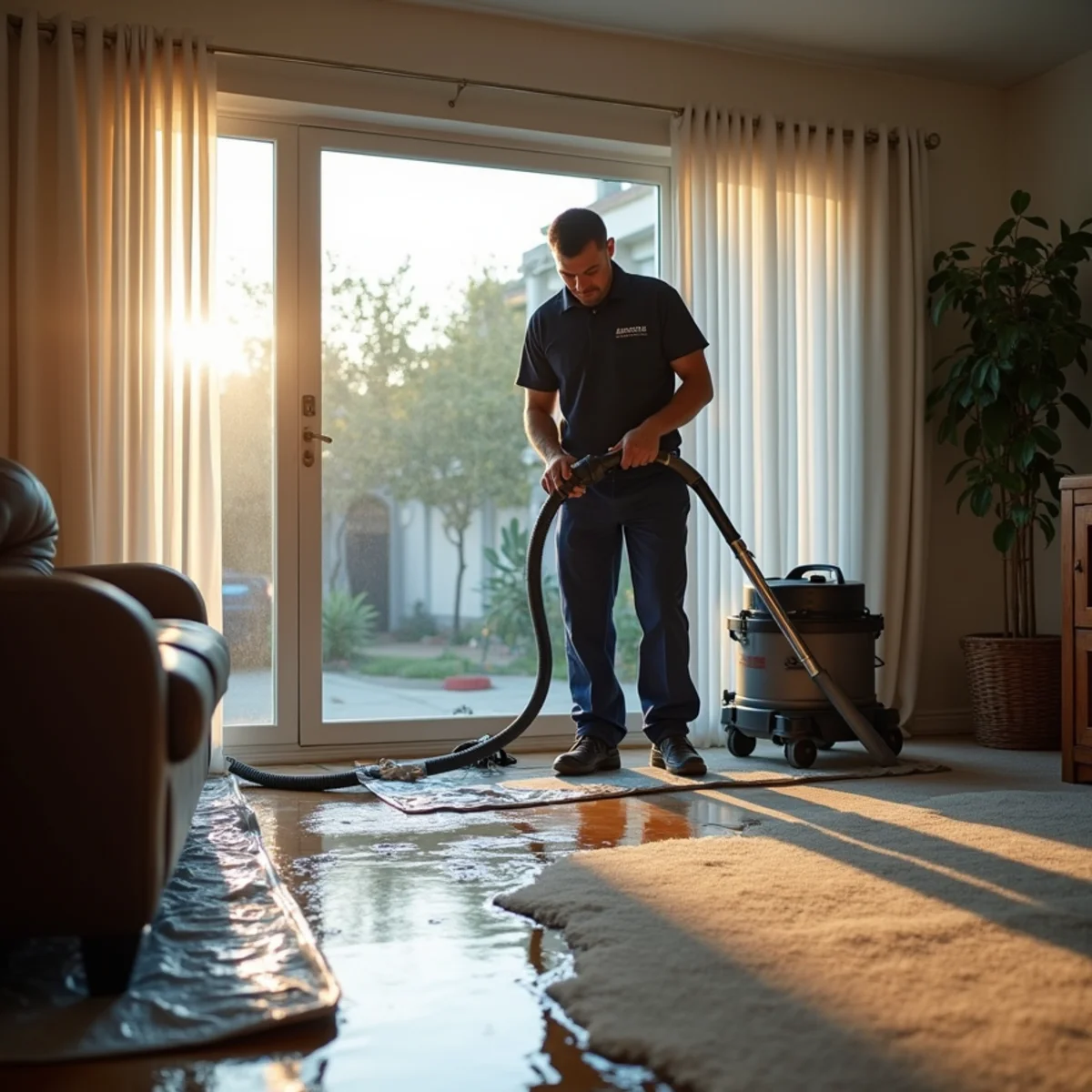
Water Damage Restoration · Whittier, CA
Water Damage Restoration in Whittier, CA
Extraction, structural drying, mold prevention and repairs — one crew from the first hour to the final coat of paint.
- 24/7 emergency dispatch
- 60-minute target response
- IICRC-certified technicians
- Direct insurance billing
If you're reading this on your phone while standing in a puddle, here's what matters right now: shut off the water, start taking photos, and call a crew that can be at your door within the hour.
Water does not wait for business hours. It travels along floor joists, wicks up drywall, and soaks into the subfloor and framing where you cannot see it. The visible puddle is usually the smallest part of the problem. Within 24 to 48 hours of the first soaking, mold can begin to colonize wet organic material — drywall paper, cabinet backing, carpet padding — and what started as a mitigation job becomes a remediation job with a much larger bill attached.
We are a Whittier-based restoration crew. That means when you call at 2 a.m. because a supply line let go under the kitchen sink, a truck leaves from this side of town — not from a regional hub past the 605. We handle the full arc of the job: emergency water extraction, structural drying and dehumidification, antimicrobial treatment, and the repairs that put your home back the way it was. And we document all of it for your insurance carrier as we go.
What you actually get
What a Full Water Damage Restoration Job Includes
Restoration is not one service, it is a sequence — and the price you are quoted should tell you which parts of that sequence are in scope. Here is everything that sits inside ours.
Emergency dispatch and make-safe
A crew on the road during your call, electrical hazards isolated on arrival, and containment set so contamination is not tracked into dry parts of the house.
Full moisture mapping
Thermal imaging and meter readings across the whole affected zone — including the rooms that look untouched — with the wet perimeter marked before anything is moved.
Volume water extraction
Truck-mounted and portable units on standing water, then weighted extraction through carpet and pad, then the low spots under toe kicks and cabinet bases.
Engineered structural drying
Air movers and dehumidifiers sized from the affected volume and class of loss, a sealed drying chamber, and daily repositioning as the wet footprint shrinks.
Controlled demolition and disposal
Only the materials that genuinely cannot be dried, photographed in place first, then bagged and documented for disposal so your carrier has the record.
Reconstruction to match
Drywall, texture, paint, flooring, baseboard and cabinetry — including the matching work an older Whittier home needs when the original finish is discontinued.
Why Whittier Homes Keep Flooding — and What That Means for Your Repair
Whittier is an older Los Angeles County community, and its housing stock is the single biggest driver of water loss calls in this city. Large parts of East Whittier, Michigan Park, Sorensen Park and South Whittier were built out in the 1950s, 60s and 70s as slab-on-grade tracts. The original supply plumbing in those homes — galvanized steel in the earlier builds, soft copper in the later ones — is now well past the age where failures become routine rather than unusual.
That has a practical consequence for you. When a supply line fails inside or beneath a concrete slab, the water has nowhere to go but sideways and up. It moves under the flooring, wicks into the bottom plate of the wall framing, and shows up two rooms away from the actual break. This is why a restoration company that only extracts the water you can see leaves you exposed to a second, worse problem sixty days later.
The other half of the local risk profile is seasonal. Whittier averages roughly 14 inches of rain a year and almost all of it arrives between November and March, often in concentrated atmospheric river events rather than gentle winter drizzle. Roofs that shed water fine for eight dry months fail under three days of sustained rain. Add Santa Ana wind events that lift and crack tile and composition shingle, and you get the pattern we see every winter: roof leak water damage discovered as a ceiling stain in a back bedroom.
- Aging galvanized and copper supply lines in pre-1980 tract homes
- Slab leaks that spread laterally under flooring before showing at the surface
- Roof and flashing failures during November–March storm season
- Water heater and washing machine supply lines in unconditioned garages
- Cast-iron and clay sewer laterals compromised by mature tree roots
- Storm runoff and yard drainage overwhelming low door thresholds
What "Restoration" Actually Covers
The industry splits this work into two halves, and knowing the difference protects you in a claim.
Mitigation is the emergency half: stopping the spread, extracting the water, and drying the structure back to normal moisture content. It is time-sensitive, it is what your policy usually treats as an urgent covered expense, and it is where a fast response saves the most money. Restoration is the rebuild half: replacing the drywall that had to come out, re-laying flooring, re-setting baseboard and casing, texture and paint.
We do both, which matters more than it sounds. When the mitigation crew and the rebuild crew are the same company, nobody argues about what was already wet when they arrived, and there is one set of moisture documentation covering the whole job. When they are different companies, you become the project manager during the worst week of your year.
The Categories of Water — and Why We Ask What Broke
The first question the dispatcher asks is where the water came from. It is not small talk. The source determines the entire protocol, the safety equipment, and what can be saved.
Category 1 is clean water from a supply line, a water heater, or an ice-maker line. Carpet, padding and drywall can often be dried in place if we get there quickly. Category 2 — sometimes called gray water — comes from a dishwasher, washing machine, or an overflowed sink, and carries enough contamination that padding usually goes and drying is paired with antimicrobial treatment. Category 3 is contaminated water: a sewage backup, a toilet overflow past the trap, or storm water that has run across the ground. Porous materials that absorbed Category 3 water do not get dried and reused. They get removed.
Left long enough, a Category 1 loss degrades into Category 2, and Category 2 into Category 3. That progression is the strongest argument there is for calling within the first hour rather than waiting until the morning.
Why a Local Crew Beats a Franchise Dispatch
Every restoration company in Los Angeles County advertises 24/7 service. The number that actually matters is how long it takes a truck with extraction equipment on it to reach your address.
Our target is 60 minutes or less for Whittier addresses, and we are honest about what that depends on: time of day, whether the 605 is moving, and how many crews are already on jobs. For East Whittier, Whittwood and Scott Avenue — the pockets nearest our Walnut Grove Dr base — it is usually well inside that. For Diamond Bar or West Covina at the edge of our radius, it is longer, and we will tell you the honest number when you call rather than quoting a marketing figure.
Local also means we know the housing stock. A technician who has opened up fifty Whittier slab homes knows where the manifold usually runs, which tract builders used which pipe, and what a 1968 lath-and-plaster wall does when it gets wet versus a 1994 drywall assembly. That knowledge shortens the diagnostic phase, and the diagnostic phase is where hidden moisture gets missed.
Do this right now
The First-Hour Emergency Checklist
Five steps, in this order, before anyone arrives. They take less time to do than to read about, and they are the difference between a drying job and a rebuild.
- 1
Shut off the water source
If a pipe or supply line has failed, close the angle stop at the fixture. If you cannot reach it, go to the main — in most Whittier homes that is the concrete meter box near the street or a valve on the exterior wall where the supply enters the house.
Expert tip: If you do not know where your main shut-off is, find it today. A meter key costs very little and a seized valve found during a flood is a bad evening.
- 2
Cut power to the affected area
Switch off the breakers serving the wet rooms — but only if you can reach your panel without walking through standing water. If the panel itself is in the affected area, leave it and tell us when you call.
Expert tip: Never step into standing water near outlets, appliances or your electrical panel. Energized water is the one genuinely dangerous part of this.
- 3
Document everything before you touch anything
Wide shots of every affected room, close-ups of the damage and the water line, and a walking video where you say out loud what happened and when you found it. Four minutes of this is the single best thing you can do for your insurance claim.
Expert tip: Once mitigation starts, wet materials come out and the original condition is gone. Photograph first, always.
- 4
Protect what you can move
Electronics, documents, artwork, rugs and anything with sentimental value go somewhere dry. Put foil or wood blocks under furniture legs standing on wet carpet so the finish does not bleed into it.
Expert tip: Leave heavily saturated furniture and mattresses in place for assessment. Moving them redistributes water and spreads contamination.
- 5
Call a local restoration crew — now, not in the morning
Mold can begin forming within 24 to 48 hours of water exposure, and water keeps migrating into wall bases and subfloor for as long as it is in the building. Fast extraction dramatically reduces the total cost of the repair.
Expert tip: Do not use a household vacuum on standing water — it is not rated for liquid and creates a genuine electrical hazard.
Transparent pricing
Whittier Water Damage Restoration Cost Ranges
Most restoration companies will not discuss cost until they are standing in your house. That leaves you calling three companies at midnight with no baseline. Here are published ranges so you have one.
| Service | Typical range | Notes |
|---|---|---|
| Water extraction | $1,000 – $5,000 | Driven by water volume and affected square footage. Category 1 clean water sits at the lower end. |
| Structural drying & dehumidification | $1,500 – $8,000 | Includes equipment on site per day, daily monitoring and moisture verification. |
| Mold remediation | Not confirmed — verify | Varies widely with containment complexity and material removal. Source current California pricing. |
| Drywall repair & replacement | Not confirmed — verify | Depends on patch versus full replacement, and on texture matching in older homes. |
| Flooring replacement | Not confirmed — verify | Material-dependent: carpet, hardwood, tile and laminate all have different cost profiles. |
| Full water damage restoration | $3,000 – $30,000+ | From a minor extraction-only job to major structural restoration. National average approximately $3,867. |
| Emergency / after-hours response | Not confirmed — verify | Some companies include this in base pricing, others charge a premium. Ask any company directly. |
Ranges are drawn from published 2026 California and national restoration cost data and are a starting point for comparison, not a quote. Final cost depends on the extent of damage, affected square footage, category of water, materials involved and whether structural repairs are needed. A site inspection with thermal imaging and moisture readings is required for an accurate estimate.
Claims handled properly
Insurance Claim Assistance for Whittier Homeowners
Most competitor pages mention insurance in passing. Here is exactly what we do, because the documentation is what decides borderline claims.
Direct billing to your carrier
For covered water damage claims we bill your insurance company directly, so in most cases you are not paying the full cost up front and waiting on reimbursement. You remain responsible for your deductible.
Documentation that protects the claim
Your carrier needs proof of the full extent of the damage. If hidden moisture behind walls or under flooring is not documented before drying is complete, that damage can be disputed because there is no evidence it existed. We record thermal images, daily moisture readings and photographs from the first visit.
Working with your adjuster
We coordinate directly with your adjuster, supply the scope and methodology they ask for, and advocate for complete coverage of all damage rather than only what was immediately visible. Drying days are one of the most commonly short-paid line items, and a clean daily log is the answer to that.
What is typically covered, and what is not
Most standard California policies cover sudden and accidental water damage from internal sources such as burst pipes and appliance failures. Flood from external sources generally requires separate flood insurance, and sewer backup generally requires a water backup endorsement. Gradual damage from a leak left unaddressed is the classic denial, which is why the timeline of discovery matters.
On every job
The Equipment We Bring to a Whittier Property
The difference between a thorough restoration and a surface cleanup is the equipment used and the training behind it. Here is what will actually be on site.
Diagnostic equipment
Finding the water you cannot see is what separates a thorough restoration from a surface cleanup.
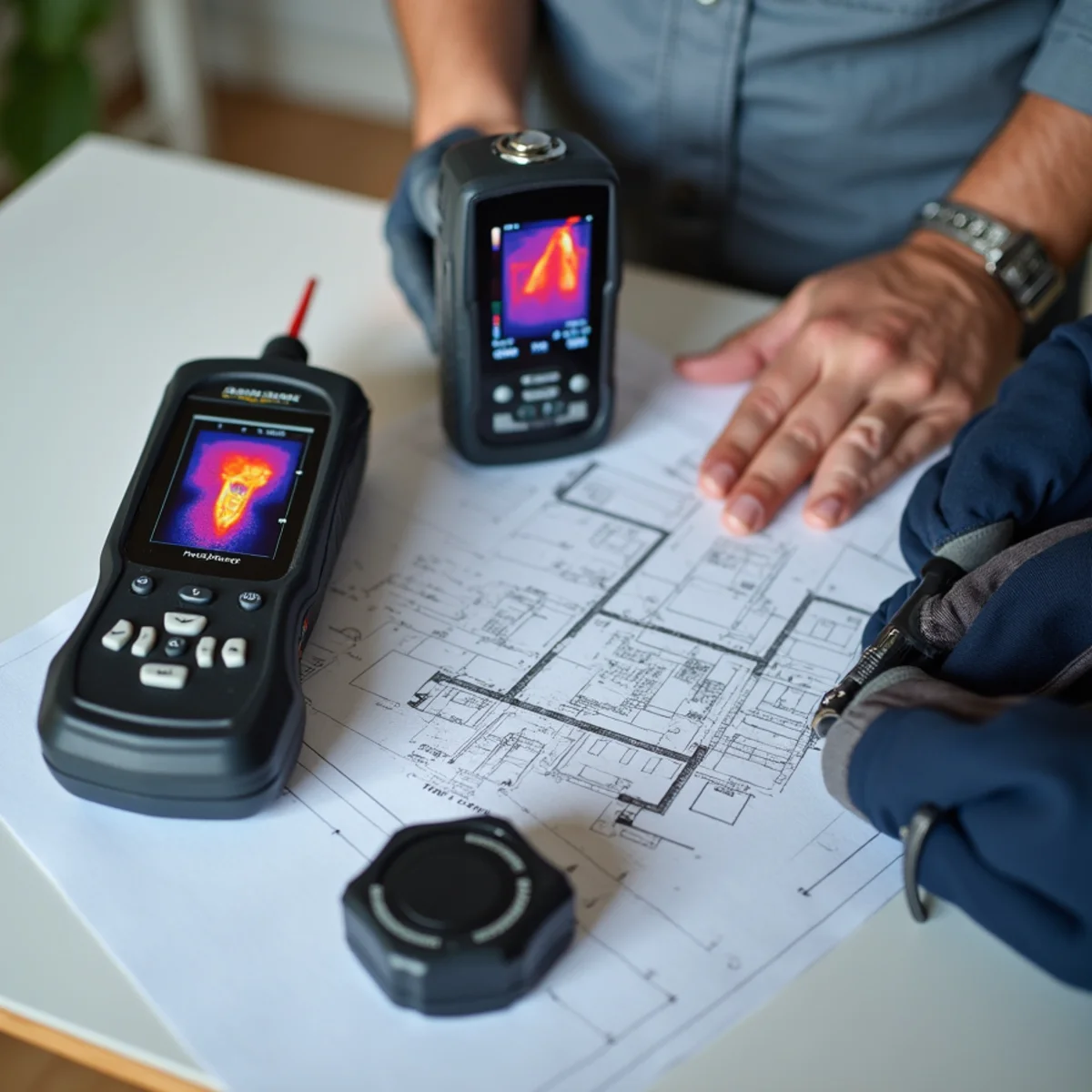
Thermal imaging cameras
Reveal temperature differences that indicate moisture behind walls, under flooring and in ceiling cavities — areas that look dry but are saturated internally.
Moisture meters
Measure the actual moisture content of drywall, framing, concrete and insulation, establishing the drying baseline and confirming when materials are genuinely dry.
Hygrometers
Monitor ambient temperature and relative humidity throughout the drying chamber, so the air itself is not holding moisture that will reabsorb into dried materials.
Extraction & drying equipment
Mechanical removal first, evaporation second. Every gallon extracted is a gallon that does not have to be dried.
Truck-mounted and portable extraction units
Remove standing water at high volume, and pull water out of carpet padding under weighted compression rather than skimming the surface.
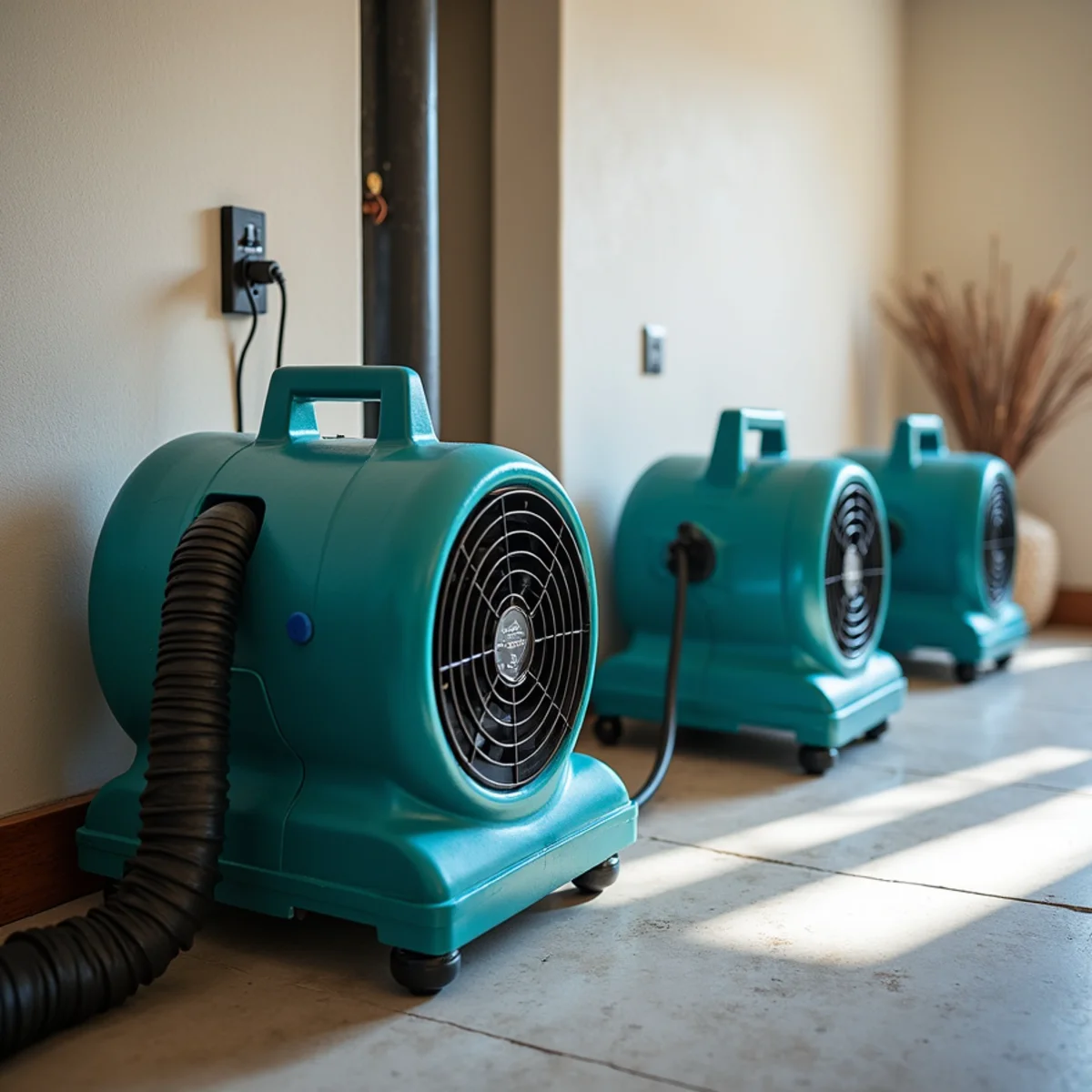
Commercial air movers
Create high-velocity airflow across wet surfaces to drive evaporation from drywall, framing and flooring materials.
Commercial dehumidifiers
Pull evaporated moisture out of the air before it reabsorbs into dry material. Drying is not complete until humidity readings stabilize at normal indoor levels.
Treatment & documentation
Antimicrobial protection where the risk warrants it, and a claim file built as the job runs.
Antimicrobial treatments
Applied to affected surfaces and cavities to inhibit microbial growth during and after drying. A secondary defense — speed of drying is the primary one.
Digital moisture logs and thermal image archives
Daily readings at marked locations, timestamped, forming the record that supports your claim and justifies each day of equipment on site.
Written condition reports
A documented scope of what was removed and why, issued to you and to your adjuster so nothing about the loss is left to recollection.
Why us for this job
Why Whittier Homeowners Call Us for Full Restoration
Any company can put fans in a room. These are the things that decide whether the job actually ends on time, on scope and paid.
Mitigation and rebuild under one roof
No handoff gap between the drying company and the reconstruction contractor, no argument about what was already wet, and one set of moisture documentation covering the whole claim.
Based in east-central Whittier
Crews leave from Walnut Grove Drive, not a regional hub past the 605. That is what makes a 60-minute target realistic for city addresses rather than aspirational.
IICRC-certified, licensed and insured
Technicians trained to the industry standard for extraction, drying and remediation — with certification details available on request rather than implied by a badge.
Daily readings you can hand to an adjuster
Same marked locations, same meters, logged every day in writing. Drying days are one of the most commonly short-paid lines on a water claim, and this is what answers that. Equipment days are also where most of the cost variation sits.
We dry in place before we demolish
Cavity drying through small hidden access points and mat systems for hardwood. Removal is a last resort, because original material in a 1960s home cannot be bought back.
- IICRC-certified technicians
- Licensed & insured
- 60-minute target response across Whittier
- Direct insurance billing
- 7012 Walnut Grove Dr, Whittier, CA 90606
Need water damage restoration today?
Call and a crew is dispatched during the conversation — the first hour decides most of what this costs.
Step by step
Our Water Damage Restoration Process, Start to Finish
Six phases. You will know which one you are in at every point, and you will get moisture readings in writing at each step.
Phase 1
Emergency call and dispatch
A real person answers — not an answering service taking a message. We ask for your address, what the water came from, how far it has spread, and whether power is still on in the affected rooms. A crew is dispatched immediately and you get an arrival window before you hang up.
Phase 2
Inspection and moisture mapping
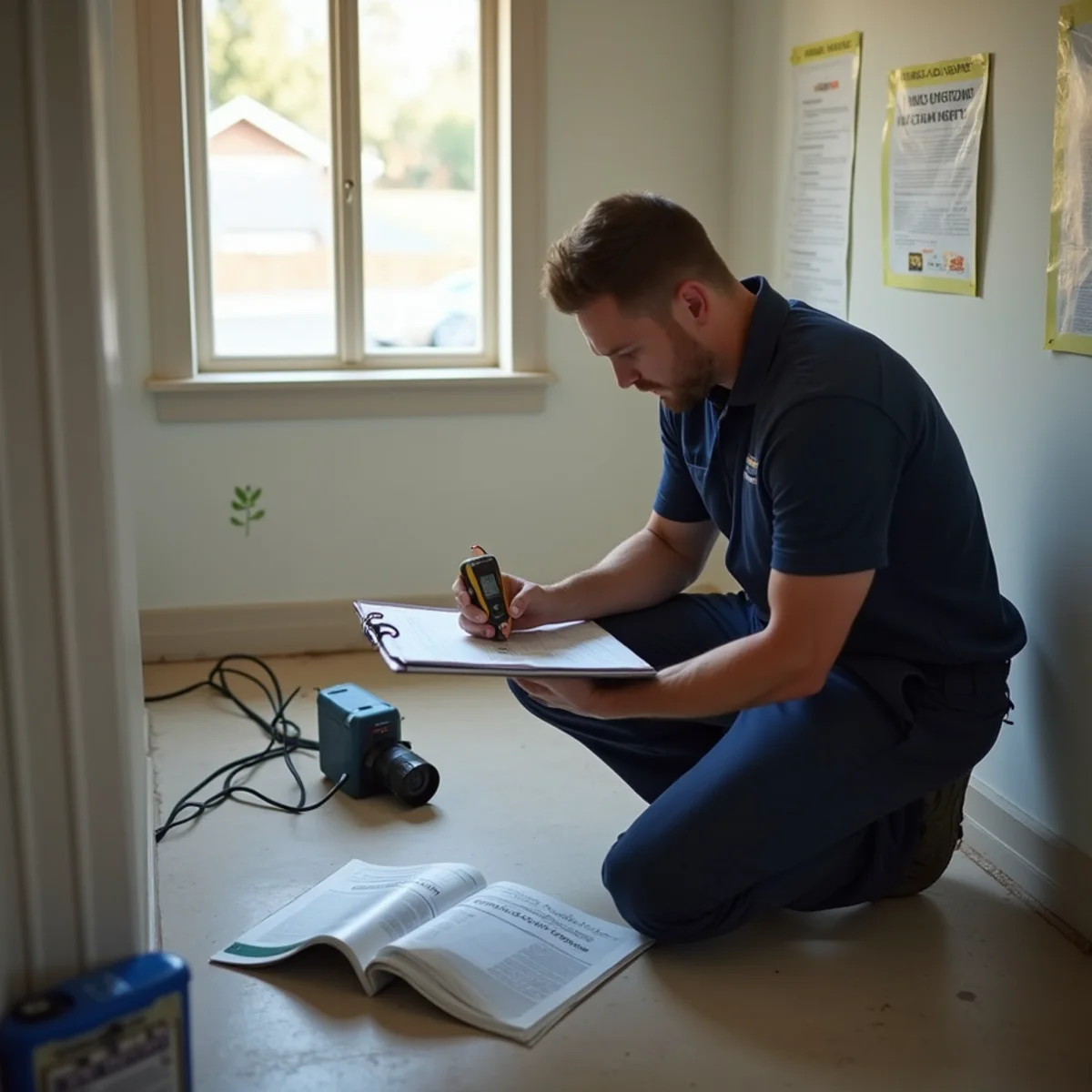
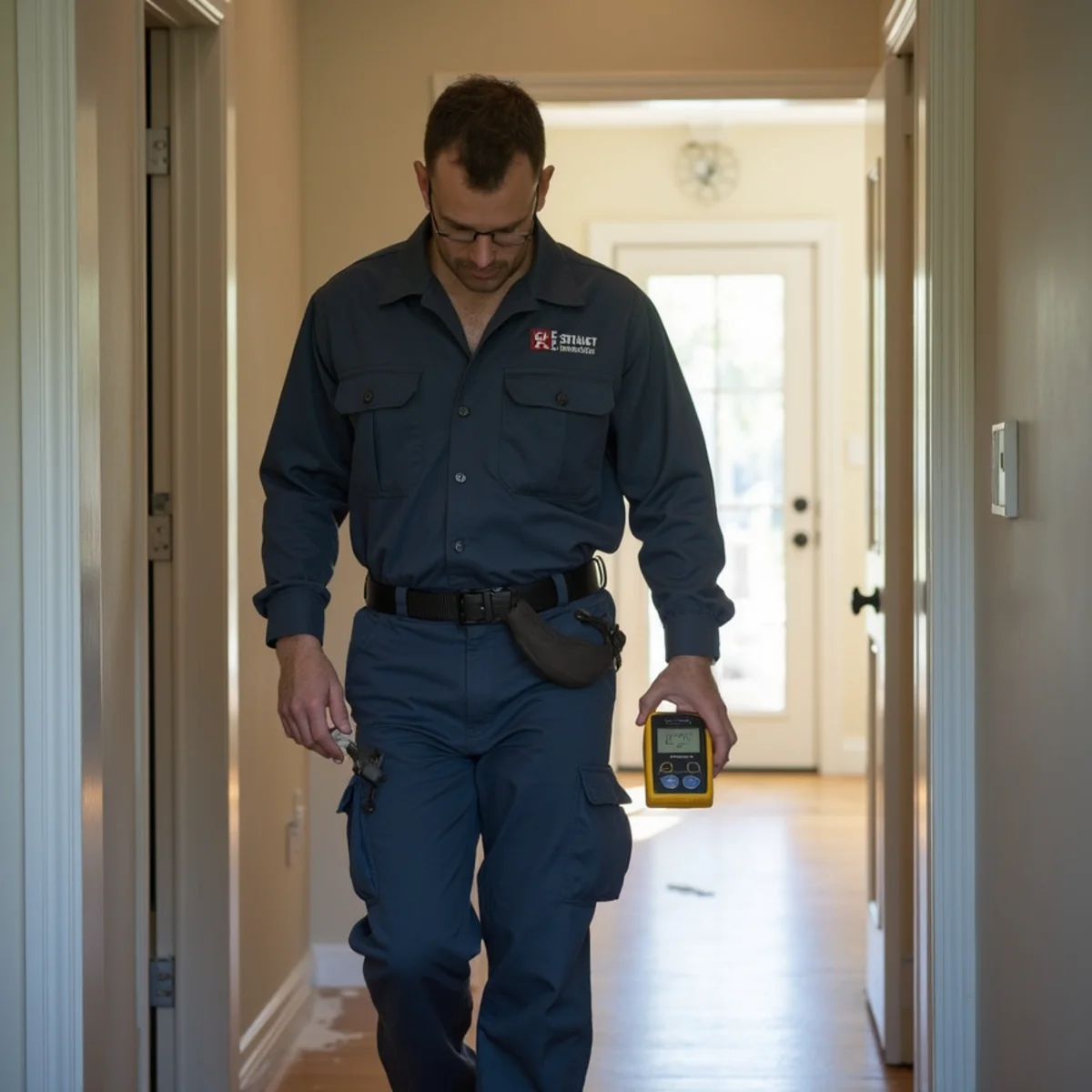
Technicians arrive with thermal imaging cameras and moisture meters. Thermal imaging shows temperature differences that reveal water behind drywall and under flooring; moisture meters give the actual moisture content of the material. We map the full wet footprint — which is almost always larger than the visible one — and set the drying baseline.
Phase 3
Extraction
Truck-mounted and portable extraction units pull standing water first, then water trapped in carpet and padding, then the pooled water under cabinets and in low spots. This is the single highest-value hour of the entire job. Every gallon removed now is a gallon that does not have to be evaporated later.
Phase 4
Structural drying and dehumidification
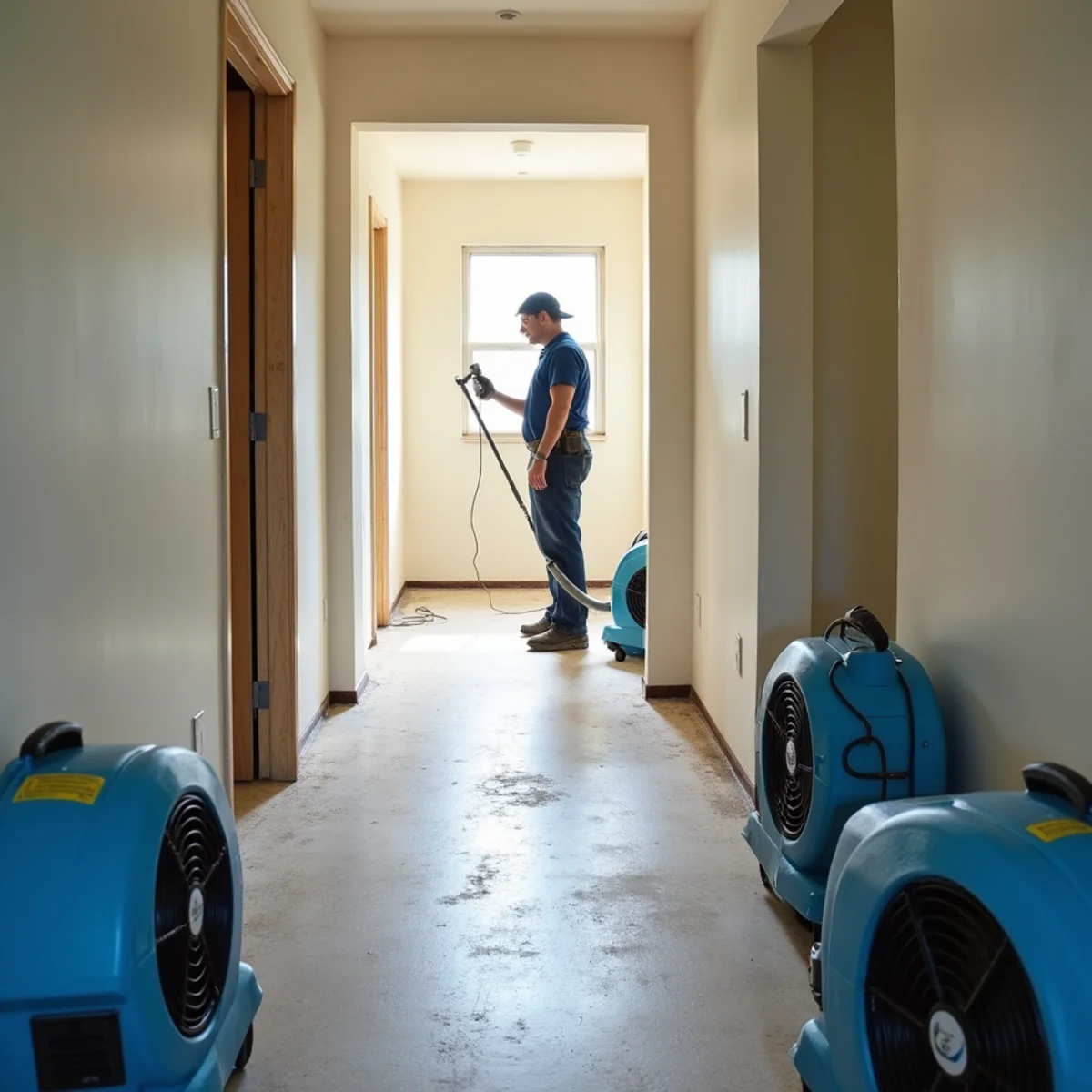
Air movers create high-velocity airflow across wet surfaces to drive evaporation; commercial dehumidifiers pull that evaporated moisture out of the air before it reabsorbs into dry material. Equipment placement is calculated from the affected square footage and the class of water loss, not guessed. We return daily to take readings and reposition.
Phase 5
Antimicrobial treatment
Speed is the real mold prevention strategy — antimicrobial application is the second line of defense, applied to affected surfaces and cavities where the risk profile warrants it. If mold has already established because the loss went unnoticed, we move to a contained mold remediation scope with proper containment and negative air.
Phase 6
Repairs and rebuild
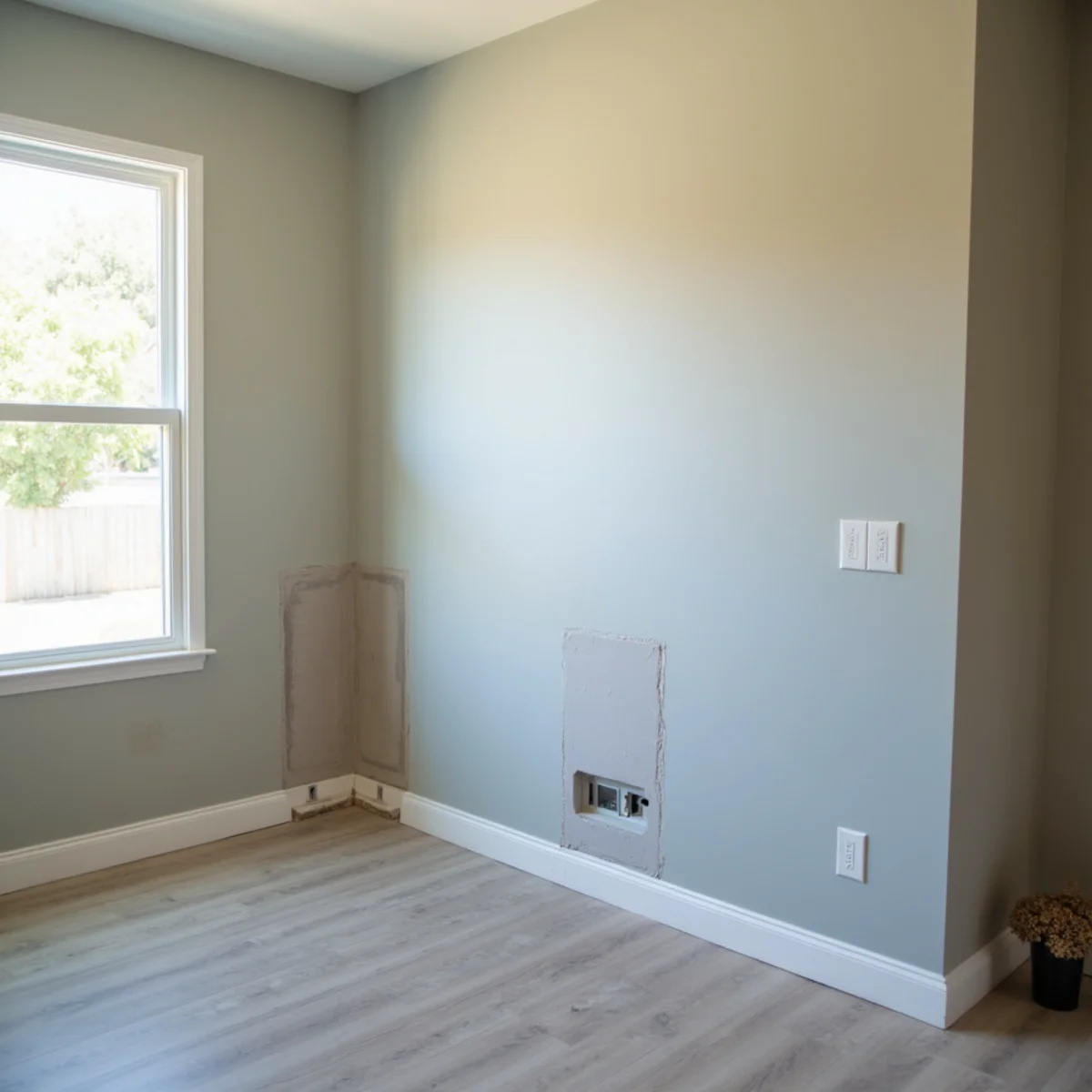
Once readings confirm the structure is genuinely dry — not "looks dry" — the rebuild starts: drywall, texture, paint, flooring, baseboard, cabinetry. Everything is photographed and logged before repairs begin so no evidence of the original damage is destroyed while your claim is still open.
On the job
Honest pricing
What Drives the Price of a Whittier Water Damage Job
Most restoration companies will not discuss cost until they are standing in your house. That is understandable — the variables are real — but it leaves you calling three companies with no baseline. Here is what actually moves the number.
- Affected square footage
- Not the size of the puddle — the size of the wet footprint we map with meters. One room versus a whole floor changes both equipment count and drying days.
- Category of water
- Clean supply water is the cheapest scenario. Gray water adds disposal and antimicrobial scope. Category 3 sewage adds containment, PPE, disposal and mandatory removal of porous materials.
- How long it sat
- The dominant variable. Water found in an hour is a drying job. Water found on Monday after a weekend away is a demolition-and-rebuild job.
- Materials involved
- Engineered wood, solid hardwood, tile over slab, carpet and laminate all behave differently. Hardwood can often be saved with mat drying systems if we reach it quickly; laminate almost never is.
- Equipment days
- Drying is billed largely on equipment on site per day. A tight, well-contained drying chamber finishes faster and costs less than an open, poorly sealed one.
- Rebuild scope
- Whether the job ends at "dry" or continues through drywall, texture, paint, flooring and cabinetry — and whether matching existing 1960s finishes requires custom work.
We inspect before we quote, always. Be cautious with any contractor who gives you a firm number over the phone without thermal imaging and moisture readings — they are either guessing high or planning to discover more work later. For published 2026 California cost ranges, see our Whittier water damage restoration cost guide.
Related services, service areas and guides
Related services
- 24/7 Emergency Water RemovalA real person answers, a crew is dispatched immediately, and you get an honest arrival window before you hang up.
- Water Extraction & RemovalTruck-mounted and portable extraction that pulls water out of carpet, pad and subfloor before it reaches the framing.
- Mold RemediationContainment, HEPA filtration and controlled removal — plus fixing the moisture source so it does not come back.
Related reading
- How Much Does Water Damage Restoration Cost in Whittier? (2026 Price Guide)Most restoration companies will not discuss price until they are standing in your house. Here are the published California ranges, and an honest account of which variables actually move them.
- Does Homeowners Insurance Cover Water Damage in California? What's In and What's OutThe whole thing turns on two words: sudden and accidental. Here is what that phrase includes, what it excludes, and where the arguments actually happen.
Water Damage Restoration across our service area
We provide water damage restoration across Whittier and the surrounding Los Angeles County communities. Each area page covers the local housing and drainage risks that actually drive water damage there.
- East WhittierUnder 10 minutes from our Walnut Grove Dr base. This is our home zone.
- Uptown WhittierAbout 8 to 12 minutes from our Walnut Grove Dr base, west along Whittier Boulevard or Philadelphia Street.
- Whittwood, WhittierUnder 10 minutes from our Walnut Grove Dr base — one of our closest zones.
- Friendly Hills, WhittierAround 8 to 12 minutes from our base, up toward the Whittier foothills.
- Pico RiveraTypically 10 to 15 minutes from our Walnut Grove Dr base, straight across on Whittier Boulevard or Washington Boulevard.
- Santa Fe SpringsAround 10 minutes from our base, south on Painter Avenue or straight down the 605.
- South WhittierUsually under 10 minutes from our Walnut Grove Dr base — one of the fastest zones we serve.
- La MiradaRoughly 12 to 18 minutes from our Whittier base via Imperial Highway or Rosecrans Avenue.
- NorwalkAround 12 to 15 minutes from our base, south on Norwalk Boulevard or Pioneer Boulevard.
- Los Angeles CountyWe work the southeast quadrant of the county from our base at 7012 Walnut Grove Dr in Whittier, with a 60-minute target response across the Gateway Cities and the lower San Gabriel Valley.
Request a visit
Free Estimate for Water Damage Restoration
We inspect with thermal imaging and moisture meters before quoting — a firm price given over the phone without readings is a guess. If water is spreading right now, call instead; crews are dispatched during the conversation.
+1 (201) 277-9344