
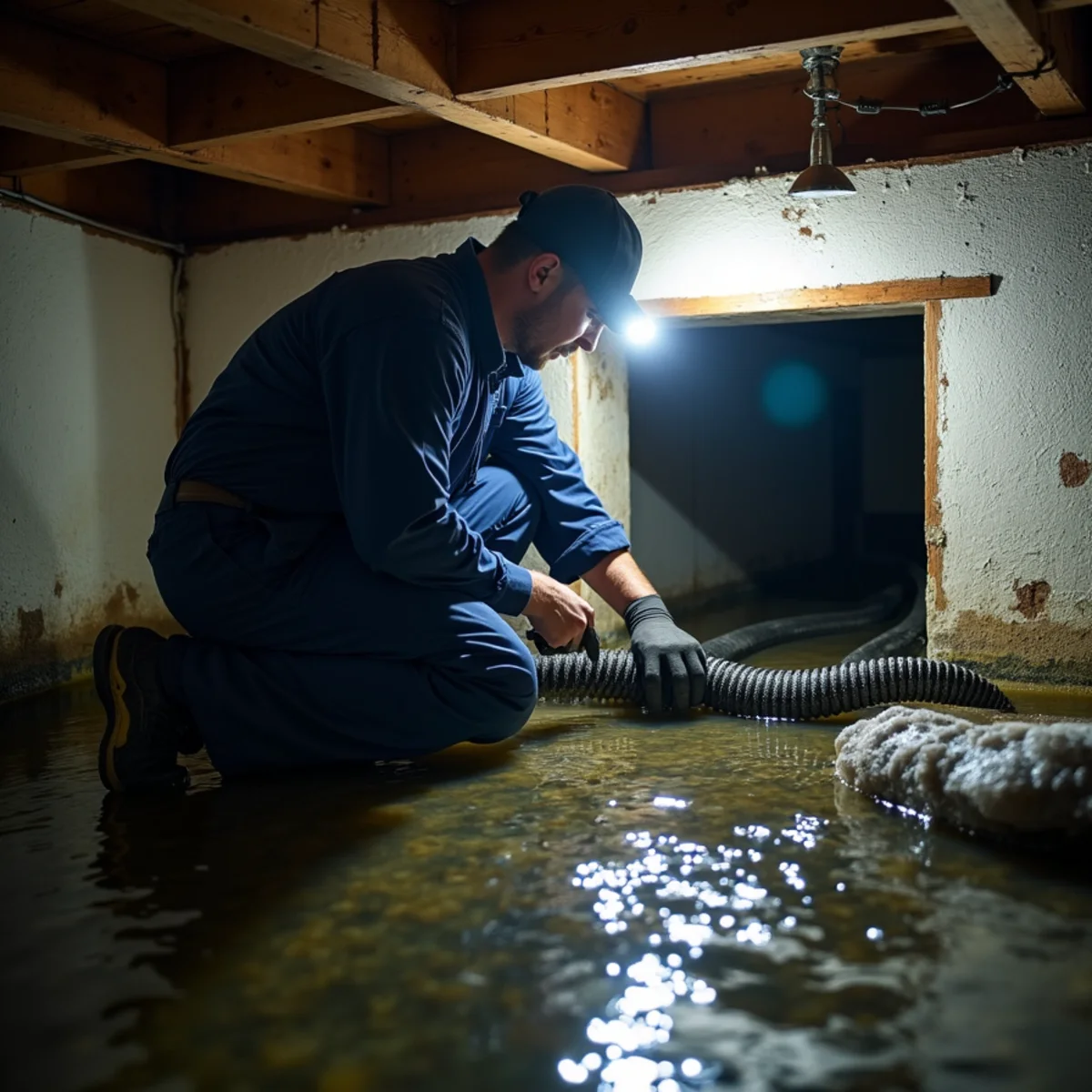
Water Damage Restoration · Whittier, CA
Flooded Basement & Crawl Space Cleanup in Whittier, CA
Pump-out, vapor barrier and insulation replacement, and drying for the space under your house that nobody looks at.
- 24/7 emergency dispatch
- 60-minute target response
- IICRC-certified technicians
- Direct insurance billing
Let us be straight about something the national franchise pages gloss over: most Whittier homes do not have basements. Southern California built on slabs and raised foundations, and true below-grade basements are rare here.
What we do have, in large numbers, is crawl spaces — and a crawl space floods for exactly the same reasons a basement does, with the added problem that nobody goes down there for years at a time. Water sits under the house, soaks the insulation and subfloor, and quietly raises the humidity of every room above it.
If your home is one of the genuinely below-grade properties in this area, or a hillside build in Hacienda Heights or Rowland Heights with a daylight lower level, the pump-out and drying protocol is the same. We handle both.
What you actually get
What Crawl Space & Below-Grade Cleanup Includes
Pumping the water out is step one of six. A quote that stops there leaves wet insulation and torn vapor barrier under your floor.
Confined-space assessment
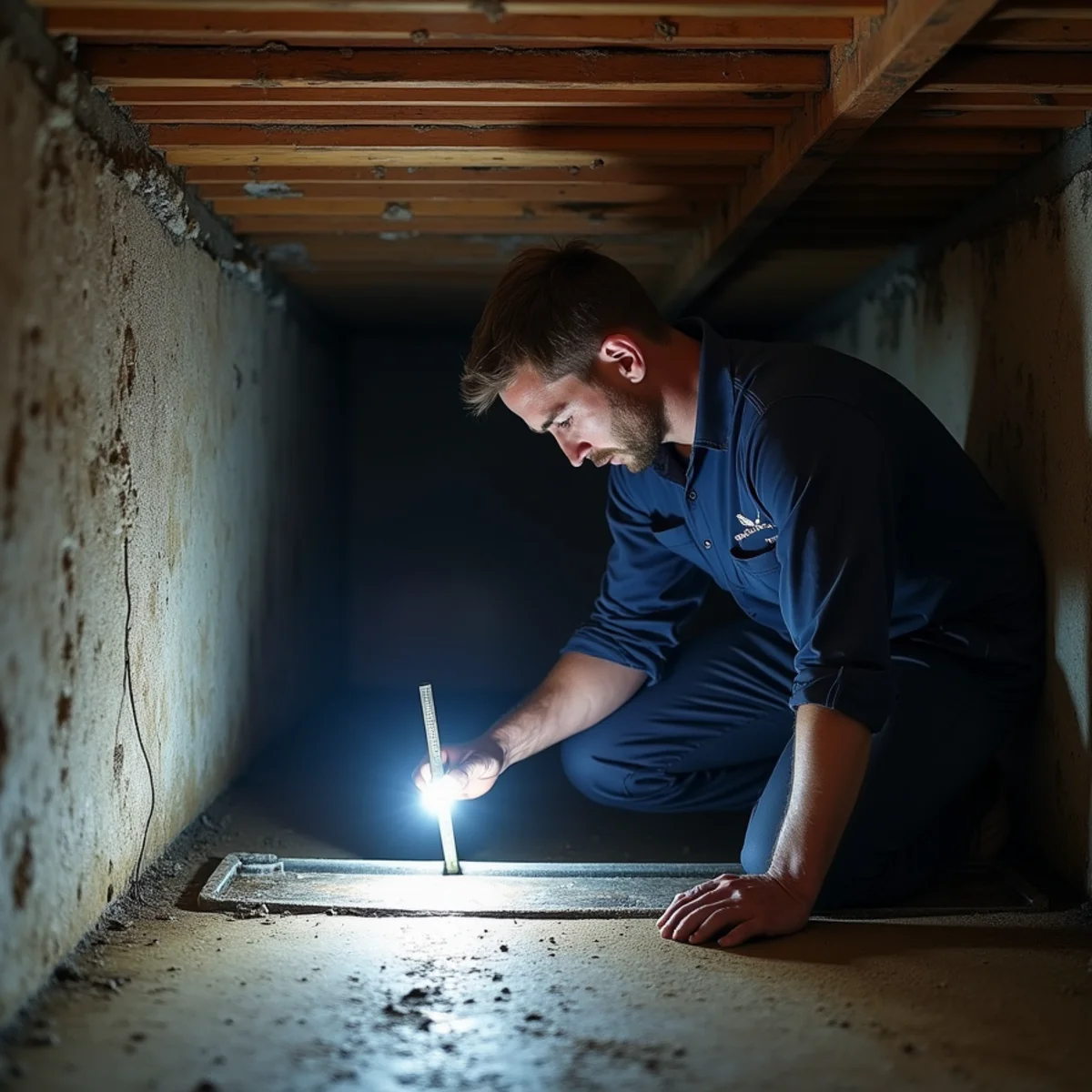
Entry protocol, electrical and gas hazards identified, contamination level established, and the structural condition of joists and posts checked.
Pump-out and debris removal
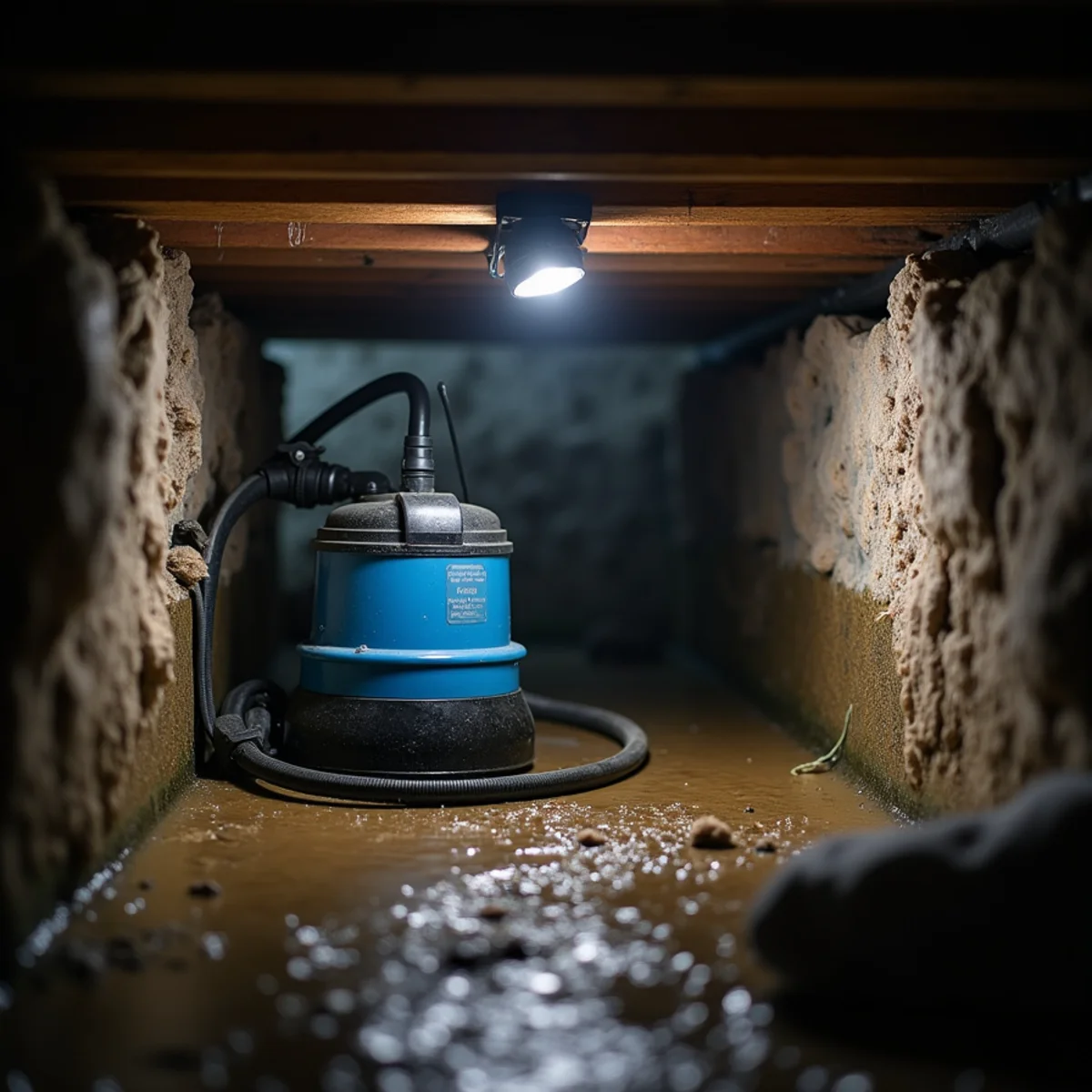
Submersible pumps for standing water, extraction for what pumps cannot reach, and mechanical removal of the silt storm water leaves behind.
Saturated insulation removal
Wet fiberglass batt never recovers — it mats down, holds water against the joists and loses its R-value permanently. It comes out and is disposed of.
Vapor barrier replacement
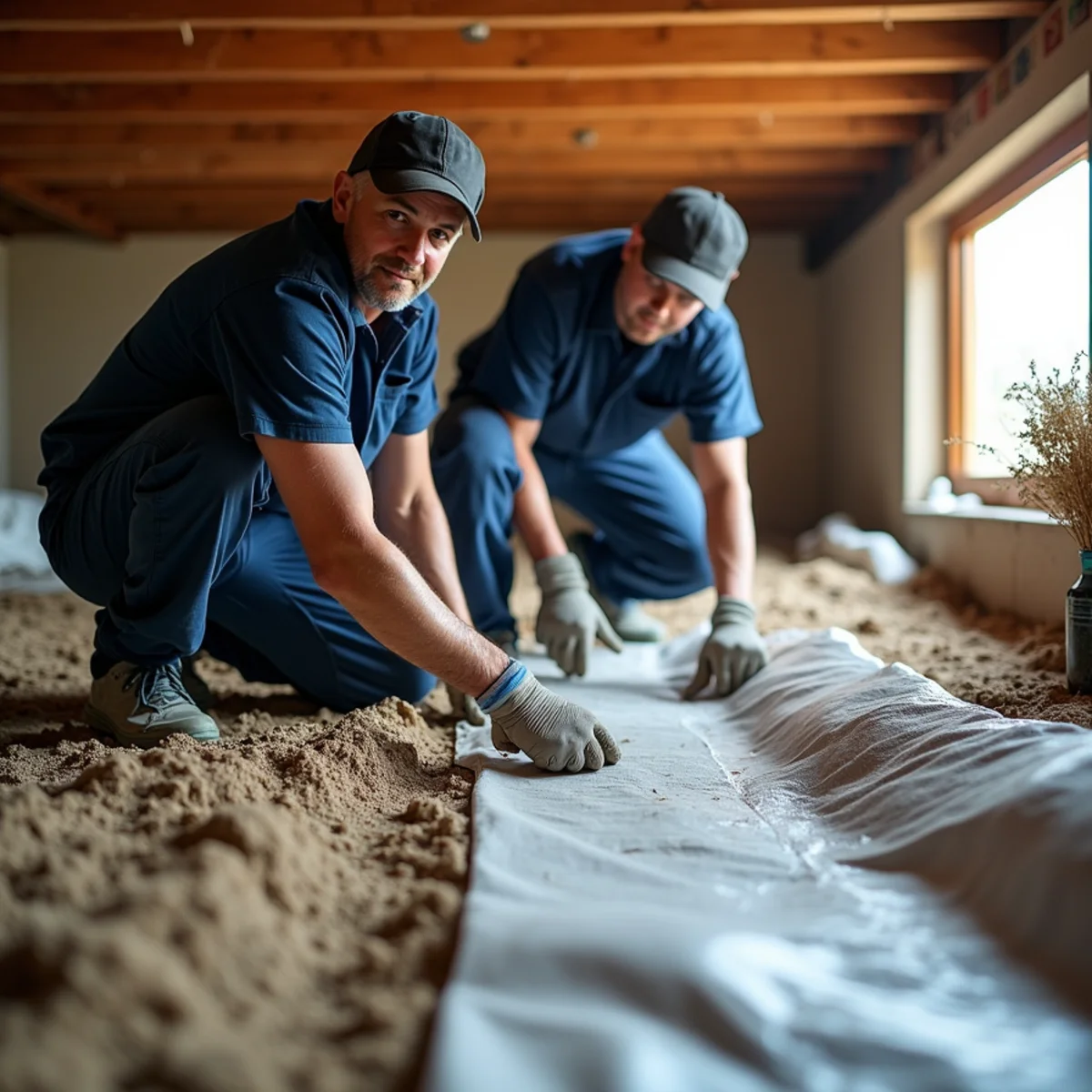
Sequenced around the space rather than the material. The old barrier comes up first so the ground beneath can actually release moisture — leaving it down traps water under the plastic and stalls the dry indefinitely. Sub-floor framing and any ducting are read and dried with the barrier off, the soil is treated where the water category warrants it, and the new barrier goes down only once the readings say the space is finished.
Drying inside the space
Equipment placed in the crawl space itself, with subfloor and joist moisture read against a dry standard rather than assessed by eye.
A plain answer on the cause
Whether this was plumbing, grading or drainage — because a crawl space that floods every winter is a drainage problem wearing a restoration costume.
How Water Gets Under a Whittier Home
Four routes, in rough order of how often we see them.
Surface water during storms. Whittier's rain arrives concentrated between November and March. When a yard slopes toward the house, when a downspout discharges next to the foundation, or when a foundation vent sits low in a grade that has built up over the decades, storm water goes straight in.
Plumbing failures. A supply line, drain line, or sewer lateral under the house dumps directly into the crawl space, and because nothing is visible upstairs it can run for a very long time.
Groundwater and hydrostatic pressure. On the lower-lying parcels near the San Gabriel River and Rio Hondo corridors, saturated soil after a sustained storm system pushes moisture through foundation walls and slab joints.
Failed drainage. Area drains and French drains silt up. Sump pumps fail — usually during the storm that they were most needed for, and usually because they had not been tested since installation.
Why a Wet Crawl Space Affects the Whole House
This is the part homeowners find surprising, and it is the reason the job is worth doing properly.
Air moves upward through a building. Warm air rises and escapes at the top, drawing replacement air in from the lowest point — which, in a raised-foundation home, is the crawl space. A meaningful share of the air you breathe in your living room entered through the space under your floor.
So a wet crawl space is not an isolated problem. It raises humidity throughout the house, feeds mold growth on the subfloor and joists directly under your living space, degrades the insulation you paid for, and carries whatever odor is under there into every room. Homeowners chasing a musty smell through their house frequently find it started below the floor.
What Proper Crawl Space Restoration Includes
Pumping the water out is step one of six, not the whole job.
Standing water is removed with pump extraction. Saturated insulation comes out — wet fiberglass batt does not recover, it holds water against the joists and sags out of the bays. Contaminated or torn vapor barrier is removed and replaced. Exposed soil is treated where the water was contaminated. Then the space is dried with equipment placed inside it and monitored, and the subfloor and joists are read with meters rather than assessed by eye.
The last step is the one that stops it happening again: identifying whether this was plumbing, drainage or grading, and telling you plainly which. A crawl space that floods every winter is a drainage problem wearing a restoration costume.
Why us for this job
Why the Space Under Your Floor Is Worth Doing Properly
Nobody goes down there, which is exactly why it gets skipped — and why it quietly affects the air in every room above it.
We are honest that this is crawl spaces, not basements
Southern California built on slabs and raised foundations. Pages promising basement waterproofing here are describing a market that barely exists.
We treat it as a whole-house air problem
Air moves upward through a building and draws replacement air from the lowest point. Wet crawl space means raised humidity in your living rooms.
Insulation and barrier are in scope
Not an add-on discovered later. Wet batt and torn vapor barrier are the two things that keep a "dried" crawl space damp.
We name the cause before we leave
Regrading, downspout extensions, drain clearing or a failed sump. Fixing that is what stops next November being an identical phone call.
- IICRC-certified technicians
- Licensed & insured
- 60-minute target response across Whittier
- Direct insurance billing
- 7012 Walnut Grove Dr, Whittier, CA 90606
Need flooded basement & crawl space cleanup today?
Water under the floor does not dry on its own — call and we will get a pump and a reading under there.
Step by step
Our Crawl Space & Below-Grade Process
Confined-space work, done in the right order.
Step 1
Assess and make safe
Confined-space entry protocol, electrical and gas hazards identified, contamination level established, structural condition of joists and posts checked.
Step 2
Pump and extract
Submersible pumps for standing water, extraction for what the pumps cannot reach, and removal of silt and debris.
Step 3
Remove saturated materials
Wet insulation, damaged vapor barrier and any contaminated stored contents come out and are documented for disposal.
Step 4
Clean and treat
Soil and framing cleaned of organic load, then antimicrobial treatment applied where the water category warrants it.
Step 5
Dry and verify
Equipment placed inside the space, subfloor and joist moisture read against the dry standard, and new vapor barrier installed once readings are met.
Step 6
Identify the cause
A plain answer on whether this was plumbing, grading or drainage — and what it will take to stop it recurring next winter.
On the job
Honest pricing
What Crawl Space Cleanup Costs Depend On
Confined-space work runs slower than the same square footage in a living room, and that shapes the price.
- Access and clearance
- An 18-inch crawl space with a single small access hatch takes far longer to work than a 4-foot space with two entries.
- Water volume and contamination
- Clean storm water versus a sewer lateral failure changes protocol, PPE and disposal entirely.
- Insulation and vapor barrier
- Removal and replacement across the full footprint is a material and labor line of its own.
- Drying duration
- Enclosed spaces with limited airflow dry slowly; expect more equipment days than an equivalent above-grade area.
- Cause correction
- Regrading, downspout extensions, drain clearing or sump replacement are separate work — necessary, but scoped separately.
One inexpensive habit prevents most of these calls: look into your crawl space with a flashlight twice a year, once before the November rains and once in spring. Fallen insulation and standing water are both obvious in ten seconds.
Related services, service areas and guides
Related services
- Flood CleanupStorm and overflow flooding handled as the contaminated-water event it is — extraction, removal, disinfection, drying.
- Structural Drying & DehumidificationEngineered drying with daily moisture readings — so the structure is verifiably dry, not just dry to the touch.
- Mold RemediationContainment, HEPA filtration and controlled removal — plus fixing the moisture source so it does not come back.
Related reading
- Gutters, Downspouts, and Yard Drainage: A Pre-Rainy-Season Checklist for Whittier HomesA roof sheds water perfectly and then hands the whole problem to your gutters, downspouts and yard. That handoff is where most local water damage starts.
- Why Your House Still Smells Musty After the Water "Dried"Odor is information, not a nuisance. A musty smell weeks after a leak means the job was not finished — here is where to look.
Flooded Basement & Crawl Space Cleanup across our service area
We provide flooded basement & crawl space cleanup across Whittier and the surrounding Los Angeles County communities. Each area page covers the local housing and drainage risks that actually drive water damage there.
- East WhittierUnder 10 minutes from our Walnut Grove Dr base. This is our home zone.
- Uptown WhittierAbout 8 to 12 minutes from our Walnut Grove Dr base, west along Whittier Boulevard or Philadelphia Street.
- Whittwood, WhittierUnder 10 minutes from our Walnut Grove Dr base — one of our closest zones.
- Friendly Hills, WhittierAround 8 to 12 minutes from our base, up toward the Whittier foothills.
- Pico RiveraTypically 10 to 15 minutes from our Walnut Grove Dr base, straight across on Whittier Boulevard or Washington Boulevard.
- Santa Fe SpringsAround 10 minutes from our base, south on Painter Avenue or straight down the 605.
- South WhittierUsually under 10 minutes from our Walnut Grove Dr base — one of the fastest zones we serve.
- La MiradaRoughly 12 to 18 minutes from our Whittier base via Imperial Highway or Rosecrans Avenue.
- NorwalkAround 12 to 15 minutes from our base, south on Norwalk Boulevard or Pioneer Boulevard.
- Los Angeles CountyWe work the southeast quadrant of the county from our base at 7012 Walnut Grove Dr in Whittier, with a 60-minute target response across the Gateway Cities and the lower San Gabriel Valley.
Request a visit
Free Estimate for Flooded Basement & Crawl Space Cleanup
We inspect with thermal imaging and moisture meters before quoting — a firm price given over the phone without readings is a guess. If water is spreading right now, call instead; crews are dispatched during the conversation.
+1 (201) 277-9344