
Water Damage Restoration · Whittier, CA
Leak Detection Services in Whittier, CA
Acoustic, thermal and pressure testing to find the leak precisely — so the repair opens one small area, not four.
- 24/7 emergency dispatch
- 60-minute target response
- IICRC-certified technicians
- Direct insurance billing
A leak you cannot see is still doing damage on a schedule. The only question is whether you find it this month or after the flooring buckles.
Most hidden leaks announce themselves quietly first: a water bill that stepped up and stayed up, a warm patch on a tile floor, a faint sound of running water at 3 a.m. when the house is silent. Homeowners typically notice one of those and wait, because nothing is visibly wrong.
Locating a leak precisely is what keeps the repair small. The difference between "somewhere under the east side of the house" and "here, under this tile, 14 inches off the wall" is the difference between opening four feet of slab and opening one.
What you actually get
What a Leak Detection Visit Includes
You are paying for a location, not a guess. Here is what the visit covers and what you hold at the end of it.
Meter test and history
A shut-house meter test to confirm active loss and gauge volume, plus what you have noticed and when — which narrows the search before any equipment comes out.
System isolation
Hot separated from cold, house separated from irrigation and yard line, pressure held and observed. This alone eliminates most of the system.
Acoustic location
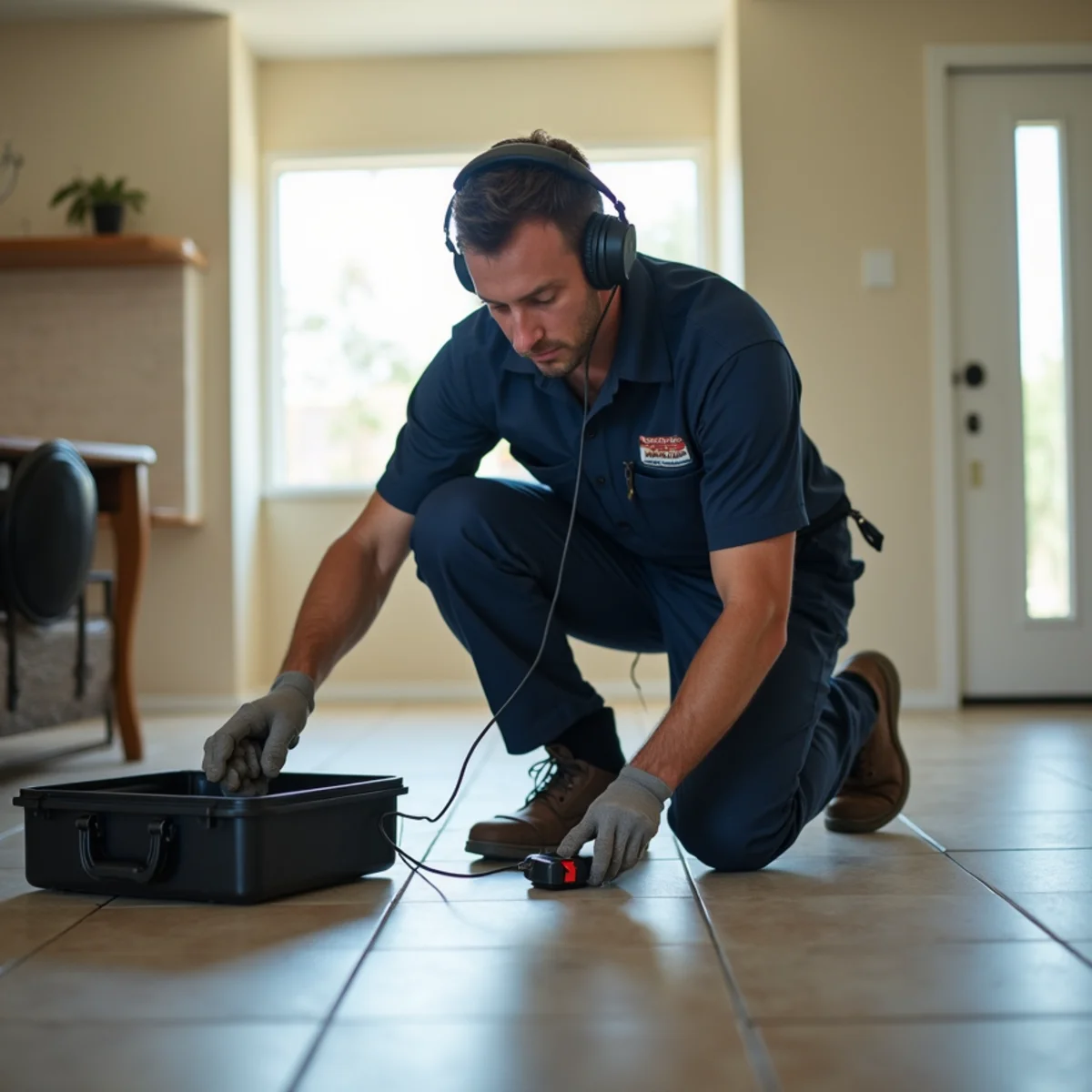
Ground microphones and amplification worked in a grid across the suspected area, narrowing to the point of maximum intensity.
Thermal confirmation
A hot-water slab leak heats the concrete above it. Thermal imaging confirms the acoustic find and reads through tile, vinyl and hardwood.
Tracer gas where needed
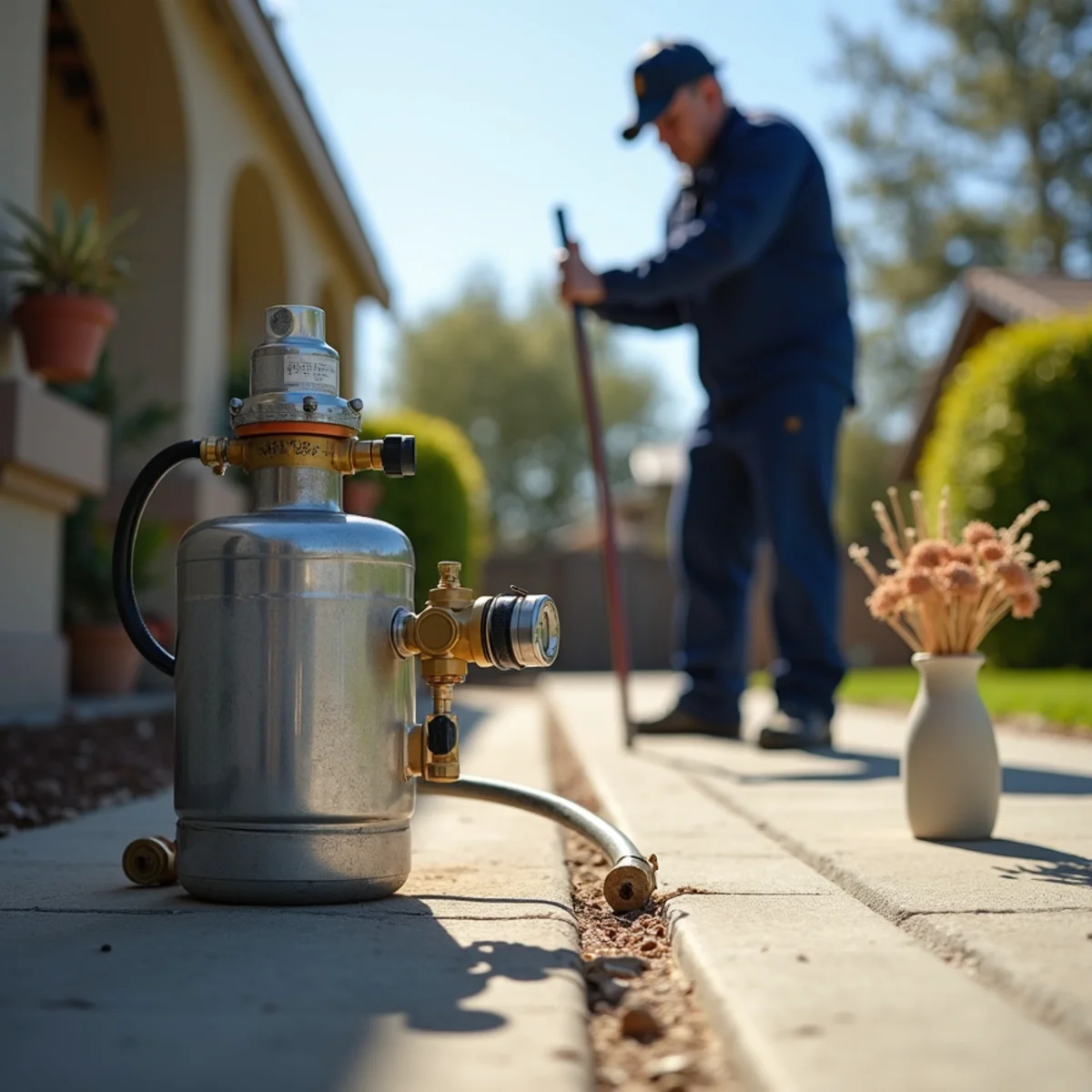
For weeps too quiet to hear or leaks under thick mortar-bed tile, safe tracer gas introduced into the isolated line and detected at the surface.
A written report and a moisture map
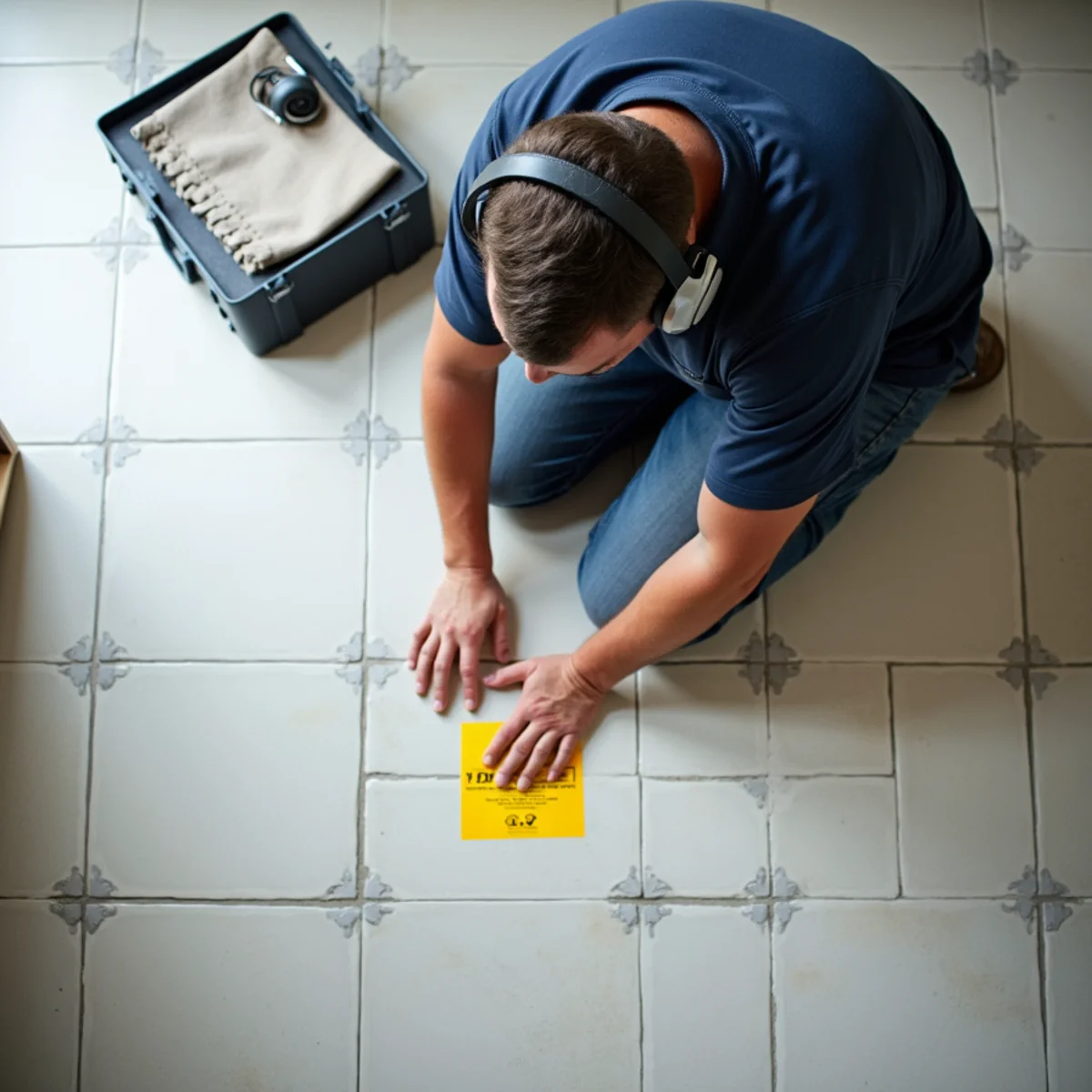
Location marked on your floor, findings and photographs written up for your plumber and your insurer, plus how far water has already traveled.
How We Find Leaks Without Opening Walls
Detection is a process of elimination run with several instruments, because no single tool is right for every leak.
A meter test comes first and is free information: shut every fixture, watch the meter. Movement means active loss somewhere on the system. Pressure isolation then separates hot from cold and the house from the yard line, which narrows the search to a section of the system before we look for a point.
Acoustic listening equipment amplifies the sound a pressurized leak makes escaping a pipe — under a slab this is often the tool that finds the exact spot. Thermal imaging reads temperature differences through finish materials, which is why hot-water slab leaks show up so clearly. Tracer gas is the fallback for leaks that are too small or too quiet to hear, introduced into the isolated line and detected where it surfaces.
Run in that order, most leaks are located to within a few inches without opening anything.
Whittier's Two Dominant Leak Patterns
This service area produces a lot of two specific failures, and both are age-related rather than accidental.
Pinhole leaks in copper. Homes repiped or built in the copper era develop pitting corrosion from the inside out. Los Angeles County's water is hard, and the combination of mineral content, water chemistry and decades of service produces the classic pinhole — a tiny hole in an otherwise healthy-looking pipe. The first one is a repair. The third one in two years is a repipe conversation, because pinholes rarely happen alone.
Galvanized steel failure. Earlier builds across Michigan Park, Orange Drive and older pockets of West Whittier still have original galvanized supply. Galvanized corrodes and scales internally, restricting flow, then fails at threaded joints where the wall is thinnest. Gradually falling pressure across the whole house is the tell.
Under a slab, either failure produces the same symptom set — warm floor, high bill, sound of water — and the same urgency, because the water is going somewhere and that somewhere is the soil under your foundation.
What Happens After We Find It
We locate and document; the repair itself is licensed plumbing work, and we coordinate it rather than pretending otherwise.
For most slab leaks there are three repair paths: spot repair through the slab at the located point, rerouting the affected line overhead or through walls to bypass the slab entirely, or a full repipe when the pipe material has reached end of life across the house. Each has a different cost and a different disruption profile, and the right answer depends on the pipe material, the number of previous failures, and how long you plan to own the home.
What we do handle directly is everything the water did on its way out: drying the slab and the affected assemblies, removing what cannot be dried, and restoring the flooring and finishes that had to be opened — see slab leak water damage restoration.
Why us for this job
Why Precision Is the Whole Value Here
Every inch of vagueness in a leak location becomes a foot of opened floor. That is the entire economics of this service.
We isolate before we listen
Skipping straight to acoustic work means sweeping a whole floor plan for a sound that could be anywhere. Isolation removes most of the system first — and it starts with the free test anyone can run once they know where the main shut-off is.
Multiple instruments, not one gadget
Acoustic, thermal and pressure each fail in different conditions. Running them together is what produces a location measured in inches.
We know the local failure patterns
Galvanized splitting at threaded joints in the pre-1960 stock, copper pinholes in the tracts that followed. Knowing which you have shortens the search, and a ten-minute monthly walk-round catches most of it before we are needed.
We map the damage too
Finding the leak is half the job. How far water has already spread under flooring and into wall bases determines what the repair actually costs — which is the case for sensors and automatic shut-off valves on properties that sit empty.
- IICRC-certified technicians
- Licensed & insured
- 60-minute target response across Whittier
- Direct insurance billing
- 7012 Walnut Grove Dr, Whittier, CA 90606
Need leak detection & repair coordination today?
Located to within inches means the floor opens once — call before anyone starts breaking concrete.
Step by step
Our Leak Detection Process
Usually a single visit, one to three hours depending on how cooperative the leak is.
Step 1
History and meter test
What changed, when, and what you have noticed. Then a shut-house meter test to confirm active loss and get a rough sense of volume.
Step 2
Isolate the system
Hot separated from cold, house separated from yard and irrigation, pressure held and observed. This alone eliminates most of the plumbing system from the search.
Step 3
Locate the point
Acoustic listening, thermal imaging and — where needed — tracer gas narrow the leak to a specific location, which we mark on the floor or wall.
Step 4
Assess the damage already done
Moisture mapping around the leak point establishes how far water has traveled through slab, flooring and wall base. This is usually wider than the homeowner expects.
Step 5
Report and coordinate
A written report with location, findings, and photographs — usable for your plumber and your insurer — plus coordination of repair and the drying that follows.
On the job

Honest pricing
What Leak Detection Costs Depend On
Detection is priced as a diagnostic visit rather than by the repair it leads to.
- Type of leak
- A visible supply line under a sink is minutes. A slab leak under tile in a hard-surfaced house takes a full workup.
- Access and floor covering
- Acoustic work is harder over thick carpet, and thermal imaging reads differently through tile, vinyl plank and hardwood.
- System complexity
- Multi-zone irrigation, added bathrooms, and pool equipment all extend isolation testing.
- Equipment required
- Most leaks are found acoustically and thermally; tracer gas adds cost when it is the only option left.
- Documentation needed
- A basic verbal location costs less than the photographed written report an insurer or a real estate transaction will want.
Detection cost is almost always trivial next to the repair it prevents. The expensive version of this problem is the one found by a buckled floor rather than by a meter test.
Related services, service areas and guides
Related services
- Slab Leak Water Damage RestorationThe most common serious water loss in Whittier — located precisely, dried through the slab, and restored properly.
- Water Damage RestorationExtraction, structural drying, mold prevention and repairs — one crew from the first hour to the final coat of paint.
- Mold RemediationContainment, HEPA filtration and controlled removal — plus fixing the moisture source so it does not come back.
Related reading
- Hidden Leak Symptoms: Warm Floor Spots, High Water Bills, and the Sound of Running WaterA leak you cannot see is still working to a schedule. Eight signals, and a two-minute test that settles it.
- How Pros Find Slab Leaks Without Tearing Up Your Whole FloorFour instruments, run in sequence. Done properly, the repair opens a few inches of concrete instead of a room.
Leak Detection & Repair Coordination across our service area
We provide leak detection & repair coordination across Whittier and the surrounding Los Angeles County communities. Each area page covers the local housing and drainage risks that actually drive water damage there.
- East WhittierUnder 10 minutes from our Walnut Grove Dr base. This is our home zone.
- Uptown WhittierAbout 8 to 12 minutes from our Walnut Grove Dr base, west along Whittier Boulevard or Philadelphia Street.
- Whittwood, WhittierUnder 10 minutes from our Walnut Grove Dr base — one of our closest zones.
- Friendly Hills, WhittierAround 8 to 12 minutes from our base, up toward the Whittier foothills.
- Pico RiveraTypically 10 to 15 minutes from our Walnut Grove Dr base, straight across on Whittier Boulevard or Washington Boulevard.
- Santa Fe SpringsAround 10 minutes from our base, south on Painter Avenue or straight down the 605.
- South WhittierUsually under 10 minutes from our Walnut Grove Dr base — one of the fastest zones we serve.
- La MiradaRoughly 12 to 18 minutes from our Whittier base via Imperial Highway or Rosecrans Avenue.
- NorwalkAround 12 to 15 minutes from our base, south on Norwalk Boulevard or Pioneer Boulevard.
- Los Angeles CountyWe work the southeast quadrant of the county from our base at 7012 Walnut Grove Dr in Whittier, with a 60-minute target response across the Gateway Cities and the lower San Gabriel Valley.
Request a visit
Free Estimate for Leak Detection & Repair Coordination
We inspect with thermal imaging and moisture meters before quoting — a firm price given over the phone without readings is a guess. If water is spreading right now, call instead; crews are dispatched during the conversation.
+1 (201) 277-9344