Emergency Guides
How to Find and Shut Off Your Home's Main Water Valve (Before You Ever Need To)
The single highest-value ten minutes any homeowner can spend. Find it, turn it, label it — before the night you need it in the dark.
Water spreading right now? Call before you finish reading — crews are dispatched during the conversation, 24/7.
+1 (201) 277-9344The short answer
Check two places: the concrete meter box in the parkway near the sidewalk, and the exterior wall where the supply line enters the house, usually near the front hose bib. Buy a meter key, turn the valve once to prove it still moves, tag it, and make sure everyone in the household knows where it is.
Every emergency call we take begins with the same question: have you shut the water off? A surprising number of answers are some version of "I do not know where it is."
That gap — between the failure starting and the water stopping — is where most of the cost of a water loss is created. Close it today, in about ten minutes.
Where It Is in a Typical Whittier Home
Two locations cover the large majority of houses here.
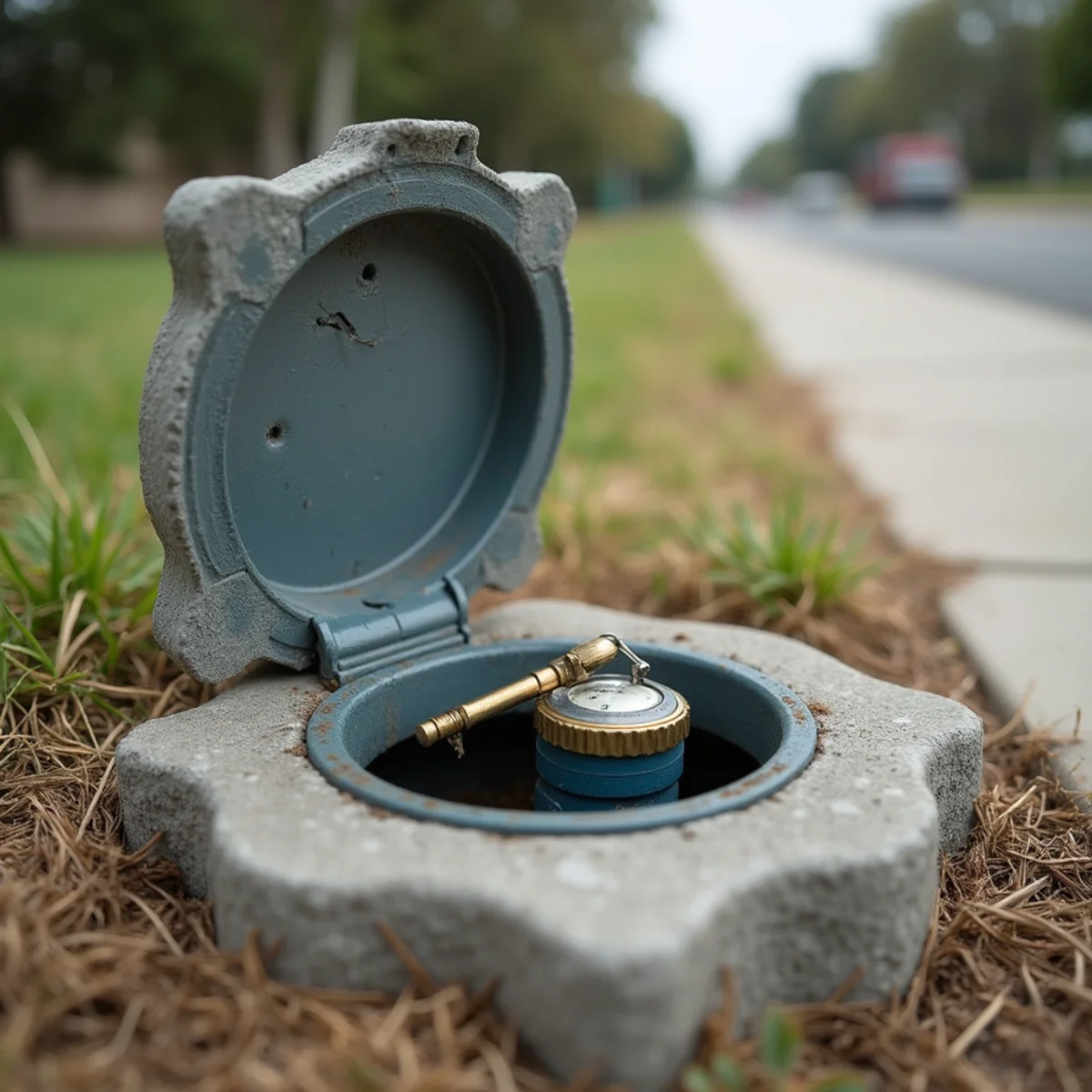
The meter box. A concrete or plastic lid set into the parkway or near the sidewalk, usually marked "water". Lift the lid — a screwdriver in the pry slot works — and inside you will find the meter and, on the house side of it, a valve. This is the shut-off that stops water to the entire property.
The house-side valve. Many homes also have a valve where the supply line enters the structure, typically on an exterior wall near the front, often close to the first hose bib. This is easier to reach and it is the one to use if you have it.
Older homes sometimes have neither in an obvious place, or have a valve that was buried during landscaping. If you cannot find yours after a proper look, that is worth resolving with a plumber before an emergency rather than during one.
Get the Right Tool Now
Meter box valves usually need a water meter key — a long T-shaped tool available at any hardware store for very little money. A large adjustable wrench often works, but in the dark and the rain, the right tool is worth having.
Buy one, and keep it somewhere everyone in the household knows about. Not in the garage under three boxes. Somewhere you could find it at 2 a.m.
Test It — Do Not Assume It Works
This is the part people skip and it is the part that matters.
Valves that have not been operated in twenty years seize. Gate valves in particular corrode into place, and a stem that has not moved since the house was built will sometimes snap rather than turn. Finding that out during an active flood is a bad evening.
So: turn it off, confirm a tap inside runs dry, then turn it back on. Do this once a year. If it will not move, or moves and does not stop the water, get it replaced — a stuck main shut-off is a defect worth fixing before you need it.
When you turn the water back on, open it slowly and then run a tap for a minute to clear air from the lines.
Label It and Tell Everyone
A weatherproof tag on the valve, and a photo of its location saved on the phones of everyone in the household. If you have teenagers, a house-sitter, or an elderly parent living with you, they need to know as much as you do.
While you are at it, locate the individual angle stops too: under every sink, behind every toilet, at the washing machine, and on the cold inlet at the water heater. Being able to isolate one fixture beats shutting off the whole house.
- Main shut-off — meter box or where supply enters the house
- Water heater cold inlet valve, on top of the tank
- Laundry hot and cold valves behind the machine
- Angle stops under every sink and behind every toilet
- Irrigation shut-off, usually near the backflow device
The Two-Minute Test That Finds Hidden Leaks
While you are at the meter, learn this one. Shut off every water-using fixture and appliance in the house — taps, ice maker, irrigation, everything — then watch the meter dial or the small leak-indicator triangle.
If it is still moving, water is leaving your system somewhere.
In the slab-on-grade tracts across East Whittier and Sorensen Park, this test routinely catches an under-slab leak weeks before the flooring gives it away — and weeks is exactly the difference between a located spot repair and a room rebuild. Run it seasonally.
The Difference Ten Minutes Makes, Measured in Rooms
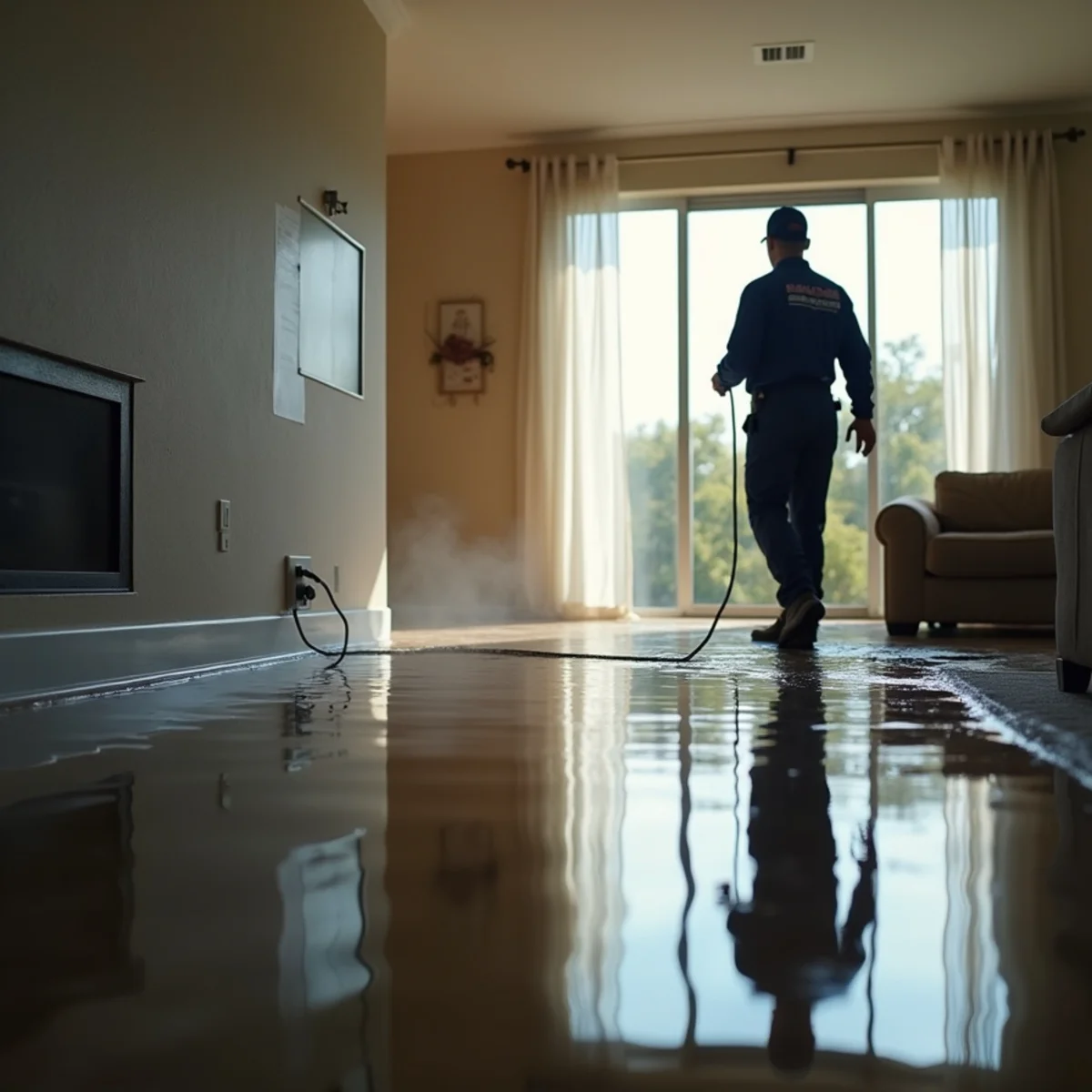
We can usually tell how long a supply-line failure ran before anyone found the valve, without being told. The pattern is written into the building. A short run leaves a wet footprint that stops within a room or two and a waterline low on the baseboard. A long run pushes water under the wall plates into adjacent rooms, several inches up the drywall, into the cabinet toe kicks, and — on a slab — sideways under flooring across much of the ground floor.
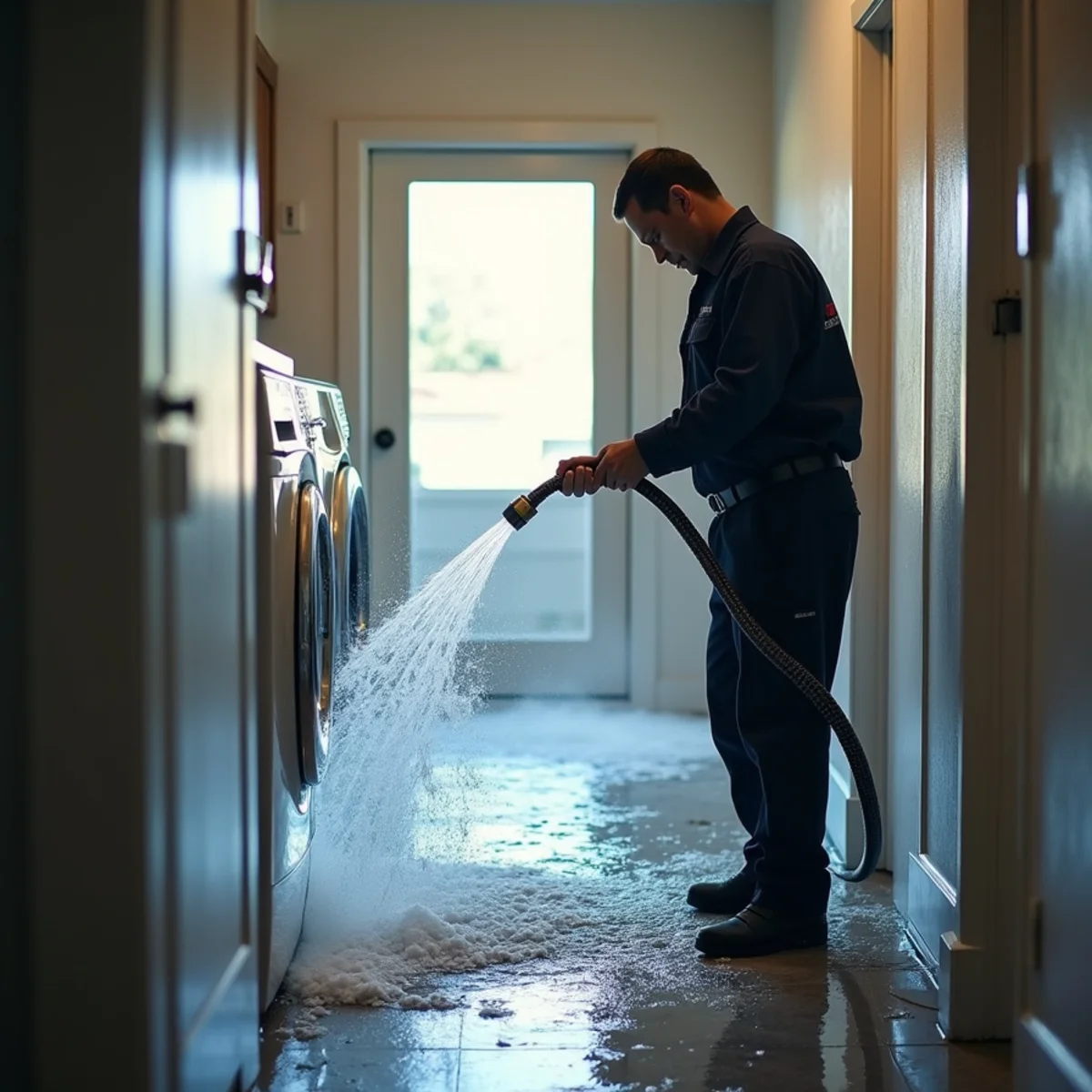
Those two jobs are not the same category of work. One is extraction, a few air movers and a dehumidifier for three or four days. The other is flooring out, a flood cut along multiple walls, cabinet bases removed, and a rebuild afterwards. The difference between them is very often nothing more than whether someone knew where the valve was and whether it turned when they got there.
Which is the argument for testing it rather than merely locating it. Gate valves that have not been operated in twenty years seize or, worse, turn freely without sealing because the stem has separated from the gate inside. Both failures present identically on a calm afternoon and catastrophically at 2am. Turning it off once a year, confirming a tap runs dry, and turning it back on takes under two minutes and is the cheapest insurance in the house.
The bottom line
Find it, buy the key, turn it to prove it works, label it, tell everyone, and run the meter test twice a year.
Ten minutes, once. It is the best-value maintenance in the entire house.