
Water Damage Restoration · Whittier, CA
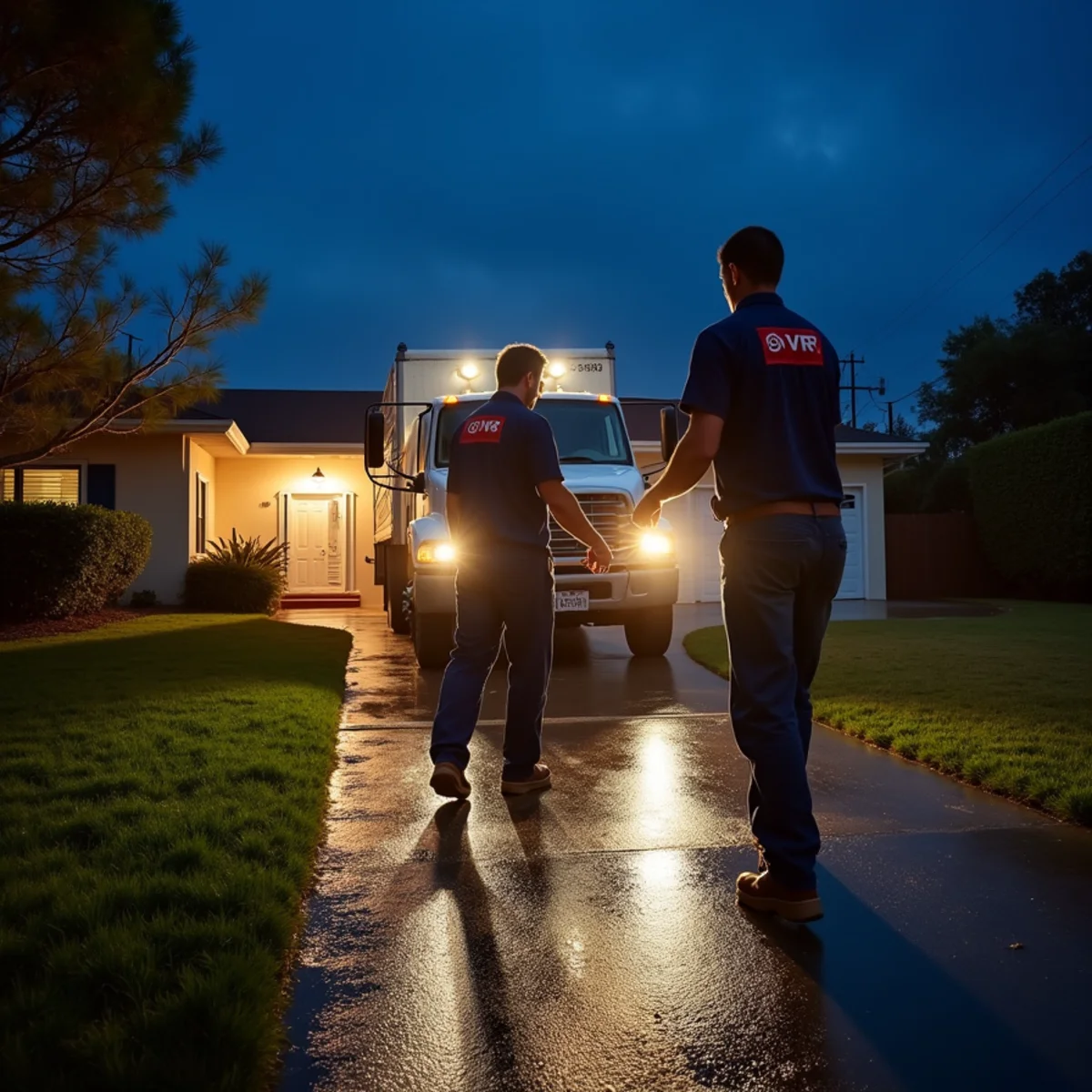
24/7 Emergency Water Removal in Whittier, CA
A real person answers, a crew is dispatched immediately, and you get an honest arrival window before you hang up.
- 24/7 emergency dispatch
- 60-minute target response
- IICRC-certified technicians
- Direct insurance billing
Water damage does not schedule itself for Tuesday at 10 a.m. Supply lines fail at night, water heaters go on holiday weekends, and roofs give up at the worst hour of the worst storm.
What separates an emergency service that works from one that does not is what happens in the first ten minutes of your call. Not whether someone picks up — whether the person who picks up can actually dispatch a truck.
Call us and a person answers. They take your address, ask what failed and how far the water has spread, check whether power is still on in the affected rooms, and put a crew on the road. You get an arrival window before the call ends.
What you actually get
What an Emergency Call-Out Includes
Emergency response is not a diagnostic visit with equipment to follow. The truck arrives loaded and the work starts on the first visit.
Live dispatch, not a message service
A person takes your address, the source, how far it has spread and whether power is on — then puts a crew on the road during the call.
Hazard isolation on arrival
Electrical risk assessed and circuits killed before anyone works in standing water, and traffic paths protected so contamination is not tracked through the house.
Same-visit moisture mapping
Thermal imaging and meters establish the real wet footprint before extraction begins, so nobody stops at the edge of the visible water.
Volume extraction that night
Standing water, then carpet and pad, then cavities and low spots — the highest-value hours of the entire job, done while they still count.
Drying equipment left running
Air movers and dehumidifiers placed and powered before the crew leaves, so the structure starts drying overnight rather than tomorrow.
Board-up and tarping where needed
If the building envelope is open, it gets closed the same visit — leaving an opening through the rest of a storm undoes everything else.
What to Do Before We Arrive
The first hour is yours, and what you do in it matters. Five things, in this order.
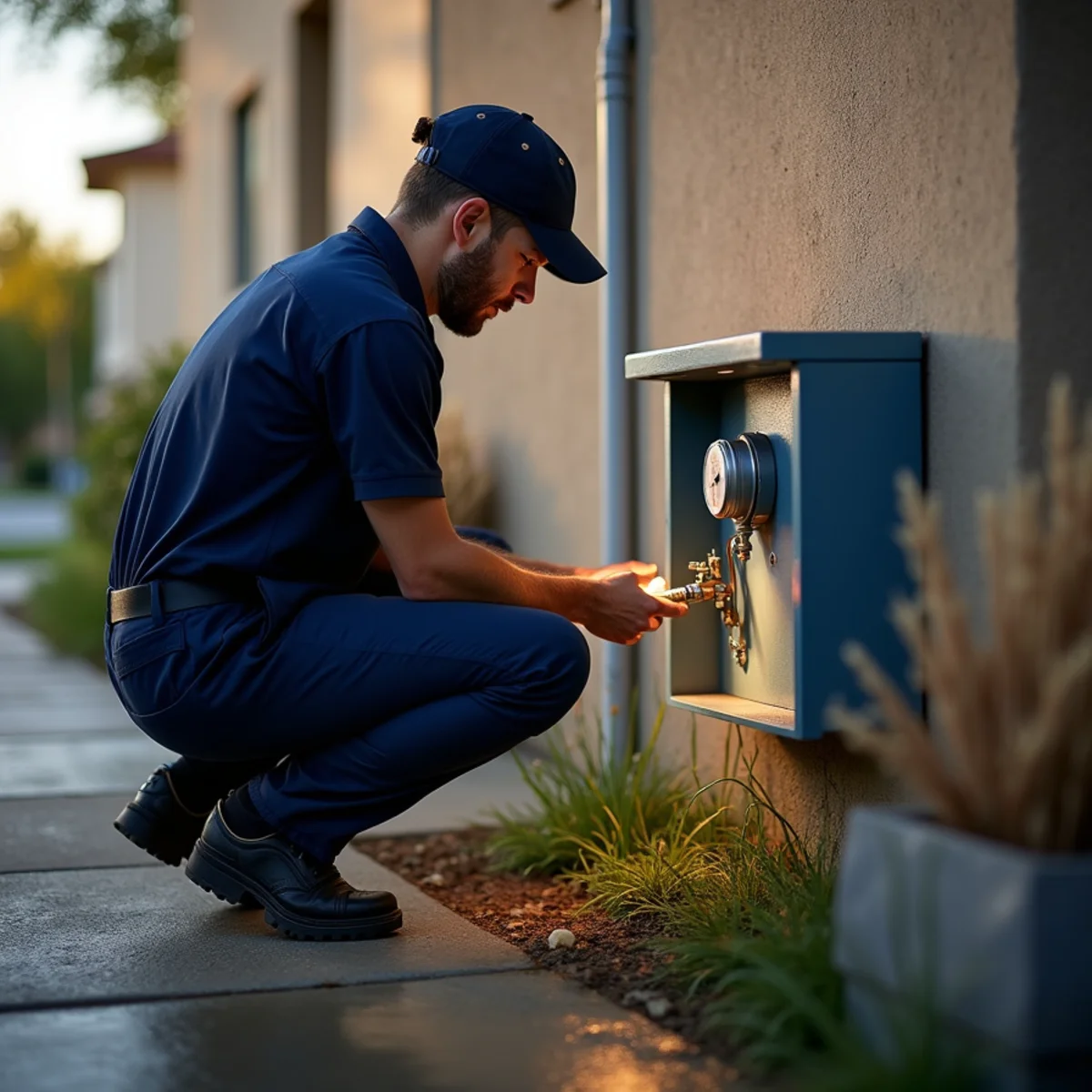
Shut off the water. At the fixture if you can reach the angle stop; at the main if you cannot. In most Whittier homes the main shut-off is at the street-side meter box or on the exterior wall where the supply enters — find yours now if you do not know, before you ever need it.
Kill power to the affected area at the breaker, but only if you can reach the panel without standing in water. If the panel is in the wet zone, leave it and tell the dispatcher.
Document before you touch anything. Wide shots of every affected room, close-ups of the damage, and a walking video where you say out loud what happened and when you found it. This takes four minutes and it is the single best thing you can do for your claim.
Move what you can. Electronics, documents, rugs, and anything with sentimental value go somewhere dry. Put foil or wood blocks under furniture legs standing on wet carpet so the finish does not bleed. Leave heavily soaked furniture where it is.
Do not use a household vacuum on standing water, do not walk through the wet area more than necessary, and do not start pulling up flooring before it has been photographed.
Why the First Hour Costs More Than Any Other
Water damage is not linear. It compounds, because each stage opens the next.
In the first hour, water is mostly still on surfaces and in the top of the padding, and almost all of it is mechanically removable. By hour six, it has wicked up the drywall, moved along the bottom plate of the framing, and traveled under cabinet toe kicks into rooms that look untouched. By hour 24 to 48, wet organic material is a viable substrate for mold, and the scope of work changes categories entirely.
That is why our dispatch model puts equipment on the road immediately rather than scheduling an estimate visit first. The assessment happens with the extraction truck already in the driveway.
What "60-Minute Response" Honestly Means
Our target is arrival within 60 minutes for Whittier addresses. Here is the truthful version of that promise.
For the neighborhoods nearest our Walnut Grove Dr base — East Whittier, Whittwood, Scott Avenue, Friendly Hills — arrival is routinely well inside the hour. Across the rest of Whittier and the adjacent cities it is usually close to it. During a major storm event, when every restoration company in Los Angeles County is running at capacity, honest arrival windows stretch — and we will tell you the real number when you call rather than promising an hour and showing up at three.
If we cannot get to you quickly, we will say so and tell you what to do in the meantime. That is more useful than a booking we cannot keep.
Why us for this job
Why Our 24/7 Line Is Different From the Others
Every restoration company in the county advertises 24/7. Very few of them mean the same thing by it.
A person who can dispatch
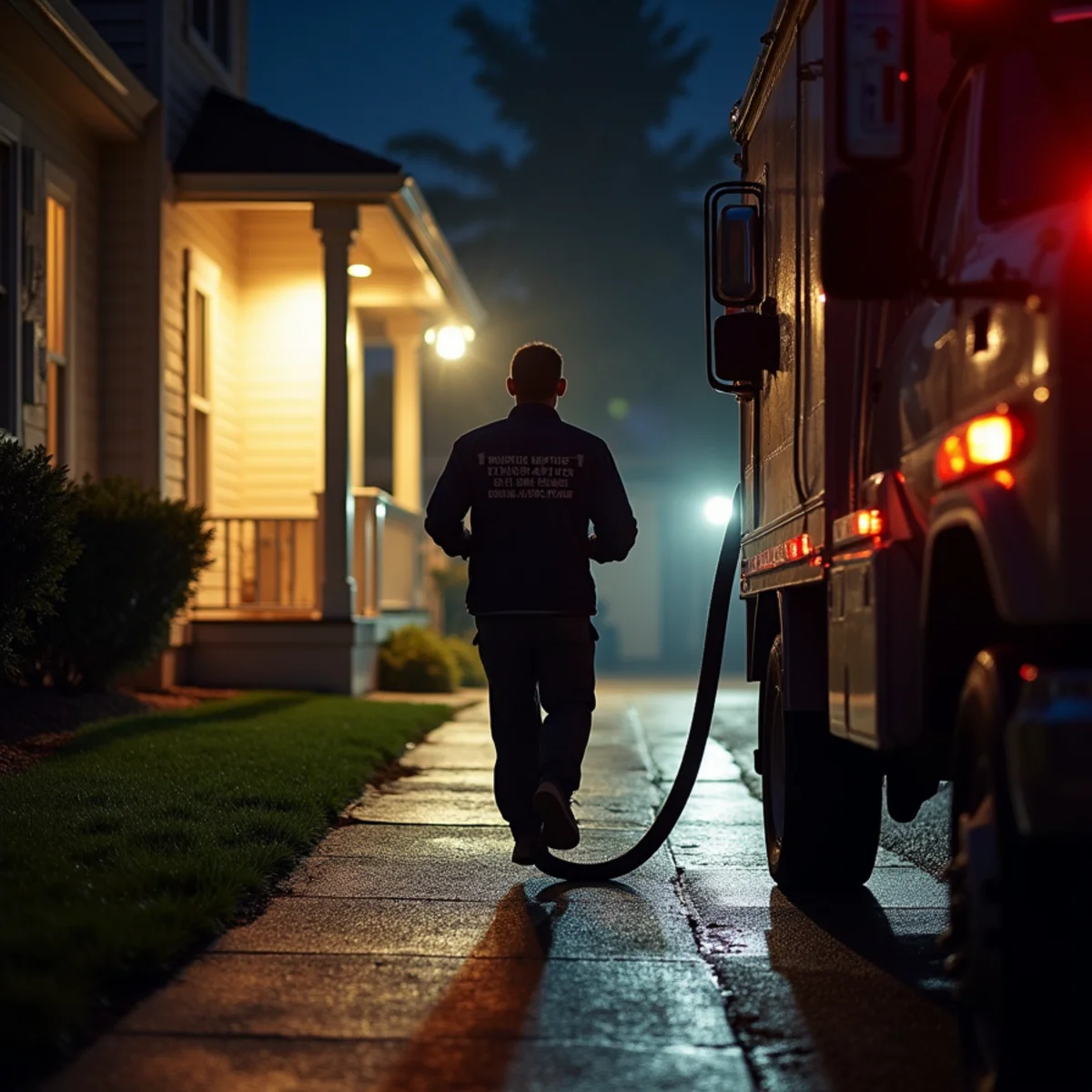
Not an answering service taking a message for the morning. The point of an emergency line is a truck moving, and a message-taker cannot move one.
Honest arrival windows
Including the ones you do not want to hear. During a major storm every crew in the county is deployed, and we will tell you the real number.
We are actually local
Trucks leave from east-central Whittier. For East Whittier, Whittwood and the Scott Avenue pocket that is single-digit minutes, not a marketing claim.
No after-hours surprise on the invoice
Ask any company you call whether nights and weekends carry a premium, and get the answer in writing before work starts. We will give you ours up front.
- IICRC-certified technicians
- Licensed & insured
- 60-minute target response across Whittier
- Direct insurance billing
- 7012 Walnut Grove Dr, Whittier, CA 90606
Need 24/7 emergency water removal today?
A person answers, not a message service — call and a truck is moving before you hang up.
Step by step
What Happens When You Call
No hold music, no callback queue, no sales pitch.
Minute 1
A person answers
Address, source of water, how far it has spread, whether power is still on in the affected rooms. Four questions, then dispatch.
Minute 2
Crew dispatched
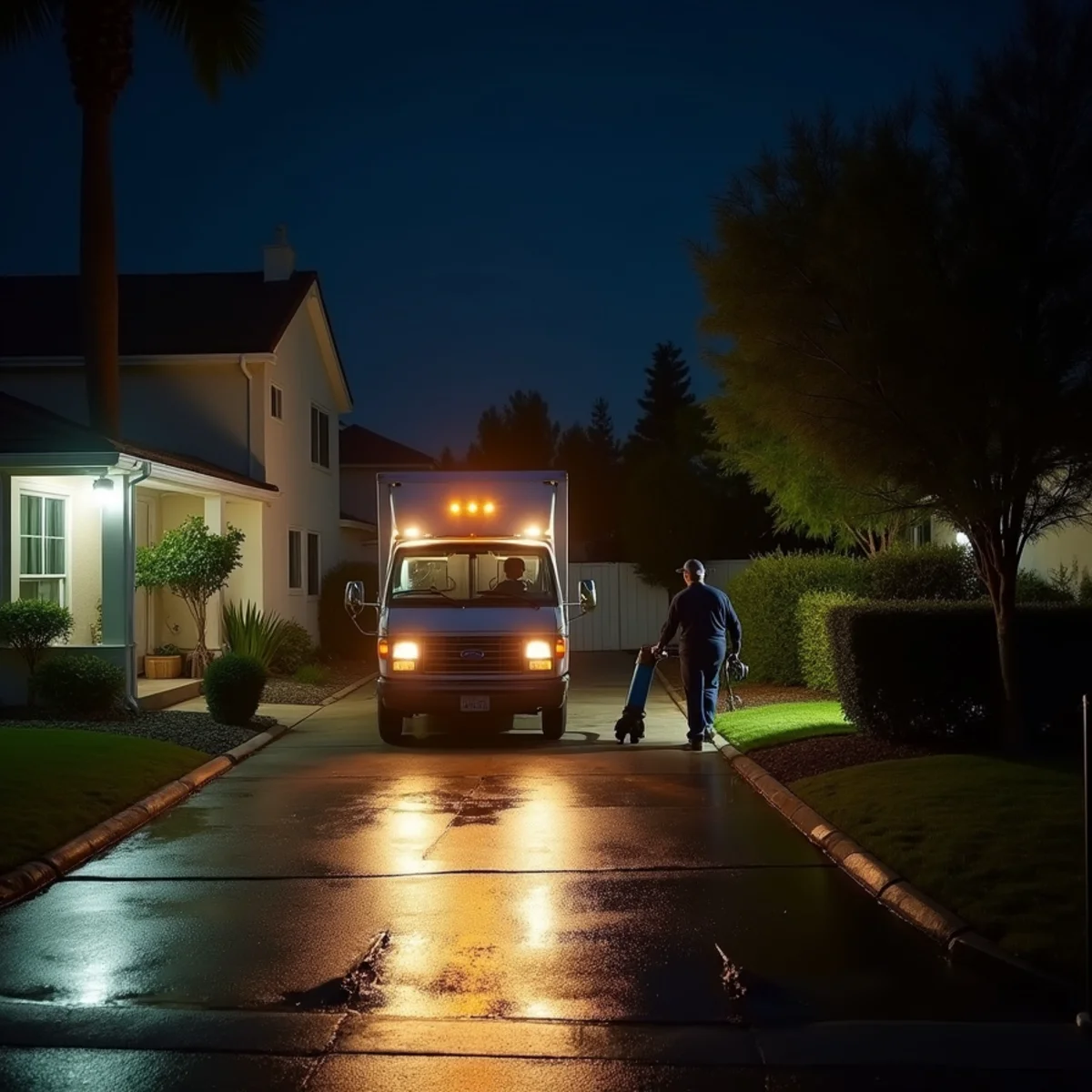
A truck with extraction equipment leaves. You get an arrival window before the call ends, and a call back if traffic changes it.
On arrival
Make safe, then map
Electrical hazards addressed first, then thermal imaging and moisture meters establish the true wet footprint before extraction begins.
Hour 1–3
Extraction
Standing water, then carpet and pad, then low spots and cavities. The most valuable hours of the entire job.
Same visit
Drying equipment set
Air movers and dehumidifiers are placed and running before the crew leaves, so drying starts tonight rather than tomorrow.
On the job
Honest pricing
How Emergency Work Is Priced
Emergency response is normal restoration work performed on an emergency timeline.
- Extent of the loss
- Affected square footage as mapped with meters, not as visible on the surface.
- Water category
- Clean, gray or contaminated — this drives protocol, protective equipment and disposal.
- Equipment deployed
- Number of air movers and dehumidifiers on site, and for how many days.
- Time of arrival
- Some companies add an after-hours premium. Ask any company you call whether they do, and get it in writing.
- Emergency services scope
- Board-up, tarping and content manipulation when the situation calls for them.
Emergency mitigation is the part of a water loss that homeowners insurance is most likely to treat as an urgent covered expense, because policies generally require you to take reasonable steps to prevent further damage. Delaying to shop around can itself become a coverage argument.
Related services, service areas and guides
Related services
- Water Extraction & RemovalTruck-mounted and portable extraction that pulls water out of carpet, pad and subfloor before it reaches the framing.
- Burst Pipe CleanupFrom the shut-off valve to the final coat of paint — extraction, drying and rebuild after a supply line failure.
- Water Damage RestorationExtraction, structural drying, mold prevention and repairs — one crew from the first hour to the final coat of paint.
Related reading
- How to Find and Shut Off Your Home's Main Water Valve (Before You Ever Need To)The single highest-value ten minutes any homeowner can spend. Find it, turn it, label it — before the night you need it in the dark.
- How to Document Water Damage for an Insurance Claim (Photo & Receipt Checklist)Claims are decided on evidence, and the evidence disappears the moment mitigation starts. Twenty minutes of documentation is worth more than any argument later.
24/7 Emergency Water Removal across our service area
We provide 24/7 emergency water removal across Whittier and the surrounding Los Angeles County communities. Each area page covers the local housing and drainage risks that actually drive water damage there.
- East WhittierUnder 10 minutes from our Walnut Grove Dr base. This is our home zone.
- Uptown WhittierAbout 8 to 12 minutes from our Walnut Grove Dr base, west along Whittier Boulevard or Philadelphia Street.
- Whittwood, WhittierUnder 10 minutes from our Walnut Grove Dr base — one of our closest zones.
- Friendly Hills, WhittierAround 8 to 12 minutes from our base, up toward the Whittier foothills.
- Pico RiveraTypically 10 to 15 minutes from our Walnut Grove Dr base, straight across on Whittier Boulevard or Washington Boulevard.
- Santa Fe SpringsAround 10 minutes from our base, south on Painter Avenue or straight down the 605.
- South WhittierUsually under 10 minutes from our Walnut Grove Dr base — one of the fastest zones we serve.
- La MiradaRoughly 12 to 18 minutes from our Whittier base via Imperial Highway or Rosecrans Avenue.
- NorwalkAround 12 to 15 minutes from our base, south on Norwalk Boulevard or Pioneer Boulevard.
- Los Angeles CountyWe work the southeast quadrant of the county from our base at 7012 Walnut Grove Dr in Whittier, with a 60-minute target response across the Gateway Cities and the lower San Gabriel Valley.
Request a visit
Free Estimate for 24/7 Emergency Water Removal
We inspect with thermal imaging and moisture meters before quoting — a firm price given over the phone without readings is a guess. If water is spreading right now, call instead; crews are dispatched during the conversation.
+1 (201) 277-9344