
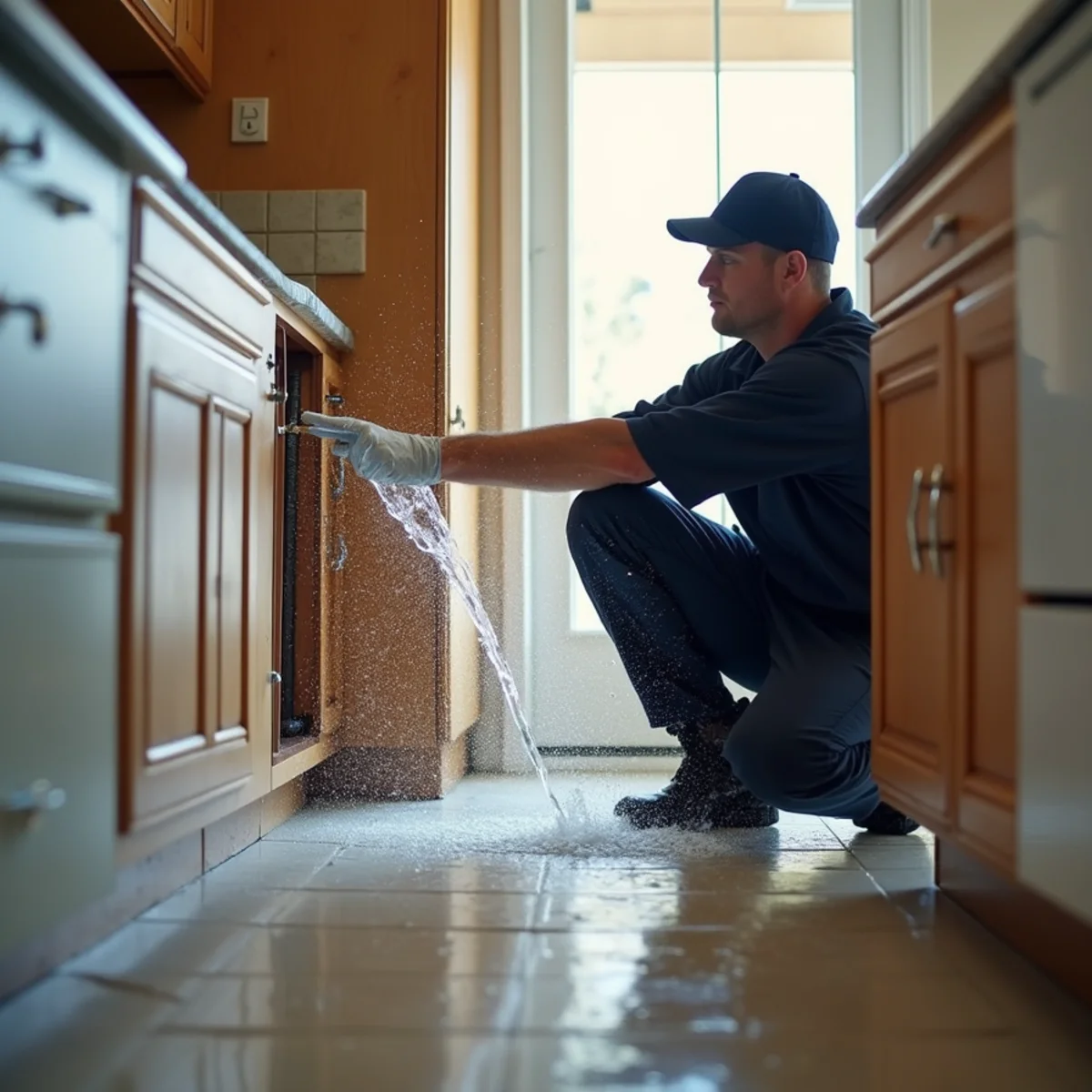
Water Damage Restoration · Whittier, CA
Burst Pipe Cleanup & Water Damage Repair in Whittier, CA
From the shut-off valve to the final coat of paint — extraction, drying and rebuild after a supply line failure.
- 24/7 emergency dispatch
- 60-minute target response
- IICRC-certified technicians
- Direct insurance billing
A half-inch supply line under pressure moves a lot of water. Left running overnight, a single failed connection can put hundreds of gallons through a house.
Shut it off first. If you can reach the angle stop under the fixture, close it. If you cannot, go to the main — meter box at the street or the exterior wall where the supply enters the house. Then call.
Once the water is off, the job is a race between how fast we extract and how far the water has already traveled. Both are measurable, and both are why we dispatch the truck before we quote anything.
What you actually get
What Burst Pipe Cleanup Covers
The pipe repair is usually the smallest line on the invoice. Everything the water did is what we handle — and what this scope covers.
Source shut-off assistance
Talking you through the main on the phone if it is not already closed, then coordinating a licensed plumber for the repair itself.
Full water-path tracing
Thermal imaging and meters follow the water through slab, wall cavities and ceiling assemblies — including into rooms that look completely untouched.
Extraction and selective opening
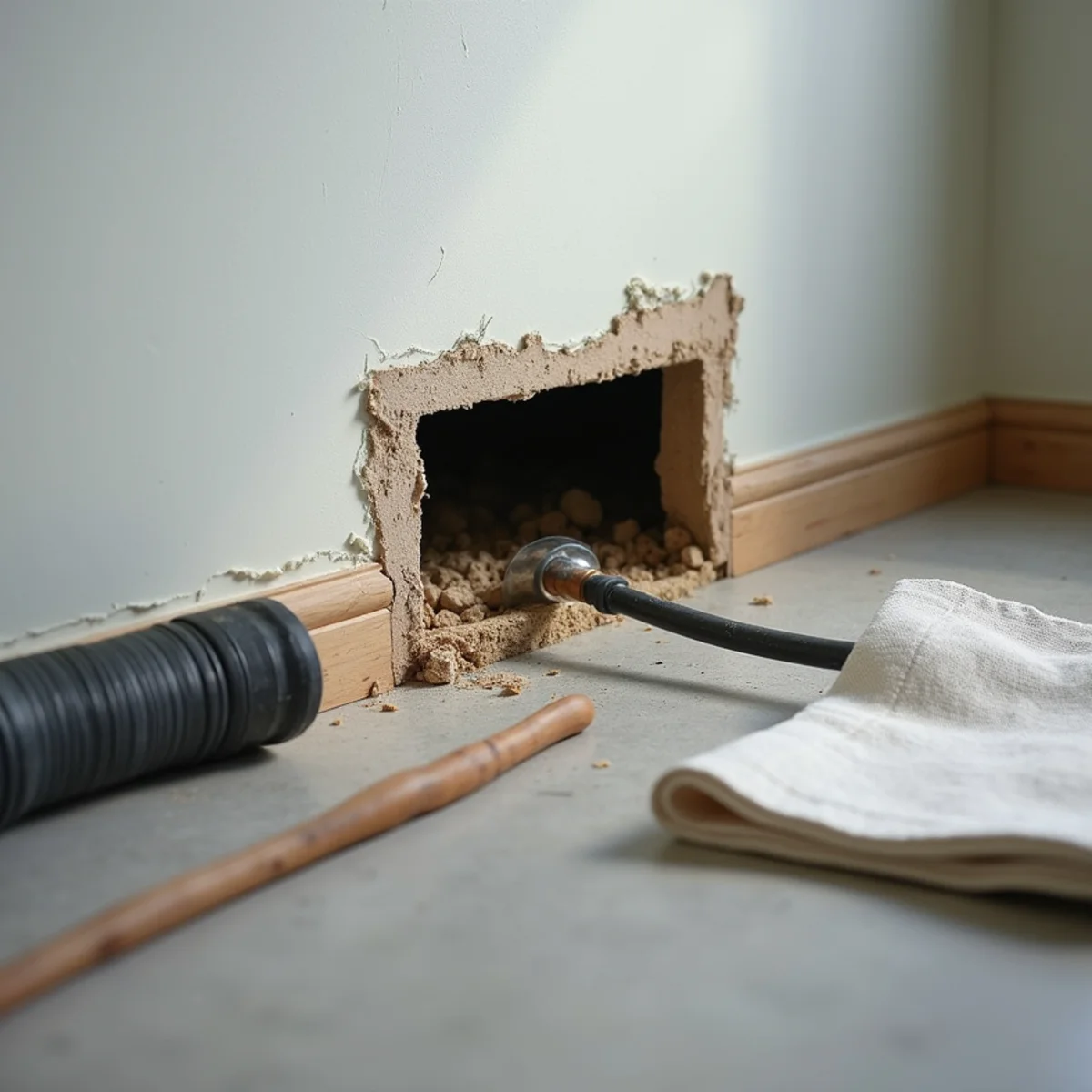
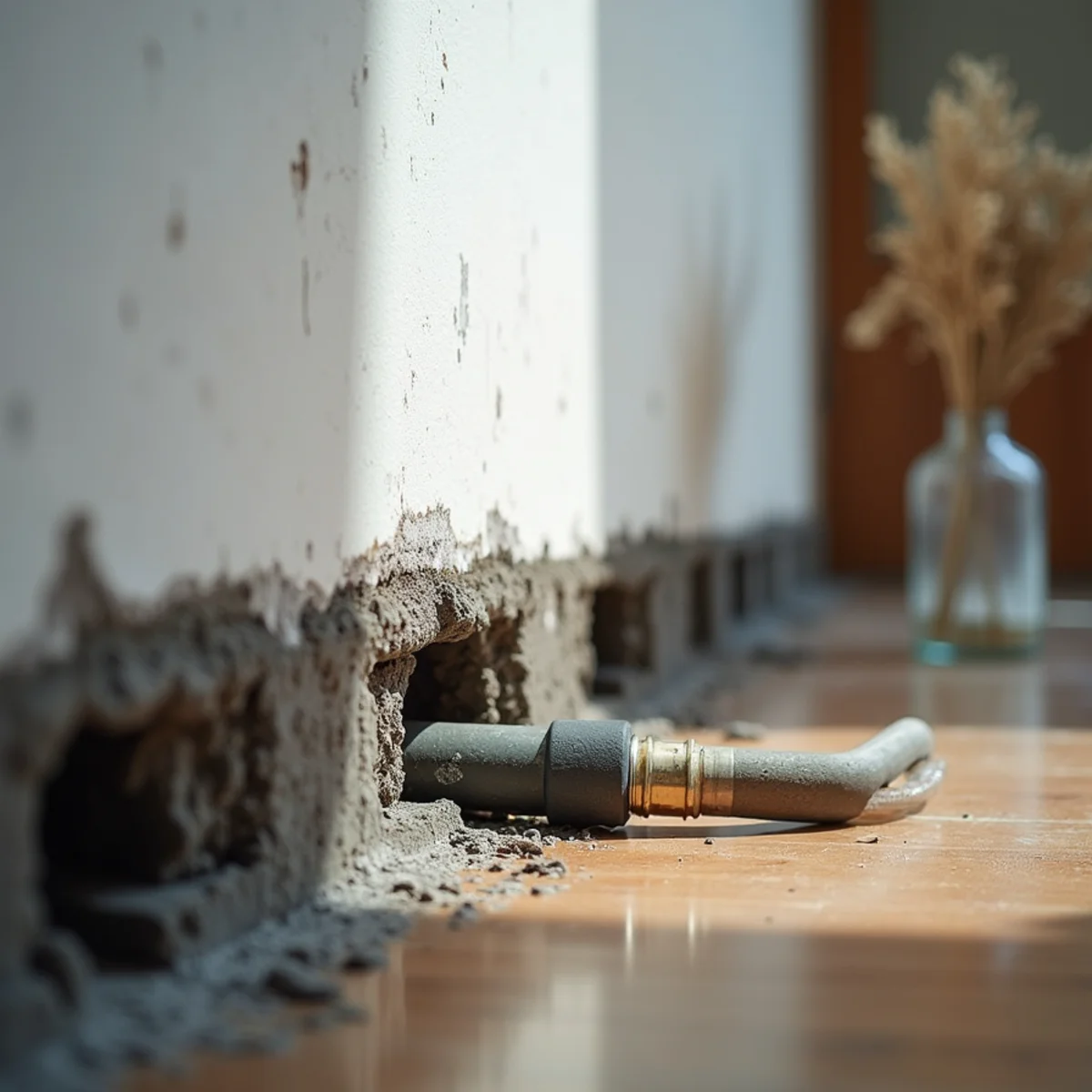
Bulk extraction, then controlled access holes only where cavities read wet. Small openings in inconspicuous places beat removing whole walls.
Cavity drying with readings
Directed airflow into wall cavities through those access points, with moisture read from inside rather than guessed at from the room.
Ceiling assemblies where involved
Upstairs failures saturate insulation and drywall from above. Wet insulation comes out, the cavity is dried, and only then is the ceiling closed.
Rebuild and finish matching
Drywall, texture, paint, flooring, baseboard and cabinetry — matched to the existing finishes, which in a 1960s home takes real care.
Why Whittier Pipes Fail
Pipes rarely burst here for the reason they burst in cold climates. Freezing is a marginal factor in this part of Los Angeles County — real, but limited to unprotected exterior lines and the higher, more exposed pockets around Rose Hills and Hacienda Heights during an unusual cold snap.
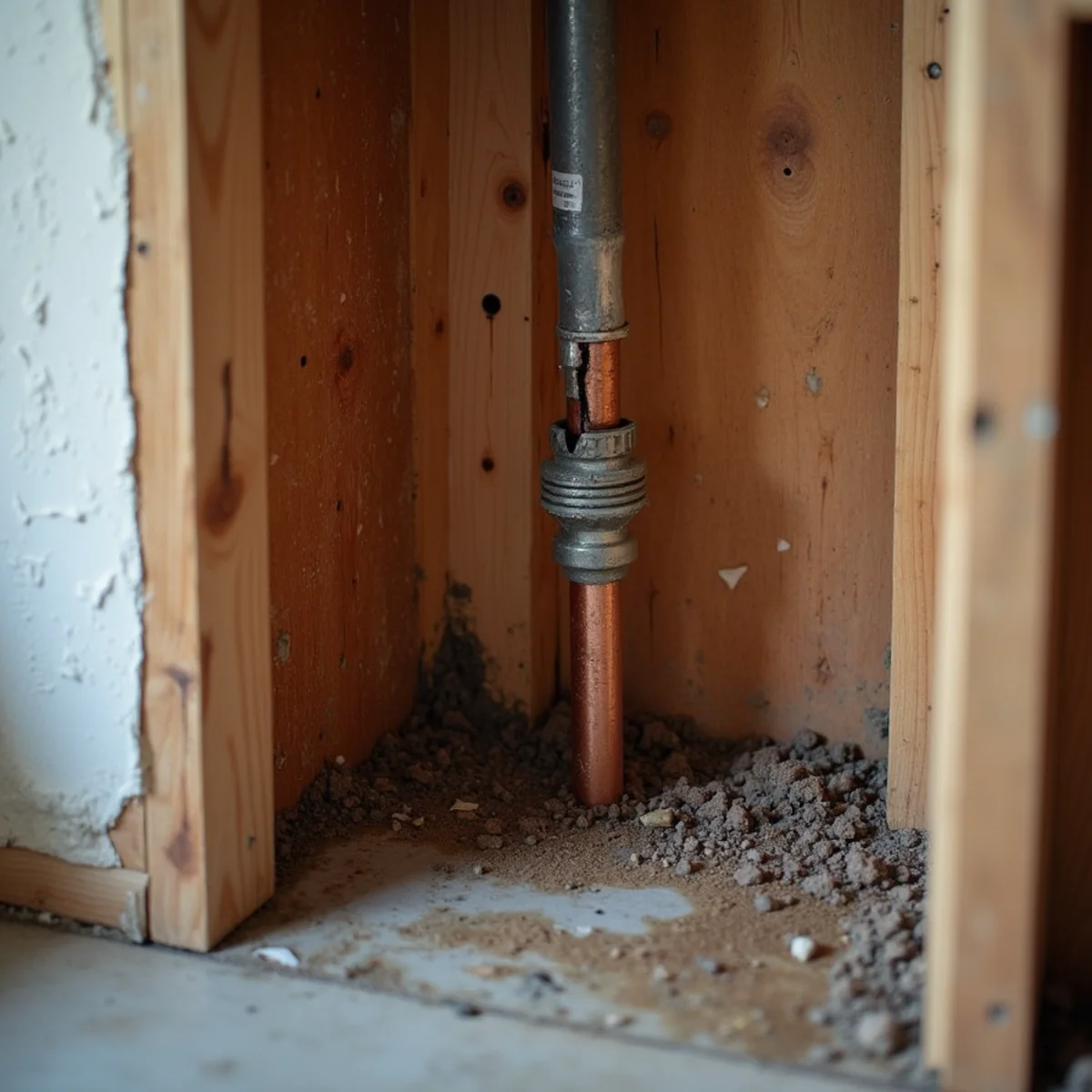
The dominant cause here is age. Galvanized steel supply from the 1940s–60s corrodes internally, scales up, thins at threaded joints and eventually splits. Copper from the later era develops pitting corrosion and pinholes — a small hole that weeps for months before it becomes a break. Poly and CPVC fittings from certain eras have their own known failure profiles.
The other reliable culprits are the flexible connectors nobody thinks about: washing machine hoses, toilet supply lines, refrigerator ice-maker tubing, dishwasher supply. Braided stainless connectors have a service life. Rubber washing machine hoses have a shorter one. Both fail at full line pressure, and both fail when nobody is home — see when to replace washing machine hoses and supply lines.
Where the Water Goes
Understanding the path explains why the repair is bigger than the puddle.
In a single-story slab home — most of East Whittier, Michigan Park, South Whittier — water spreads across the slab under the flooring. Tile and vinyl plank hide it completely. It wicks into the bottom plate of every wall it reaches and up the drywall by capillary action, typically eight to sixteen inches before it stops climbing.
In a two-story home, an upstairs failure is worse. Water finds the floor penetrations — around drain lines, at the stair stringer, along HVAC chases — and drops into the ceiling cavity below, where it saturates insulation and drywall from above. The ceiling stain you see downstairs is usually well inside a much larger wet area.
In an older raised-foundation home in Uptown or Central Whittier, water goes into the crawl space and stays there, soaking subfloor and insulation with no airflow to dry it.
Repair the Pipe, Then Ask the Bigger Question
The immediate repair is a plumber's job and we coordinate it. But if this is not your first failure, the real question is whether you are repairing a pipe or postponing a repipe.
A useful rule: one failure is an event. A second failure in the same material within two years is a pattern, and a third is a system telling you it is finished. Emergency spot repairs plus the restoration that follows each one add up faster than most homeowners expect — and a planned repipe happens on your schedule, dry, with the flooring protected, instead of at 1 a.m. with water coming through a light fixture.
Why us for this job
Why a Burst Pipe Needs More Than a Wet Vac
A supply line under pressure puts water into places that stay wet for weeks. The value is in finding those, not in mopping the room.
We open the smallest hole that works
Cavity drying through hidden access points instead of tearing out sound drywall. Your rebuild stays small and your claim stays cleaner.
We check two rooms out
On a slab, water spreads laterally under the flooring and surfaces well away from the break. The room that looks dry is the one that catches people.
We tell you if it is a repipe conversation
One failure is an event. A third in two years is a system telling you it is finished, and we would rather say that than sell you a fourth restoration.
Documentation for the sudden-vs-gradual test
Coverage turns on whether the discharge was sudden. We date and photograph everything from the first visit, because that is the argument carriers make.
- IICRC-certified technicians
- Licensed & insured
- 60-minute target response across Whittier
- Direct insurance billing
- 7012 Walnut Grove Dr, Whittier, CA 90606
Need burst pipe cleanup today?
Shut the valve, then call — the two together decide how many rooms this becomes.
Step by step
Our Burst Pipe Response
Stop it, extract it, dry it, rebuild it — in that order, with documentation at each step.
Step 1
Stop the source
We help you locate and close the main if it is not already off, and coordinate a plumber for the pipe repair itself.
Step 2
Map before extracting
Thermal imaging and meters trace how far the water has traveled through slab, wall cavities and ceilings — including into rooms that look untouched.
Step 3
Extract and open selectively
Bulk extraction, then controlled openings only where cavities are wet. Small access holes in inconspicuous places beat removing whole walls.
Step 4
Dry with daily readings
Air movers and dehumidifiers sized to the loss, monitored and repositioned daily until readings match the dry standard.
Step 5
Rebuild
Drywall, texture, paint, flooring, baseboard and cabinetry — matched to the existing finishes, which in a 1960s home takes some care.
On the job
Honest pricing
What Burst Pipe Cleanup Costs Depend On
The pipe repair is usually the smallest line on the invoice. The water is the expensive part.
- How long it ran
- A failure caught in minutes versus one that ran overnight are different jobs at completely different scales.
- Where it failed
- An accessible under-sink line is straightforward. In-slab or in-wall failures require access, and in-ceiling failures affect two floors.
- Flooring type
- Tile and sealed concrete tolerate water. Laminate, engineered wood and carpet padding usually do not.
- Cavity involvement
- Drying wall cavities in place through small access points is far cheaper than removing and rebuilding them.
- Rebuild finish level
- Matching existing texture, older cabinetry or discontinued flooring adds cost that a plain drywall patch does not.
Sudden and accidental discharge from a burst pipe is the classic covered water loss under a standard California homeowners policy. Gradual seepage that went unaddressed is the classic denial. Document when you found it and when you called.
Related services, service areas and guides
Related services
- 24/7 Emergency Water RemovalA real person answers, a crew is dispatched immediately, and you get an honest arrival window before you hang up.
- Water Extraction & RemovalTruck-mounted and portable extraction that pulls water out of carpet, pad and subfloor before it reaches the framing.
- Ceiling Water Damage RepairTrace the source, dry the cavity above, then repair and texture-match the ceiling so the patch does not show.
Related reading
- Burst Pipe? Your First-Hour Action Plan to Stop the DamageSix things, in order, in the first sixty minutes. Do them and a burst pipe stays a drying job. Skip them and it becomes a rebuild.
- Washing Machine Supply Line Burst: 5 Steps to Limit the DamageThe most preventable water loss there is. Here is what to do when it happens — and the fifteen-dollar afternoon that stops it happening again.
Burst Pipe Cleanup across our service area
We provide burst pipe cleanup across Whittier and the surrounding Los Angeles County communities. Each area page covers the local housing and drainage risks that actually drive water damage there.
- East WhittierUnder 10 minutes from our Walnut Grove Dr base. This is our home zone.
- Uptown WhittierAbout 8 to 12 minutes from our Walnut Grove Dr base, west along Whittier Boulevard or Philadelphia Street.
- Whittwood, WhittierUnder 10 minutes from our Walnut Grove Dr base — one of our closest zones.
- Friendly Hills, WhittierAround 8 to 12 minutes from our base, up toward the Whittier foothills.
- Pico RiveraTypically 10 to 15 minutes from our Walnut Grove Dr base, straight across on Whittier Boulevard or Washington Boulevard.
- Santa Fe SpringsAround 10 minutes from our base, south on Painter Avenue or straight down the 605.
- South WhittierUsually under 10 minutes from our Walnut Grove Dr base — one of the fastest zones we serve.
- La MiradaRoughly 12 to 18 minutes from our Whittier base via Imperial Highway or Rosecrans Avenue.
- NorwalkAround 12 to 15 minutes from our base, south on Norwalk Boulevard or Pioneer Boulevard.
- Los Angeles CountyWe work the southeast quadrant of the county from our base at 7012 Walnut Grove Dr in Whittier, with a 60-minute target response across the Gateway Cities and the lower San Gabriel Valley.
Request a visit
Free Estimate for Burst Pipe Cleanup
We inspect with thermal imaging and moisture meters before quoting — a firm price given over the phone without readings is a guess. If water is spreading right now, call instead; crews are dispatched during the conversation.
+1 (201) 277-9344