Emergency Guides
Burst Pipe? Your First-Hour Action Plan to Stop the Damage
Six things, in order, in the first sixty minutes. Do them and a burst pipe stays a drying job. Skip them and it becomes a rebuild.
Water spreading right now? Call before you finish reading — crews are dispatched during the conversation, 24/7.
+1 (201) 277-9344The short answer
Shut off the water at the fixture valve or the main, cut power to the affected rooms, photograph everything before you move it, lift what you can to a dry room, then call a restoration crew. Doing all of that inside the first hour is what keeps a burst pipe a drying job rather than a rebuild.
A supply line under household pressure moves a serious volume of water — enough that the difference between finding it at minute five and minute ninety is measured in rooms, not square feet.
So work the list. In order. It takes less time to do than to read about.
Minute 1: Shut Off the Water
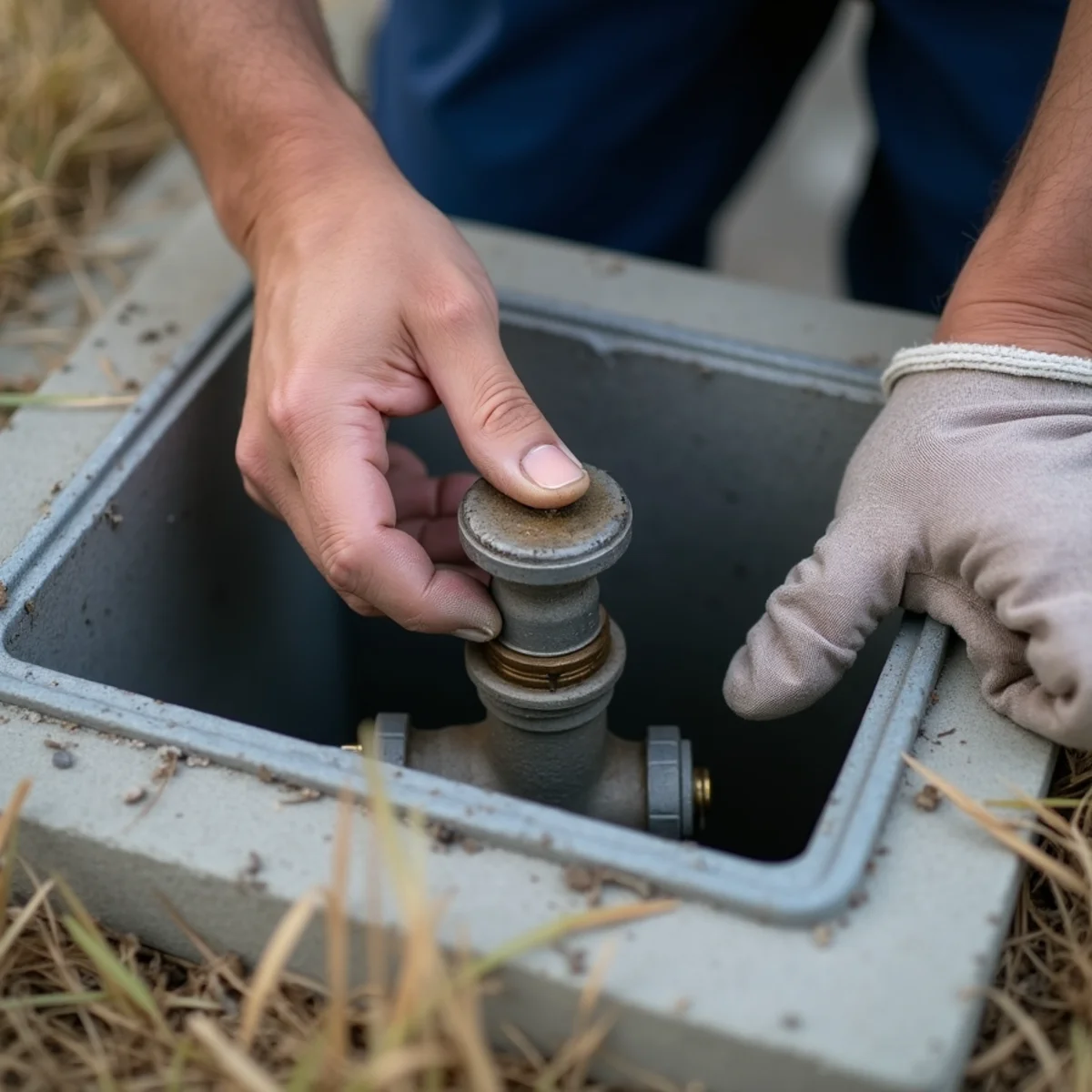
Everything else is secondary. If you can see which fixture is involved, close the angle stop underneath it — the small oval or lever valve on the supply line. If you cannot, go to the main.
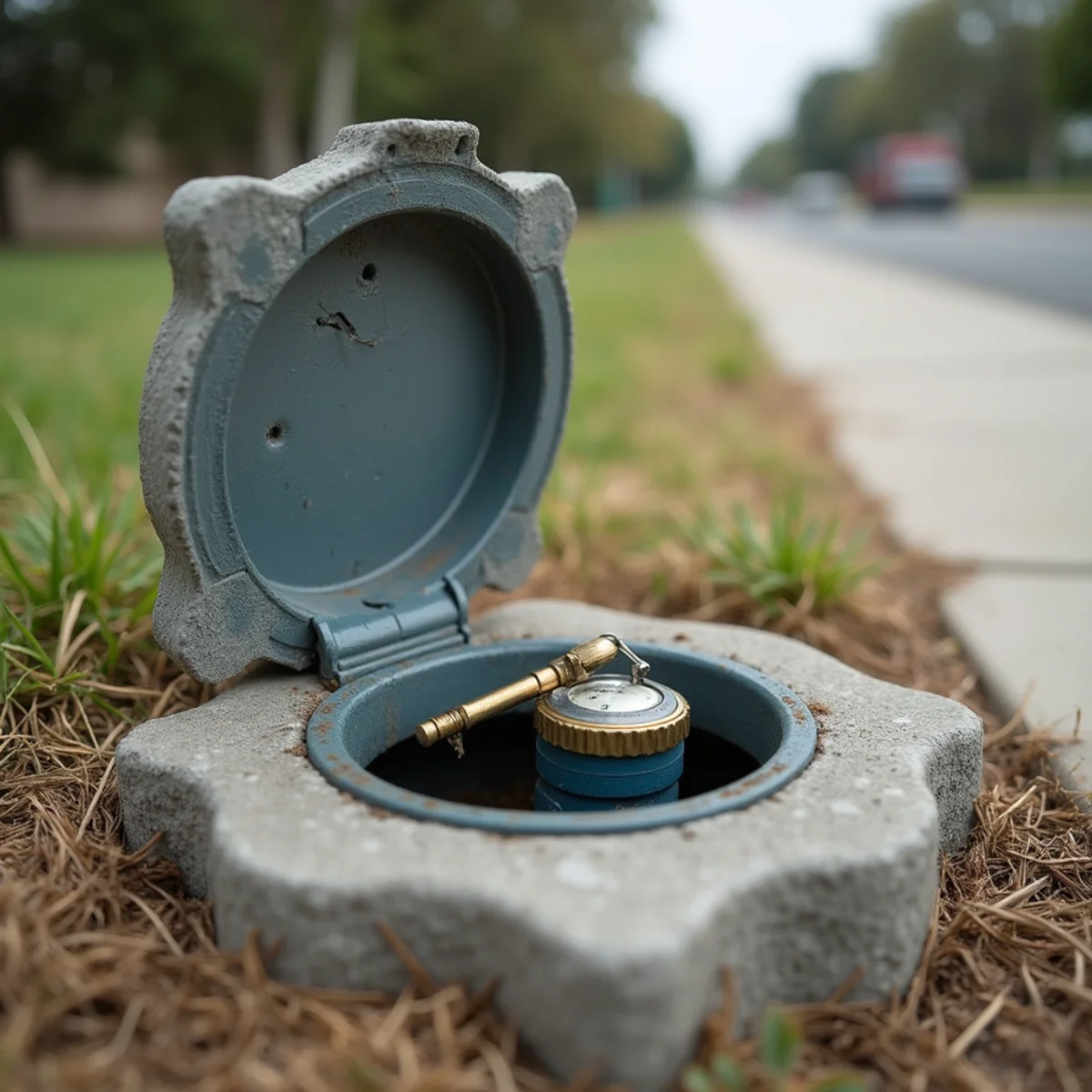
In most Whittier homes the main shut-off is in one of two places: the concrete meter box near the street or sidewalk, or on an exterior wall where the supply enters the house, often close to the front hose bib. Meter box valves usually need a meter key; a large adjustable wrench will often do in an emergency.
If you do not know where yours is, that is the most important thing you will learn this year. Find it, turn it to confirm it actually moves, and show everyone in the household.
Minute 2: Cut Power to the Affected Area
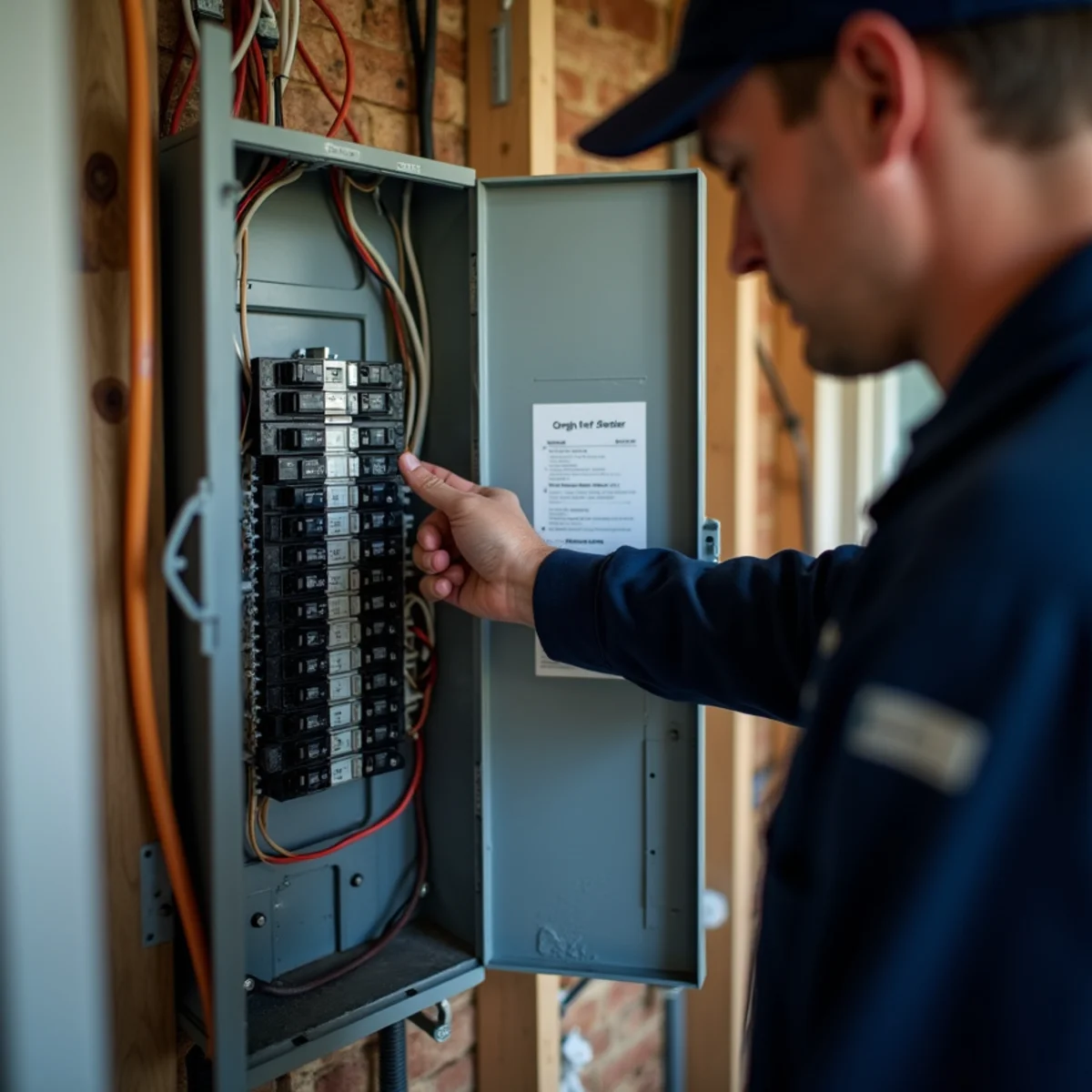
Water and electricity in the same room is the one genuinely dangerous part of this. If you can reach your electrical panel without walking through standing water, switch off the breakers serving the affected rooms.
If the panel itself is in the wet area, leave it alone entirely and tell the dispatcher when you call. That is a job for someone with the right equipment, not for you in wet shoes.
Do not wade into standing water to reach an appliance, an outlet, or anything plugged in.
Minutes 3–7: Photograph Everything Before You Touch It

This is the step people skip, and it is the one that costs them most later.
Take wide shots of every affected room from the doorway, then close-ups of the damage: the waterline on the wall, the soaked carpet, the failed pipe or fitting if you can see it, and any damaged belongings. Then walk the house on video and narrate — say what happened, when you found it, and what you have already done.
Your insurer decides the claim on evidence. Once mitigation starts, wet materials come out and the original condition is gone. Four minutes of photography now is what stands between "documented loss" and "your word for it".
Minutes 8–20: Protect What You Can Move
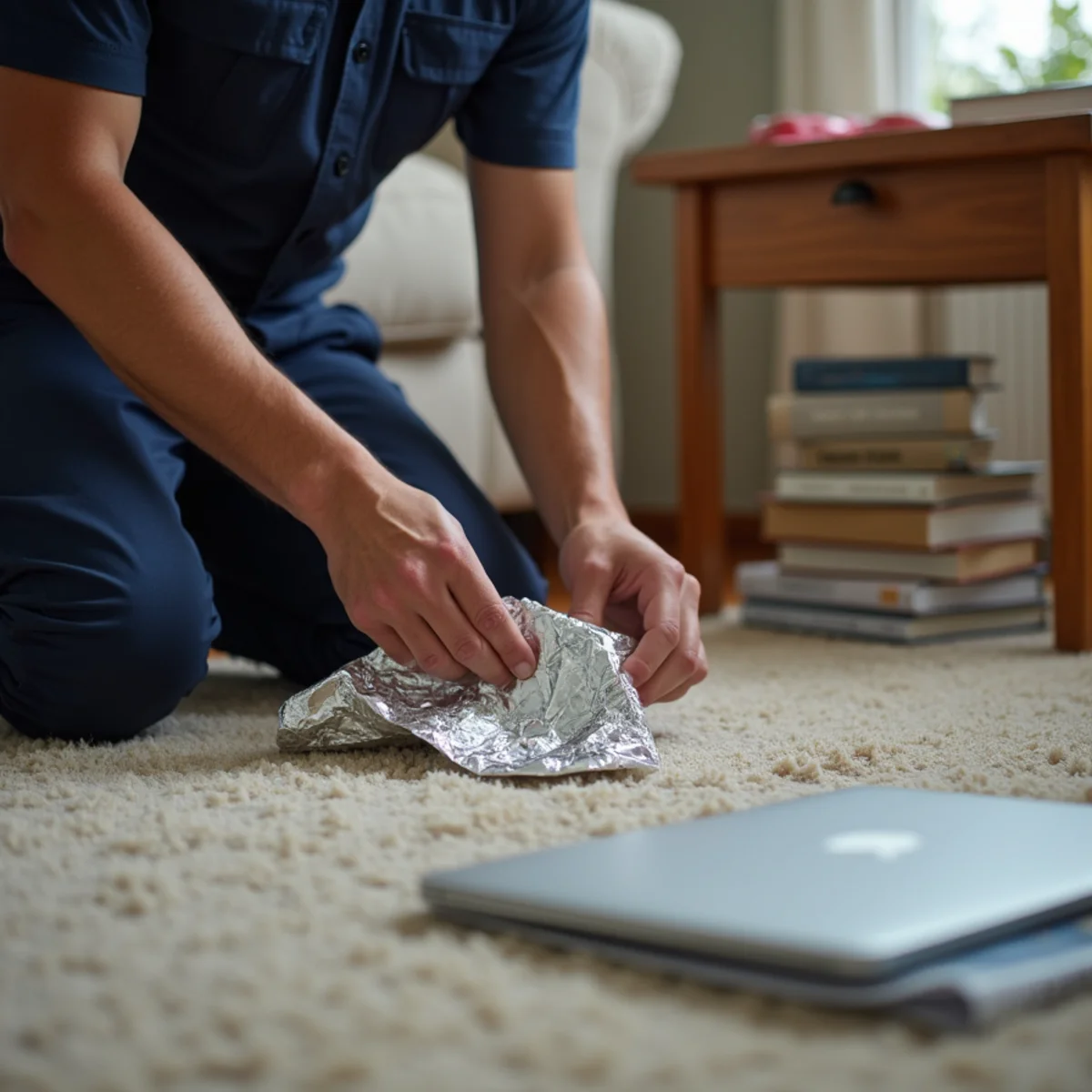
Electronics, documents, artwork, rugs and anything with sentimental value go somewhere dry — a garage, a spare room, upstairs.
For furniture standing on wet carpet that you cannot move, put aluminum foil or small wood blocks under the legs. Furniture finish bleeds into wet carpet and stains it permanently, and it is a trivial thing to prevent.
Leave heavily saturated furniture and mattresses where they are. Moving them redistributes water and, if the water is contaminated, spreads it into clean areas.
- Move electronics, paper and textiles to a dry room
- Block up furniture legs on wet carpet with foil or wood
- Leave soaked upholstery and mattresses in place for assessment
- Open interior doors so air can move between rooms
- Do not run the HVAC system — it distributes moisture and contamination
Minute 21: Call a Restoration Crew — Not in the Morning
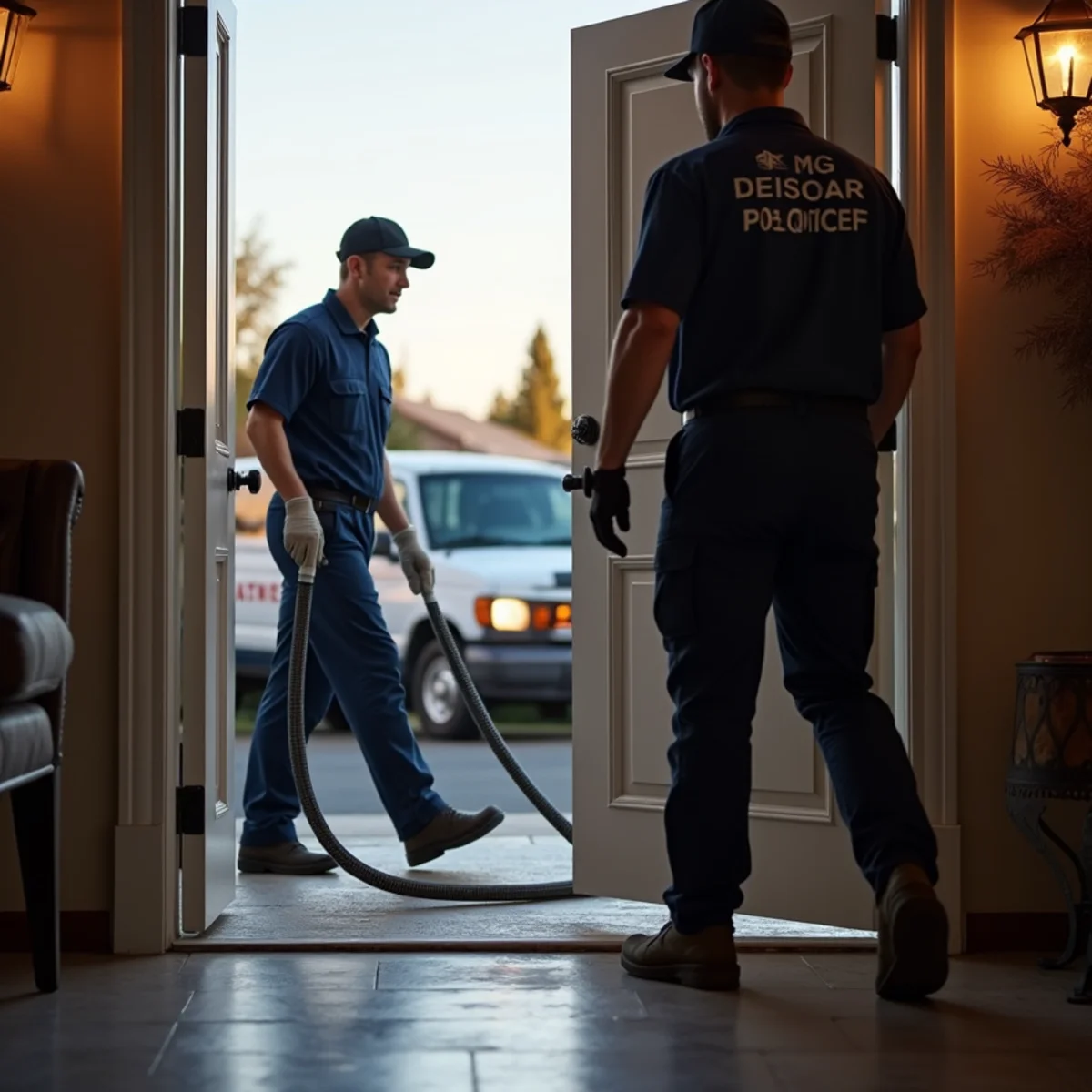
Mold can begin to colonize wet organic material within 24 to 48 hours. Water also keeps migrating for as long as it is in the building, moving into wall bases, under cabinets and along framing into rooms that currently look fine.
A crew that arrives inside the hour extracts water that is still mechanically removable. A crew that arrives tomorrow is drying materials that have already absorbed it — slower, more expensive, and with more removal.
If you are in Whittier or an adjacent city, 24/7 emergency water removal is a phone call away and crews are dispatched during the call, not scheduled afterward.
What Not to Do
A short list, all of which we see regularly.
- Do not use a household vacuum on standing water. It is not rated for liquid and creates a real electrical hazard.
- Do not assume a wet carpet that feels dry on top has dried. The padding beneath holds several gallons per square yard.
- Do not open windows during winter storms. Storm-day air is humid and slows drying rather than helping it.
- Do not start pulling up flooring before it has been photographed.
- Do not wait for your insurer to approve mitigation. Most policies require you to take reasonable steps to prevent further damage — acting promptly supports your claim.
Why Whittier Pipes Burst
Not from freezing, mostly. Freeze is a marginal factor here, limited to unprotected exterior lines and the higher hillside pockets during an unusual cold snap.
The real cause is age. Galvanized steel from the 1940s–60s corrodes internally and splits at threaded joints. Copper from the later era develops pinhole pitting. The tracts across East Whittier and the surrounding neighborhoods are squarely in that window, which is why we attend so many of these.
If this is your second failure in a couple of years, the conversation to have is not about this pipe — it is about whether the system has reached end of life.
What a Crew Actually Does in the First Ten Minutes on Site
The first thing a technician does on a burst-pipe call is not extraction. It is mapping. A moisture meter and a thermal camera get run along the base of every wall in the affected room and every wall adjoining it, because the wet footprint is always larger than the visible one — usually by several feet in the direction the floor falls.
That map decides everything after it. It sets how many air movers go in and where they point, whether the baseboard comes off to vent the wall cavity, and whether a section of drywall has to be cut. Guessing at this stage is how jobs get re-opened a fortnight later with a musty hallway and a mold conversation nobody wanted.
The judgment call we make most often on these losses is dry-in-place versus removal. Clean supply water, found quickly, in a wall with fiberglass insulation: that usually dries in place with the baseboard off and warm dry air pushed into the cavity. The same wall with cellulose insulation, or the same water found three days later, generally does not — wet cellulose slumps and holds moisture against the framing indefinitely, and it comes out.
- Moisture map of the affected room plus every adjoining wall, before anything is moved
- Baseboard removed to vent wall cavities rather than cutting drywall on sight
- Carpet padding assessed separately from carpet — the pad holds most of the water
- Daily readings against a documented dry standard, not a technician judging by feel
- Wet insulation type checked, because fiberglass and cellulose behave completely differently
The bottom line
Shut it off. Kill the power. Photograph it. Move what matters. Call. In that order, inside the hour.
Everything after that is our problem rather than yours.