Emergency Guides
Dishwasher Leaked Overnight and Flooded the Kitchen — Now What?
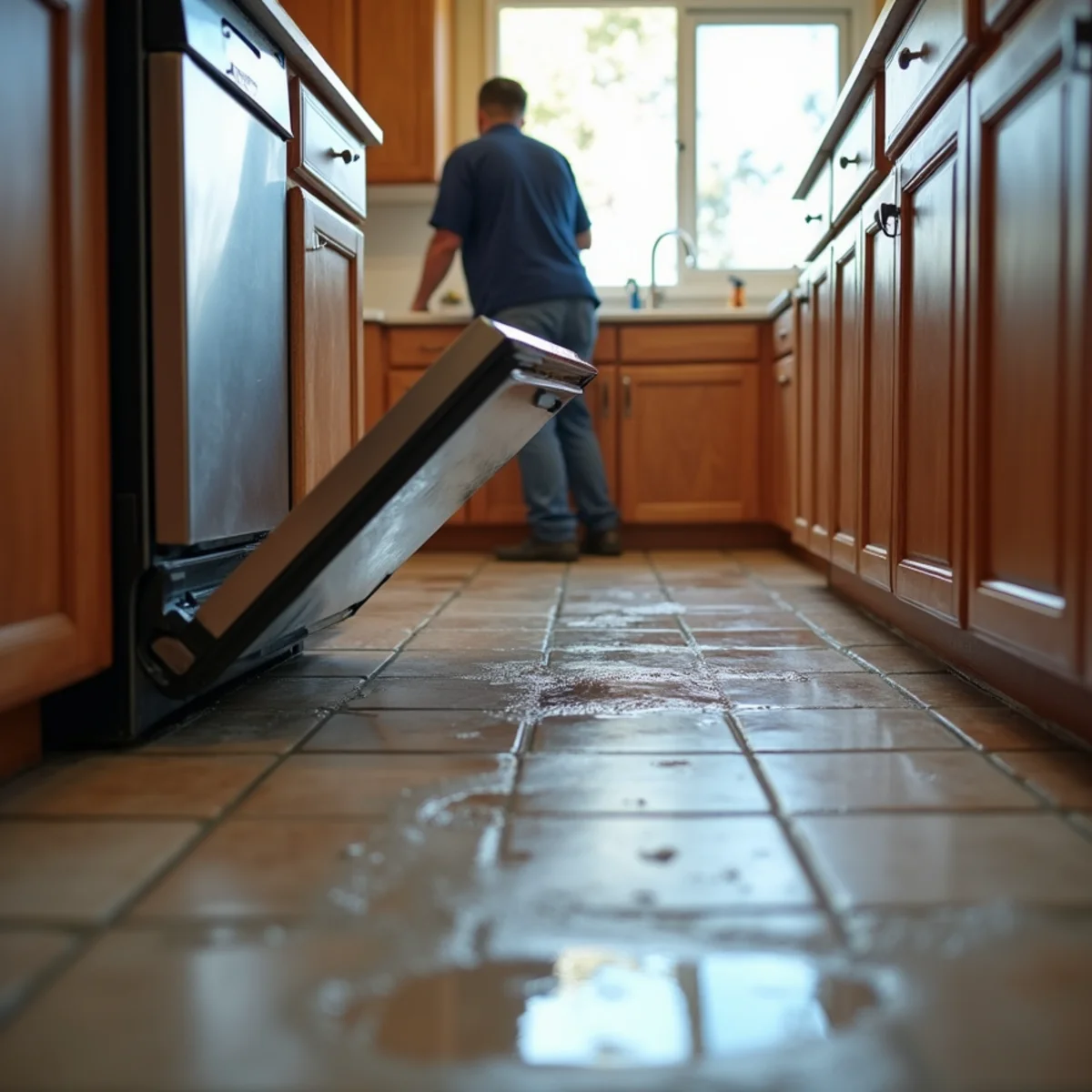
The puddle is the least of it. Dishwasher leaks go under the cabinets and into the subfloor, where nothing is visible and nothing dries on its own.
Water spreading right now? Call before you finish reading — crews are dispatched during the conversation, 24/7.
+1 (201) 277-9344The short answer
Close the dishwasher supply valve under the adjacent sink and switch off its breaker before you open the door. Then check the toe kick along the entire cabinet run and the sink base, because the visible puddle is a small fraction of it. Water under cabinets and flooring needs drilled access and directed airflow, not a wet vac.
Kitchens are the worst room in the house for water, and dishwasher leaks are the worst kind of kitchen leak, because the water goes exactly where you cannot see or reach it.
Under the toe kick. Into the cabinet base. Under the flooring. Into the subfloor and, in a two-story home, through it.
First: Stop It and Isolate
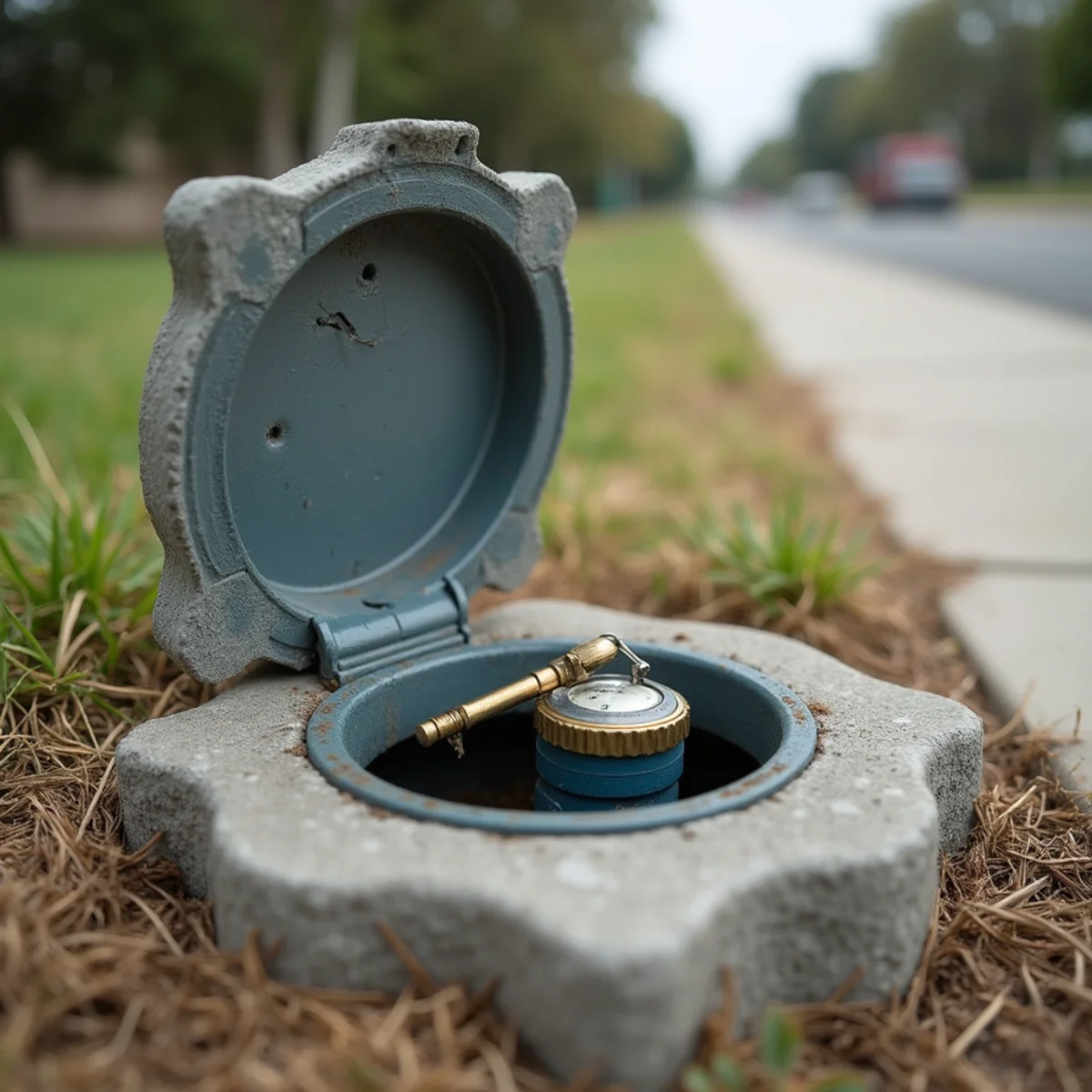
Close the dishwasher supply valve — usually under the adjacent sink, a small angle stop on the hot line running toward the machine. If you cannot identify it, close both angle stops under the sink, or use the main.
Then switch off the dishwasher circuit at the breaker. Do not just press the cancel button; a machine with a failed component can restart or continue to fill.
Do not open the door if the machine is full of water — you will add several more gallons to the floor. Let it be until the water is off.
Second: Understand Where the Water Actually Went
The visible puddle in front of the machine is a fraction of it. Dishwashers sit in a recess with an open back and no floor pan in most installations, so water leaving one runs in three directions.
Under the cabinets. The toe kick space beneath your base cabinets is a continuous void along the whole run. Water travels along it easily and reaches cabinets several feet away with no sign at the front.
Under the flooring. Vinyl plank, laminate and tile over an underlayment all let water travel underneath and trap it there. Laminate and engineered wood swell from the bottom and the damage shows days later.
Into the subfloor. Particle-board and OSB subfloor absorbs water and loses structural integrity as it does. On a second floor, it goes further and appears as a stain on the ceiling below.
Third: Check the Cabinets Properly
Open the base cabinets either side of the dishwasher and put a hand on the floor of each. Then check the sink base — it is the lowest point of most kitchen runs and where water collects.
Look at the material. Most cabinet boxes are particle board or MDF with a laminate face. Those swell irreversibly when wet, delaminate at the edges, and never recover. Plywood boxes fare much better.
Feel the toe kick along the whole cabinet run, not just next to the machine. If any of it is soft or swollen, water has traveled further than the puddle suggested.
Fourth: Know What a Wet Vac Will Not Do
Surface water off a tile floor, yes. Everything described above, no.
Water in a toe kick void, under flooring, or in a cabinet base cannot be reached from the surface and will not evaporate outward on its own — those are enclosed spaces with no airflow. Left alone, they stay damp for weeks, which is comfortably inside the window for mold to establish on the particle board and the drywall behind.
Proper drying here means drilling small, hidden access holes into the toe kick and cabinet bases and directing air into the voids, plus lifting flooring where readings show water underneath. That is what structural drying actually involves in a kitchen, and it is why kitchens take longer than bedrooms.
Fifth: Work Out Why It Failed
Dishwasher leaks come from a short list, and knowing which one you had tells you whether to repair or replace.
- Door gasket — perished or displaced seal; water escapes at the front during the cycle. Cheap fix.
- Supply line — the braided or copper line feeding the machine. Fails at the connection, usually from age.
- Drain hose — cracked, or a failed connection at the disposal or standpipe.
- Pump seal or tub — internal failure. On a machine over ten years old this usually means replacement.
- Overfill — a failed float switch or water inlet valve letting the machine fill past capacity.
The Insurance Angle
A sudden appliance failure is normally a covered loss for the resulting water damage under a standard California homeowners policy. The appliance itself is generally not covered.
Where carriers push back is on gradual damage — a machine that had been weeping quietly for months, with staining and swelling that shows it. If your cabinet base is already delaminated and dark when you look at it today, that is evidence of a long-running leak rather than last night's failure, and it changes the conversation.
Either way, photograph before you move anything, and see how to document water damage for an insurance claim.
Why Kitchens Take Longer to Dry Than the Rooms Around Them
A bedroom with the same volume of water dries in three days. A kitchen with that volume routinely takes five to seven, and the reason is that a kitchen is not really one space — it is one open room sitting on top of a series of sealed voids that were never designed to be dried.
The toe kick beneath a cabinet run is a continuous channel the full length of the kitchen, closed at the front by a finished board and at the back by the wall. The cabinet bases sit above it. Under the flooring is another plane entirely. Air pushed across the room reaches none of them, which is why a kitchen can read completely dry at the surface for a week while the void beneath it has not lost a percentage point.
That is why equipment placement on these jobs looks unusual. Small holes get drilled in concealed locations — inside the cabinet bases, behind the toe kick board, sometimes at the base of the wall behind the baseboard line — and air is injected directly into the void rather than blown across the floor. The holes are hidden by the toe kick or the baseboard when it goes back on. The alternative is pulling the cabinet run out, which is both far more expensive and far more disruptive, and is reserved for cases where the boxes are particle board and have already swollen past saving.
The bottom line
Supply off, breaker off, then check the toe kick along the whole cabinet run and the sink base — not just the puddle.
Kitchens hide water better than any other room, and the hidden water is the part that becomes a mold problem.