Emergency Guides
Standing Water in the House: Is It Safe to Stay, and Who Do You Call First?
Three safety questions decide whether you stay or go, and the call order matters more than most people realize.
Water spreading right now? Call before you finish reading — crews are dispatched during the conversation, 24/7.
+1 (201) 277-9344The short answer
Staying is usually reasonable if the water is clean, has not reached outlets, appliances or the electrical panel, and no ceiling is sagging. It is not safe with sewage, storm water or live electricity in the room. Call order: emergency services if needed, then a restoration crew, then your insurer, then the trade fixing the source.
Standing water in a home raises two separate questions — is it safe to be here, and who do I call in what order. People usually get the second one wrong because they are worrying about the first.
Here is how to answer both quickly.
Safety Question One: Electricity
This is the one that can hurt you tonight.
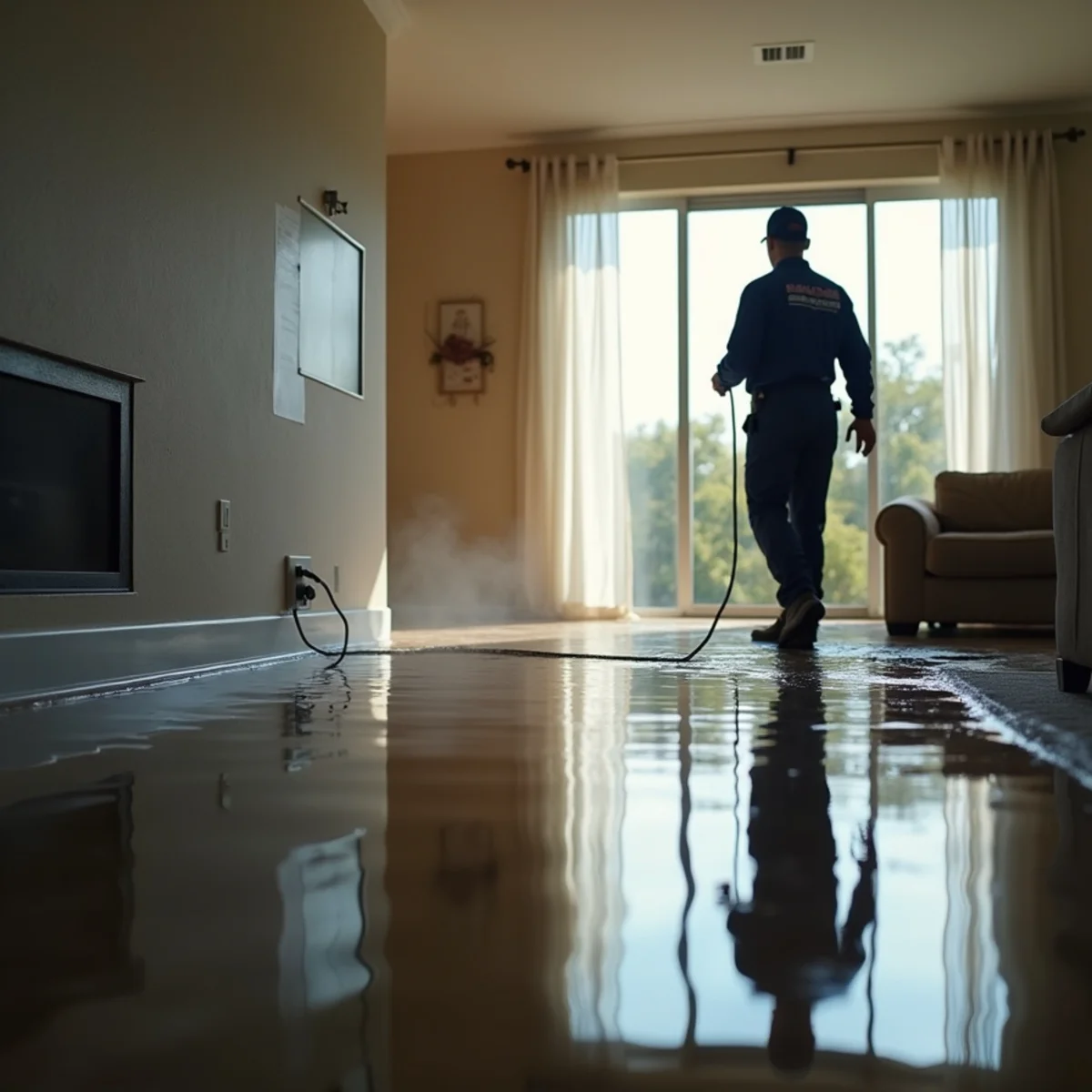
If standing water has reached outlets, appliances, extension leads, or is anywhere near your electrical panel, treat the affected area as live until proven otherwise. Do not enter it. Do not reach across it to unplug anything.
If you can reach your panel from a dry route, switch off the breakers for the affected rooms. If the panel is in or adjacent to the water, leave the house and call your utility or an electrician. That is not caution for its own sake — energized water is genuinely lethal.
Safety Question Two: What Kind of Water Is It?
Category 1 is clean water from a supply line, water heater or ice-maker line. Not a health hazard in itself. Staying in the house is usually fine.
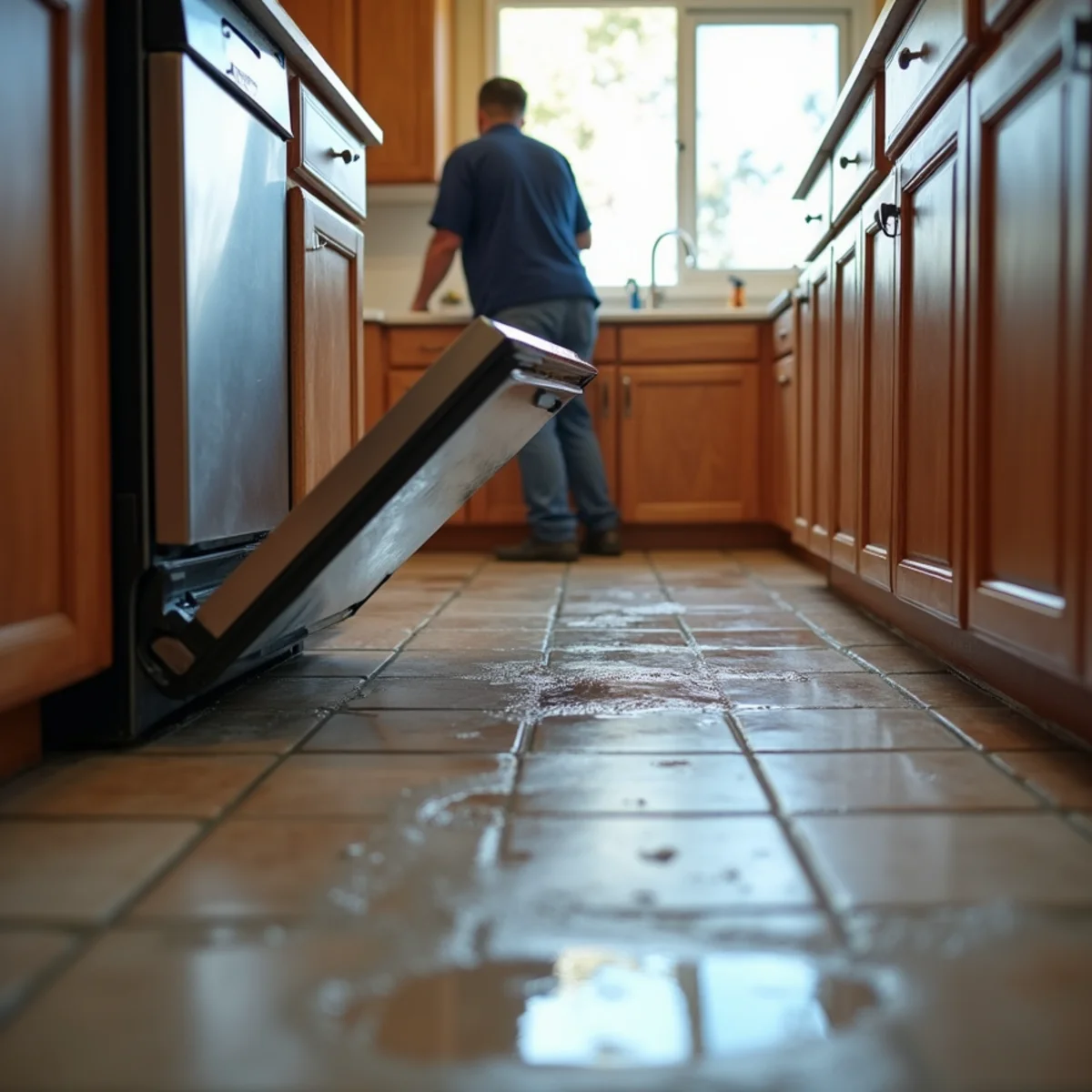
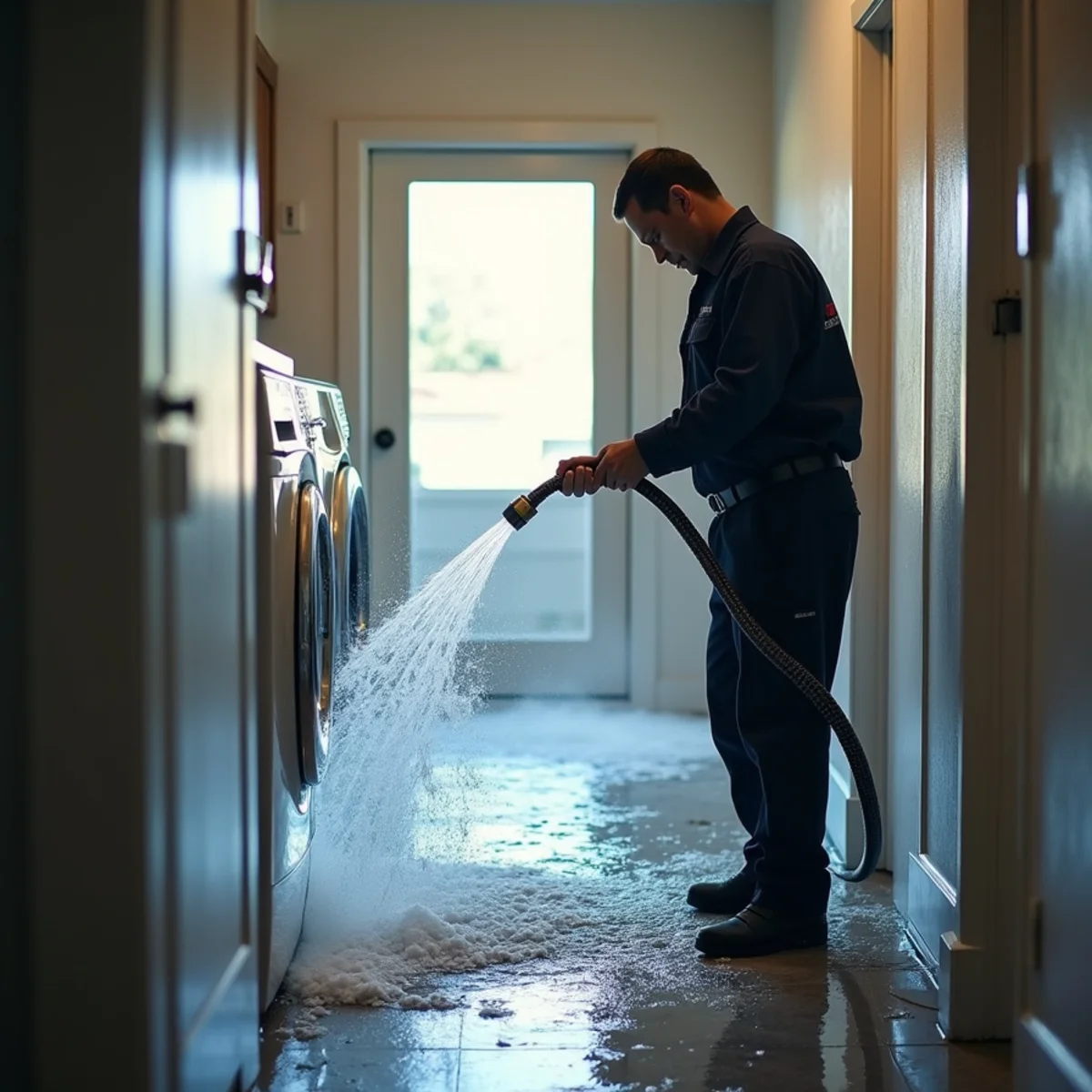
Category 2 is gray water from a dishwasher, washing machine or overflowed sink. Some contamination, avoid contact, keep children and pets clear.
Category 3 is contaminated: a sewer backup, a toilet overflow past the trap, or storm water that has crossed the ground. This carries bacteria, viruses and parasites. Stay out of the affected area entirely, and if it has reached bedrooms, the kitchen or the only bathroom, plan to relocate.
One important point: categories degrade with time. Clean water sitting for two days is no longer clean water. The classification is about what the water is now, not what it was when it arrived.
Safety Question Three: Structure and Air
Look up before you walk around. A ceiling that is sagging, bulging or cracking is holding water and can fail without warning — stay out from under it.
On the air side, the practical concern in the first 24 hours is not mold; it is humidity and, if the water is contaminated, aerosols. Anyone in the household with asthma, allergies or a compromised immune system should be somewhere else while contaminated water is being handled, and that is worth being firm about.
Gas is the other check. If you smell gas at any point, leave immediately and call the gas company from outside.
The Right Call Order
1. Emergency services, if there is any question about gas, electricity, or structural safety. Nothing below this matters if the house is not safe.
2. A restoration company. This is the one people put second or third and it should be here. Mitigation is time-sensitive in a way nothing else in the process is, and most policies require you to take reasonable steps to prevent further damage — so starting promptly supports your claim rather than jeopardizing it. Crews should be dispatched during the call, not scheduled after it.
3. Your insurance carrier. File the claim once mitigation is underway. You will have far more useful information for them after an assessment than before it.
4. A plumber or roofer, if the source needs a licensed trade. Your restoration company should coordinate this so the sequence is right.
The common mistake is waiting for the insurer to authorize mitigation. They generally do not need to, and the hours lost waiting are the most expensive hours of the whole event.
If You Do Stay, What to Expect
Most families stay for most losses, and being honest about the experience is fair.
Drying equipment is loud. Air movers run continuously, day and night, for three to five days. Containment barriers will block doorways. Parts of your floor will be exposed subfloor. The house will be warmer than usual, because heat speeds drying.
It is entirely tolerable and it is over reasonably quickly. What is not tolerable is switching the equipment off overnight because of the noise — that is the most common reason a three-day dry becomes six.
If your policy includes loss-of-use coverage and the conditions genuinely warrant relocating, that is what the coverage exists for. We document the conditions supporting it as part of residential restoration.
What Changes the Stay-or-Go Answer After the First Day
The safety questions people ask on night one are about electricity and contamination, and those are the right questions. What decides whether a household actually stays for the whole job is usually something else: noise, humidity and access.
Drying equipment runs continuously. Air movers and a dehumidifier in a hallway are genuinely loud, and they stay on overnight because switching them off for eight hours does not pause a drying job — it extends it by a day and gives moisture time to migrate back into materials that had started releasing it. Containment sheeting across a doorway blocks a route people use without thinking. Neither is dangerous. Both are wearing after three nights.
The occupancy factor we take most seriously is not the water at all. Where a household includes an infant, someone pregnant, an older adult, or anyone with asthma, a suppressed immune system or an existing respiratory condition, the threshold for recommending relocation drops considerably — particularly for category 2 or 3 water, or where mold is already suspected. If your policy carries loss-of-use coverage, this is exactly the situation that coverage exists for, and it is worth asking your adjuster about on the first call rather than the fourth.
- Live electricity in a wet area — leave, and have it isolated before anyone returns
- Category 3 water, or category 2 that has sat more than 48 hours — plan to relocate
- A sagging or cracked ceiling anywhere in the path — stay out of that room entirely
- Vulnerable occupants and any suspected mold — relocate, and raise loss-of-use early
- Clean water, isolated area, no electrical exposure — most households stay
The bottom line
Electricity, water category, structure. Answer those three and you know whether to stay.
Then call restoration before you call your insurer, and let the hours work for you rather than against you.