
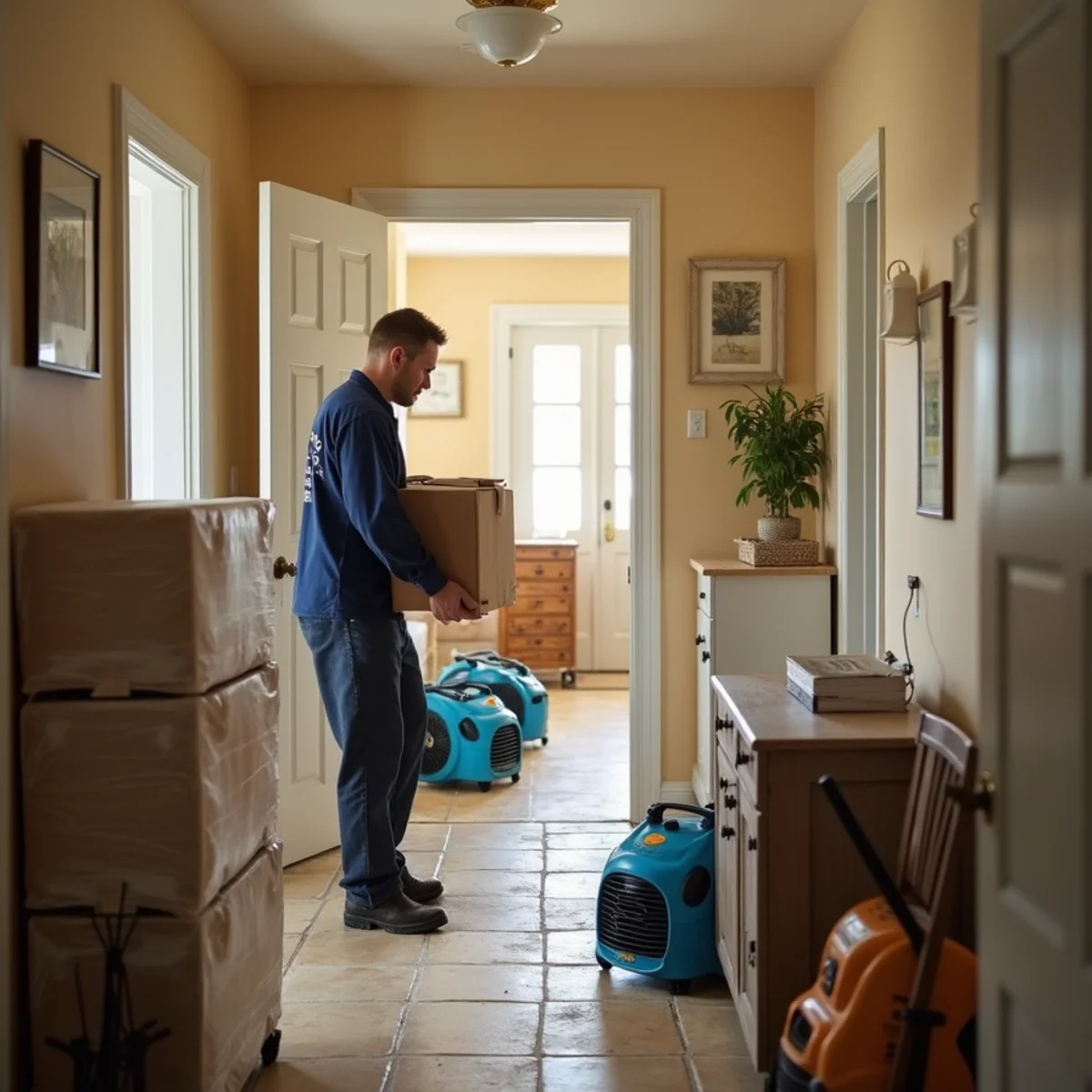
Water Damage Restoration · Whittier, CA
Residential Water Damage Restoration in Whittier, CA
One company from the first extraction pass to the final coat of paint — with your household treated like people, not a job site.
- 24/7 emergency dispatch
- 60-minute target response
- IICRC-certified technicians
- Direct insurance billing
A water loss in a home is not only a building problem. It is a family living around drying equipment, sleeping in the wrong rooms, and trying to work out what happens to their things.
The technical work is the same as any restoration job. What is different is everything around it: how contents are handled, how much of the house stays livable, how loud the equipment is at 11 p.m. in a house with a toddler, and how quickly you get a straight answer about what is salvageable.
We run the whole arc — emergency response, extraction, drying, remediation where it is needed, and the rebuild that puts the house back — so you are dealing with one company and one set of documentation instead of coordinating four trades during the worst week of your year.
What you actually get
What Residential Restoration Includes
The technical work is the same as any water loss. What this scope adds is everything around it — because a family is living in the middle of it.
Emergency response and mapping
Crew dispatched during the call, source stopped, hazards addressed, and the full wet footprint mapped before anything is moved.
Contents handling and inventory
Belongings moved out or blocked up off wet flooring, and anything leaving the house photographed and inventoried as it goes.
Specialty item recovery
Photographs, documents, artwork and sentimental textiles flagged for specialty drying — the recovery window is days, so they get triaged first.
Containment that keeps the house livable
Work zones sealed so the rest of the home stays usable, with circuit loading planned so drying equipment does not trip breakers overnight.
Verified structural drying
Equipment sized to the loss with daily readings at marked locations, released zone by zone as each area reaches the dry standard.
Rebuild and final walkthrough
Drywall, texture, paint, flooring, baseboard and cabinetry matched to what was there, then walked with you before the job closes.
What Happens to Your Belongings
This is the question homeowners ask first and restoration companies answer last. Here is the plain version.
Usually salvageable: hard furniture, sealed wood, metal, glass, ceramics, most clothing and textiles that can be laundered, and electronics that were not submerged and have not been powered on since. Usually not: particle board and MDF furniture, mattresses and upholstered pieces exposed to Category 2 or 3 water, cardboard and anything stored in it, and paper products that have been saturated for more than a day or two.
Do not throw out photographs, documents, artwork or textiles with sentimental value before we look at them. Specialty drying recovers a lot more of that material than people expect, including items that were fully submerged. Put them somewhere cool, keep them separated, and tell us they matter — the recovery window is measured in days, so it is worth saying on the first visit.
Contents that need to leave the house for cleaning or storage are inventoried and photographed as they go, both for your peace of mind and for the claim.
Living in the House During Restoration
Most families stay. Being honest about what that is like is part of the job.
Drying equipment is loud — air movers run continuously and a house with eight of them running is genuinely noisy. It also draws real power; we plan circuit loading to avoid tripping breakers overnight, which is the classic way a night of drying gets lost. Containment barriers will block doorways. Parts of the floor will be exposed subfloor for several days.
Plan to relocate when the loss involves Category 3 water in living space, when containment blocks the only bathroom or the kitchen, when a household member has a respiratory condition, or when the rebuild scope means extended demolition. If your policy includes loss-of-use coverage, it typically pays for that — and we document the conditions that support the claim so the request is evidenced rather than asserted.
One Company Through the Rebuild
The handoff between mitigation and reconstruction is where most residential restoration jobs go wrong.
When the drying company leaves and a separate contractor picks up the rebuild, three things reliably happen: the rebuild schedule slips because nobody owns the transition, the two companies disagree about what was already damaged, and the homeowner becomes the project manager. Meanwhile the claim sits open with two scopes that do not quite reconcile.
We carry the job through: drywall, texture, paint, flooring, baseboard, trim and cabinetry. In older Whittier homes that continuity matters more than usual, because matching a 1962 texture, a discontinued tile, or existing cabinetry is craft work — and the person who removed it is the person best placed to put it back.

Why us for this job
Why Families Stay in the House on Our Jobs
Most residential losses do not require anyone to move out. Whether that stays true depends almost entirely on how the job is set up.
We contain so the home stays usable
Sealed work zones and managed access mean the loss stays in one part of the house rather than taking over all of it for a week. Kitchens are the hardest room to contain and the slowest to dry, because the water goes under the cabinets and the flooring.
We are honest about what it is like
Air movers are loud and run continuously for days. We will tell you that up front, and we will re-engineer the chamber before we let you switch them off.
Your belongings are tracked, not shifted
Anything leaving the house is inventoried and photographed. You should never have to guess where something went or what condition it left in.
One company means one timeline
No gap where the drying company leaves and a rebuild contractor has not started. That handoff is where most residential restorations quietly lose two weeks.
- IICRC-certified technicians
- Licensed & insured
- 60-minute target response across Whittier
- Direct insurance billing
- 7012 Walnut Grove Dr, Whittier, CA 90606
Need residential water damage restoration today?
One company from extraction to final paint — call and we will give you a phase-by-phase timeline.
Step by step
Our Residential Process
The same six phases as any water loss, run around a household rather than a job site.
Step 1
Emergency response
Crew dispatched immediately, source stopped, hazards addressed, and the full wet footprint mapped with thermal imaging and meters before anything is moved.
Step 2
Contents handling
Belongings moved out of the affected area, blocked up off wet flooring, or inventoried and removed for cleaning. Sentimental and specialty items flagged for recovery.
Step 3
Extraction and controlled demolition
Bulk water removed, then only the materials that genuinely cannot be dried are taken out — documented and photographed before disposal.
Step 4
Structural drying
Equipment sized to the loss, containment built to keep the rest of the house usable, and readings taken daily until they meet the dry standard.
Step 5
Rebuild and finish
Drywall, texture, paint, flooring, baseboard and cabinetry — matched to what was there, with a final walkthrough before we close the job.
On the job
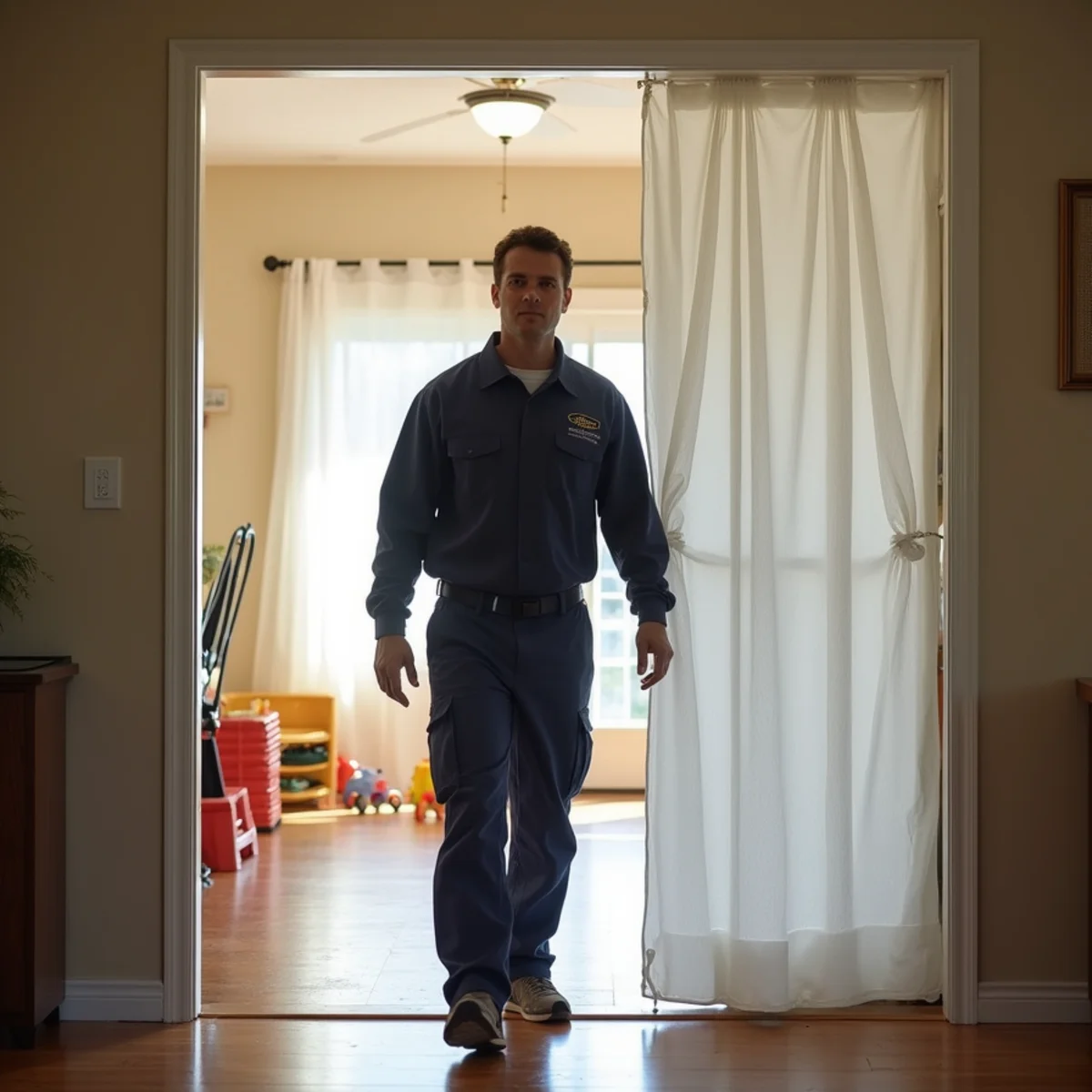

Honest pricing
What Residential Restoration Costs Depend On
Two homes with identical square footage can differ by a factor of five. These are the reasons.
- Time from loss to first call
- The dominant variable in every water loss. Hours matter more than anything else on this list.
- Water category
- Clean supply water, gray water from an appliance, or contaminated water — each changes what can be dried and what must be removed.
- Rooms and assemblies affected
- Kitchens and bathrooms carry cabinetry, tile and plumbing that a bedroom does not.
- Finish level and matching
- Matching an older Whittier home's texture, discontinued tile or original cabinetry is craft work with a real cost.
- Contents scope
- Moving, cleaning, storing and inventorying belongings, plus specialty recovery of documents and photographs.
We inspect before quoting, every time. A firm number over the phone without moisture readings is a guess, and guesses in this trade are corrected upward later.
Related services, service areas and guides
Related services
- Water Damage RestorationExtraction, structural drying, mold prevention and repairs — one crew from the first hour to the final coat of paint.
- Burst Pipe CleanupFrom the shut-off valve to the final coat of paint — extraction, drying and rebuild after a supply line failure.
- Structural Drying & DehumidificationEngineered drying with daily moisture readings — so the structure is verifiably dry, not just dry to the touch.
Related reading
- Standing Water in the House: Is It Safe to Stay, and Who Do You Call First?Three safety questions decide whether you stay or go, and the call order matters more than most people realize.
- How Much Does Water Damage Restoration Cost in Whittier? (2026 Price Guide)Most restoration companies will not discuss price until they are standing in your house. Here are the published California ranges, and an honest account of which variables actually move them.
Residential Water Damage Restoration across our service area
We provide residential water damage restoration across Whittier and the surrounding Los Angeles County communities. Each area page covers the local housing and drainage risks that actually drive water damage there.
- East WhittierUnder 10 minutes from our Walnut Grove Dr base. This is our home zone.
- Uptown WhittierAbout 8 to 12 minutes from our Walnut Grove Dr base, west along Whittier Boulevard or Philadelphia Street.
- Whittwood, WhittierUnder 10 minutes from our Walnut Grove Dr base — one of our closest zones.
- Friendly Hills, WhittierAround 8 to 12 minutes from our base, up toward the Whittier foothills.
- Pico RiveraTypically 10 to 15 minutes from our Walnut Grove Dr base, straight across on Whittier Boulevard or Washington Boulevard.
- Santa Fe SpringsAround 10 minutes from our base, south on Painter Avenue or straight down the 605.
- South WhittierUsually under 10 minutes from our Walnut Grove Dr base — one of the fastest zones we serve.
- La MiradaRoughly 12 to 18 minutes from our Whittier base via Imperial Highway or Rosecrans Avenue.
- NorwalkAround 12 to 15 minutes from our base, south on Norwalk Boulevard or Pioneer Boulevard.
- Los Angeles CountyWe work the southeast quadrant of the county from our base at 7012 Walnut Grove Dr in Whittier, with a 60-minute target response across the Gateway Cities and the lower San Gabriel Valley.
Request a visit
Free Estimate for Residential Water Damage Restoration
We inspect with thermal imaging and moisture meters before quoting — a firm price given over the phone without readings is a guess. If water is spreading right now, call instead; crews are dispatched during the conversation.
+1 (201) 277-9344