
Water Damage Restoration · Whittier, CA
Mold Remediation in Whittier, CA
Containment, HEPA filtration and controlled removal — plus fixing the moisture source so it does not come back.
- 24/7 emergency dispatch
- 60-minute target response
- IICRC-certified technicians
- Direct insurance billing
Mold is not the problem. Mold is the symptom. The problem is that something in your house has been wet long enough for it to grow, and until that is fixed, removal is temporary.
That is the single most important thing to understand before you hire anyone. A remediation company that scrubs and seals without identifying and correcting the moisture source has sold you a delay, not a solution.
We approach it in that order: find the water, stop the water, then remove the growth under containment so spores are not distributed through the rest of the house during the work.
What you actually get
What Mold Remediation Includes
A remediation quote that does not name the moisture source is a cleaning proposal. Here is what a real scope contains.
Moisture source investigation
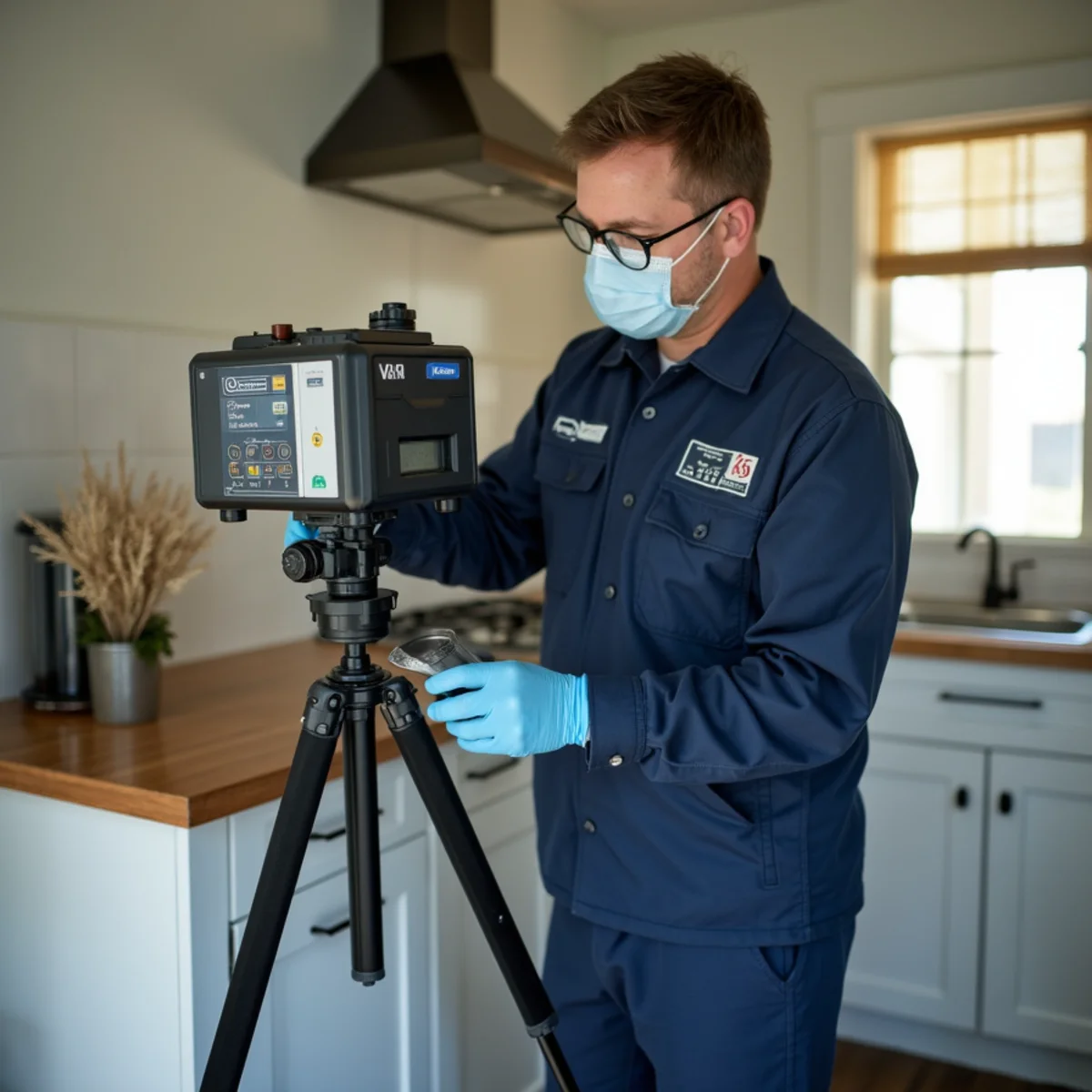
Thermal imaging and meters to find the water feeding the growth, because removal without correcting the source guarantees it returns.
Sealed containment with negative air
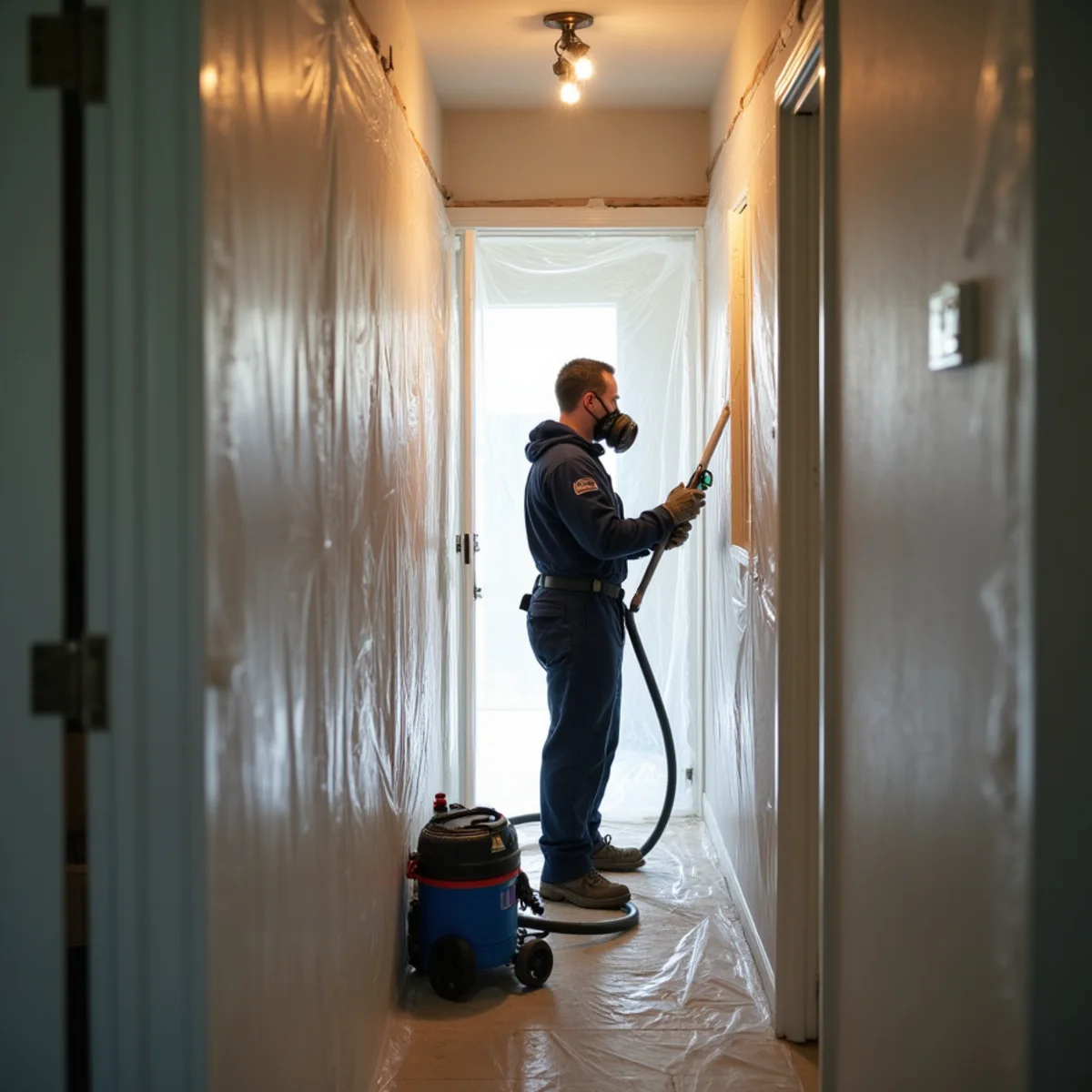
Poly barriers, HEPA air scrubbers maintaining negative pressure, sealed HVAC registers and a decontamination path in and out.
Controlled material removal
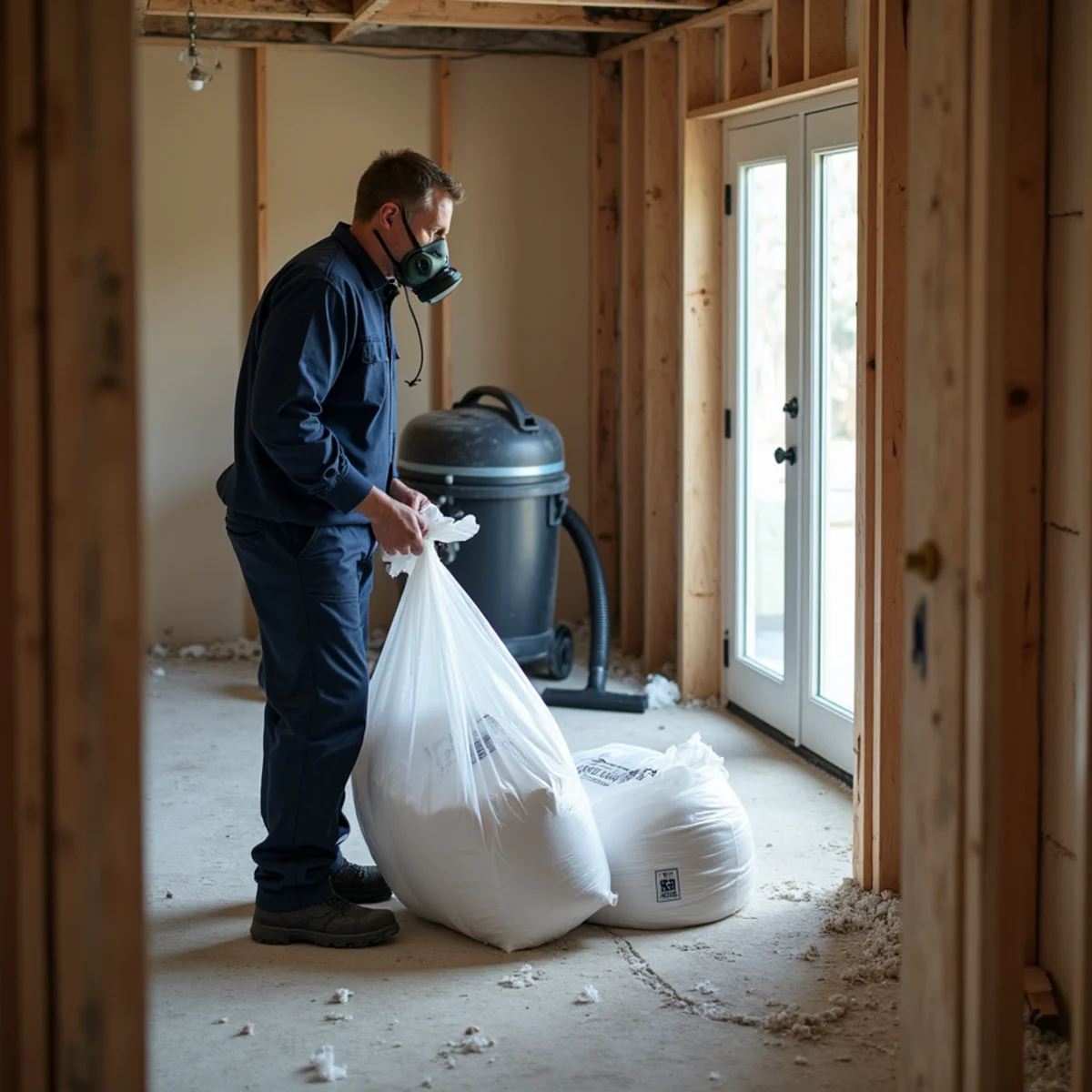
Affected porous material cut out and bagged inside the containment. Structural timber is cleaned and treated rather than removed wherever it is sound.
HEPA cleaning and treatment
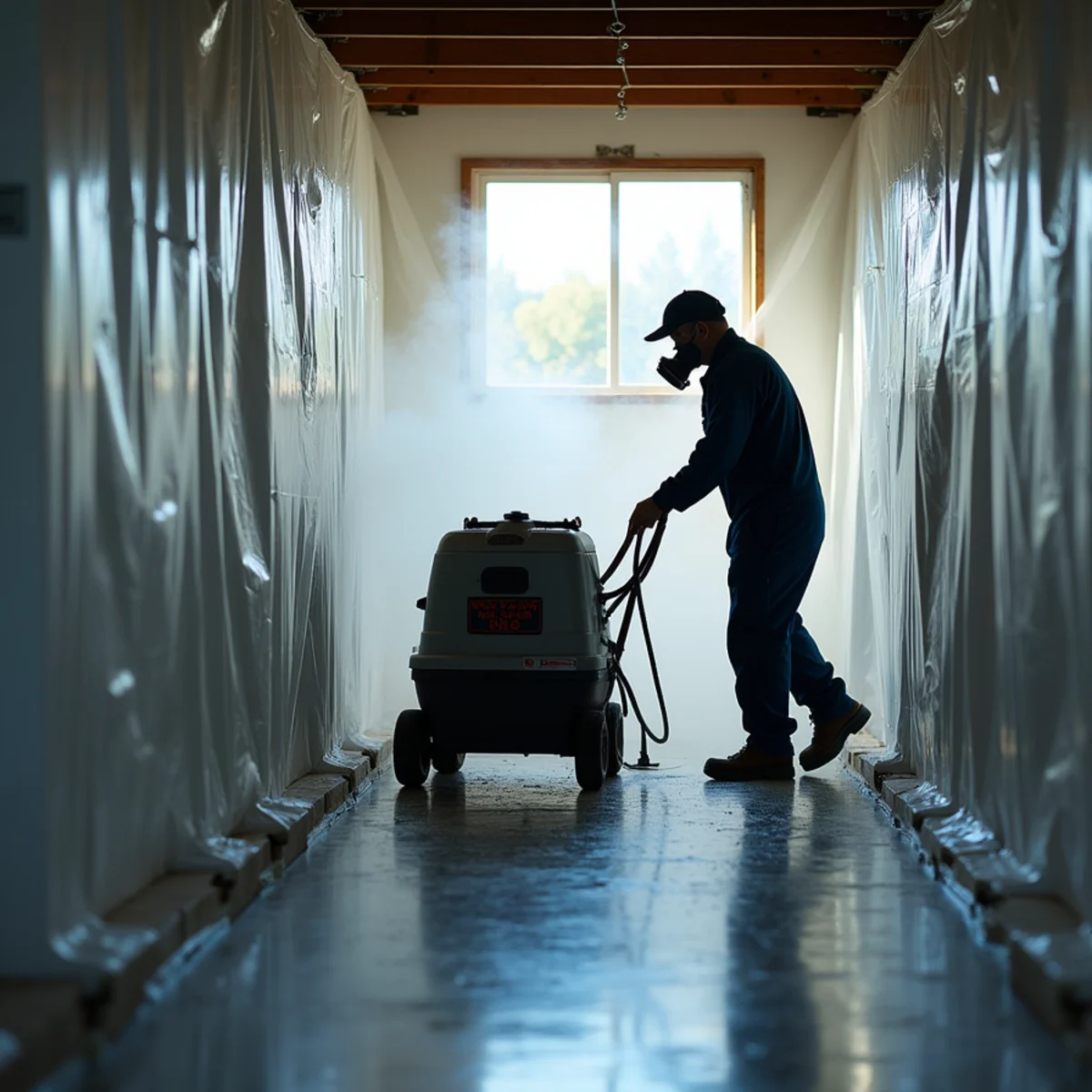
All surfaces within containment HEPA-vacuumed and detail-wiped, then treated with an antimicrobial suited to the substrate.
Drying to documented targets
The assembly dried and verified before containment comes down — closing up over a damp cavity is how this recurs in a space nobody can inspect.
Clearance coordination
Where a claim, a sale or a health concern warrants it, we work alongside an independent hygienist rather than grading our own homework.
How Fast It Happens — and Why the 24–48 Hour Rule Matters
Mold spores are already in your home. They are in every home. They are inert until they get moisture, a food source and time.
Wet drywall paper, cabinet backing, carpet padding and wood framing are all food sources. Once wet, colonization can begin within 24 to 48 hours. That is the entire reason the restoration industry treats water loss as an emergency rather than a scheduling problem — the difference between calling at hour two and calling on Monday morning is often the difference between a drying invoice and a remediation invoice.
Southern California's dry climate helps less than people assume. Whittier's outdoor humidity is low most of the year, but the inside of a wall cavity that holds water from a slab leak is its own microclimate, and it stays humid indefinitely regardless of what the weather is doing outside.
Where We Find It in Whittier Homes
The locations repeat, because the construction repeats.
Under kitchen sinks and around dishwashers, where a slow supply or drain leak has run behind the cabinet base for months. At the base of walls in slab homes with an undetected slab leak — often first noticed as a warm spot on the floor. Behind shower surrounds in 1950s and 60s bathrooms where the original mud-set tile has cracked at the corner. In attics under a roof leak that only shows during sustained winter rain. And in crawl spaces of raised-foundation homes where the vapor barrier has been torn or was never replaced after work was done underneath.
Garages are worth a specific mention. The water heater sits there in most California homes, and a slow tank weep can run for a long time against a shared wall before anyone notices — see water heater leak cleanup.
Containment Is the Whole Job
Removing mold generates airborne spores. If that happens in an unsealed room, you have not remediated anything — you have redistributed it, often into the HVAC system and from there through the whole house.
Proper remediation means sealed poly containment around the work area, negative air pressure maintained with HEPA-filtered air scrubbers so air flows into the containment rather than out of it, sealed HVAC registers, and controlled removal of affected materials into sealed bags inside the containment before they are carried out.
After removal, remaining surfaces are HEPA-vacuumed and wiped, the area is dried to verified moisture levels, and containment stays up until that verification is complete. Only then does rebuild start.
On Testing, and Being Honest About It
Air sampling has a real role, but it is oversold in this industry.
If you can see growth, testing to prove it exists is money spent to confirm what your eyes already told you. Where testing genuinely earns its cost is: establishing a pre-work baseline when a claim is contested, confirming clearance after remediation in a household with a medically sensitive occupant, or locating a hidden source when there is odor but no visible growth.
For clearance testing, an independent third-party hygienist is the right choice — a remediation company grading its own homework is a conflict of interest, and any adjuster will say the same. We are happy to work alongside whichever hygienist you choose.
Why us for this job
Why Our Remediation Does Not Come Back
California has no state license specific to mold remediation, which puts the burden of judging competence on you. These are the questions worth asking anyone.
We fix the water first
Every scope starts with locating and correcting the moisture source. Removal without that is a delay you are paying for, not a solution — and it is why growth returns in the same spot after cleaning.
Containment on every job
Removing growth aerosolizes spores. Done in an unsealed room, that redistributes the problem into the HVAC and the rest of the house. Containment is also most of why remediation costs what it does.
Independent clearance, not self-certification
Where verification matters we work with a third-party hygienist. A contractor testing its own work is a conflict any adjuster will spot.
Honest about testing
If you can see growth and we have found the source, air sampling mostly confirms what your eyes already told you. We will say so rather than sell it. The genuinely useful number is how fast colonization can begin after a leak.
- IICRC-certified technicians
- Licensed & insured
- 60-minute target response across Whittier
- Direct insurance billing
- 7012 Walnut Grove Dr, Whittier, CA 90606
Need mold remediation today?
The growth is a symptom — call and we will find the moisture source before quoting removal.
Step by step
Our Mold Remediation Process
Source first, containment always, verification before rebuild.
Step 1
Inspect and find the moisture source
Thermal imaging and moisture meters locate the water feeding the growth. Remediating without correcting the source guarantees recurrence, so this comes first.
Step 2
Build containment
Sealed poly barriers, negative air with HEPA filtration, HVAC registers sealed, and a decontamination path in and out of the work area.
Step 3
Remove affected materials
Contaminated porous material is cut out and bagged inside containment. Structural wood is cleaned and treated rather than removed wherever it is sound.
Step 4
HEPA clean and treat
All surfaces within containment are HEPA-vacuumed and detail-wiped, then treated with an antimicrobial appropriate to the substrate.
Step 5
Dry, verify, rebuild
The area is dried to documented moisture targets and verified — third-party clearance testing where warranted — before containment comes down and repairs begin.
On the job
Honest pricing
What Drives Mold Remediation Costs
Cost tracks the size of the containment and how much material has to come out, more than the visible square footage of growth.
- Size of the affected area
- A single vanity cabinet is a different job from a whole wall assembly or an attic plane.
- Containment complexity
- Number of zones, negative air machines and days the containment must stay up.
- Materials involved
- Drywall and insulation are straightforward. Cabinetry, tile assemblies and hardwood require careful removal and costlier rebuild.
- Source repair
- The plumbing or roofing repair that stops the water is separate work — and non-negotiable.
- Testing and clearance
- Independent pre- and post-testing where a claim, a sale, or a health concern makes documentation necessary.
California has no state licensing scheme specifically for mold remediation, which means credentials and process discipline are on you to verify. Ask any company how they establish containment, how they verify the source is corrected, and who does their clearance testing.
Related services, service areas and guides
Related services
- Structural Drying & DehumidificationEngineered drying with daily moisture readings — so the structure is verifiably dry, not just dry to the touch.
- Leak Detection & Repair CoordinationAcoustic, thermal and pressure testing to find the leak precisely — so the repair opens one small area, not four.
- Water Damage RestorationExtraction, structural drying, mold prevention and repairs — one crew from the first hour to the final coat of paint.
Related reading
- How Fast Does Mold Grow After a Leak? Inside the 24–48 Hour WindowThe number everyone quotes is 24 to 48 hours. Here is what is actually happening in that window, and why it drives the whole industry.
- Black Mold vs. Mildew: How to Tell the Difference and When to Call a ProThe practical distinction is not color. It is whether the growth sits on the surface or has grown into the material.
Mold Remediation across our service area
We provide mold remediation across Whittier and the surrounding Los Angeles County communities. Each area page covers the local housing and drainage risks that actually drive water damage there.
- East WhittierUnder 10 minutes from our Walnut Grove Dr base. This is our home zone.
- Uptown WhittierAbout 8 to 12 minutes from our Walnut Grove Dr base, west along Whittier Boulevard or Philadelphia Street.
- Whittwood, WhittierUnder 10 minutes from our Walnut Grove Dr base — one of our closest zones.
- Friendly Hills, WhittierAround 8 to 12 minutes from our base, up toward the Whittier foothills.
- Pico RiveraTypically 10 to 15 minutes from our Walnut Grove Dr base, straight across on Whittier Boulevard or Washington Boulevard.
- Santa Fe SpringsAround 10 minutes from our base, south on Painter Avenue or straight down the 605.
- South WhittierUsually under 10 minutes from our Walnut Grove Dr base — one of the fastest zones we serve.
- La MiradaRoughly 12 to 18 minutes from our Whittier base via Imperial Highway or Rosecrans Avenue.
- NorwalkAround 12 to 15 minutes from our base, south on Norwalk Boulevard or Pioneer Boulevard.
- Los Angeles CountyWe work the southeast quadrant of the county from our base at 7012 Walnut Grove Dr in Whittier, with a 60-minute target response across the Gateway Cities and the lower San Gabriel Valley.
Request a visit
Free Estimate for Mold Remediation
We inspect with thermal imaging and moisture meters before quoting — a firm price given over the phone without readings is a guess. If water is spreading right now, call instead; crews are dispatched during the conversation.
+1 (201) 277-9344