
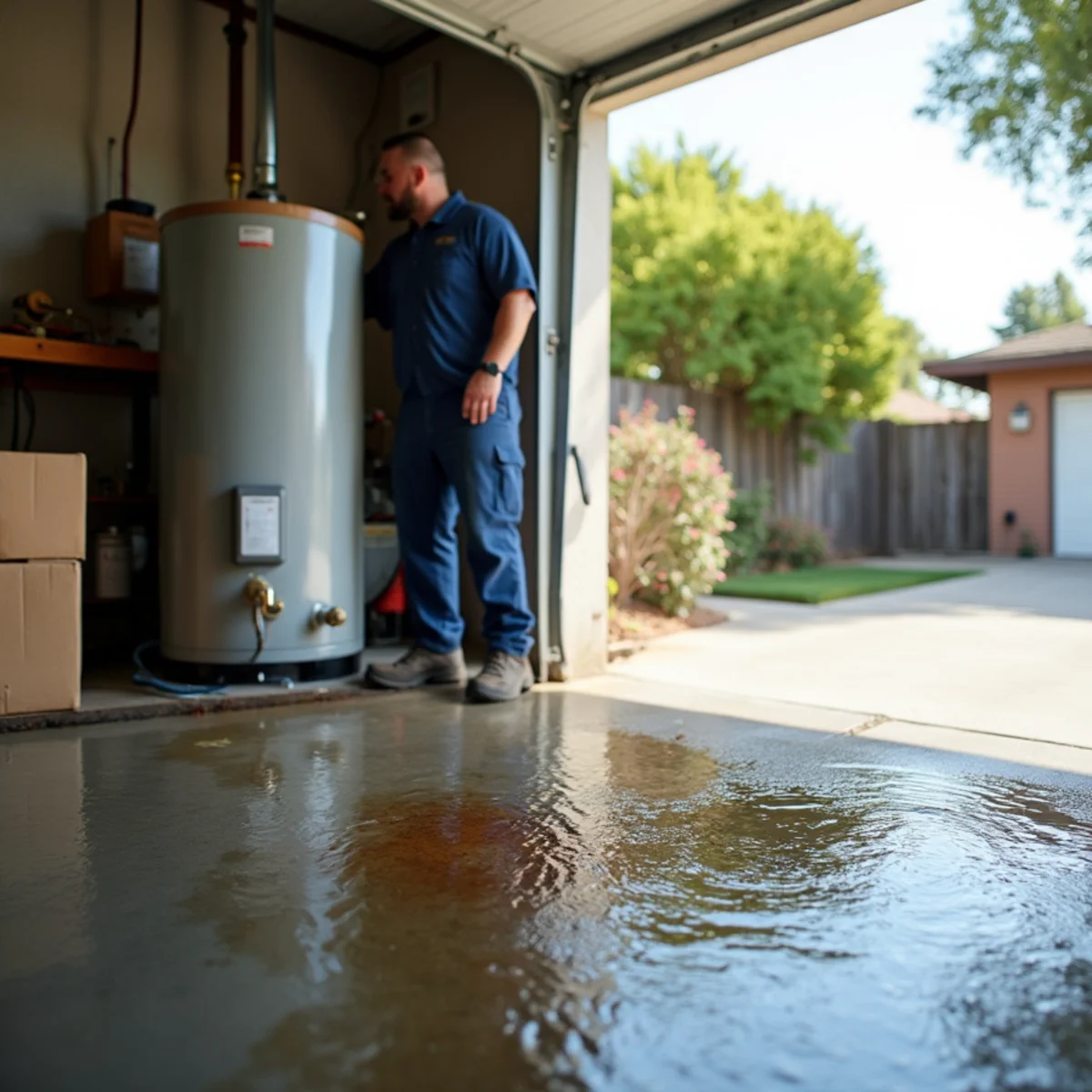
Water Damage Restoration · Whittier, CA
Water Heater Leak Cleanup in Whittier, CA
Forty to eighty gallons on a garage floor, plus whatever went through the shared wall — extracted, dried and restored.
- 24/7 emergency dispatch
- 60-minute target response
- IICRC-certified technicians
- Direct insurance billing
A failed water heater does not just empty its tank. It keeps refilling and emptying, because the supply is still connected and the tank is still trying to do its job.
Shut off the cold supply valve on top of the tank first — a lever or gate valve on the inlet line. Then shut off the energy source: the gas valve on the line into the unit, or the breaker for an electric heater. Then call.
In California, that tank is nearly always in the garage, which changes the shape of the damage. Garage slabs are poured to drain toward the door, except where forty years of settlement have changed the grade. When they no longer drain that way, the water pools against the wall shared with the living space and goes through it.
What you actually get
What Water Heater Leak Cleanup Includes
A garage-only event is a modest job. The scope below exists because the important part is finding out whether it stayed in the garage.
Supply and energy isolation
Cold inlet closed, gas valve or breaker off, and the tank drained where it has failed catastrophically and needs to come out safely.
Garage slab extraction
Standing water removed from the slab, including the low spots sixty years of settlement have created that no longer drain to the door.
Shared-wall moisture readings
Both faces of the wall between garage and living space, plus the flooring on the interior side. This is where a garage event becomes a house event.
Contents triage
Stored cardboard, particle board and textiles sitting on the slab assessed and documented — most of it does not survive, and it needs recording for the claim.
Assembly drying
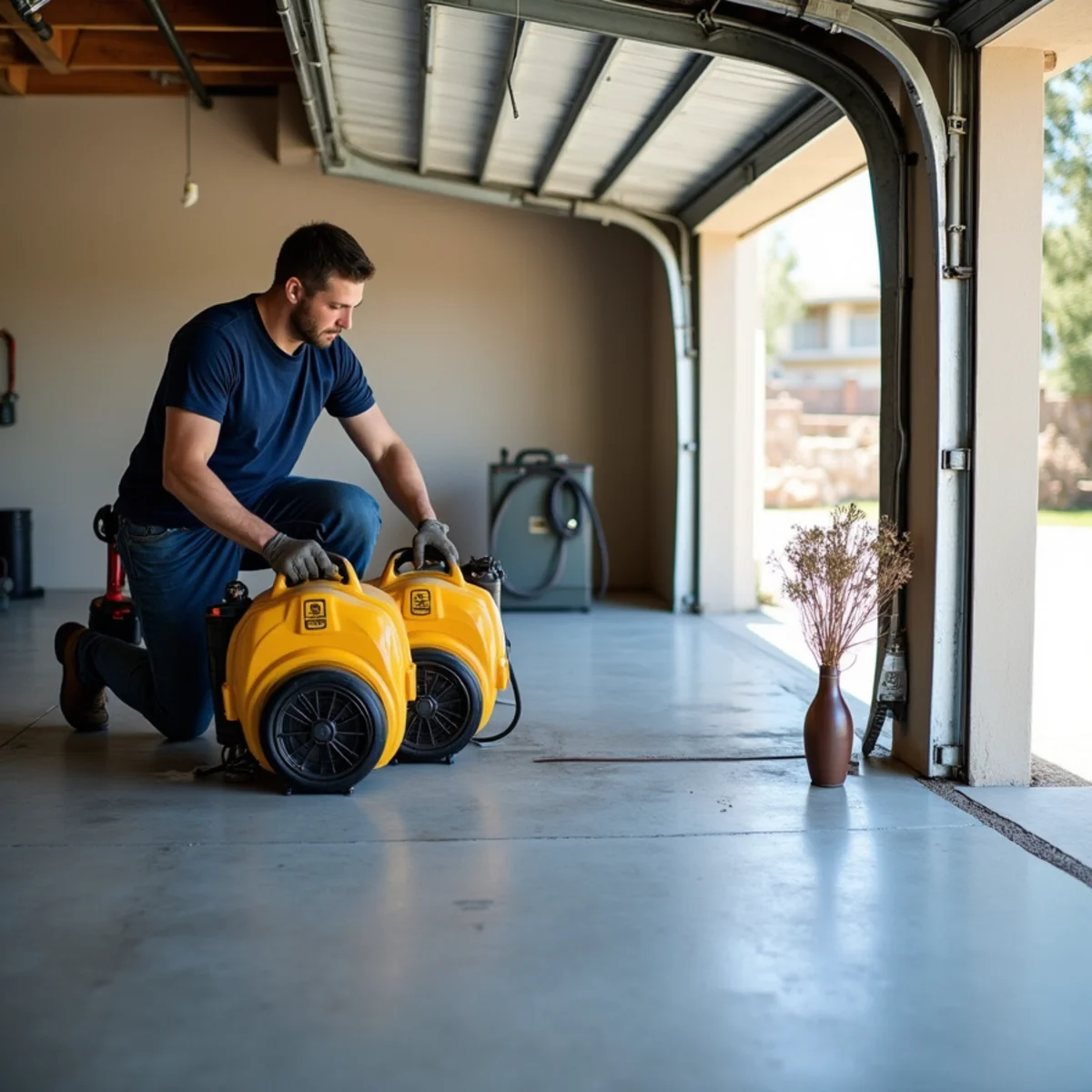
Slab, wall base and any affected interior flooring dried with equipment and monitored daily until readings meet the dry standard.
Prevention walkthrough
Drip pan, drain line, seismic straps and shut-off reviewed before we leave — the things that decide whether the next one is a claim.
Why the Garage Location Makes It Worse
Three things about a garage installation turn a tank failure into a structural problem.
Nobody sees it. A slow weep from a corroding tank seam can run for weeks behind stored boxes and against a wall. By the time it is found, the drywall base, the bottom plate of that wall, and often the flooring on the other side are already involved.
Drainage assumptions fail. The slab was poured to fall toward the door. Decades of soil movement and settlement change that, and water finds the interior wall instead of the driveway.
Stored contents. Garages hold cardboard, paper, particle-board furniture, camping gear and stored textiles — all highly absorbent, all sitting directly on the slab, and all excellent mold substrate once wet.
The shared wall is the thing we check on every one of these calls, because it is where a garage event becomes a house event.
Earthquake Strapping Is a Leak Issue Too
California Health and Safety Code section 19211 requires water heaters to be braced, anchored or strapped to resist falling or horizontal displacement from earthquake motion. It is usually discussed as a seismic safety and gas-line rule, and it is. It is also a leak rule.
An unstrapped or poorly strapped tank moves during even a moderate event. When it moves, it stresses the rigid supply connections and the gas line at the top of the unit. The failure does not have to be dramatic to matter — a connection that gets pulled slightly out of true starts weeping, and that weep runs unnoticed in a garage for weeks.
Two straps, upper and lower thirds of the tank, anchored into structure — not just into drywall. It takes very little to do, and it is worth checking today rather than after the next event. More detail in our guide to California's water heater strapping law.
Why Whittier Tanks Fail Early
Hard water is the accelerant. Los Angeles County water carries significant mineral content, and in a water heater those minerals precipitate out and settle at the bottom of the tank as sediment.
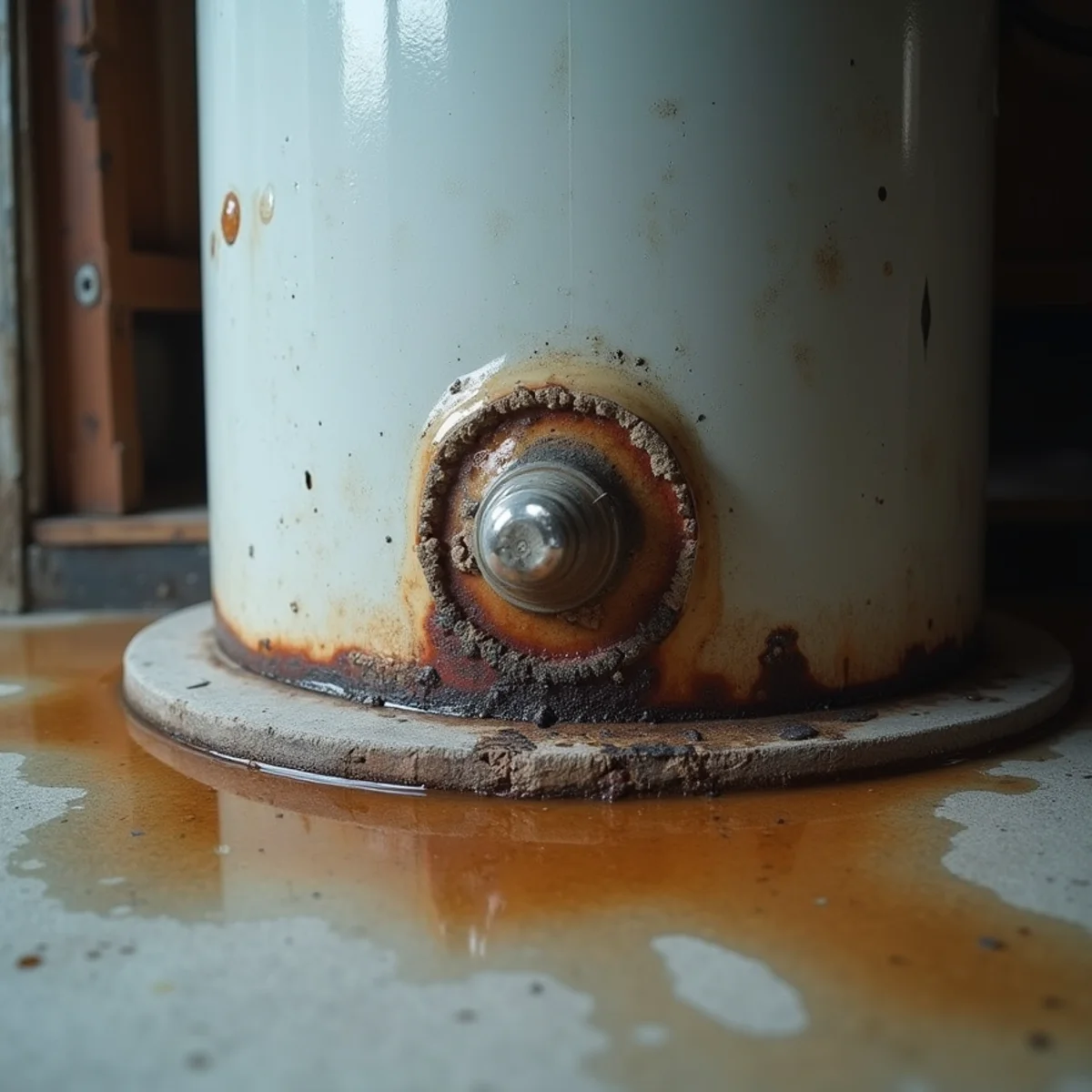
That sediment layer insulates the bottom of the tank from the burner, so the steel gets hotter than designed to push heat through it. Overheated steel at the bottom seam is exactly where tanks fail. Sediment also accelerates the consumption of the sacrificial anode rod — the component whose entire job is to corrode instead of the tank lining.
Practical consequences: flush the tank annually, have the anode rod checked around year five, and treat a heater past ten to twelve years old as living on borrowed time. Replacing a functioning old tank on a Saturday costs a fraction of replacing a failed one along with the flooring, drywall and contents it took with it.
Why us for this job
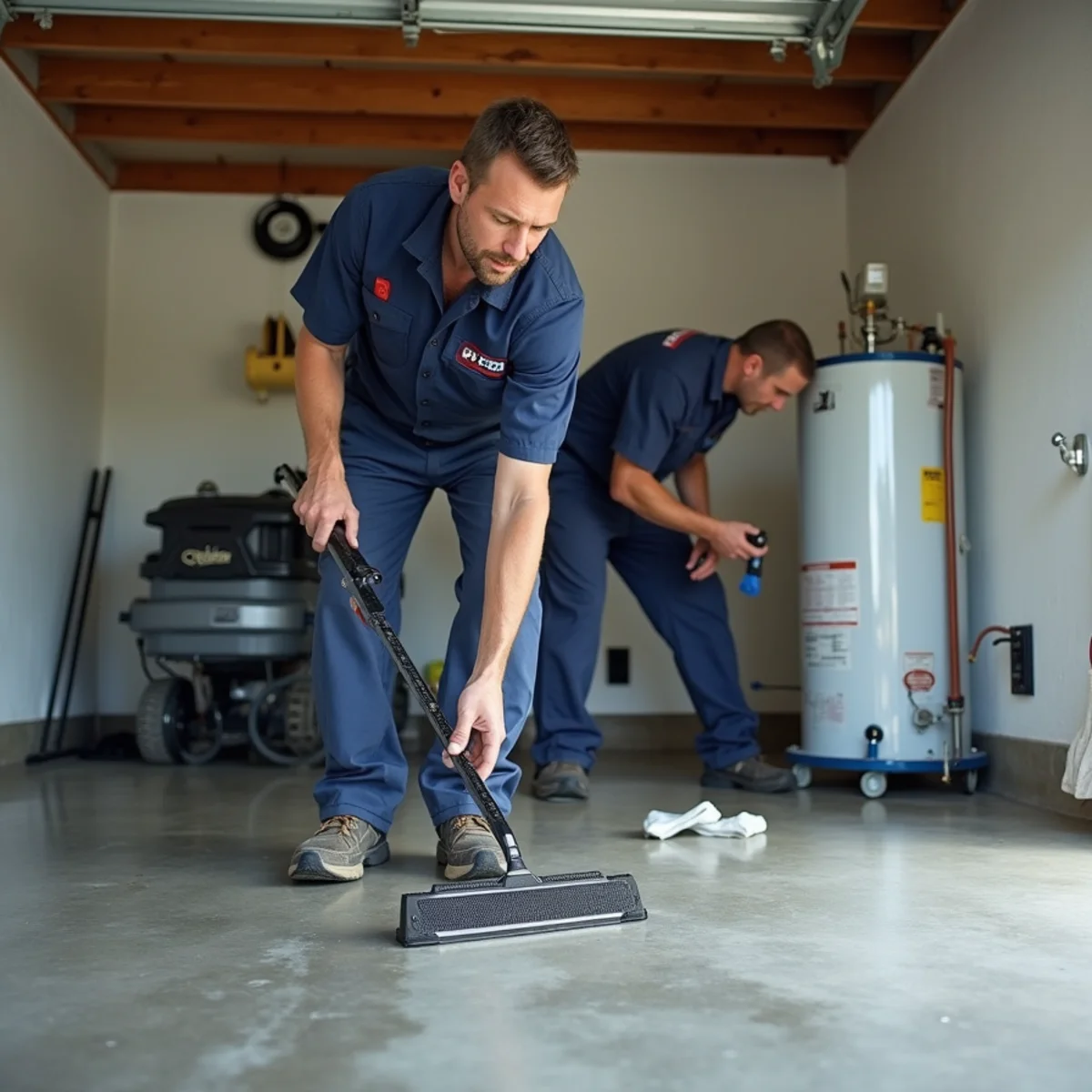
Why the Garage Is the Room Most Crews Underestimate
Water heater failures look contained. The ones that turn expensive are the ones where nobody checked the wall.
We always read the shared wall
Water pooling against the wall a garage shares with the house wicks into the bottom plate and the drywall on both faces. From the garage side you may see nothing, which is why that check comes before anything else.
We know California garage slabs settle
They were poured to drain toward the door. Sixty years of movement means many now drain toward the house, which is why this keeps reaching living space.
We check the strapping while we are there
Health and Safety Code §19211 is a seismic rule and a leak rule. A tank that shifts stresses the rigid connections at the top, and those start weeping — the anchoring is the part that gets done badly.
We flag hard-water tank life honestly
Local mineral content builds sediment that overheats the bottom seam. Past ten to twelve years, we will tell you the tank is on borrowed time.
- IICRC-certified technicians
- Licensed & insured
- 60-minute target response across Whittier
- Direct insurance billing
- 7012 Walnut Grove Dr, Whittier, CA 90606
Need water heater leak cleanup today?
Close the cold inlet, then call — and tell us whether the shared wall is wet.
Step by step
Our Water Heater Leak Response
Stop it, extract it, check the shared wall, dry everything.
Step 1
Isolate supply and energy
Cold inlet valve closed, gas valve or breaker off. If the tank has failed catastrophically it may need draining before anything else can proceed safely.
Step 2
Extract the garage
Standing water off the slab, and stored contents assessed — cardboard, particle board and textiles that were sitting in it are usually unsalvageable.
Step 3
Check the shared wall
Moisture readings on both faces of the wall between the garage and living space, plus the flooring on the interior side. This is where the real damage usually hides.
Step 4
Dry the assemblies
Slab, wall base and any affected interior flooring dried with equipment and monitored daily until readings meet the dry standard.
Step 5
Restore and prevent
Drywall, baseboard and flooring restored — and a straight conversation about the drip pan, drain line, straps and shut-off that would keep the next one from being a claim.
On the job
Honest pricing
What Water Heater Cleanup Costs Depend On
A garage-only event is a modest job. Once it crosses into the house, the numbers change.
- Whether it reached living space
- The single biggest factor. Garage slab only is straightforward; interior flooring and drywall is a full restoration scope.
- How long it ran
- A tank that burst while you were home is a different job from a slow weep discovered after a vacation.
- Contents affected
- Stored boxes, furniture and equipment sitting on the slab, plus the labor of moving and assessing them.
- Wall assembly involvement
- Drying the shared wall through controlled access versus removing and rebuilding a section of it.
- Drywall and finish restoration
- Garage drywall is usually simple; matching interior finishes on the other side is not.
Sudden tank failure is normally a covered loss for the resulting damage, though the replacement heater itself typically is not covered. A tank that had been visibly weeping for months is where carriers push back — another reason not to ignore a small puddle in the garage.
Related services, service areas and guides
Related services
- 24/7 Emergency Water RemovalA real person answers, a crew is dispatched immediately, and you get an honest arrival window before you hang up.
- Water Extraction & RemovalTruck-mounted and portable extraction that pulls water out of carpet, pad and subfloor before it reaches the framing.
- Mold RemediationContainment, HEPA filtration and controlled removal — plus fixing the moisture source so it does not come back.
Related reading
- Water Heater Flooded the Garage: Emergency Steps Before Help ArrivesForty to eighty gallons on the floor, and the tank is still refilling. Here is the shut-off sequence — and the wall you must check before you assume it stayed in the garage.
- California's Water Heater Strapping Law (HSC §19211): The Earthquake Leak Risk Hiding in Your GarageEveryone treats it as a seismic and gas-safety requirement. It is also the cheapest water damage prevention in your house.
Water Heater Leak Cleanup across our service area
We provide water heater leak cleanup across Whittier and the surrounding Los Angeles County communities. Each area page covers the local housing and drainage risks that actually drive water damage there.
- East WhittierUnder 10 minutes from our Walnut Grove Dr base. This is our home zone.
- Uptown WhittierAbout 8 to 12 minutes from our Walnut Grove Dr base, west along Whittier Boulevard or Philadelphia Street.
- Whittwood, WhittierUnder 10 minutes from our Walnut Grove Dr base — one of our closest zones.
- Friendly Hills, WhittierAround 8 to 12 minutes from our base, up toward the Whittier foothills.
- Pico RiveraTypically 10 to 15 minutes from our Walnut Grove Dr base, straight across on Whittier Boulevard or Washington Boulevard.
- Santa Fe SpringsAround 10 minutes from our base, south on Painter Avenue or straight down the 605.
- South WhittierUsually under 10 minutes from our Walnut Grove Dr base — one of the fastest zones we serve.
- La MiradaRoughly 12 to 18 minutes from our Whittier base via Imperial Highway or Rosecrans Avenue.
- NorwalkAround 12 to 15 minutes from our base, south on Norwalk Boulevard or Pioneer Boulevard.
- Los Angeles CountyWe work the southeast quadrant of the county from our base at 7012 Walnut Grove Dr in Whittier, with a 60-minute target response across the Gateway Cities and the lower San Gabriel Valley.
Request a visit
Free Estimate for Water Heater Leak Cleanup
We inspect with thermal imaging and moisture meters before quoting — a firm price given over the phone without readings is a guess. If water is spreading right now, call instead; crews are dispatched during the conversation.
+1 (201) 277-9344