Local Whittier Angles
California's Water Heater Strapping Law (HSC §19211): The Earthquake Leak Risk Hiding in Your Garage
Everyone treats it as a seismic and gas-safety requirement. It is also the cheapest water damage prevention in your house.
Water spreading right now? Call before you finish reading — crews are dispatched during the conversation, 24/7.
+1 (201) 277-9344The short answer
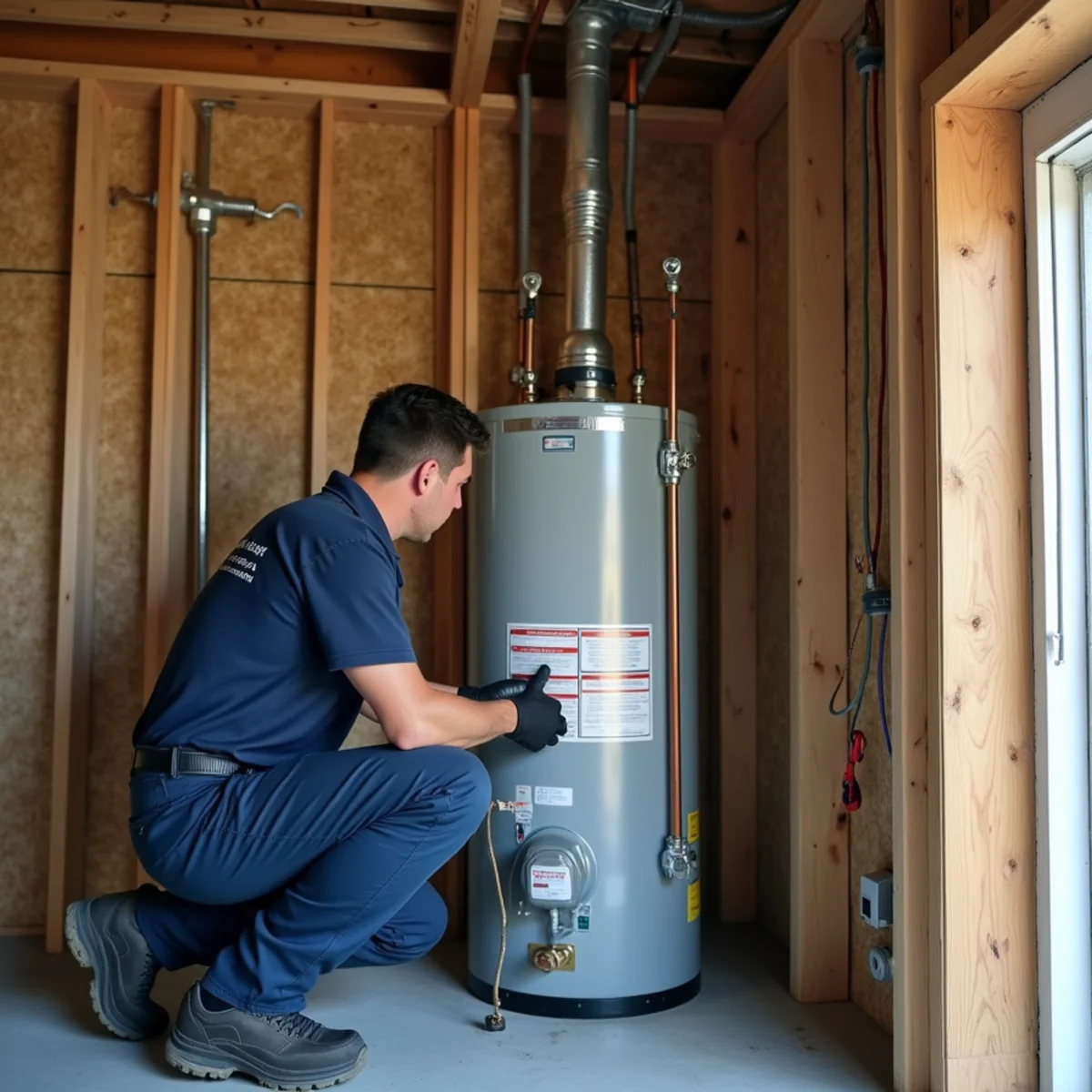
California Health and Safety Code section 19211 requires water heaters to be braced, anchored or strapped to resist earthquake displacement — conventionally two straps at the upper and lower thirds, anchored into structure rather than drywall. It is a leak rule as much as a seismic one, because a tank that shifts stresses the connections at its top.
California Health and Safety Code section 19211 requires water heaters to be braced, anchored or strapped to resist falling or horizontal displacement from earthquake motion.
It gets discussed almost entirely in terms of gas line rupture and fire risk, which is fair. What gets missed is that the same movement causes water damage — and does so far more often, because it does not take an earthquake big enough to make the news.
What the Requirement Involves
The standard approach is two straps — one at the upper third of the tank and one at the lower third, with the lower one positioned a minimum distance above the controls — anchored into structural framing rather than just into drywall.
Anchoring is the part that gets done badly. A strap screwed into drywall provides essentially nothing under load; it has to reach studs or solid blocking.
The requirement typically comes up at point of sale and at permit inspection for a replacement. If your heater was installed by a previous owner or replaced without a permit, it is worth checking yourself rather than assuming.
Why This Is a Leak Rule
A water heater is a heavy, top-loaded cylinder standing on a slab. Ground motion moves it, and rigid connections at the top do not tolerate that movement.
The dramatic failure — tank topples, gas line ruptures — is what the code is written around. The common failure is far less dramatic: the tank shifts an inch or two, the rigid supply connections at the top are stressed, and a connection that has been pulled slightly out of true starts weeping.
That weep is in a garage, behind stored boxes, on a floor nobody looks at closely. It runs for weeks. And Southern California experiences ground motion regularly at levels well below what makes the news — plenty to shift an unstrapped tank.
Flexible Connectors Are the Other Half
Straps stop the tank moving. Flexible connectors let the connections tolerate whatever movement remains.
Corrugated flexible water connectors on the supply lines and a flexible gas connector on gas units absorb movement that would otherwise stress a rigid joint. Modern installations generally use them; older ones frequently do not.
If your heater has rigid copper running straight into the top of the tank, that is worth raising with a plumber next time one is in the house. It is a small job.
While You Are Looking, Check These Too
The garage water heater is worth a five-minute inspection twice a year, and this is the list.
- Straps — two, upper and lower third, anchored into structure not drywall
- Flexible connectors on water and gas
- Drip pan underneath, with a drain line running somewhere useful
- T&P relief valve discharge line — should terminate safely, not into a bucket or nowhere
- Age — check the date on the data plate; past ten to twelve years, plan a replacement
- Corrosion at the bottom seam, and any moisture or mineral crust around fittings
- Combustion clearance — nothing stored against a gas unit
The Local Angle
Almost every home in Whittier and the surrounding cities has its water heater in the garage, and most of those garages are on slabs poured sixty or seventy years ago.
Those slabs were poured to drain toward the door. Decades of settlement have frequently changed that, so water from a weeping connection pools against the wall shared with the living space instead of running to the driveway — and from there it wicks into the wall base and shows up as damp drywall inside the house.
Which is why our advice on any water heater leak always includes checking that shared wall. It is where a garage event becomes a house event.
What We Actually Find When We Get Called to a Garage
The strapping conversation usually starts after a leak rather than before one, which means we see a fair sample of how these installations are really put together. Four defects come up repeatedly, and none of them are exotic.
Straps anchored into drywall instead of a stud or the masonry behind it — they look correct from three feet away and provide almost nothing under load. A single strap at the middle of the tank, which allows the top to rock even though something is technically fitted. Rigid copper running straight into the top of the tank with no flexible connector, so any movement at all transfers directly into the joint. And a drip pan with no drain line, or a drain line terminating somewhere that simply puts the water on the same garage floor.
The fourth one is worth dwelling on, because a properly plumbed pan is what converts a slow tank failure into a non-event. A pan under the heater, with a line running to a floor drain or to the exterior, catches a weeping fitting or a failing seam and takes the water somewhere visible instead of somewhere absorbent. It is inexpensive work at replacement time and nearly always skipped. On a garage slab that has settled toward the house rather than the door — which is common in local tracts of a certain age — that pan is the difference between wiping a floor and drying a bedroom wall on the other side.
The bottom line
Two straps into structure, flexible connectors, a drip pan with a drain, and a glance at the date plate.
Ten minutes, twice a year, on the appliance most likely to flood your house.