Local Whittier Angles
What the 2022–2023 Atmospheric Rivers Taught the San Gabriel Valley About Urban Flooding
Systems that shrug off a shower fail under seventy-two hours of continuous rain. That is the whole lesson, and it applies to almost every house here.
Water spreading right now? Call before you finish reading — crews are dispatched during the conversation, 24/7.
+1 (201) 277-9344The short answer
Four things: duration breaks what intensity does not, routine drainage maintenance is what actually keeps water out, the regional flood-control system held while street and lot drainage failed, and a large share of the losses were uncovered because the water crossed the ground rather than entering through a storm-created opening.
The winter of 2022–2023 delivered an unusual run of atmospheric river systems to California in rapid succession — weeks of sustained, repeated rainfall across a state built around a dry-summer climate.
For restoration crews across Los Angeles County it was an education in what actually fails when the rain does not stop.
Lesson 1: Duration Breaks Things That Intensity Does Not
A roof, a drain and a soil profile all behave differently on hour six of rain than on hour sixty.
Roofing systems here are engineered for a climate that is dry eight months a year. A cracked tile or a lifted flashing sheds a brief shower without complaint. Give it three days of continuous saturation against aging underlayment and the same defect becomes an active leak.
Soil is the same. Dry ground absorbs the first storm. By the third or fourth day of a sustained system, the ground is saturated, absorption has stopped, and everything that falls becomes surface runoff looking for the lowest point.
That is why our call volume during that period did not peak with the heaviest rainfall day. It peaked on days three and four of each system.
Lesson 2: Drainage Maintenance Is Not Optional Here
The single most common cause of water entering homes during that winter was not roof failure. It was drainage that had not been cleared.
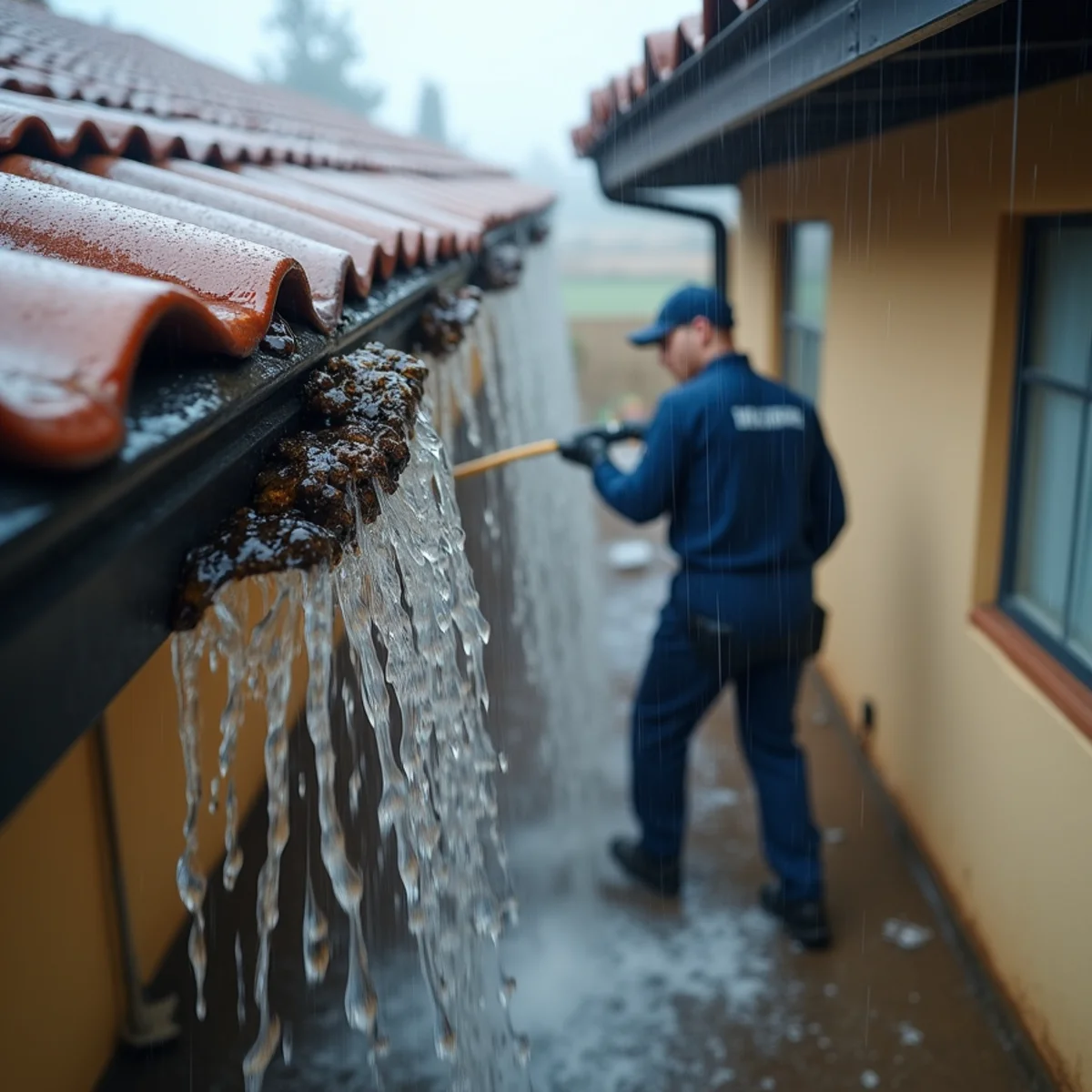
Gutters full of eight months of accumulated debris. Downspouts discharging directly against foundations. Area and yard drains silted up since the previous spring. Flat commercial roof drains blocked, ponding water on roofs designed to shed it.
None of that is exotic. All of it is an afternoon of work in October, and it prevents the large majority of what we were called to. Our pre-rainy-season drainage checklist covers the specifics.
Lesson 3: Capacity Is Regional but Failure Is Local
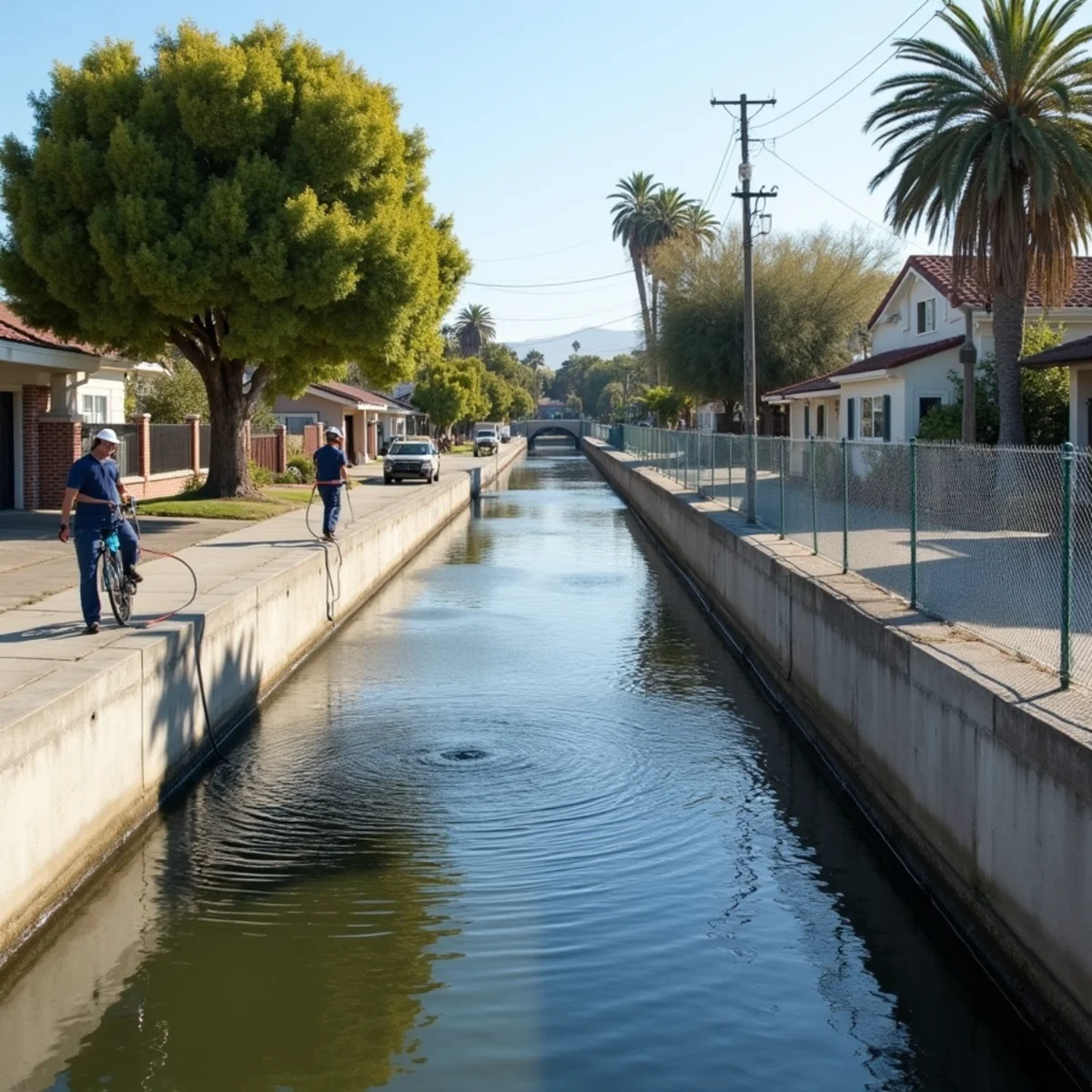
The county flood-control system did its job. The concrete channels on the San Gabriel River and Rio Hondo carried the regional flow, and Whittier Narrows and the spreading grounds performed the function they exist for.
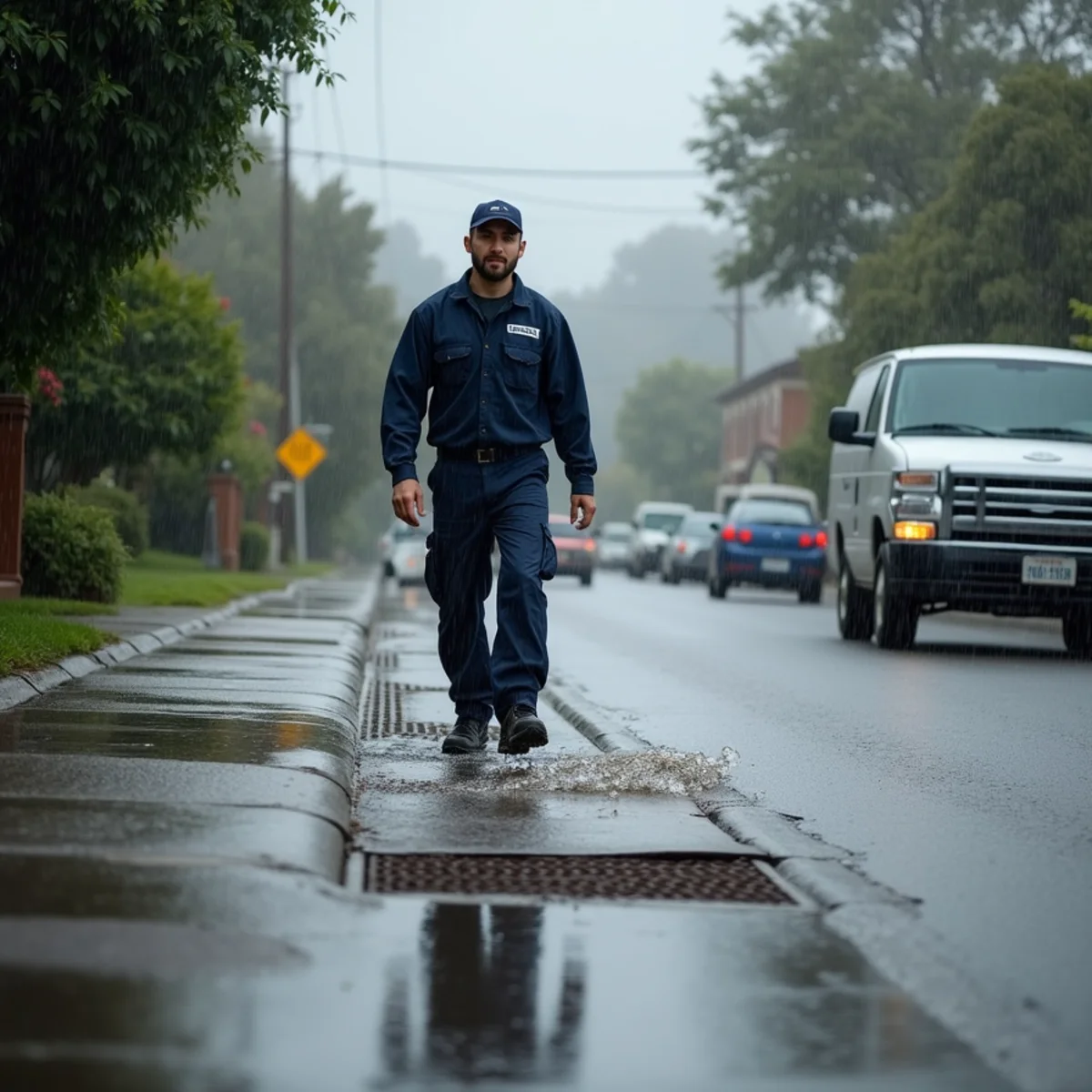
The flooding that damaged homes happened at street and lot scale — storm drains at capacity, water backing up at kerbs, driveways funnelling toward garages, low thresholds admitting water that had nowhere else to go.
That is an important distinction for homeowners, because it means the risk you can meaningfully reduce is entirely within your property line.
Lesson 4: The Insurance Gap Became Very Visible
A large number of the losses from that winter were not covered, and the reason was consistent: the water came off the ground rather than through the roof.
Standard California homeowners policies cover rain entering through a storm-created opening and the interior damage that follows. They exclude surface water, runoff and rising water, which require separate flood coverage.
The homes with the worst outcomes were the ones where water came in under a door or a garage threshold — visually identical damage to a roof leak, entirely different claim result. It is why documenting the entry point is the first thing we photograph on any storm job.
What to Change Before the Next One
Five things, none of them expensive.
- Clear gutters, downspouts and every area drain in October, before the first system
- Extend downspout discharge well away from the foundation
- Check the grade around the house — soil should fall away, and landscaping frequently reverses it
- Walk the roof line from the ground after any wind event and look for lifted or slipped material
- Price flood coverage now, remembering the typical 30-day waiting period
What That Winter Looked Like From the Dispatch Log
The pattern of a wet season is visible in call volume, and it does not track the rainfall chart the way people assume. Calls do not peak on the heaviest day. They peak two to four days into a sustained system, and again disproportionately on the first significant storm of the season regardless of how much rain it actually delivered.
Both spikes have the same explanation, which is that buildings here fail from saturation rather than from intensity. A roof, a soil profile and a drain all behave acceptably for six hours and differently at sixty. Dry ground absorbs the first day and stops absorbing by the third. A cracked tile sheds a shower and admits water once the underlayment beneath it has been wet for two days. And a gutter carrying eight months of debris fails on the first storm it meets, not the biggest one.
The other thing the log showed was repetition of address type rather than address. The same configurations came up again and again: garages at the low point of a sloping driveway, side yards where an area drain was the only outlet, additions where the new roof plane met the old one, and single-story homes with mature trees directly overhead. None of those are unusual houses. They are simply the shapes where a small maintenance failure has nowhere harmless to go, which is why the October work matters more on some properties than others.
The bottom line
Duration is what breaks things here, drainage is what you control, and the entry point decides the claim.
One afternoon in October is the highest-return maintenance in the Southern California calendar.