
Water Damage Restoration · Whittier, CA
Roof Leak Water Damage Restoration in Whittier, CA
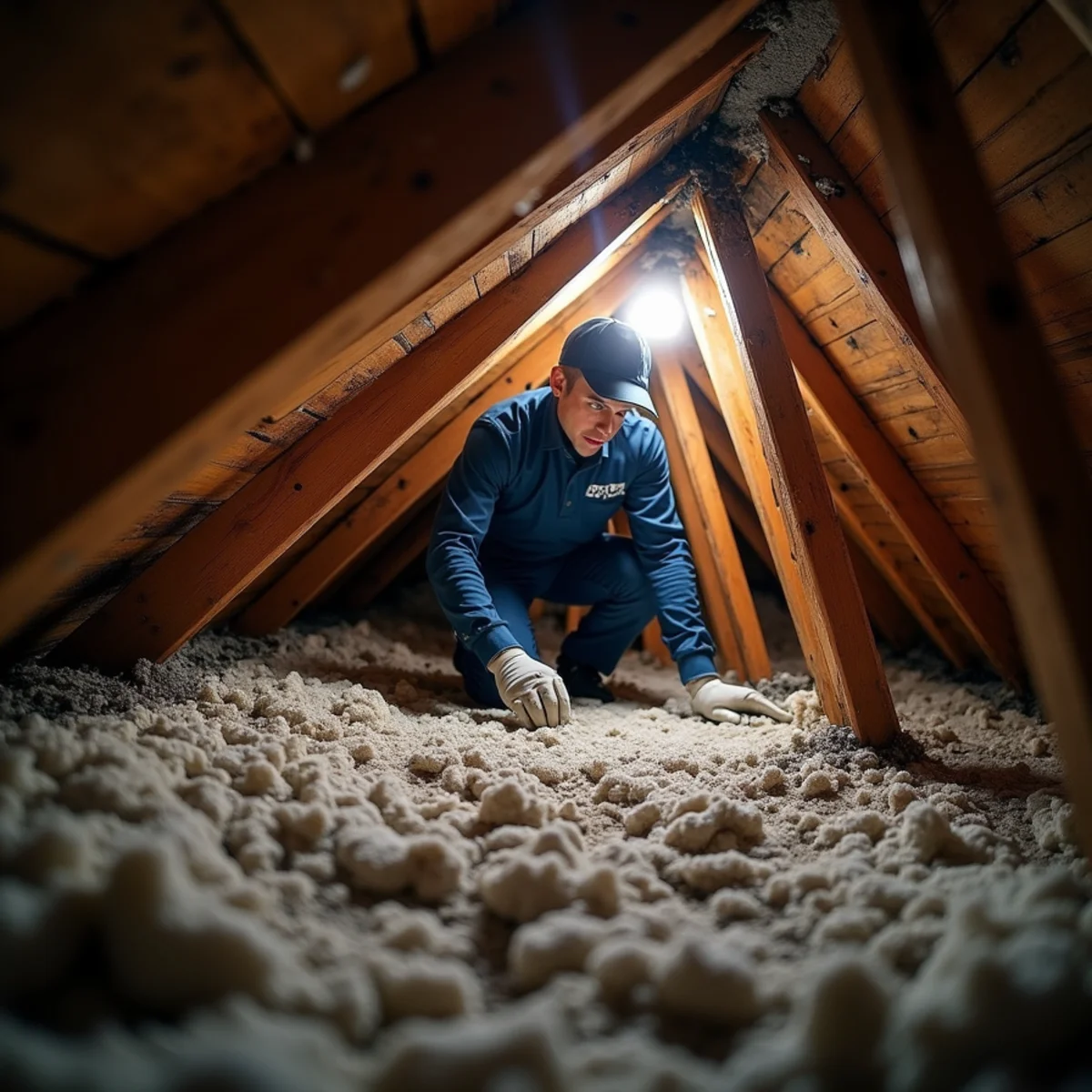
Attic-down restoration: wet insulation out, decking and framing dried, ceilings rebuilt and matched.
- 24/7 emergency dispatch
- 60-minute target response
- IICRC-certified technicians
- Direct insurance billing
Roof leaks are seasonal here in a way that catches people out. Eight months of the year the roof is not tested at all. Then November arrives, and three consecutive days of rain find every defect at once.
The other half of it is wind. Santa Ana events lift tile and shingle, break the seal on flashings, and drive rain horizontally under laps that were only ever designed to shed water falling straight down.
By the time you see a stain on the ceiling, water has already been in the attic — soaking insulation, running along the top chord of the trusses, and traveling well away from the actual entry point. That is where restoration starts.
What you actually get
What Roof Leak Restoration Includes
This is attic-down work. The interior repair is the visible half; what happens above the ceiling decides whether it holds.
Emergency tarping if rain continues
The plane closed properly with battens into sound decking before any interior work starts, so the next band does not undo it.
Attic entry-point tracing
Working uphill from the interior staining along the framing to find the actual entry — which on a low-slope plane can be twenty feet away.
Saturated insulation removal
Handled from the attic side, which is the part homeowners rarely see. Wet material is bagged in place so it is not dragged across dry insulation on the way out, the framing underneath is read once it is exposed, and the ceiling drywall is then assessed separately — it is frequently salvageable once the weight and the moisture source above it are gone. Attic work also gives us the entry point, because the leak is almost never directly above the stain.
Decking and framing drying
Equipment placed in the attic itself, with sheathing and rafters read on meters — confined, hot, awkward work, and exactly the step that gets skipped.
Ceiling rebuild and matching
Drywall back to sound framing, texture matched, stain-blocking primer and paint — with asbestos testing first on any pre-1980 acoustic ceiling.
Insulation reinstated to spec
Replaced to the correct R-value rather than left thin, so the repair does not quietly cost you on every energy bill afterward.
Where Roofs Actually Leak
Almost never in the middle of a clean field of roofing. Water gets in at transitions and penetrations.
The reliable list: flashing at roof-to-wall junctions, chimneys and skylights; plumbing vent boots, whose rubber collars dry out and split in this climate; valleys where two planes meet and volume concentrates; the eave edge where ice is irrelevant here but wind-driven rain is not; and around any penetration added after the original roof — a satellite mount, a solar standoff, an added exhaust vent.
Underlayment is the other silent factor. The visible roofing sheds most water; the underlayment beneath is the actual waterproof layer and it degrades with age and heat. A tile roof in Whittier can look perfectly sound at forty years old while the felt under it has become brittle and stopped doing its job — which is why the leak seems to appear from nowhere.
Why the Stain Is Not Under the Hole
Water entering at the roof deck runs downhill along whatever it lands on before it drops.
It follows the underside of the decking to a rafter, then runs along the rafter, then finds a low point — a truss connection, a duct penetration, a ceiling joist — and drops through. In a house with a low-slope roof plane, that can put the interior stain fifteen or twenty feet from the entry point, and on the opposite side of the room from where you would look.
This is why "just patch the roof above the stain" fails so often. We inspect from inside the attic, trace the staining on the framing back uphill to the entry, and mark it — then the roofing repair addresses the actual defect rather than the coincidence directly above the drip.
Attic Restoration Is Its Own Scope
What happens above the ceiling determines whether the repair holds.
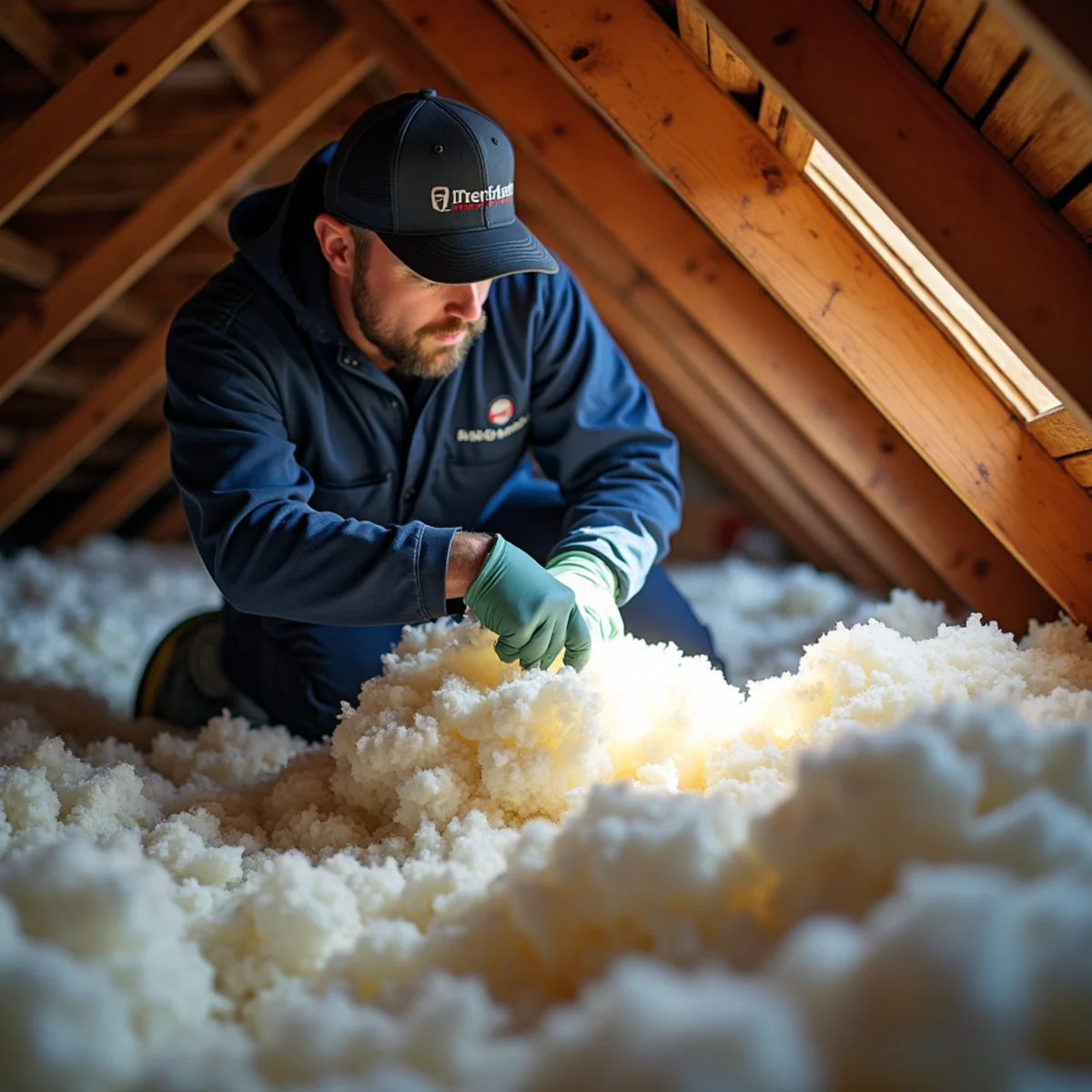
Wet insulation comes out. Blown-in cellulose and fiberglass batt both mat down when wet, hold water against the ceiling drywall, and lose their R-value permanently — drying wet insulation in place is not an option and leaving it produces exactly the conditions for hidden mold. Sheathing and framing are read with meters, then dried with equipment placed in the attic, which is difficult work in a confined, hot space with no lighting and is exactly the step that gets skipped.
Once the assembly is verified dry, the ceiling repair follows: drywall, texture matching, stain-blocking primer, paint. And on any pre-1980 home with acoustic popcorn texture, testing before disturbance rather than assumption.
Why us for this job
Why the Stain Is Not Where the Leak Is
Most failed roof repairs failed because someone patched directly above the drip. That is the single most useful thing to understand here.
We trace it uphill, in the attic
Water runs along the underside of decking to a rafter, along that, then drops at the first penetration. The entry is almost never above the stain.
We understand the local failure mode
Aging underlayment is the usual hidden cause here — visible tile can look sound at forty years while the felt beneath has gone brittle and stopped working.
Wet insulation always comes out
Leaving it is the most common cause of hidden attic mold, in the one part of the house nobody would find it for years.
We are straight about roof versus patch
We handle tarping and the full interior restoration and coordinate the roofing repair — including telling you when what you need is a roof, not another patch.
- IICRC-certified technicians
- Licensed & insured
- 60-minute target response across Whittier
- Direct insurance billing
- 7012 Walnut Grove Dr, Whittier, CA 90606
Need roof leak water damage restoration today?
The entry is rarely above the stain — call and we will trace it from the attic down.
Step by step
Our Roof Leak Restoration Process
Stop the entry, restore from the attic down.
Step 1
Emergency tarping
If rain is ongoing, the plane is tarped properly — battens into sound decking, laps that shed water — before anything else. See storm damage cleanup.
Step 2
Attic inspection and tracing
We work uphill from the interior staining along the framing to find the real entry point, and photograph it for the roofer and the claim.
Step 3
Remove wet insulation and materials
Saturated insulation is bagged and removed; compromised ceiling drywall is taken back to sound material and framing.
Step 4
Dry decking, framing and ceilings
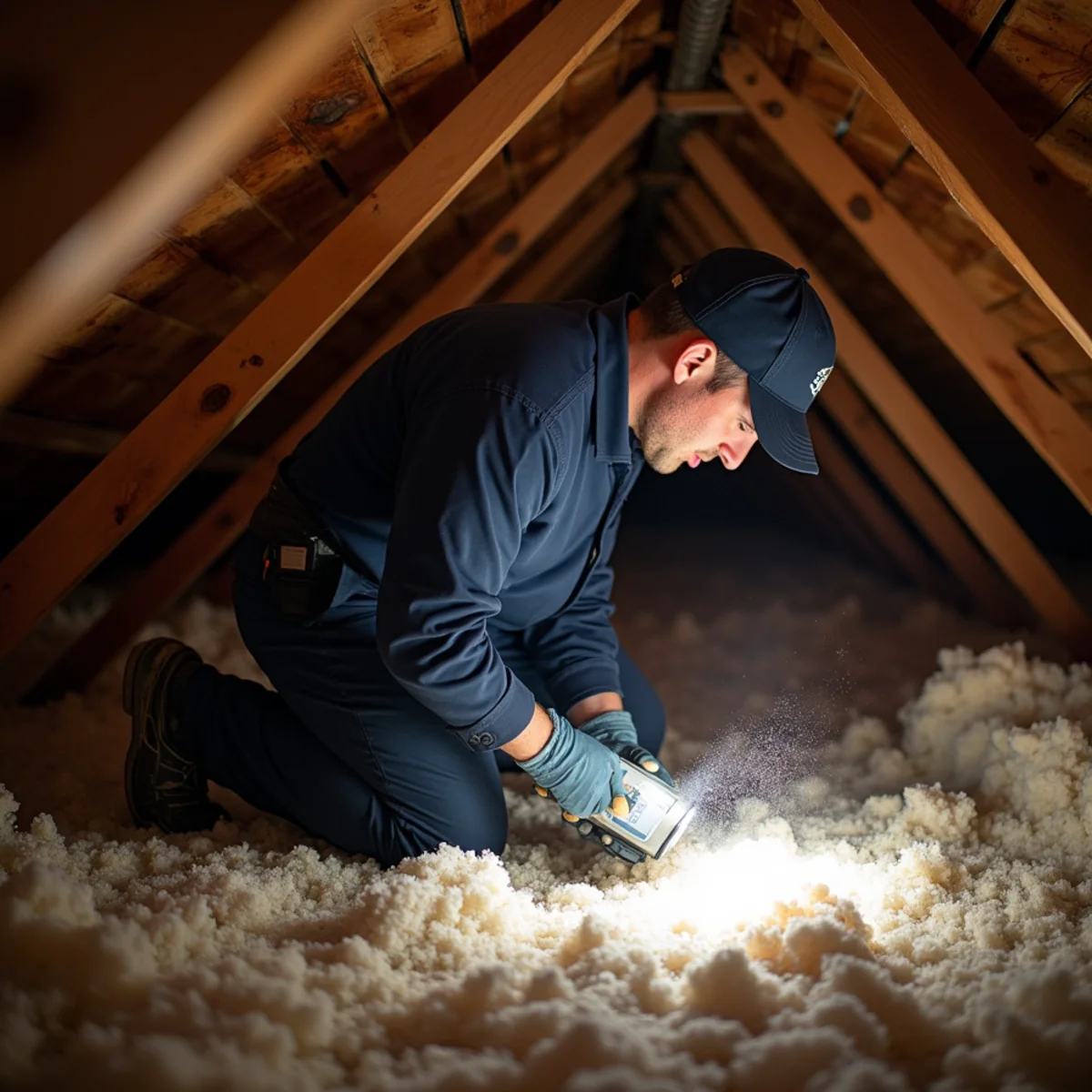
Equipment placed in the attic and in the room below, with daily readings on the decking, rafters and ceiling assembly until they meet the dry standard.
Step 5
Repair and reinstate
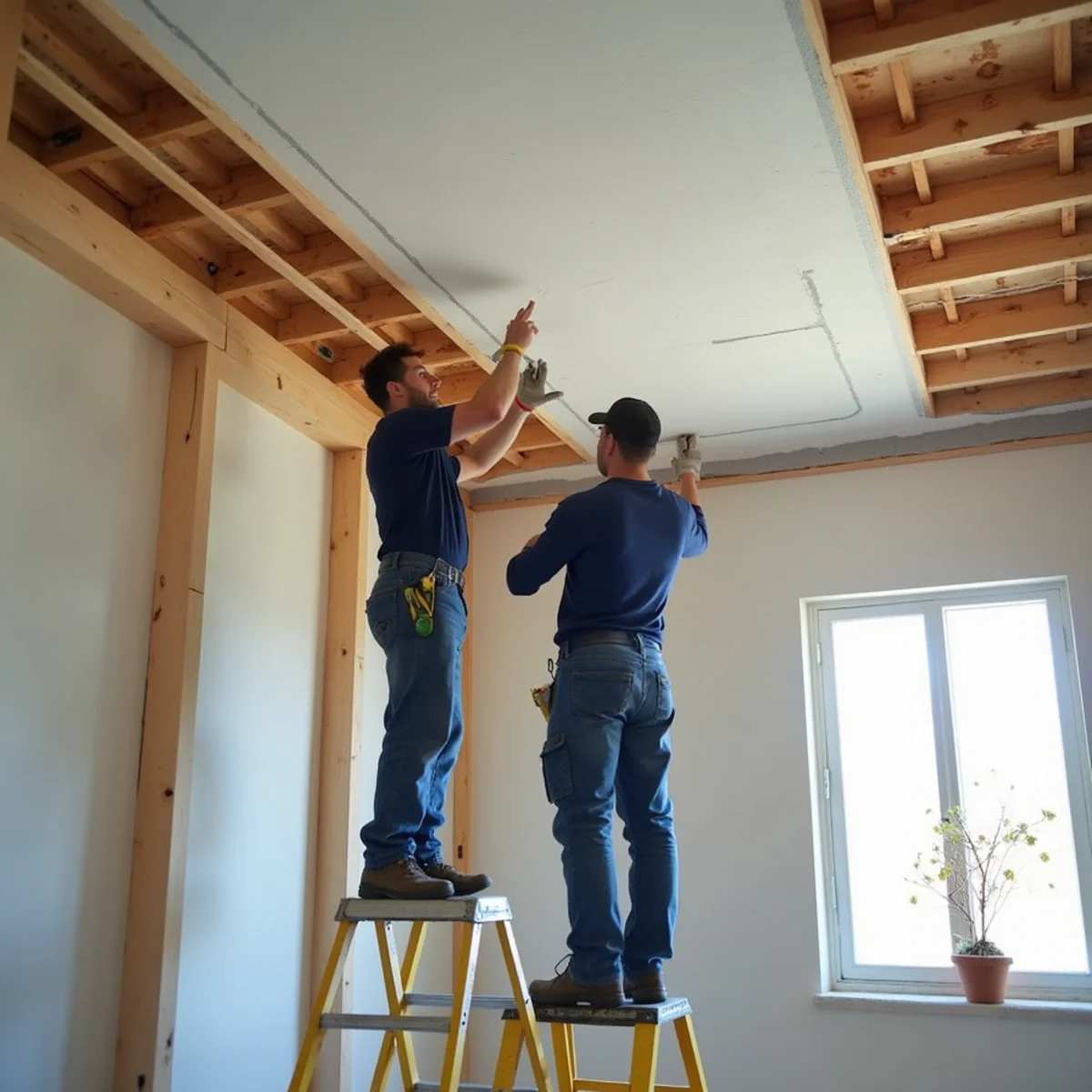
Permanent roof repair coordinated, insulation replaced to the correct R-value, ceilings rebuilt, textured, primed and painted.
On the job
Honest pricing
What Roof Leak Restoration Costs Depend On
The interior restoration and the roofing repair are two separate budgets. This covers the interior.
- How many storms it ran through
- A single event is usually one ceiling. A leak that ran across a whole winter reaches insulation, framing and often a wall assembly.
- Attic access and clearance
- Low-clearance attics and cut-up roof structures make removal and equipment placement slow.
- Insulation volume
- Removal, disposal and replacement to the correct R-value across the affected area.
- Ceiling area and texture
- Patch versus full plane, texture matching, and asbestos testing on pre-1980 acoustic ceilings.
- Wall and flooring involvement
- Water that ran down inside a wall rather than dropping through the ceiling extends the scope considerably.
Insurance generally covers sudden storm-created damage and the resulting interior water damage, and generally excludes the roof repair itself when the roof failed from age or deferred maintenance. Documenting the storm date against the damage is what separates those two outcomes.
Related services, service areas and guides
Related services
- Storm Damage CleanupEmergency tarping and board-up first, then extraction and drying — so the next band of rain does not undo the work.
- Ceiling Water Damage RepairTrace the source, dry the cavity above, then repair and texture-match the ceiling so the patch does not show.
- Mold RemediationContainment, HEPA filtration and controlled removal — plus fixing the moisture source so it does not come back.
Related reading
- Ceiling Leaking During a Storm? What to Do in the Next 30 MinutesA bulging ceiling is holding more water than it looks and it fails without warning. Clear the room first, then relieve it deliberately.
- Gutters, Downspouts, and Yard Drainage: A Pre-Rainy-Season Checklist for Whittier HomesA roof sheds water perfectly and then hands the whole problem to your gutters, downspouts and yard. That handoff is where most local water damage starts.
Roof Leak Water Damage Restoration across our service area
We provide roof leak water damage restoration across Whittier and the surrounding Los Angeles County communities. Each area page covers the local housing and drainage risks that actually drive water damage there.
- East WhittierUnder 10 minutes from our Walnut Grove Dr base. This is our home zone.
- Uptown WhittierAbout 8 to 12 minutes from our Walnut Grove Dr base, west along Whittier Boulevard or Philadelphia Street.
- Whittwood, WhittierUnder 10 minutes from our Walnut Grove Dr base — one of our closest zones.
- Friendly Hills, WhittierAround 8 to 12 minutes from our base, up toward the Whittier foothills.
- Pico RiveraTypically 10 to 15 minutes from our Walnut Grove Dr base, straight across on Whittier Boulevard or Washington Boulevard.
- Santa Fe SpringsAround 10 minutes from our base, south on Painter Avenue or straight down the 605.
- South WhittierUsually under 10 minutes from our Walnut Grove Dr base — one of the fastest zones we serve.
- La MiradaRoughly 12 to 18 minutes from our Whittier base via Imperial Highway or Rosecrans Avenue.
- NorwalkAround 12 to 15 minutes from our base, south on Norwalk Boulevard or Pioneer Boulevard.
- Los Angeles CountyWe work the southeast quadrant of the county from our base at 7012 Walnut Grove Dr in Whittier, with a 60-minute target response across the Gateway Cities and the lower San Gabriel Valley.
Request a visit
Free Estimate for Roof Leak Water Damage Restoration
We inspect with thermal imaging and moisture meters before quoting — a firm price given over the phone without readings is a guess. If water is spreading right now, call instead; crews are dispatched during the conversation.
+1 (201) 277-9344