
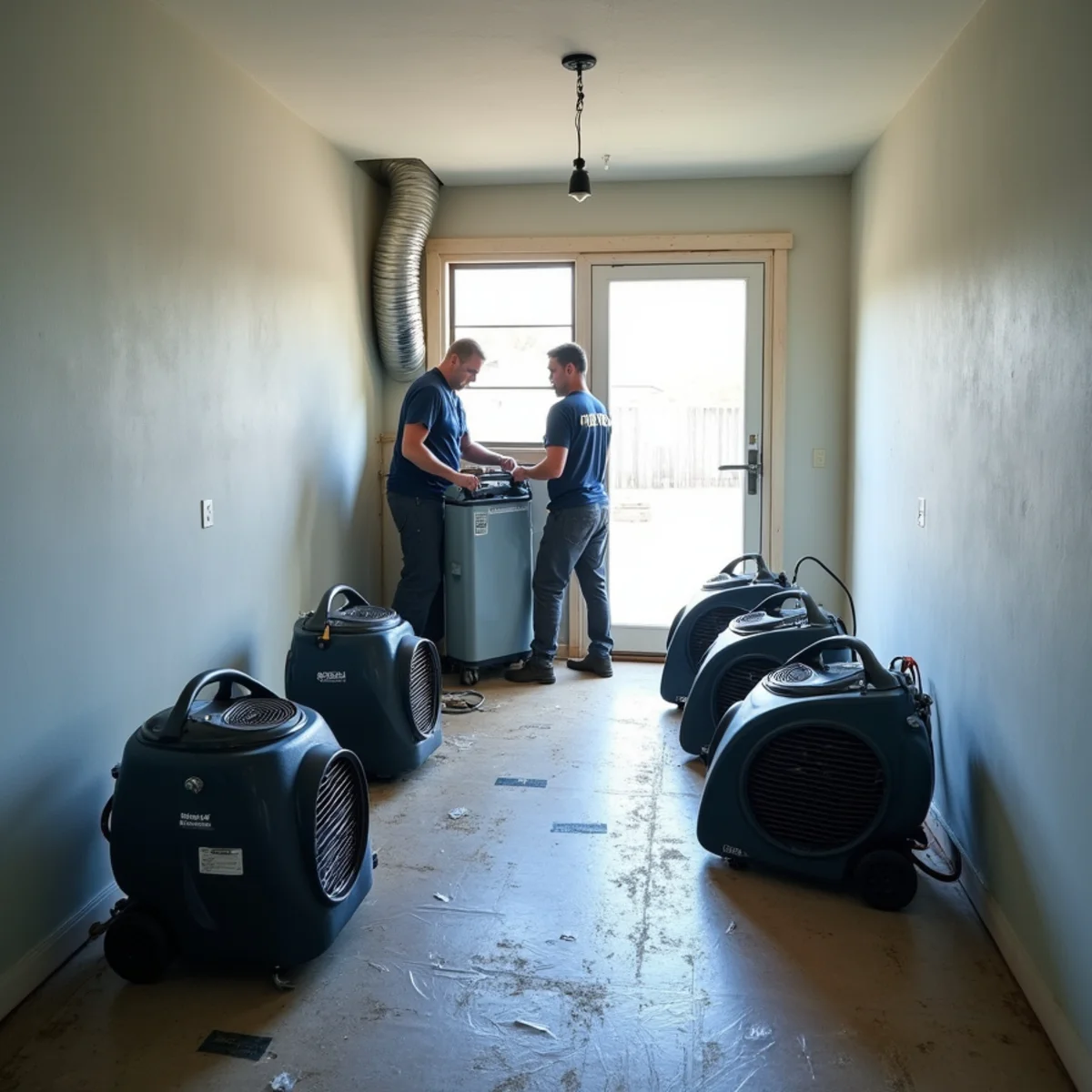
Water Damage Restoration · Whittier, CA
Structural Drying & Dehumidification in Whittier, CA
Engineered drying with daily moisture readings — so the structure is verifiably dry, not just dry to the touch.
- 24/7 emergency dispatch
- 60-minute target response
- IICRC-certified technicians
- Direct insurance billing
Extraction gets the water out of the room. Drying gets it out of the building.
Those are different problems. After a loss, moisture has already moved into materials that hold it: the paper facing on drywall, the bottom plate of the wall framing, the OSB or plank subfloor, the back of cabinet boxes, insulation. Surfaces feel dry within a day while the framing behind them is still saturated. That is the condition mold needs, and it is the condition that makes floors cup and drywall crumble weeks after everyone declared the job finished.
Structural drying is an engineered process, not a matter of pointing fans at a wet spot. We calculate equipment from the affected volume and the class of loss, build a drying chamber, and take readings every day until the numbers say the structure has returned to its normal dry standard.
What you actually get
What Structural Drying Includes
Drying is priced largely on equipment days, so what matters is what happens between the day the machines land and the day they leave.
A dry standard established first
Readings taken from unaffected areas of your own home define what "dry" means for your specific materials — not a generic target number.
A built drying chamber
Containment where it helps, HVAC managed, openings sealed. A controlled volume dries faster and costs less than an open house.
Calculated equipment placement
Air mover count and dehumidifier capacity derived from affected area and class of loss, angled to sweep surfaces rather than blast them.
Cavity drying through hidden access
Small controlled openings low on the wall where the baseboard will cover them, with directed airflow into the cavity and readings taken from inside.
Daily monitoring visits
Same marked locations, same meters, plus ambient temperature and relative humidity logged — and equipment repositioned as the wet area shrinks.
Written clearance readings
Final numbers against the dry standard issued in writing. That certificate is what releases the rebuild and what protects you later.
How Drying Actually Works
Three variables control drying speed: airflow, humidity, and temperature. Get one wrong and the job stalls.
Air movers push high-velocity air across wet surfaces. That thins the boundary layer of saturated air sitting against the material and lets evaporation continue. Dehumidifiers then remove that evaporated moisture from the air — because if the air in the room reaches equilibrium, evaporation stops and you are just running fans in a humid box. Temperature raises the rate at which water moves out of materials, which is why a sealed, conditioned drying chamber outperforms an open house with the windows cracked.
Opening windows is the single most common homeowner mistake. In Whittier, winter storm days — exactly when most losses happen — are the humid days. Bringing that outdoor air in raises the humidity in the structure and slows drying down.
Drying Whittier's Specific Construction
The assembly matters. A 1968 slab home in Michigan Park with lath-and-plaster walls dries differently from a 2004 build in The Groves with modern drywall and engineered flooring.
Plaster over wood lath holds a lot of water and releases it slowly, and it does not tolerate aggressive drying without cracking. Concrete slab holds moisture for a long time and can push it back up into new flooring for weeks if the slab is not brought down to spec before the rebuild starts. Cabinet boxes and toe-kick voids trap water where no meter reaches without drilling access holes — which we do, in inconspicuous places, rather than pretending the cavity is dry.
Where wall cavities are wet but the drywall is otherwise sound, we often dry the cavity rather than demolish it: small controlled access points, directed airflow into the cavity, and readings from inside. That keeps the rebuild scope — and your claim — smaller.
Daily Monitoring Is the Deliverable
Anyone can drop equipment. The value is in what happens on days two, three and four.
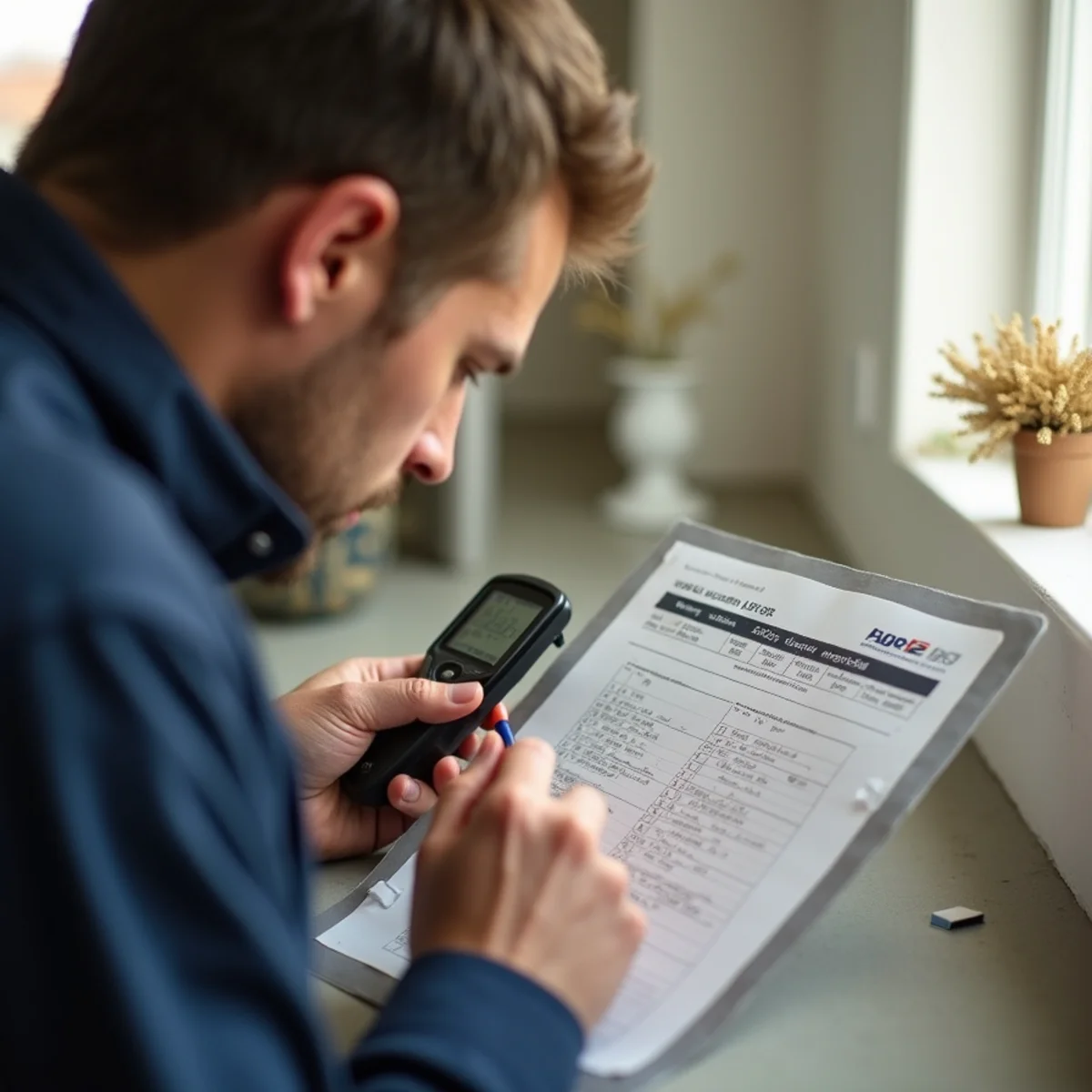
We return each day to read moisture content in the same marked locations, log ambient temperature and relative humidity, confirm the dehumidifiers are performing, and move air movers as wet areas shrink. Those daily logs do two things: they tell us when to pull equipment, and they give your adjuster a defensible record of why equipment stayed as long as it did. Claims get short-paid on drying days more often than on almost anything else, and a clean daily log is the answer to that.
Drying is complete when the affected materials read at or below the dry standard established from unaffected areas of the same home — not on a fixed schedule and not when the surface feels dry.
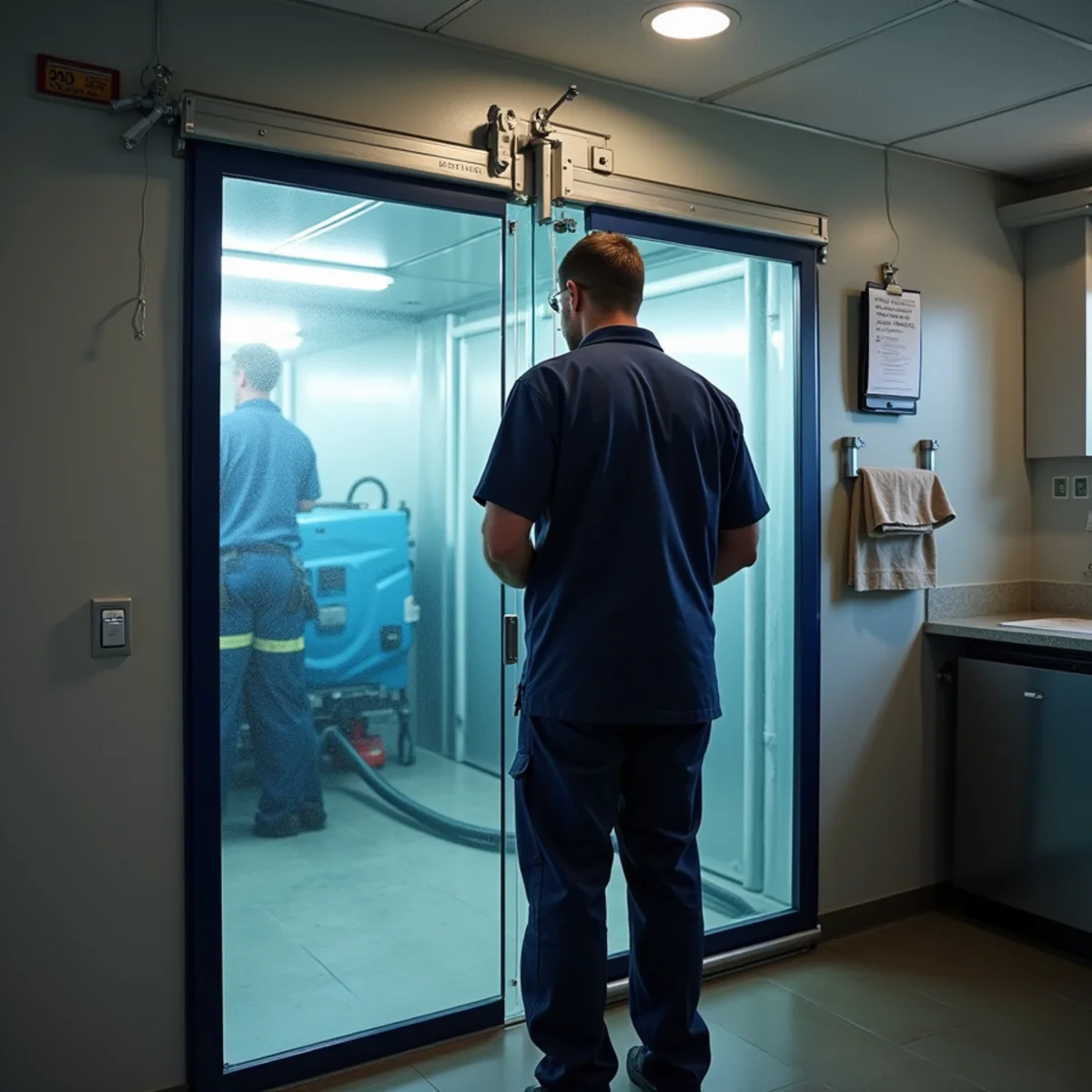
Why us for this job
Why Our Drying Finishes Instead of Just Stopping
Most drying disputes come down to one question: how do you know it is dry? Here is how we answer it.
We dry to a measured standard
Not to a fixed number of days and not to how a surface feels. Materials read against a benchmark taken from your own unaffected rooms — which is why the timeline varies so much room by room.
Daily logs, handed over
Drying days are one of the most commonly short-paid lines on a water claim. A dated log at marked locations is the only thing that answers an adjuster who questions them.
We know what Whittier assemblies do
Lath-and-plaster in the pre-war core needs low velocity over more days; slab holds moisture long after the surface reads dry. Neither tolerates a generic plan, and the same judgment decides whether wet drywall is dried in place or cut out.
Equipment pulled zone by zone
As areas hit target they are released, so you are not paying for machines running in rooms that finished three days ago.
- IICRC-certified technicians
- Licensed & insured
- 60-minute target response across Whittier
- Direct insurance billing
- 7012 Walnut Grove Dr, Whittier, CA 90606
Need structural drying & dehumidification today?
Ask for the dry standard before equipment comes out — call and we will explain what yours will be.
Step by step
Our Drying Process
Typically three to five days for a residential loss, longer for plaster, hardwood or slab saturation.
Step 1
Establish the dry standard
We take readings from unaffected areas of the same house to define what "dry" means for your specific materials, then read the affected areas against that benchmark.
Step 2
Build the drying chamber
Containment with poly sheeting where it helps, HVAC managed, doors and windows closed. A controlled volume dries faster and cheaper than a whole open house.
Step 3
Set air movers and dehumidifiers
Equipment count is calculated from affected area and class of loss. Air movers are angled to sweep surfaces, not blast them; dehumidifiers are sized to remove the moisture load that airflow is generating.
Step 4
Monitor daily and adjust
Same locations, same meters, logged every day. Equipment is repositioned as the wet footprint shrinks, and pulled zone by zone rather than all at once.
Step 5
Verify and release
Final readings are documented against the dry standard and issued in writing. That certificate is what lets the rebuild start — and what protects you if a question comes up later.
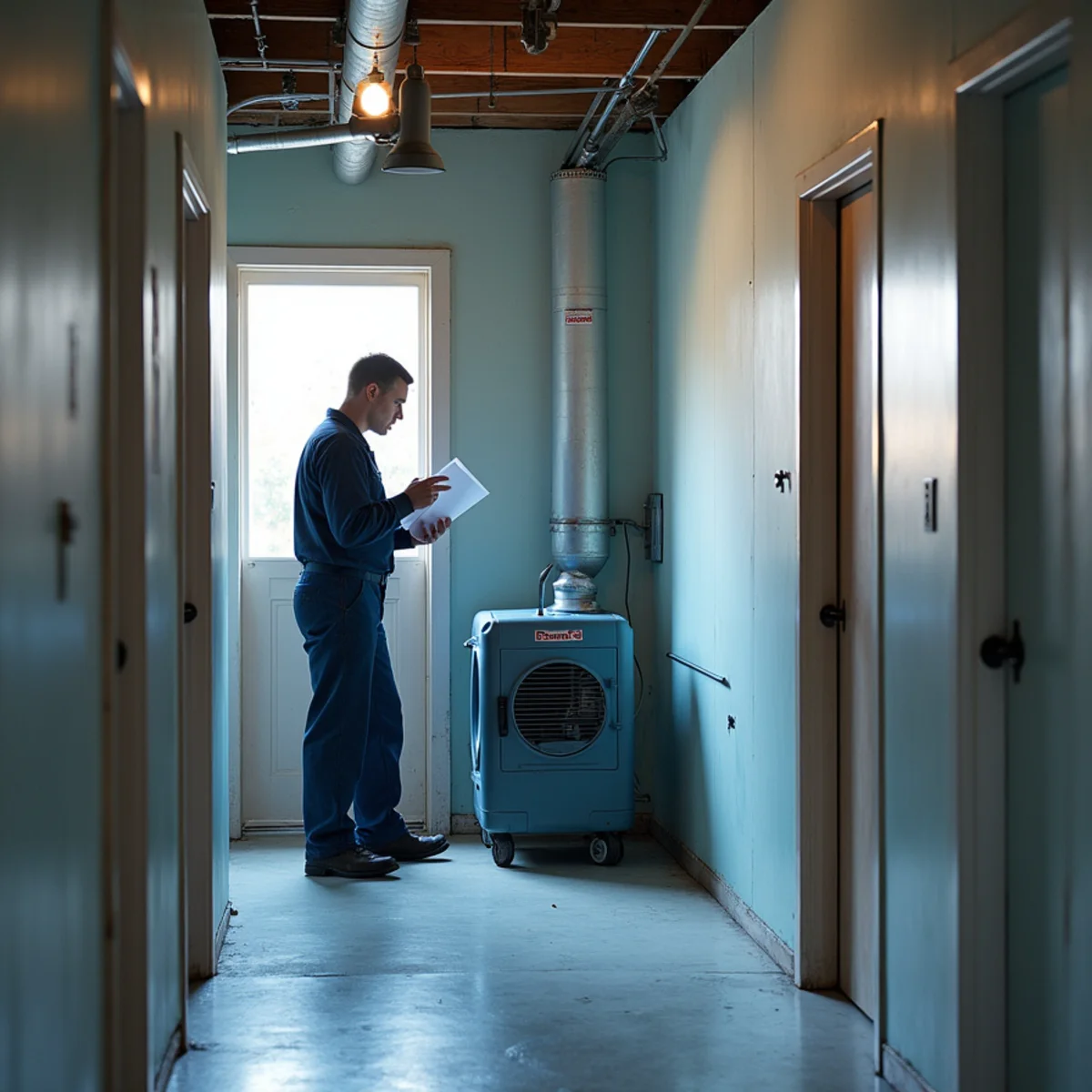
On the job
Honest pricing
What Drives Drying Costs
Drying is priced principally on equipment on site per day, which is why chamber design pays for itself.
- Equipment count
- Driven by affected square footage and the class of water loss — how much wet material, and how porous it is.
- Number of drying days
- Plaster, hardwood, cabinetry and concrete slab all extend the timeline compared with drywall and carpet.
- Chamber containment
- A contained zone dries faster and cheaper than an uncontained one. Containment materials cost less than the extra days they save.
- Cavity access
- Drilling controlled access to dry wall cavities and toe kicks in place is far cheaper than removing and rebuilding them.
- Monitoring visits
- Daily readings are labor. They are also the thing that ends the job on time instead of a week late.
If a quote does not say how many days of equipment it includes and what the release criteria are, it is not a real quote. Ask for both in writing.
Related services, service areas and guides
Related services
- Water Extraction & RemovalTruck-mounted and portable extraction that pulls water out of carpet, pad and subfloor before it reaches the framing.
- Mold RemediationContainment, HEPA filtration and controlled removal — plus fixing the moisture source so it does not come back.
- Water Damage RestorationExtraction, structural drying, mold prevention and repairs — one crew from the first hour to the final coat of paint.
Related reading
- How Long Does Structural Drying Take? A Room-by-Room TimelineMost rooms take three to five days. What takes longer, why, and the two things homeowners do that add days.
- Why Your House Still Smells Musty After the Water "Dried"Odor is information, not a nuisance. A musty smell weeks after a leak means the job was not finished — here is where to look.
Structural Drying & Dehumidification across our service area
We provide structural drying & dehumidification across Whittier and the surrounding Los Angeles County communities. Each area page covers the local housing and drainage risks that actually drive water damage there.
- East WhittierUnder 10 minutes from our Walnut Grove Dr base. This is our home zone.
- Uptown WhittierAbout 8 to 12 minutes from our Walnut Grove Dr base, west along Whittier Boulevard or Philadelphia Street.
- Whittwood, WhittierUnder 10 minutes from our Walnut Grove Dr base — one of our closest zones.
- Friendly Hills, WhittierAround 8 to 12 minutes from our base, up toward the Whittier foothills.
- Pico RiveraTypically 10 to 15 minutes from our Walnut Grove Dr base, straight across on Whittier Boulevard or Washington Boulevard.
- Santa Fe SpringsAround 10 minutes from our base, south on Painter Avenue or straight down the 605.
- South WhittierUsually under 10 minutes from our Walnut Grove Dr base — one of the fastest zones we serve.
- La MiradaRoughly 12 to 18 minutes from our Whittier base via Imperial Highway or Rosecrans Avenue.
- NorwalkAround 12 to 15 minutes from our base, south on Norwalk Boulevard or Pioneer Boulevard.
- Los Angeles CountyWe work the southeast quadrant of the county from our base at 7012 Walnut Grove Dr in Whittier, with a 60-minute target response across the Gateway Cities and the lower San Gabriel Valley.
Request a visit
Free Estimate for Structural Drying & Dehumidification
We inspect with thermal imaging and moisture meters before quoting — a firm price given over the phone without readings is a guess. If water is spreading right now, call instead; crews are dispatched during the conversation.
+1 (201) 277-9344