Problem Solving
Why Your House Still Smells Musty After the Water "Dried"
Odor is information, not a nuisance. A musty smell weeks after a leak means the job was not finished — here is where to look.
Water spreading right now? Call before you finish reading — crews are dispatched during the conversation, 24/7.
+1 (201) 277-9344The short answer
Almost always because wet material is still in the building — carpet padding that was never properly extracted, a wall cavity closed before it was verified dry, water trapped under a floating floor, an enclosed cabinet base, or a crawl space. Deodorizing treats the air rather than the source, so the smell returns within days.
That smell has a physical source. It is produced by microbial growth on wet material, which means something in your building is still damp or was damp long enough for growth to establish.
Air fresheners and ozone treatments mask it for a few days. Finding the source ends it.
The Five Places It Usually Is
In rough order of how often we find it.
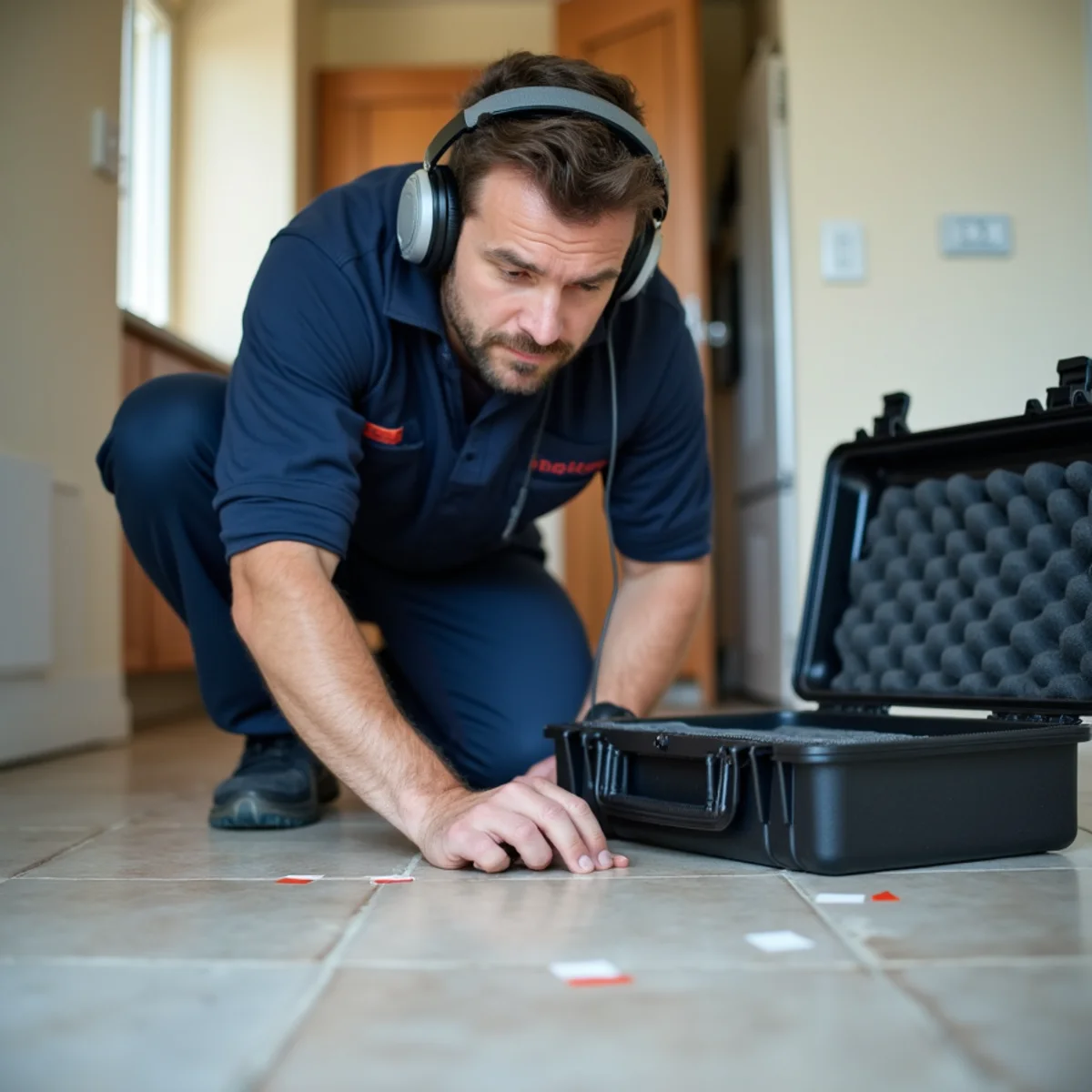
- Carpet padding that was never properly extracted — the carpet feels dry, the pad beneath is not
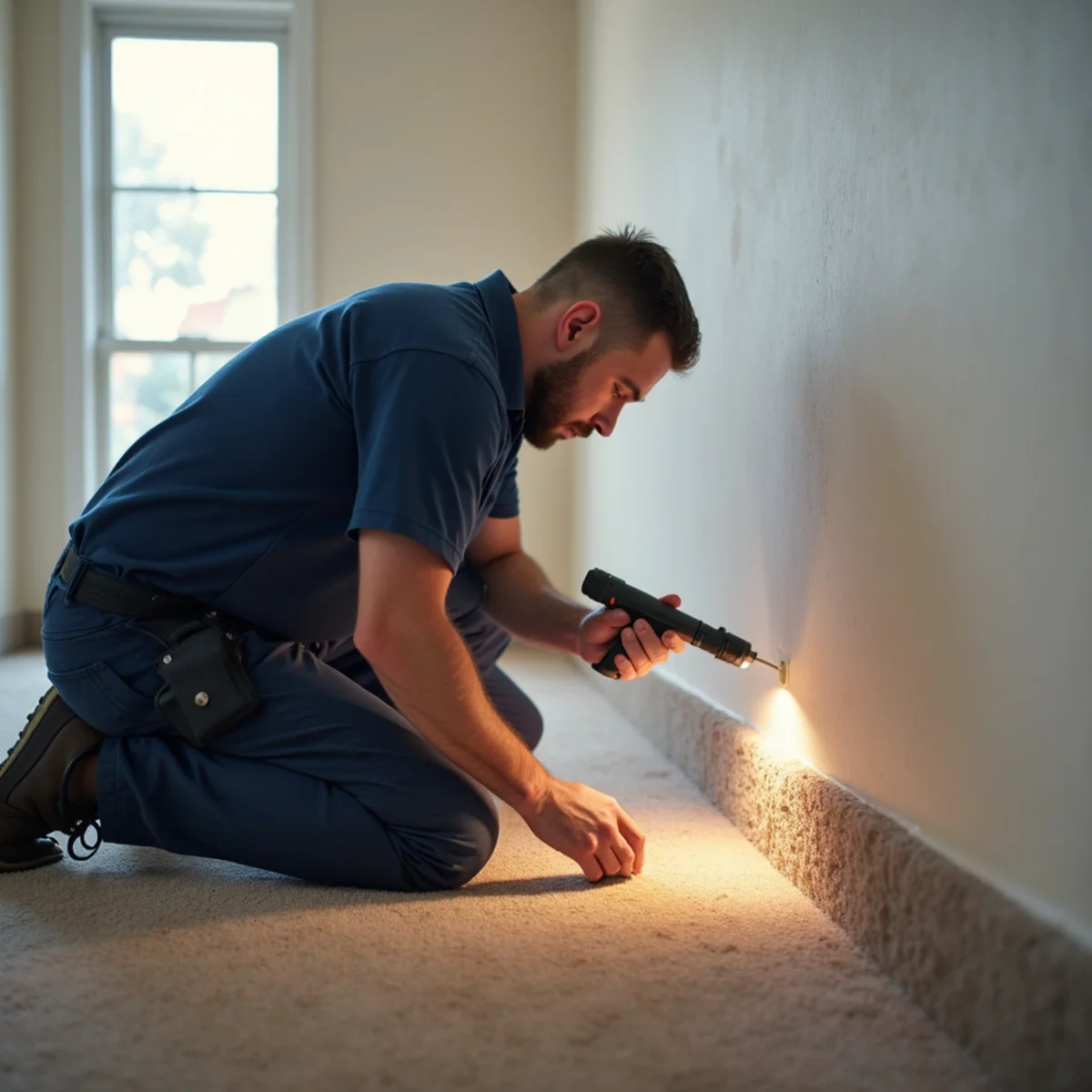
- Wall cavities that were closed up before the framing and insulation were verified dry
- Under floating floors — vinyl plank and laminate trap water against the slab or subfloor with no path out
- Cabinet bases and toe-kick voids, which are enclosed spaces with no airflow at all
- Crawl spaces, where water and wet insulation sit under the house and send odor upward through the floor
Why Crawl Spaces Are Over-Represented
Air moves upward through a building. Warm air rises and escapes at the top, drawing replacement air in from the lowest point — which, in a raised-foundation home, is the crawl space.
A meaningful share of the air you breathe in your living room entered through the space under your floor. If that space is damp, if the insulation is fallen and wet, or if there is growth on the subfloor above it, the odor comes up with the air.
This is why homeowners chase a musty smell around a house for months and then find it started below the floor. In older raised-foundation homes across Central Whittier and West Whittier-Los Nietos, it is the first place worth checking.
The HVAC Multiplier
If the odor is strongest when the air conditioning or heating runs, the system is either distributing it or generating it.
Distributing: the return draws air from an affected area and pushes it everywhere. Generating: moisture in the ducting, a wet filter, a blocked condensate drain in an attic air handler, or growth on the evaporator coil.
Attic condensate drains blocking is a genuinely common local problem, particularly during the first hot week of the year when systems run hard after months idle.
How to Find It Without Guessing
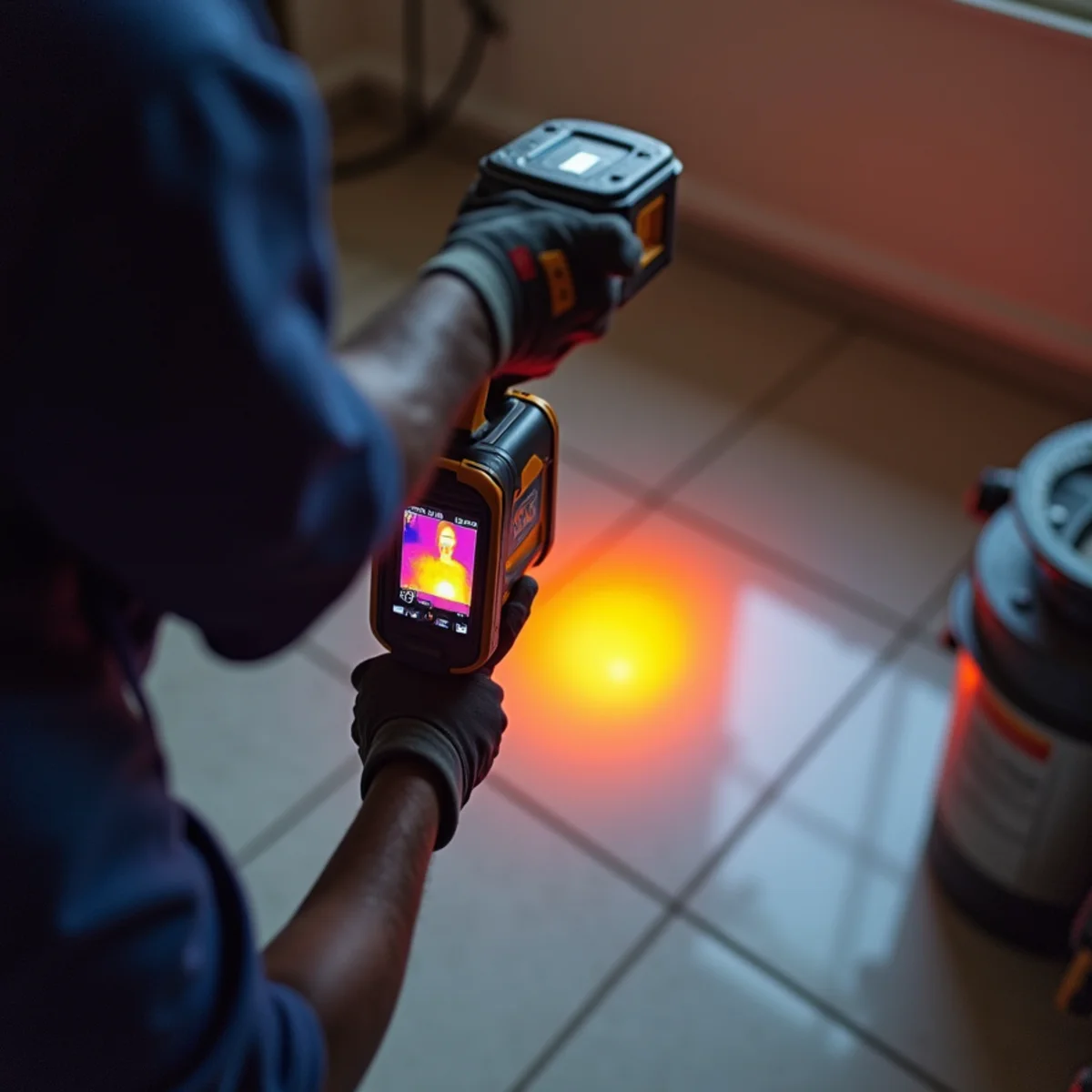
Thermal imaging shows temperature differences that reveal moisture behind finishes. Moisture meters confirm it with actual readings. Between them, most residual damp gets located without opening anything.
Where there is odor but no elevated readings anywhere accessible, air sampling has a genuine role — this is one of the few situations where testing earns its cost, because it can indicate whether there is a hidden source and roughly where.
What does not work is deodorizing. Treating the air while the source is still in the wall means the smell returns as soon as the treatment dissipates, and you have paid for a delay.
What Proper Resolution Looks Like
Locate the source. Remove the material that cannot be dried or that has growth on it, under containment if there is visible growth. Dry the assembly and verify with readings against a dry standard. Then, and only then, deodorize if any residual odor remains.
If a previous company left you with a lingering smell after declaring a job complete, that is worth a second opinion. It usually means drying was called finished on a surface impression rather than on readings — see mold remediation for what the follow-up scope looks like.
Finding the Source in the Right Order
The efficient way to chase a musty smell is cheapest and least invasive first, escalating only when each step comes back clean. Done in that order it usually takes a single visit. Done backwards it becomes weeks of guessing and a lot of unnecessary holes.
Start with location and timing, because the pattern is diagnostic. A smell that is worse in the morning, before the house has been ventilated, points at something releasing overnight. A smell that arrives when the heating or air conditioning starts points at the HVAC system — either the return is drawing from an affected area, or there is moisture in the system itself, most often a blocked attic condensate drain. A smell strongest at floor level, at a particular wall, or in one closet points at the assembly right there.
Then instruments: thermal imaging across the suspect area to find temperature anomalies, moisture meter readings to confirm what the camera suggests, and a hygrometer to establish whether the space is simply running humid. Only where there is genuine odor and no elevated readings anywhere accessible does air sampling earn its cost — and that is the one scenario where it does, because it distinguishes a hidden growth problem from a ventilation problem. Deodorisers, foggers and ozone treatments sit outside this sequence entirely: they change how the air smells for a few days without touching the wet material producing it.
The bottom line
The smell is telling you where to look. Pad, cavity, under the floating floor, cabinet base, crawl space.
Find it and remove it. Everything else is a delay you are paying for.