Problem Solving
Hidden Leak Symptoms: Warm Floor Spots, High Water Bills, and the Sound of Running Water
A leak you cannot see is still working to a schedule. Eight signals, and a two-minute test that settles it.
Water spreading right now? Call before you finish reading — crews are dispatched during the conversation, 24/7.
+1 (201) 277-9344The short answer
The reliable signals are a water bill that stepped up and stayed up, a warm patch on a slab floor, the sound of running water with every fixture off, gradually falling pressure, cracking or cupping flooring, and a musty smell with no fixture nearby. Confirm with the meter test: everything off, watch the leak indicator.
Hidden leaks announce themselves quietly. A bill that stepped up. A warm patch underfoot. The sound of water at 3 a.m. when the house is silent.
Most homeowners notice one of these and wait, because nothing looks wrong. That waiting is what turns a located repair into a floor replacement.
The Eight Signals

Any one is worth investigating. Two together is a leak until proven otherwise.
- A water bill that stepped up and stayed up with no change in household use
- A warm or hot spot on the floor — this is the hot-water line under a slab, and it is one of the most reliable indicators there is
- The sound of running water when every fixture in the house is off
- Water pressure that has fallen gradually across the whole house over months or years
- Cracking, lifting or cupping in flooring over a slab
- A damp patch or musty smell in a room with no fixture nearby
- A persistently green or soggy patch in the yard, often over the service line
- New cracks in drywall or in the slab itself
The Two-Minute Test

This is the single most useful thing any homeowner can do, and it costs nothing.
Shut off every water-using fixture and appliance in the house — taps, toilets settled, ice maker, irrigation, everything. Then go to the water meter and watch it.
Most meters have a small triangular or star-shaped leak indicator that spins with even minimal flow. If it is moving, or if the main dial creeps, water is leaving your system somewhere.
Run this seasonally. In the slab tracts of East Whittier, Sorensen Park and South Whittier, it routinely catches a leak weeks before the flooring gives it away.
Narrowing It Down Yourself

If the meter confirms flow, one more test tells you a lot.
Find the shut-off that isolates the house from the irrigation and yard lines, and close it. Then re-check the meter. Still moving means the leak is on the house side. Stopped means it is in the irrigation or the service line — which is common on larger lots and generally cheaper to address.
You can also feel the floor systematically in slab homes: walk it barefoot and note any patch that is noticeably warmer than the surrounding area. Mark it, because that is where the acoustic work will start.
Why This Is So Common Here
Whittier and the surrounding cities built out through the decades when galvanized steel and soft copper were standard supply materials, and most of it is slab-on-grade.
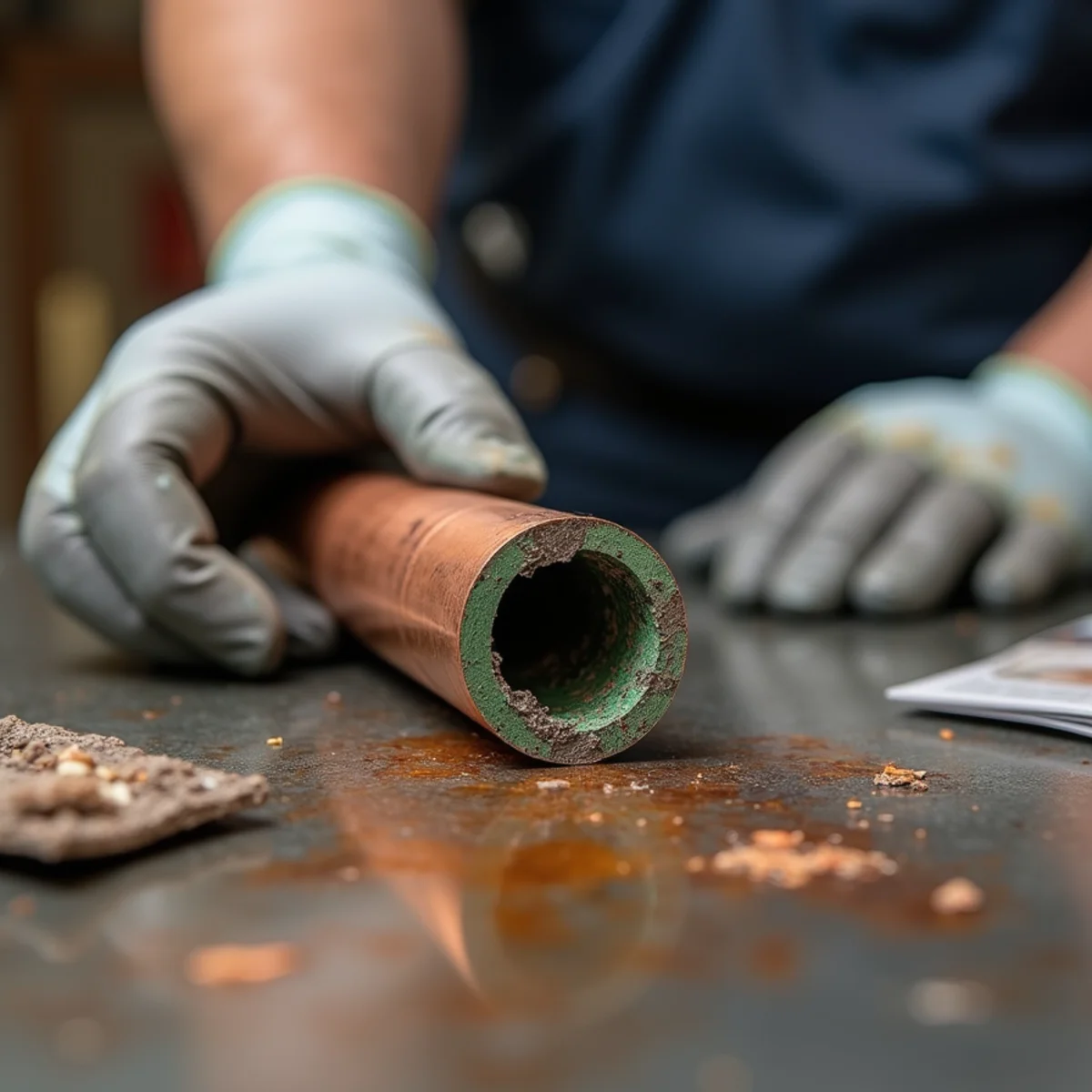
Galvanized corrodes internally and thins until a threaded joint splits. Copper develops pitting corrosion — pinholes — accelerated by the mineral content of Los Angeles County water. Under a slab, either failure spreads sideways under the flooring, invisibly, sometimes for weeks.
This is why the warm-floor symptom is so characteristic locally, and why the meter test is worth doing twice a year rather than once in a lifetime.
What Happens Next

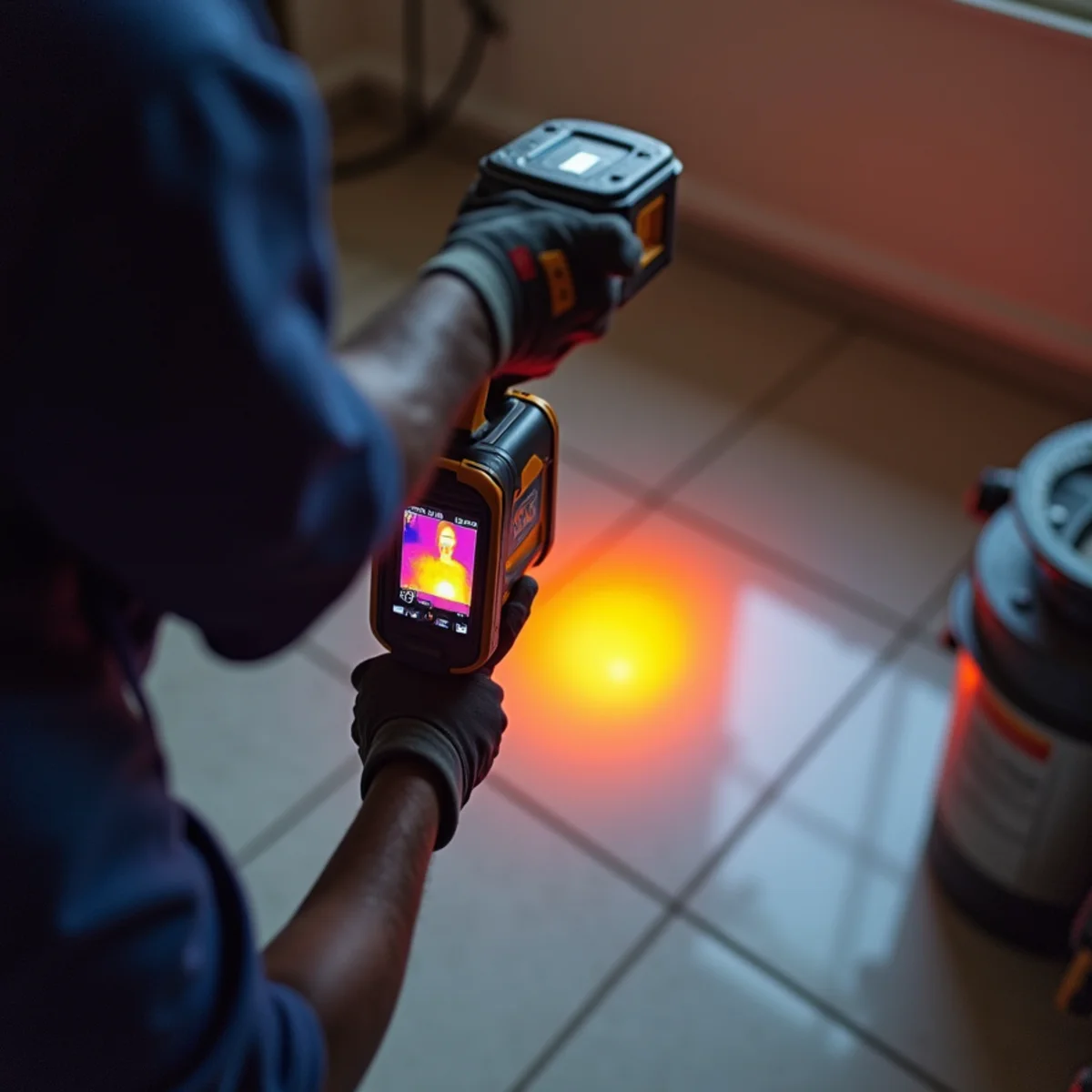
Professional leak detection runs the same logic with better instruments: pressure isolation to separate hot from cold and house from yard, acoustic listening to hear the escape point, thermal imaging to read temperature difference through the floor, and tracer gas where a leak is too quiet to hear.
The point of doing it properly is that the repair opens inches rather than feet. "Somewhere under the east side of the house" and "here, 14 inches off this wall" are very different amounts of concrete.
Which Symptom You Have Tells Us Where to Look First
The eight signals are not interchangeable. Each one points at a different part of the system, and knowing which you have shortens a detection visit considerably.
A warm floor spot is close to diagnostic: it is the hot line under the slab, and it localizes the search immediately. A green or soggy patch in the yard with normal indoor readings points at the service line between the meter and the house rather than anything under the building — a different repair entirely, and one worth checking before anyone opens a floor. A step change in the bill with no audible sound and no warm spot often turns out to be irrigation or a toilet flapper rather than the slab, which is exactly why the irrigation isolation test exists and why it is run before the acoustic work.
Falling pressure across the whole house, on the other hand, is usually not a single leak at all. In the galvanized-supply homes across the older tracts here it is internal corrosion narrowing the pipe bore progressively, and that is a repipe conversation rather than a detection one. The practical value of sorting the symptom first is that it decides whether you need a plumber, a leak detection visit, or a longer look at the system as a whole.
- Warm floor spot → hot water line under the slab, localized
- Soggy yard patch, normal indoor readings → service line between meter and house
- Bill up, nothing audible, no warm spot → check irrigation and toilets before the slab
- Musty smell with no nearby fixture → drain or waste line, not necessarily a supply leak
- Gradual whole-house pressure loss → corroded supply system rather than a single leak
The bottom line
Warm floor, high bill, running water with nothing on. Any two of those, take the meter test.
Two minutes now is weeks of warning, and weeks of warning is the whole difference in what this costs.