Problem Solving
Black Mold vs. Mildew: How to Tell the Difference and When to Call a Pro
The practical distinction is not color. It is whether the growth sits on the surface or has grown into the material.
Water spreading right now? Call before you finish reading — crews are dispatched during the conversation, 24/7.
+1 (201) 277-9344The short answer
Mildew sits on the surface, appears flat and powdery, and wipes away leaving unmarked material underneath — it is a ventilation problem. Mold grows into porous material, looks fuzzy or raised, usually smells musty, and leaves a stain or soft material when wiped — it is a water problem, and the source has to be found.
People want to know whether what they are looking at is "black mold". It is the wrong question, and answering the right one is more useful.
The question that changes what you do is: is this on the surface, or is it in the material?
Mildew: On the Surface
Mildew is a surface growth. It sits on top of a material rather than penetrating it, typically appearing as a flat, powdery or downy film — often white, gray or light in color, though it darkens as it matures.
Where you find it: shower tile grout, window frames and sills where condensation collects, the underside of bathroom shelving, and around poorly ventilated windows.
The tell is that it wipes off. Clean it with an appropriate cleaner and the surface underneath is intact and unstained.
Mildew is a ventilation problem. Improve the airflow and control the condensation and it does not come back.
Mold: Into the Material
Mold grows hyphae — root-like structures — into porous material. That is the difference that matters.
It typically appears fuzzy, slimy or raised rather than flat, and it frequently comes with a musty odor. When you try to wipe it off, the stain stays because the growth is inside the material rather than on it.
Where you find it: drywall that has been wet, cabinet bases, subfloor, insulation, wood framing — the porous materials that hold water.
Mold is a water problem. Something has been wet long enough for growth to establish, and until that source is corrected, cleaning is temporary.
Why Color Tells You Very Little
"Black mold" is a colloquial term, not a species. A number of species present as dark, several harmless things look dark, and visual identification is genuinely unreliable — laboratory analysis is the only way to identify a species.
More importantly, it does not change what you do. The response to any established growth is the same: find and stop the moisture source, remove the affected porous material under containment, verify the assembly is dry.
What is worth taking seriously regardless of species is occupant health. Anyone with asthma, allergies or a compromised immune system should stay out of the work area throughout, and that is worth being firm about.
The Test You Can Do
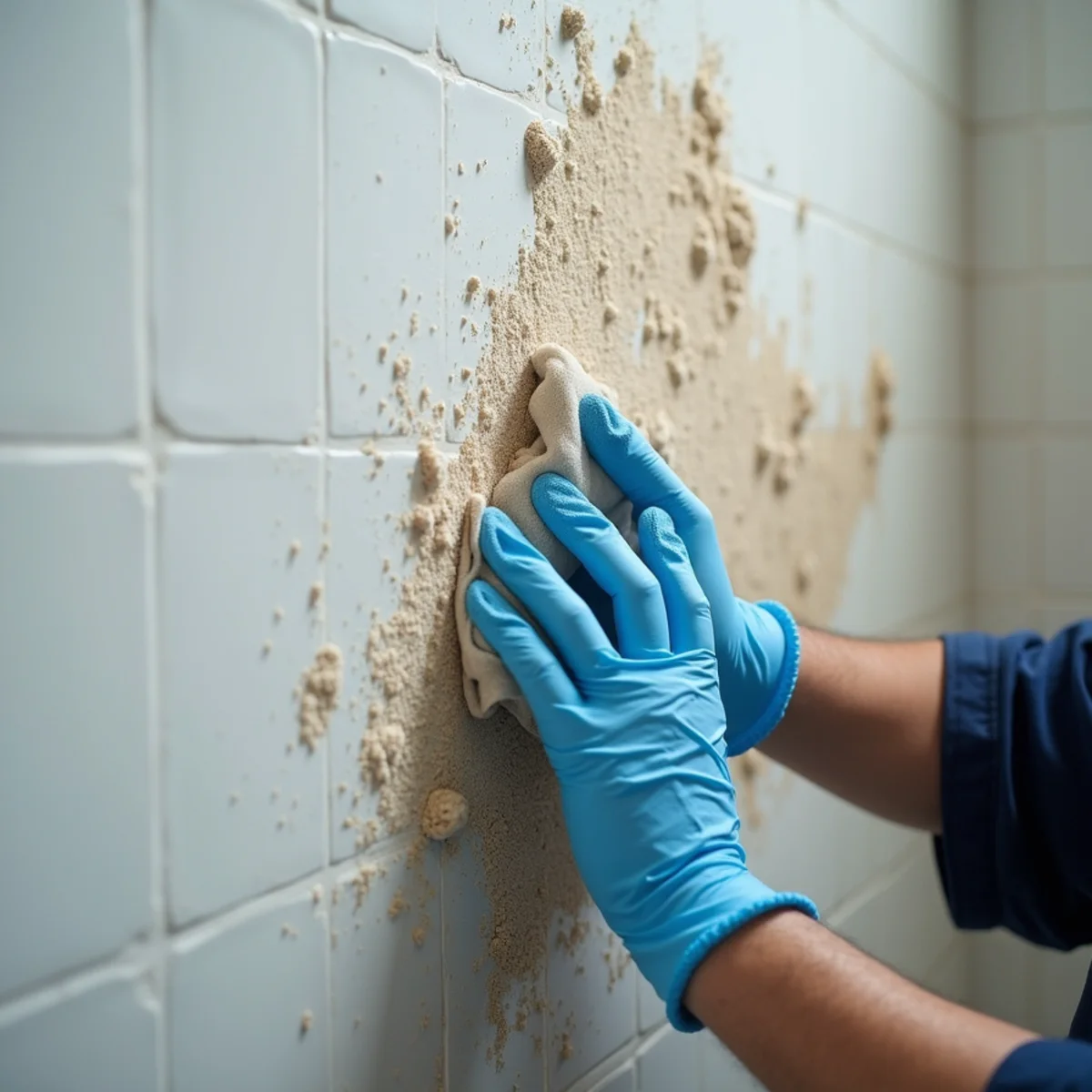
Put on gloves and eye protection, and try wiping a small area with a damp cloth.
It comes away cleanly and the surface underneath is unmarked — surface growth, likely mildew, ventilation is your fix.
The stain remains, or the material underneath is soft, dark or crumbling — the growth is in the material, and cleaning it will not resolve it.
Do not scrub aggressively at anything that looks embedded. That aerosolizes spores in an unsealed room, which is precisely what proper remediation containment exists to prevent.
When to Call
A few clear thresholds.
- Growth covering more than a small patch, roughly a square meter or more
- Any growth on drywall, insulation, subfloor or cabinetry rather than on tile or glass
- Persistent musty odor with no visible source
- Any growth following a known water loss — that is remediation, not cleaning
- Growth returning after cleaning, which means the moisture source is still active
- Anyone in the household with a respiratory condition or immune compromise
The Question That Settles It: What Is It Growing On?
Homeowners try to identify what they are looking at by color and texture. Both are unreliable. The far better question is what the material underneath is made of, because that determines the response regardless of what species is present.
On a non-porous surface — glazed tile, glass, sealed metal, a fiberglass shower surround — growth is on top of the material and cleaning genuinely removes it. If it returns in the same spot, the answer is ventilation: an extractor fan that runs long enough, a window opened after showering, or in a persistent case an upgraded fan that actually vents outside rather than into the attic, which is a defect we find surprisingly often in local homes.
On a porous or semi-porous material — drywall, wood, cabinet board, insulation, grout that has lost its seal — growth is into the material. Cleaning the face removes the color and leaves the colonization, which is why those spots come back within weeks looking exactly as they did. That is remediation, not cleaning, and it starts with finding the water that made the material hospitable in the first place. The material under your cloth answers the question faster than any photograph comparison will.
The bottom line
Wipes off cleanly and comes back with humidity — ventilation problem.
Stains stay, material is soft, odor lingers — water problem, and it needs the source found before anything else.