
Tier 1 service area · Neighborhood
Water Damage Restoration in Central Whittier, CA
The historic core around Whittier College, founded in 1887 — 1920s–40s homes with original clay-tile sewer lines and galvanized supply still in service.
- 24/7 emergency dispatch
- roughly 8 to 12 minutes from our base, west along Whittier Boulevard or Hadley Street
- IICRC-certified technicians
Central Whittier is the historic heart of the city — the neighborhoods around Whittier College, which has been here since 1887, and the residential streets that grew with it through the 1920s, 30s and 40s.
It is also the neighborhood where we most often advise against demolition. These homes have plaster, hardwood, period trim and built-ins that cannot be bought back once they are removed, and the drying approach has to be built around preserving them.
A Century of Plumbing, Still in Service
The supply plumbing in much of this housing is original galvanized steel, now in its eighth or ninth decade. Corrosion has narrowed the bore, pressure has dropped so gradually that residents adapted without noticing, and the eventual failure comes at a threaded joint inside a wall.
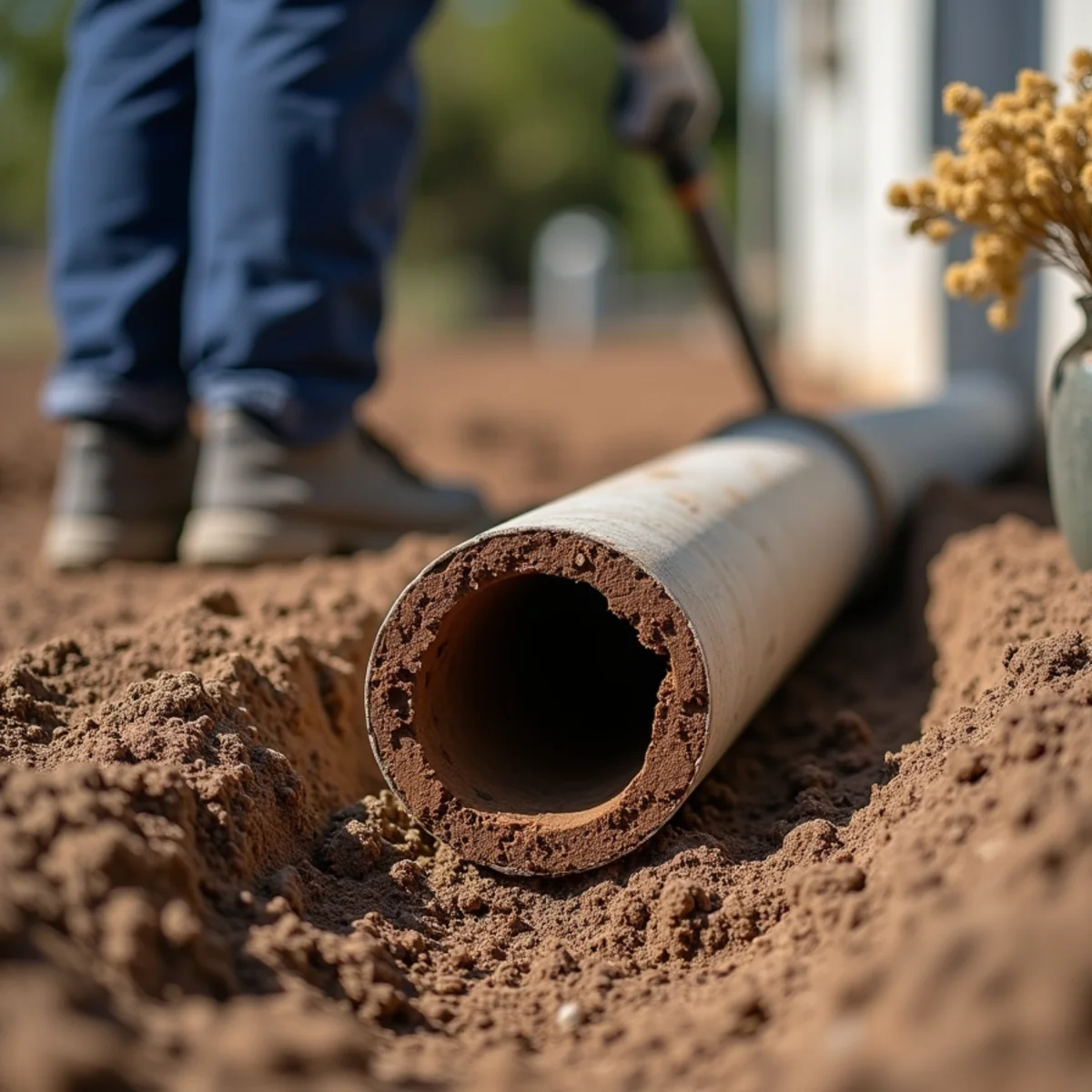
The waste side is where the recurring calls come from. Clay-tile sewer laterals in short jointed sections were standard for this construction era, and the mature street trees that define these neighborhoods have been growing into those joints for a very long time. The seasonal pattern is consistent: roots occupy the line through the dry months, the first heavy November rain loads the system, and the partially blocked lateral backs up.
Construction adds its own complications. Lath-and-plaster walls hold significantly more water than drywall and crack under aggressive drying. Raised foundations mean crawl spaces that take storm water and hold it. Original hardwood is worth saving and needs mat drying rather than removal.
- Original galvanized supply well past normal service life
- Clay-tile sewer laterals with decades of root intrusion
- Lath-and-plaster walls requiring slow, controlled drying
- Original hardwood floors worth mat drying rather than replacing
- Raised foundations with crawl spaces taking winter storm water
- Period trim, built-ins and finishes that cannot be matched off the shelf
Restoring Whittier's Historic Core
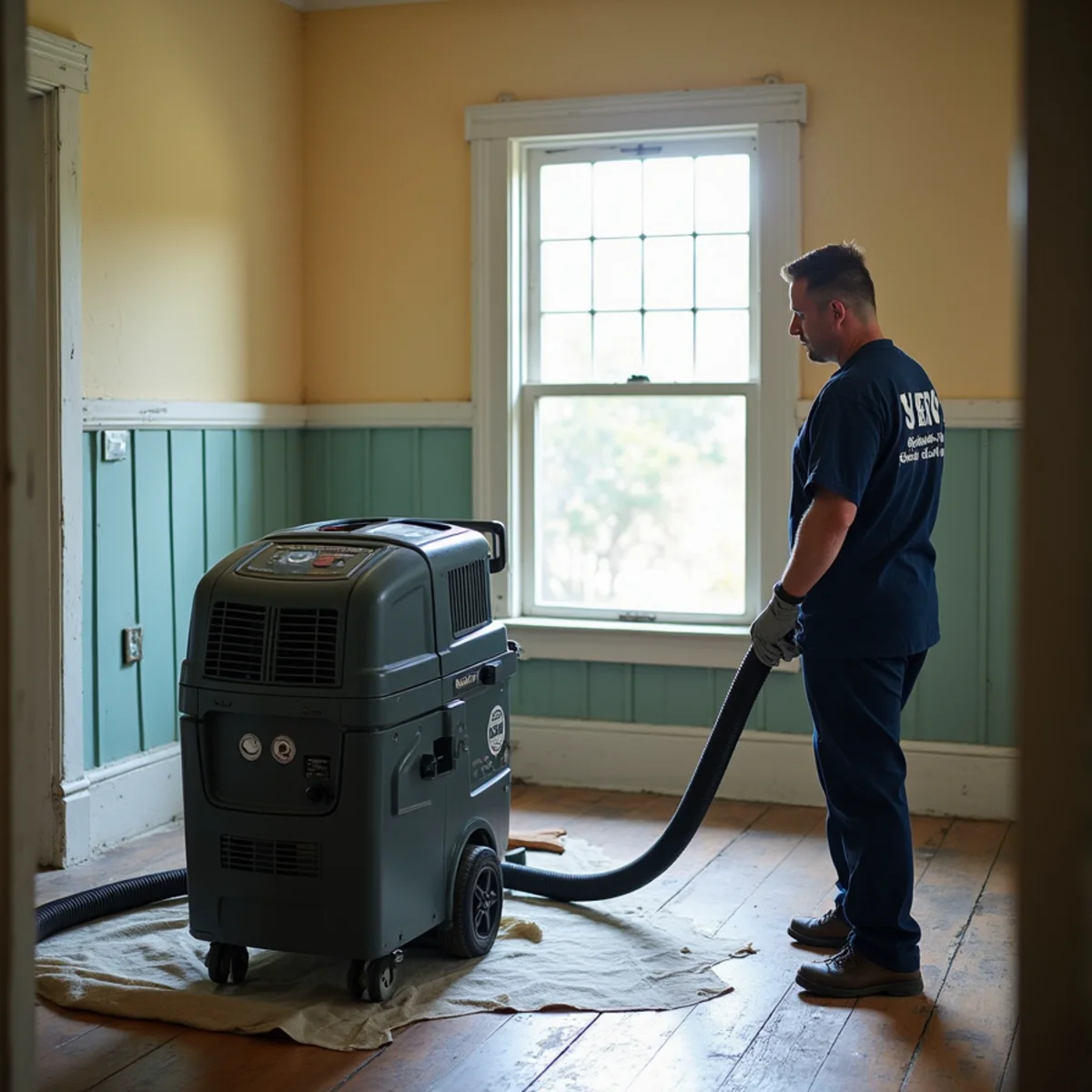
The technique that defines our work here is drying in place. Hardwood gets mat drying systems that pull moisture up through the boards under vacuum. Plaster gets a slower, more monitored drying plan with lower airflow. Wall cavities get small access holes in inconspicuous places rather than open demolition.
It takes longer and it needs more monitoring visits. It also means a 1928 house still has its 1928 floors when we leave, and that is not a detail that can be recovered later if a crew got impatient on day two.
Our work runs across the streets around Whittier College, up toward Hadley Street, and through the residential grid between Painter Avenue and Greenleaf Avenue. For anything commercial in the adjacent Uptown corridor, the same preservation logic applies to the historic building stock.
Local landmarks & reference points
- Whittier College
- Hadley Street
- Central Park
- Painter Avenue
- Whittier Boulevard
Need a crew in Central Whittier?
Original hardwood and plaster are recoverable with the right plan — call before anyone starts pulling material.
From our own job log
What we get called to in Central Whittier
The historic core, with the oldest supply and waste lines still in daily service.
Clay laterals and mature trees
Roots find the joints, form a net, and restrict the line progressively across years. Backups cluster with the first heavy rain rather than arriving without warning, and the first sign is often waste appearing at the lowest fixture in the house.
Original hardwood and plaster
Both are recoverable with the right plan and both are ruined by the wrong one. Slower controlled drying, readings through the lath, and patience rather than more fans.
Student and multi-tenant rentals
Near the college the pattern is delayed reporting rather than unusual damage — which turns an ordinary drying job into flooring, cabinetry and a mold conversation.
What we handle here
Water Damage Services in Central Whittier
The services we are called out for most in this area. Every one of them is handled by our own crews, from the first extraction pass through to the rebuild.
- Sewage Cleanup & Backup RemovalBlack-water backups removed under full containment, then disinfected, deodorized and dried to a verified sanitary condition.
- Structural Drying & DehumidificationEngineered drying with daily moisture readings — so the structure is verifiably dry, not just dry to the touch.
- Water Damage RestorationExtraction, structural drying, mold prevention and repairs — one crew from the first hour to the final coat of paint.
- Flooded Basement & Crawl Space CleanupPump-out, vapor barrier and insulation replacement, and drying for the space under your house that nobody looks at.
- Mold RemediationContainment, HEPA filtration and controlled removal — plus fixing the moisture source so it does not come back.
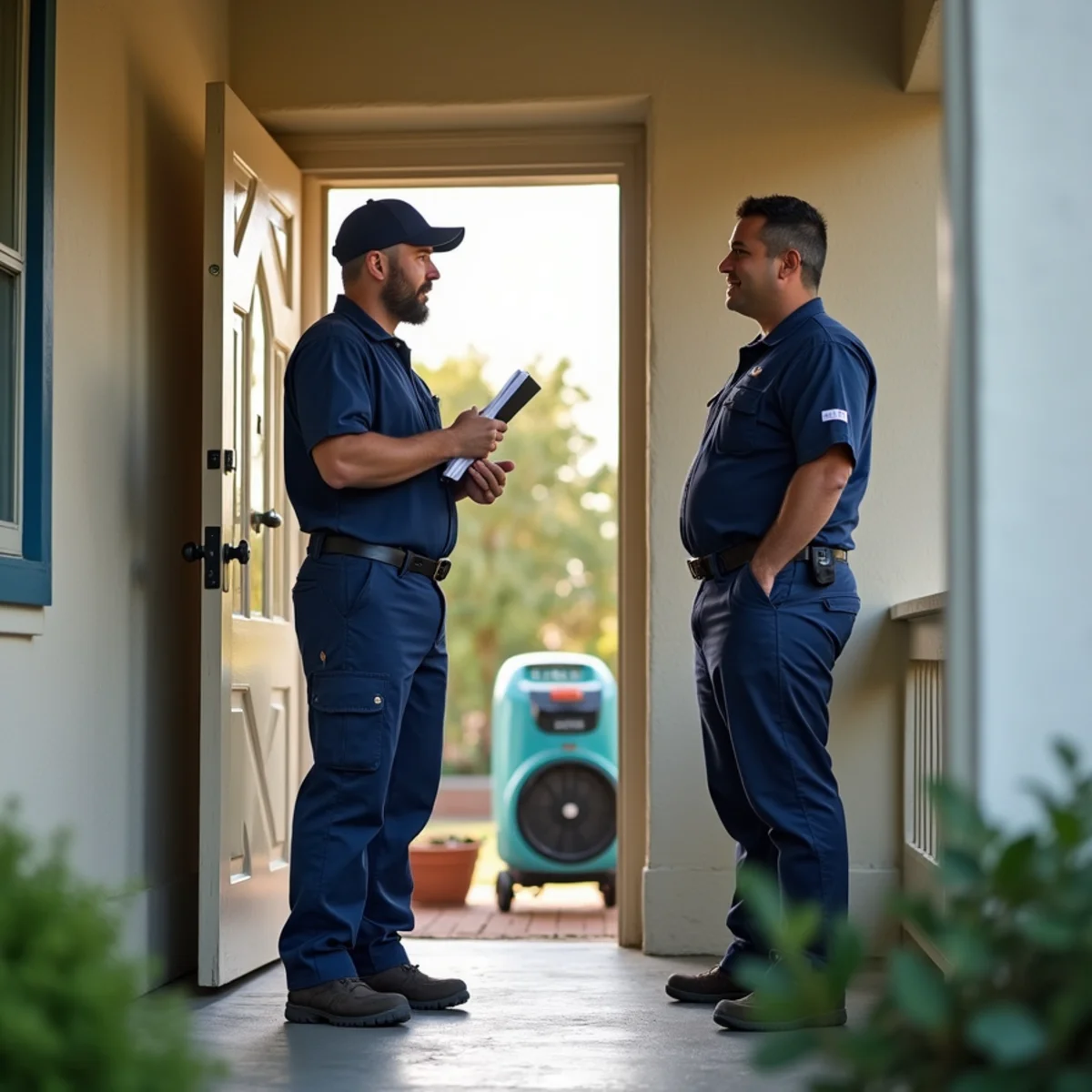
On the job in Central Whittier
Why people here call us
Why Central Whittier Homeowners Call Us
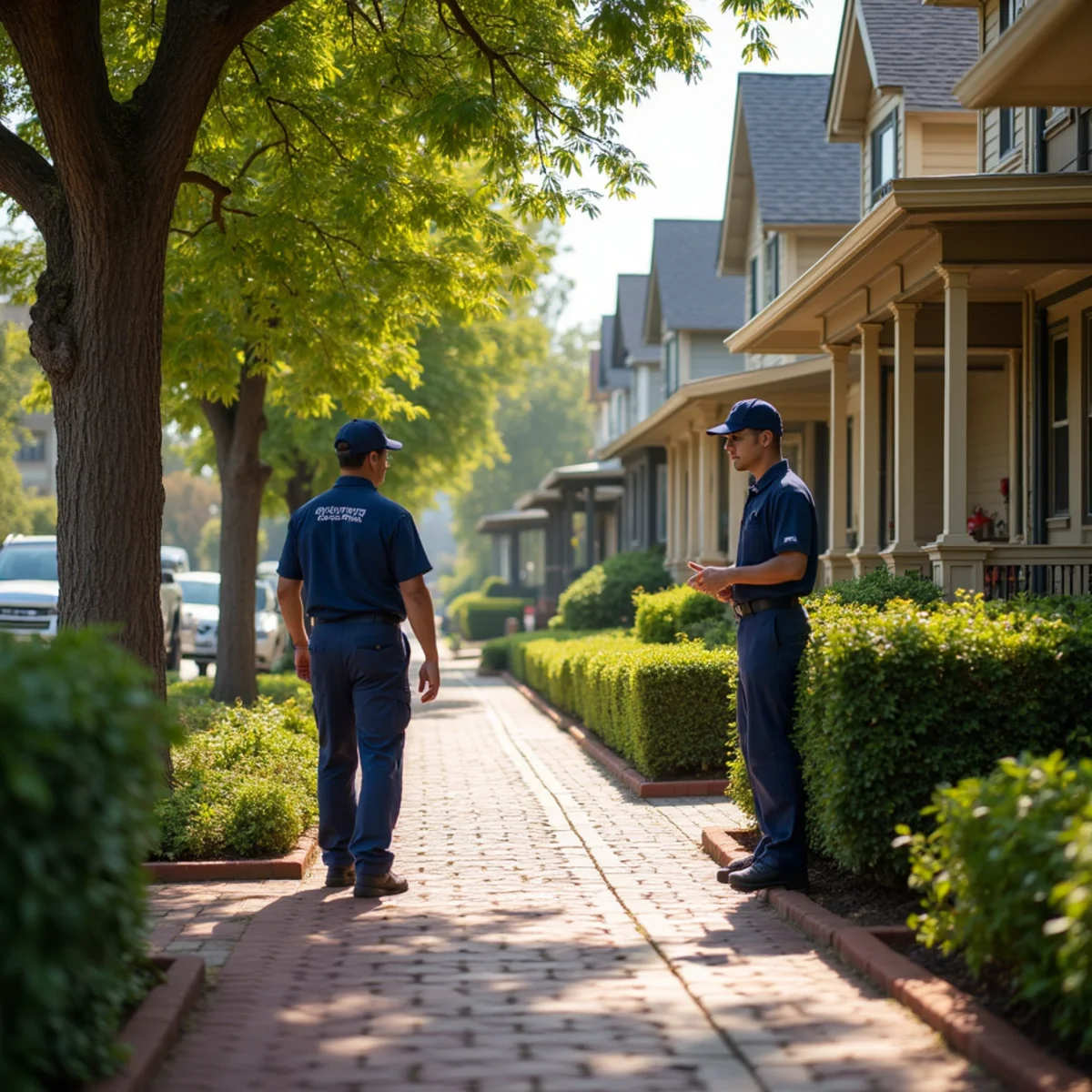
Eight to twelve minutes west, into the historic core — where what you keep matters as much as what we dry.
We advise against demolition here
Plaster, original hardwood, period trim and built-ins cannot be bought back. The drying plan is built around preserving them.
Mat drying as standard on original floors
A 1928 house should still have its 1928 floors when we leave. That is a decision made on day one, not day four.
Clay laterals get camera work, not repeat rodding
A century of root intrusion needs a diagnosis rather than another clearing visit every winter.
Water Damage Whittier · 7012 Walnut Grove Dr, Whittier, CA 90606 · +1 (201) 277-9344 · IICRC-certified technicians · Open 24 hours — 7 days a week, including holidays
Find us
Serving Central Whittier from our Whittier base
Crews dispatch from our base in east-central Whittier. Roughly 8 to 12 minutes from our base, west along Whittier Boulevard or Hadley Street.
Water Damage Whittier7012 Walnut Grove Dr, Whittier, CA 90606Open 24 hours — 7 days a week, including holidays
Nearby service areas and related guides
Nearby areas we serve
Same crews, same response commitment. Each of these pages covers the local risks specific to that area.
- Uptown WhittierAbout 8 to 12 minutes from our Walnut Grove Dr base, west along Whittier Boulevard or Philadelphia Street.
- North WhittierAround 8 to 12 minutes from our Walnut Grove Dr base.
- Penn Park, WhittierAround 8 to 12 minutes from our Walnut Grove Dr base.
- West WhittierAbout 10 to 14 minutes from our base, west along Whittier Boulevard.
- Orange Drive, WhittierRoughly 10 to 14 minutes from our Walnut Grove Dr base.
Guides for Central Whittier property owners
- How to Find and Shut Off Your Home's Main Water Valve (Before You Ever Need To)The single highest-value ten minutes any homeowner can spend. Find it, turn it, label it — before the night you need it in the dark.
- Slab Leak Repair vs. Whole-House Repipe: What Each Costs and What Insurance CoversThree repair paths, three very different disruption profiles, and a coverage rule that surprises most homeowners: the pipe itself usually is not covered.
Local proof
Working in Central Whittier
We publish customer reviews as jobs close, with the customer's first name, their neighborhood and what the job actually involved — not invented quotes. Until those are here, judge us on things you can verify on the phone in two minutes:
- A person answers the emergency line — not an answering service taking a message
- A 60-minute target response across Whittier, with an honest arrival window on the call
- IICRC-certified technicians, and a certification number available on request
- Direct insurance billing, with daily moisture readings supplied in writing
- We inspect with thermal imaging and moisture meters before we quote — never a phone price
- Mitigation and rebuild under one roof, so there is one set of documentation
Already worked with us? Leave a review on our Google listing — it genuinely helps other Whittier homeowners find a local crew.