Problem Solving
Wet Drywall: When It Can Be Saved and When It Has to Come Out
Three questions decide it: what kind of water, how long, and does the board still have structural integrity.
Water spreading right now? Call before you finish reading — crews are dispatched during the conversation, 24/7.
+1 (201) 277-9344The short answer
Clean-water drywall found within a day or two can usually be dried in place through small access holes at the base of the wall. It comes out when the water was category 3, when it stayed wet much past 48 hours, or when the board has lost integrity — soft to a push, sagging, or paper separating from the gypsum core.
Homeowners assume wet drywall always comes out, and contractors sometimes encourage that because removal is faster than drying. Both are wrong often enough to be worth understanding.
A great deal of wet drywall can be dried in place, and doing so keeps the rebuild — and your claim — considerably smaller.
Question 1: What Kind of Water?
Category 1 — clean supply water. Drywall can usually be dried in place if the response was quick. This covers most burst pipes, water heaters and supply line failures.
Category 2 — gray water. Case by case. Drying in place is often possible with antimicrobial treatment, depending on duration and how much of the board was affected.
Category 3 — contaminated water. It comes out. Porous materials that absorbed sewage or ground-contact storm water are removed rather than cleaned, because the contamination is inside the material where surface treatment cannot reach.
This first question answers most cases before the other two are needed.
Question 2: How Long Was It Wet?
Drywall is gypsum core faced with paper, and the paper is the food source. Within 24 to 48 hours of wetting, mold can begin colonizing that paper facing.
Caught in hours, clean-water drywall dries out with no lasting effect. Found after a weekend, the same board may already have growth on the back face — which you cannot see from the room, and which is the reason inspection includes cutting a small access hole rather than judging from the front.
Question 3: Does It Still Have Integrity?
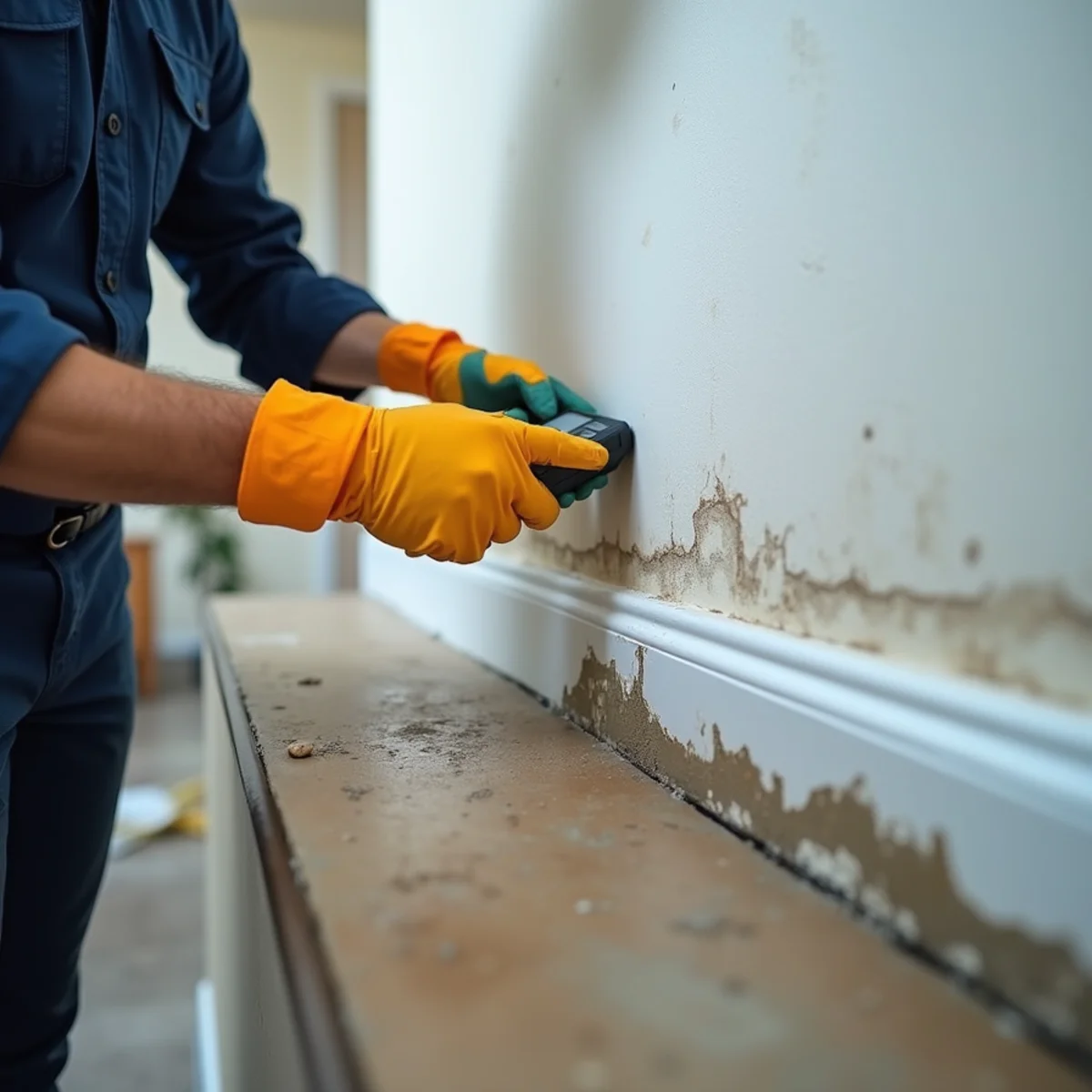
Push gently on the board low down, where water collects. Sound drywall resists. Compromised drywall gives, feels spongy, or crumbles at the edge.
Other signs it is finished: visible sagging, the paper facing bubbling or separating from the core, seams opening, or the board pulling away from the fasteners.
Ceiling drywall gets stricter treatment. A ceiling holds its own weight plus insulation, and wet ceiling board that has lost integrity fails suddenly. When in doubt overhead, it comes down — see ceiling water damage repair.
How Drying in Place Actually Works
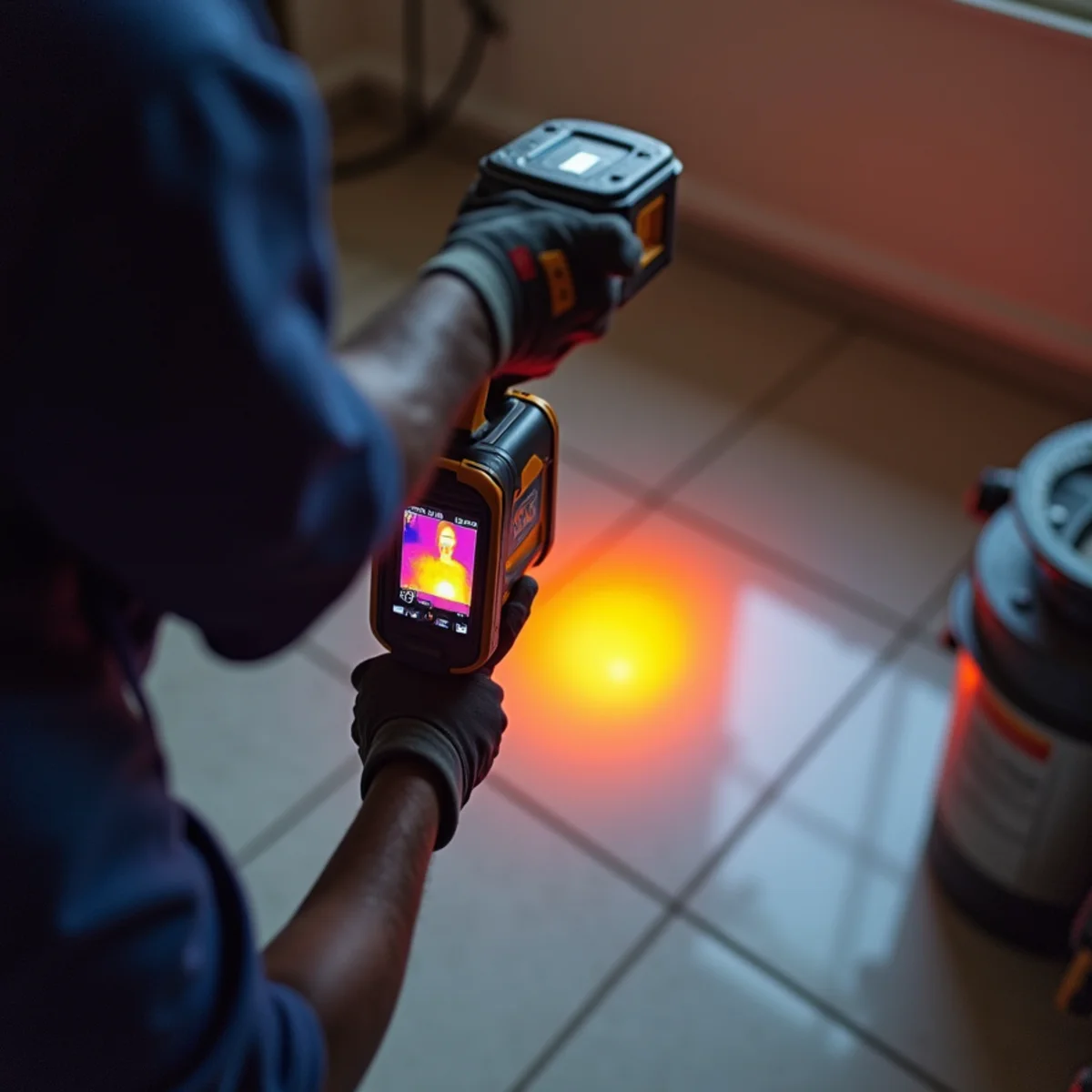
The wall cavity has to dry, not just the visible face. That means small controlled access holes — usually low on the wall behind where the baseboard will go, so they are invisible afterward — with directed airflow pushed into the cavity and readings taken from inside.
Insulation is the complication. Wet fiberglass batt in a cavity does not recover and holds water against the framing and the board. Where the cavity is insulated and saturated, the board usually has to come off to remove it, even if the drywall itself would have survived.
This approach takes more monitoring visits than removal does. It also keeps original finishes, keeps the rebuild small, and in older homes with textures that are hard to match, that is worth a great deal.
The Flood Cut
When drywall does have to come out after a ground-level water event, the standard is a flood cut — removing the board to a marked height above the visible water line, commonly two feet, because the paper facing wicks water higher than the stain shows.
Cutting at a consistent height across a wall gives a clean line to reinstate to, and it opens the cavity for insulation removal and drying. It is neater and usually cheaper than chasing an irregular damp line.
The Cavity Behind the Board Decides More Than the Board Does
Homeowners assess wet drywall by looking at the drywall. Technicians assess it by working out what is behind it, because a board in good condition on a cavity that cannot be dried is still coming out.
Insulation is the usual complication. Wet fiberglass batt loses its loft, slumps down inside the cavity and holds water against the bottom plate and the studs indefinitely — it does not recover, and it is not something warm air blown through an access hole will resolve. Cellulose is worse: it compacts wet and stays compacted. Either way the honest answer is that the insulation comes out, which means the board comes off far enough to reach it.
Two other cavity conditions change the plan. A vapor retarder or a foil-faced batt traps moisture on one side and turns a normally straightforward dry into a stalled one. And in a number of older local homes there is drywall over original plaster, or a second layer added during a remodel — a double-wall assembly with an unventilated gap between the layers, which reads dry at the surface for a week while the gap holds water. That one is only found by drilling and reading, which is why access holes get made even when the face looks convincing.
The bottom line
Clean water, found fast, board still solid — dry it in place and keep your wall.
Contaminated water, days of saturation, or a board that gives under your hand — cut it out to a clean line and move on.