
Water Damage Restoration · Whittier, CA
Storm Damage Cleanup & Restoration in Whittier, CA
Emergency tarping and board-up first, then extraction and drying — so the next band of rain does not undo the work.
- 24/7 emergency dispatch
- 60-minute target response
- IICRC-certified technicians
- Direct insurance billing
Storm work has a different priority order than every other kind of water loss: close the building first.
Extracting water from a living room while rain is still coming through the roof is wasted effort. So the first crew on site tarps, boards, and seals — then the restoration work starts against a building envelope that is actually holding.
In Whittier, storm damage comes in two distinct flavors with two different failure modes: winter rain that finds every weak point in a roof over three sustained days, and Santa Ana wind events that break things outright.
What you actually get
What Storm Damage Cleanup Covers
Storm work runs in a different order to every other water loss: the building gets closed first, then everything else follows.
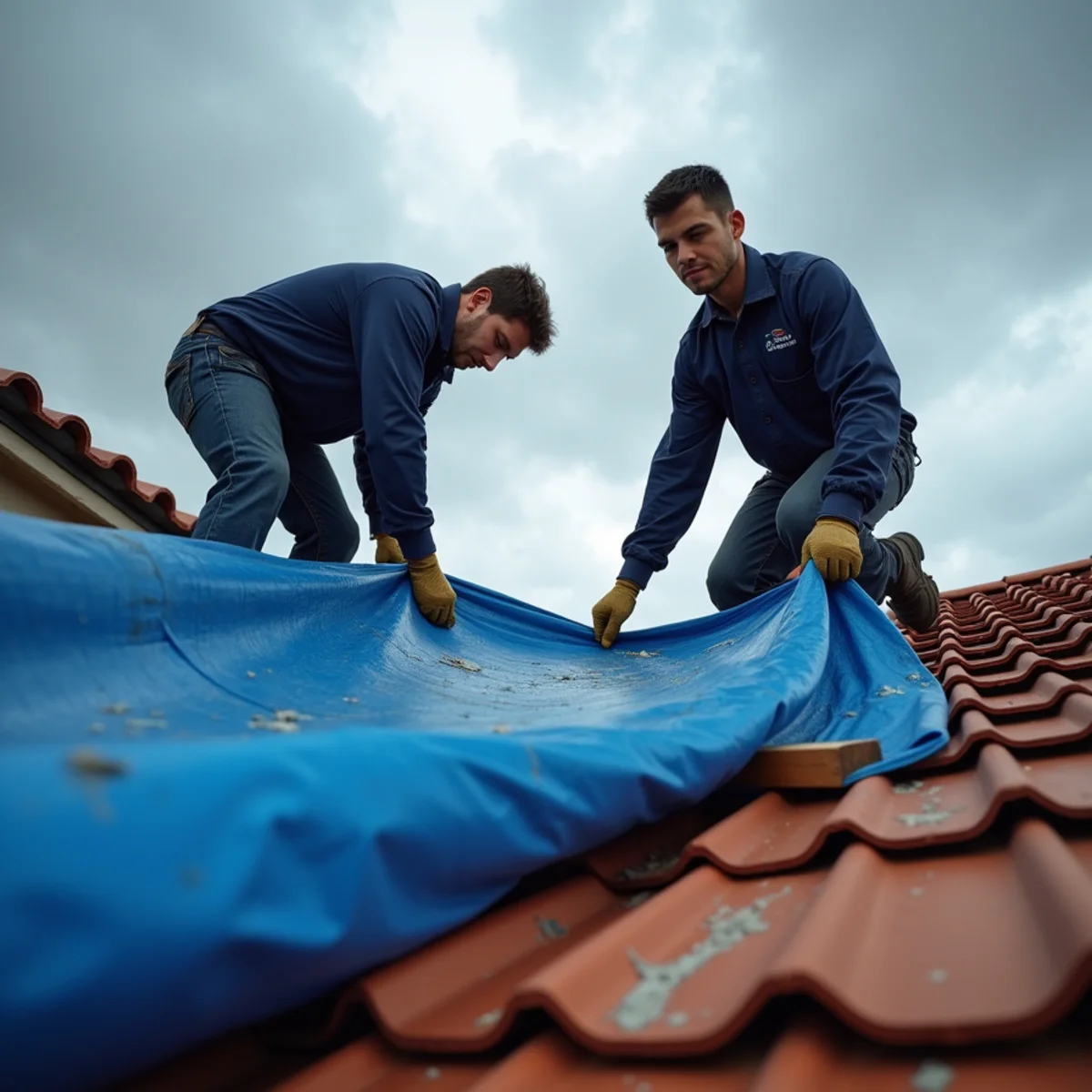
Emergency tarping and board-up
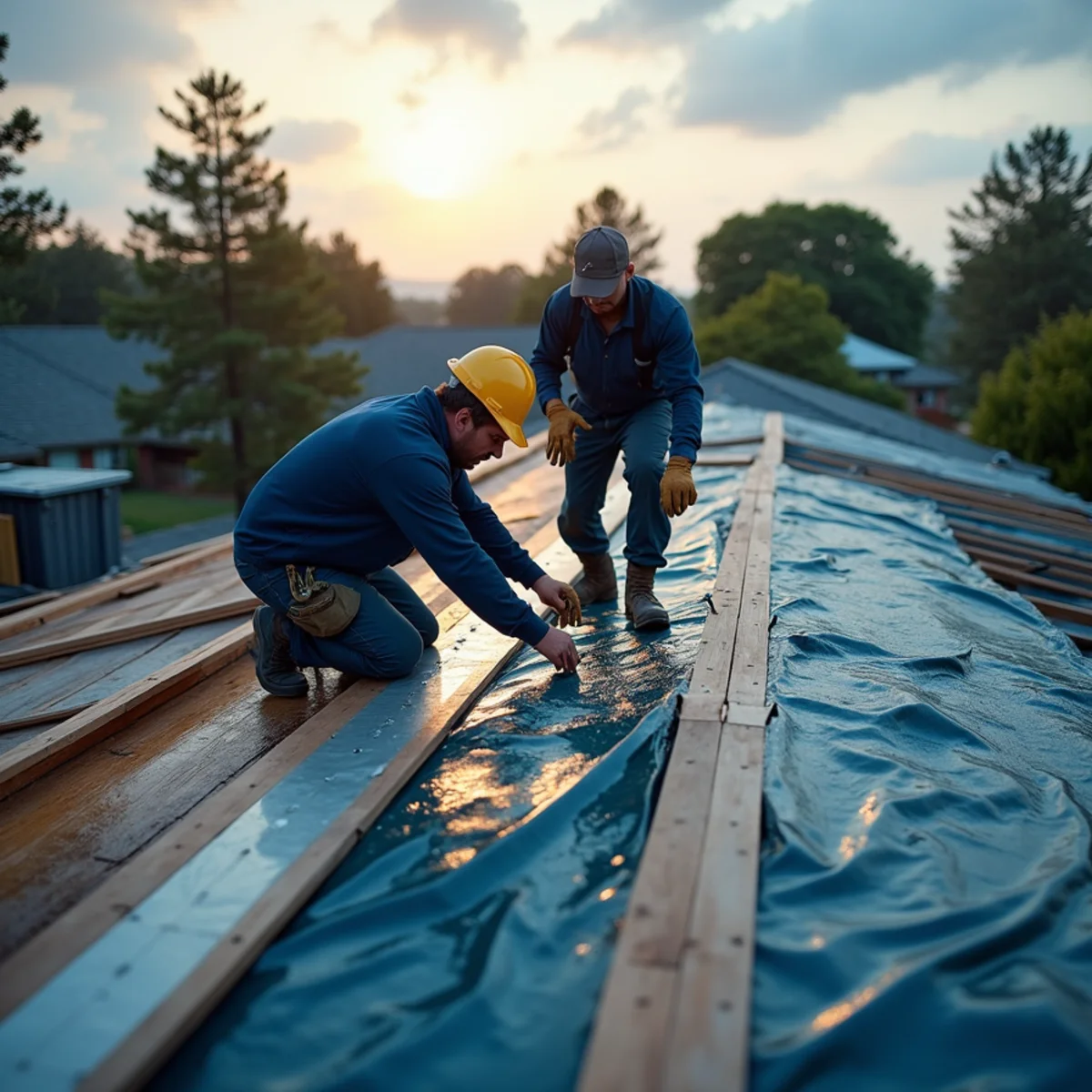
Heavy poly over the damaged plane with battens fastened into sound decking and laps that shed water, plus sheet material over broken glazing.
Pre-tarp documentation
The damage photographed and filmed as found, before stabilization covers it — a tarped roof tells an adjuster who was not there nothing at all.
Attic and ceiling assessment
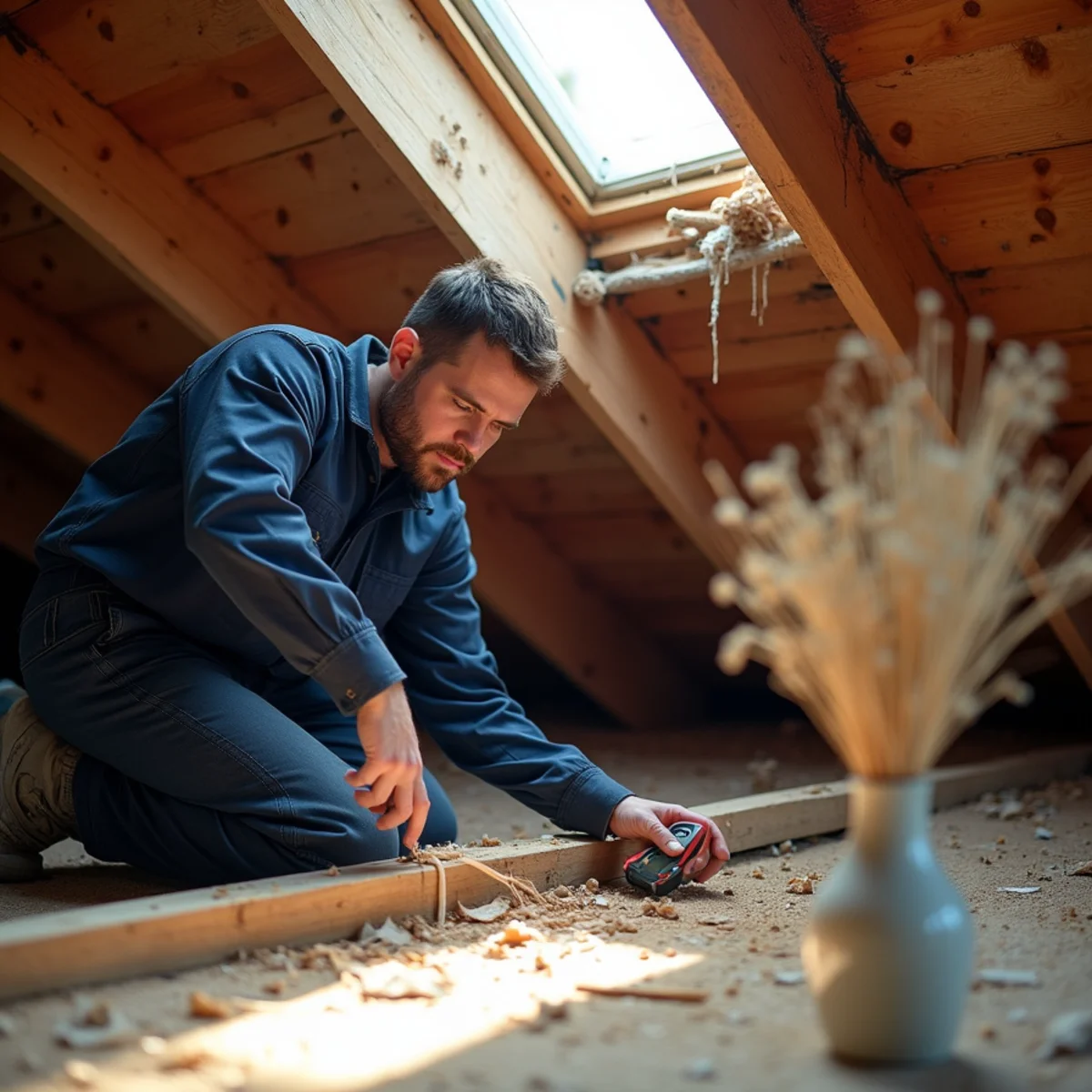
Ceiling integrity checked before anyone works underneath, and the attic inspected for the true entry path — which is rarely directly above the stain.
Wet insulation removal
Saturated blown-in and batt insulation bagged and removed. It holds water against the ceiling drywall and its R-value is gone regardless.
Extraction and dual-space drying
Water extracted below, then both the living space and the roof deck and framing dried from inside the attic, with readings on each.
Roof repair coordination and rebuild
The permanent roofing repair sequenced with the interior work, then ceiling drywall, texture, paint and any affected flooring restored.
Whittier's Two Storm Seasons
November through March is the rain. Whittier averages roughly 14 inches a year, and nearly all of it falls in this window. Increasingly it arrives as atmospheric river events — concentrated systems that deliver in days what used to spread across weeks. Southern California's 2022–2023 winter was the demonstration case: a rapid succession of atmospheric rivers across the state that produced widespread urban flooding, saturated soils, and failures in roofs that had performed fine for years.
That is the key mechanism to understand about local roof failure. Roofs here are engineered for a climate that is dry most of the year. A cracked tile or a lifted flashing sheds a light shower without complaint. Give it 72 straight hours of rain against saturated underlayment, and the same defect becomes an active leak.
Autumn and spring are the wind. Santa Ana events push dry offshore wind through the region at speeds that lift roofing material, snap limbs, and drive rain horizontally under laps and flashings that are only designed to shed water falling downward. Wind and rain together — which is what a frontal passage delivers — is the worst combination for a building envelope.
Board-Up and Tarping: the First Two Hours
Emergency stabilization is its own scope of work, and doing it well is what limits everything that follows.
Roof tarping means heavy poly secured over the damaged plane with battens fastened into sound decking, lapped so water sheds over rather than under the edge. A tarp thrown over a hole and weighted with sandbags is not tarping; it channels water into a new place and lifts in the next gust. Board-up covers openings from broken glazing or wind-opened doors with sheet material fastened into the frame.
This work is normally covered under the emergency-services provision of your policy, because it directly prevents further damage. Photograph the condition before the tarp goes on — a tarped roof looks fine to an adjuster who was not there.
What Comes After the Building Is Closed
Once the envelope is holding, storm damage becomes a water damage job with a few extra components.
Attic insulation that got wet from above comes out — it holds water against the ceiling drywall and its R-value is gone regardless. Ceiling assemblies are assessed for sagging and structural integrity before anyone works underneath them; wet drywall is heavy and it fails suddenly. Then it is standard water extraction and structural drying below the entry point, with the added step of drying the roof deck and framing from inside the attic.
Where storm water entered at ground level rather than from above, it is treated as contaminated — see flood cleanup for that protocol.
What You Can Do Before the Season
Almost every storm call we take was preventable in about two hours of October maintenance.
Clear the gutters and check that downspouts discharge away from the foundation, not against it. Clear yard and area drains of the leaf litter that accumulated over summer. Walk the perimeter and look up: cracked or slipped tiles, lifted shingle edges, failed sealant at flashings and roof penetrations. Trim limbs that overhang the roof, because those are what wind turns into a puncture. And check that the water heater strap and the washing machine hoses are still in the condition you last remember them being in.
The full list is in our winter storm prep checklist for Whittier.
Why us for this job
Why Storm Response Order Matters More Than Speed
Extracting a living room while rain is still coming through the roof is wasted effort. Sequencing is the skill here.
We close the envelope first
Proper tarping with battens into sound decking — not poly thrown over a hole and weighted with sandbags, which channels water somewhere new and lifts in the next gust. Most of what we attend was preventable in October, because the year's rain arrives in five months.
We photograph before we cover
Storm claims turn on whether damage came from a storm-created opening or an aged roof. Dated pre-tarp images are what separate those outcomes.
We trace the leak uphill
Water runs along decking and rafters before it drops. Patching directly above the stain is why so many roof repairs fail to stop the leak.
We know the local storm pattern
November-to-March atmospheric rivers that expose aging underlayment, and Santa Ana wind driving rain sideways under laps built to shed it downward. The 2022-2023 season showed what sustained rain does that a single heavy day does not.
- IICRC-certified technicians
- Licensed & insured
- 60-minute target response across Whittier
- Direct insurance billing
- 7012 Walnut Grove Dr, Whittier, CA 90606
Need storm damage cleanup today?
Close the envelope first — call and we will tarp before the next band of rain arrives.
Step by step
Our Storm Damage Response
Close the building, then restore it.
Step 1
Emergency stabilization
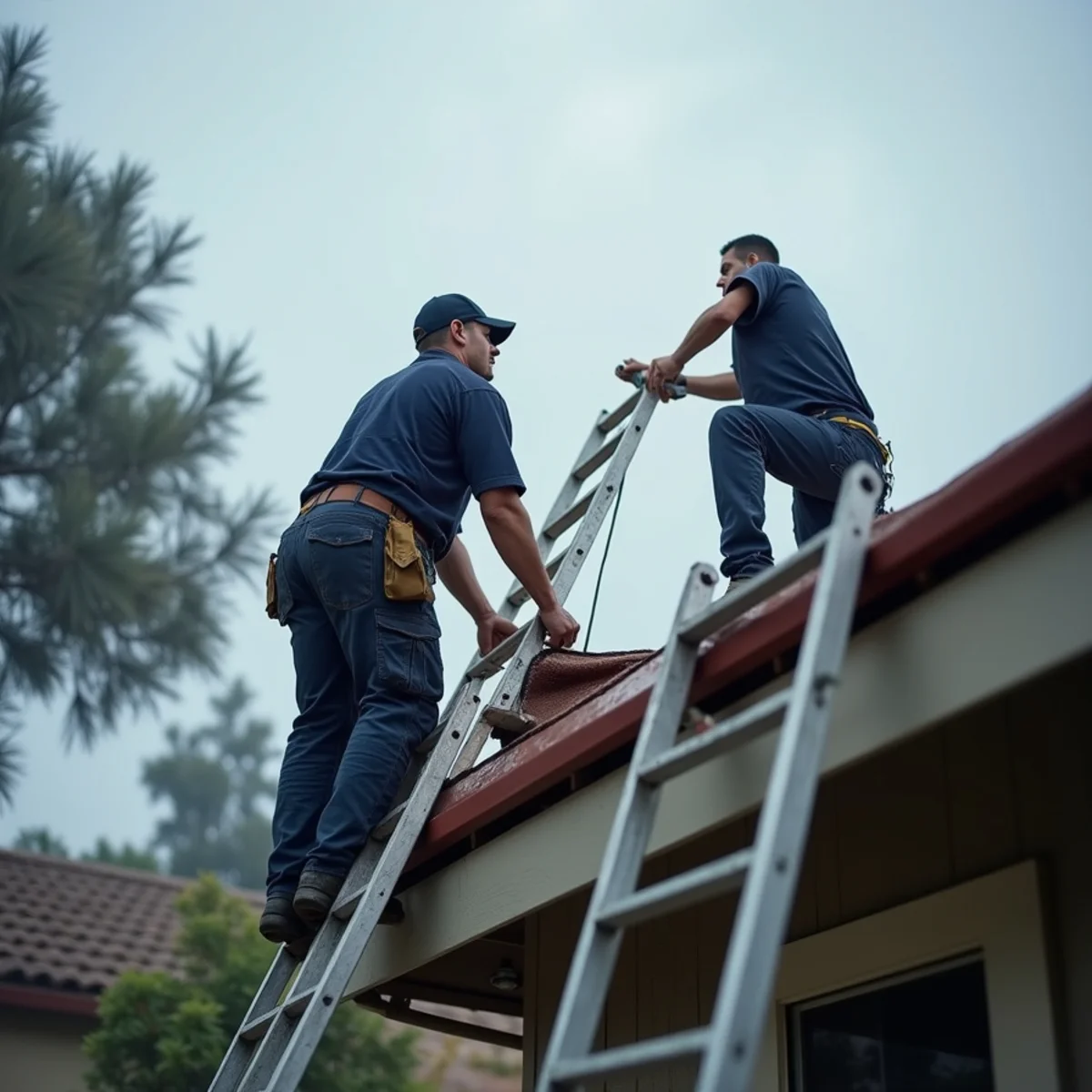
Roof tarping, board-up and sealing of active entry points, so the next band of rain does not add to the loss.
Step 2
Document the pre-tarp condition
Photographs and video of the damage as found, before any stabilization covers it. This is the evidence your carrier decides the claim on.
Step 3
Assess structure and attic
Ceiling integrity checked before anyone works below it. Attic inspected for wet insulation, saturated decking and the true entry path — which is often not directly above the stain.
Step 4
Remove, extract and dry
Wet insulation and unsalvageable materials out, water extracted, then engineered drying of both the living space and the attic assembly.
Step 5
Repair and restore
Permanent roof repair coordinated, then interior rebuild — ceiling drywall, texture, paint and any affected flooring.
On the job
Honest pricing
What Storm Damage Cleanup Costs Depend On
Storm jobs vary more than any other category because the damage is external before it is internal.
- Emergency stabilization scope
- Square footage of tarping, number of openings boarded, and whether the work has to be done in active weather.
- Point and duration of entry
- A single flashing leak over one night is a different scope from three days of entry across a roof plane.
- Attic and insulation involvement
- Wet insulation removal and attic drying add material, disposal and equipment days.
- Ceiling and structural damage
- Sagging or collapsed ceiling assemblies require removal, structural assessment and full rebuild rather than patching.
- Contamination
- Ground-level storm water is treated as contaminated, which changes protocol and what can be saved.
Wind-driven rain entering through storm-created damage is generally covered by standard homeowners policies. Rising water and surface flooding generally are not. The difference is where the water came in, which is exactly why the pre-tarp photographs matter.
Related services, service areas and guides
Related services
- Roof Leak Water Damage RestorationAttic-down restoration: wet insulation out, decking and framing dried, ceilings rebuilt and matched.
- Flood CleanupStorm and overflow flooding handled as the contaminated-water event it is — extraction, removal, disinfection, drying.
- Ceiling Water Damage RepairTrace the source, dry the cavity above, then repair and texture-match the ceiling so the patch does not show.
Related reading
- What the 2022–2023 Atmospheric Rivers Taught the San Gabriel Valley About Urban FloodingSystems that shrug off a shower fail under seventy-two hours of continuous rain. That is the whole lesson, and it applies to almost every house here.
- Whittier Gets ~14 Inches of Rain — Almost All of It November to March. Is Your Home Ready?It is not the total that causes damage. It is that a year's rain arrives in five months, after eight months of nothing testing anything.
Storm Damage Cleanup across our service area
We provide storm damage cleanup across Whittier and the surrounding Los Angeles County communities. Each area page covers the local housing and drainage risks that actually drive water damage there.
- East WhittierUnder 10 minutes from our Walnut Grove Dr base. This is our home zone.
- Uptown WhittierAbout 8 to 12 minutes from our Walnut Grove Dr base, west along Whittier Boulevard or Philadelphia Street.
- Whittwood, WhittierUnder 10 minutes from our Walnut Grove Dr base — one of our closest zones.
- Friendly Hills, WhittierAround 8 to 12 minutes from our base, up toward the Whittier foothills.
- Pico RiveraTypically 10 to 15 minutes from our Walnut Grove Dr base, straight across on Whittier Boulevard or Washington Boulevard.
- Santa Fe SpringsAround 10 minutes from our base, south on Painter Avenue or straight down the 605.
- South WhittierUsually under 10 minutes from our Walnut Grove Dr base — one of the fastest zones we serve.
- La MiradaRoughly 12 to 18 minutes from our Whittier base via Imperial Highway or Rosecrans Avenue.
- NorwalkAround 12 to 15 minutes from our base, south on Norwalk Boulevard or Pioneer Boulevard.
- Los Angeles CountyWe work the southeast quadrant of the county from our base at 7012 Walnut Grove Dr in Whittier, with a 60-minute target response across the Gateway Cities and the lower San Gabriel Valley.
Request a visit
Free Estimate for Storm Damage Cleanup
We inspect with thermal imaging and moisture meters before quoting — a firm price given over the phone without readings is a guess. If water is spreading right now, call instead; crews are dispatched during the conversation.
+1 (201) 277-9344