Local Whittier Angles
The San Gabriel River Concrete Channel: How Flood Control Protects — and Sometimes Fails — Whittier Homes
The channel is why this area is buildable. It is also why homeowners assume they are safe from water they are not actually safe from.
Water spreading right now? Call before you finish reading — crews are dispatched during the conversation, 24/7.
+1 (201) 277-9344The short answer
The channel moves regional watershed flow quickly along a fixed path to the ocean, and it works — river flooding is not what damages homes here. What it does not do is manage water on your street or your lot. Storm drains at capacity, driveways falling toward the house and blocked area drains are the real risk.
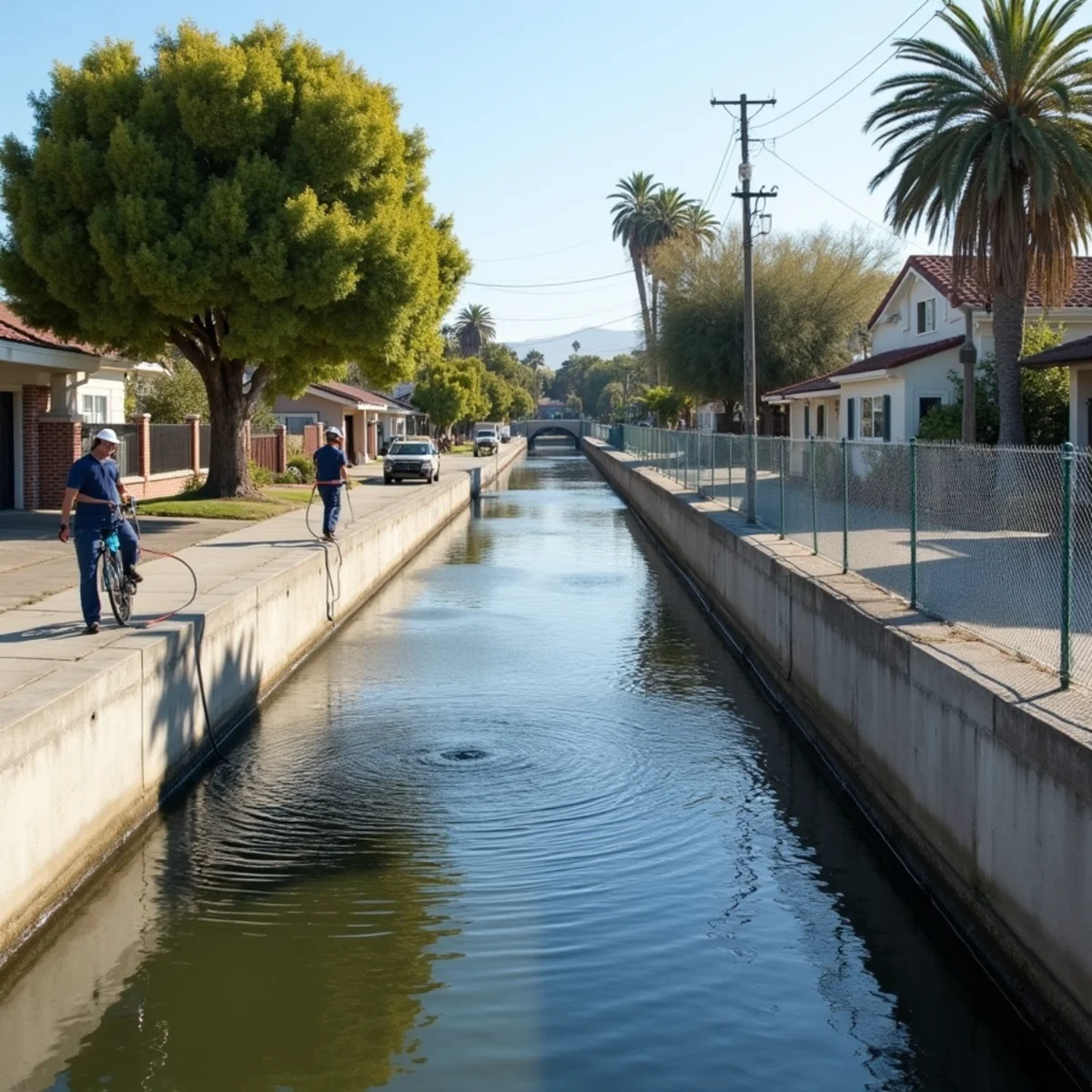
Drive over the San Gabriel River in summer and it looks like a dry concrete trench with a bike path alongside it. That appearance is deceptive in both directions — it does far more than it looks like, and it protects against something different from what people assume.
Why the River Was Channelized
Before flood control, the rivers of the Los Angeles basin were braided seasonal watercourses that moved across their floodplains during major storms. Nineteenth-century floods repeatedly reshaped drainage across the region, and the catastrophic flood of 1938 — which caused widespread destruction and loss of life across Los Angeles County — was the decisive event.
What followed was one of the largest flood-control programmes in the country: concrete channels on the San Gabriel River and Rio Hondo, dams including Whittier Narrows, debris basins in the foothills, and spreading grounds that capture storm flow and recharge the groundwater basin.
The program succeeded on its own terms. The regional river flooding that shaped this landscape historically no longer happens, and the density of housing across the lower San Gabriel Valley exists because of it.
What the Channel Actually Does
A concrete channel moves a very large volume of water very quickly and in a fixed path. Smooth lining, engineered gradient, and no vegetation to slow flow.
That speed is the point. Water that would otherwise spread across a floodplain is instead conveyed to the ocean, or captured at the spreading grounds for groundwater recharge, at a rate that keeps it inside the channel walls.
It is genuinely impressive infrastructure and it works. In our experience responding to storm losses across this service area, essentially none of them involve the river.
What It Does Not Do
It does not manage the water on your street, and this is the gap that catches homeowners out.
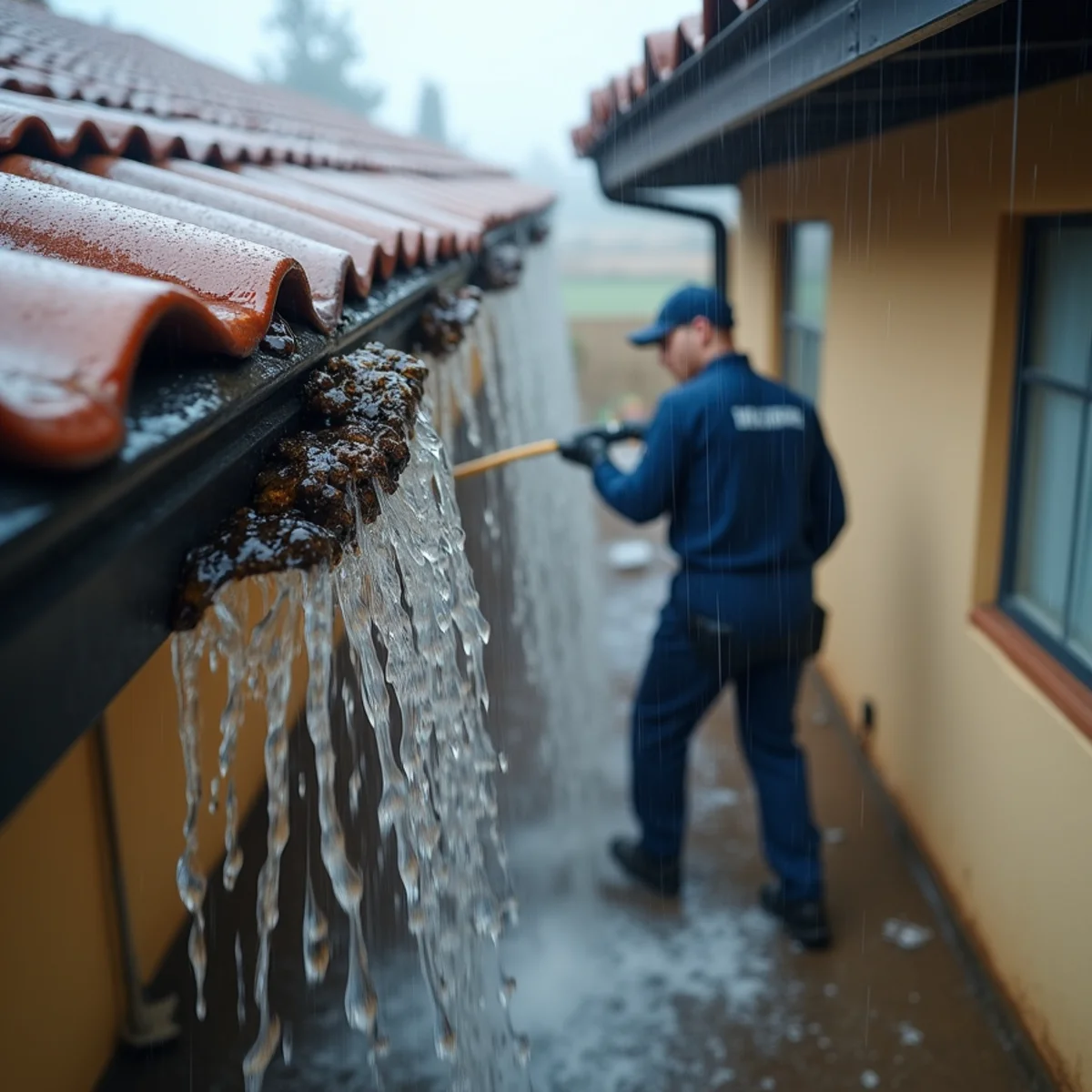
Regional flood control handles regional flow. What reaches your house is local: the storm drain at the end of the block reaching capacity during a concentrated system, the curb line backing up, your driveway sloping toward the garage, a yard grade reversed by decades of landscaping, and area drains full of last summer's leaf litter.
The paradox is that living near a well-engineered channel produces a false sense of security. Homes in West Whittier-Los Nietos and Southeast Pico Rivera sit close to the channel and are well protected from the river — and take water at grade during heavy systems for entirely local reasons.
Where the System Is Under Pressure
Two structural points worth understanding, stated plainly.
First, the network was designed decades ago against the rainfall record of its time. The concentrated multi-day systems that have characterized recent wet seasons load urban drainage — the storm drains and street network, more than the river channels — differently from steady seasonal rain.
Second, the region's enormous extent of impervious surface means very little rainfall infiltrates where it falls. Roofs, roads and parking lots convert rain to runoff almost immediately, which is precisely why local street-level drainage reaches capacity while the river channel is still running well within its walls.
What This Means for Your House
Practically: your flood risk is a property-scale question, and almost all of it is within your control.
Grade should fall away from the structure. Downspouts should discharge well clear of the foundation. Area drains should be clear before November. Garage and door thresholds should be checked where they sit low. And crawl space vents should not be at or below the surrounding grade — which decades of added landscaping and hardscape frequently causes.
And on insurance: water that crossed the ground before entering is treated as flood, excluded from standard homeowners policies, regardless of whether you are in a mapped zone. See flood insurance vs. homeowners insurance.
The Half-Hour Property Audit That Replaces Worrying About the River
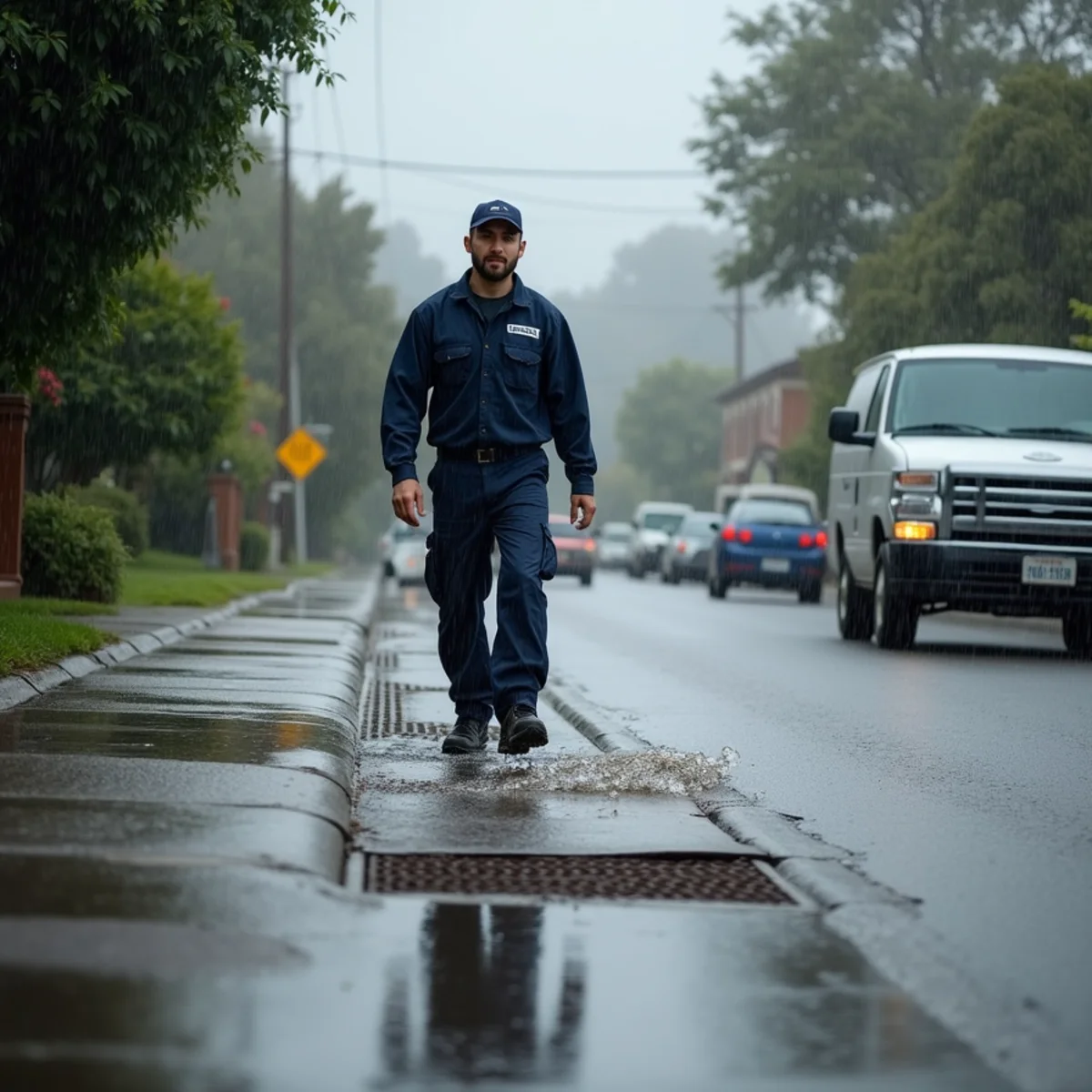
Because the risk is at lot scale, it can be assessed at lot scale, and the best time to do it is during rain rather than on a dry Saturday. Half an hour outside in a decent shower tells you more about your property than any map does.
Walk the perimeter and watch where water actually goes. Every downspout should be discharging clear of the foundation and the discharge should be running away from the house, not pooling at the base of a wall. Every area drain should be swallowing what reaches it rather than backing up around the grate. The soil and hardscape immediately around the structure should be falling away from it — which is exactly what a raised bed, a new patio or twenty years of accumulated mulch quietly reverses.
Then look at the thresholds, because that is where the uncovered losses come in. Garage doors, side doors and sliders at or near grade are where storm water enters as flood rather than as a homeowners claim, and the entry is usually a shallow sheet of water backing up two inches too high, not a dramatic surge. If you see water standing anywhere near one of those during a storm, that is the item to fix before the next season — regrading, a channel drain across the opening, or extending a downspout run to take the volume somewhere else entirely.
- Downspouts discharging well clear of the foundation, with the water actually running away
- Area and yard drains swallowing flow rather than backing up around the grate
- Grade falling away from the structure on every elevation, including behind planting
- No standing water at garage, side door or slider thresholds during a storm
- The driveway shedding away from the garage rather than toward it
- Any low point where two roof planes discharge into one gutter run
The bottom line
The channel handles the river. Your gutters, drains and grade handle everything that actually reaches your door.
Maintaining the second set is the flood control you personally own.