Cost & Insurance
Flood Insurance vs. Homeowners Insurance: Why Storm Flooding Usually Isn't Covered
One rule explains almost every storm claim outcome: water that fell on your house is usually covered, water that ran across the ground first usually is not.
Water spreading right now? Call before you finish reading — crews are dispatched during the conversation, 24/7.
+1 (201) 277-9344The short answer
Water arriving from above through an opening is usually a homeowners claim. Water arriving across the ground is a flood claim and needs separate NFIP or private flood cover, which typically carries a 30-day waiting period. Sewer backup belongs to neither by default and requires a water backup endorsement.
Every winter we attend homes where the family assumed storm damage was covered, and it was — right up until the water came in at the door instead of through the roof.
That single distinction, entry point, decides most storm claims in California.
The Rule
Water that arrives from above, through an opening, is usually a homeowners claim. Rain entering through storm-damaged roofing, a broken window, a wind-lifted tile — that is covered by standard policies, along with the interior water damage that follows.
Water that arrives from the ground is usually a flood claim. Storm runoff, surface water, rising groundwater, an overwhelmed storm drain backing up into your street — that is excluded from standard homeowners policies and requires separate flood insurance.
The physical damage in your living room can look identical either way. The claim outcome is completely different, which is why documenting the entry point is the first thing we photograph on any storm job.
What Flood Insurance Is and How You Get It
Flood coverage in the United States runs primarily through the National Flood Insurance Program, with a growing private market alongside it. It is bought separately from your homeowners policy, usually through the same agent.
Two things worth knowing. There is normally a waiting period — commonly 30 days — before a new NFIP policy takes effect, which means buying it when the forecast turns is too late. And contents coverage is separate from building coverage; a building-only policy pays nothing for your belongings.
You do not have to be in a mapped high-risk zone to buy it. Much of the flooding that affects homes in this region happens outside mapped flood zones, because it is local drainage rather than river flooding.
Why Whittier Homes Flood Without Being in a Flood Zone
This is the part that catches people out locally.
Southeast Los Angeles County is heavily engineered. The San Gabriel River and Rio Hondo run in concrete channels, the county flood control district operates Whittier Narrows Dam and its spreading grounds, and that infrastructure moves an enormous volume of storm runoff away from neighborhoods. It works. River flooding is genuinely not what generates our calls.
What does is entirely local: a storm drain at capacity during a concentrated system, a driveway that slopes back toward the garage, a yard grade altered by thirty years of landscaping, and area drains full of the previous summer's leaf litter. Whittier gets around 14 inches of rain a year and nearly all of it falls November to March, increasingly in concentrated bursts.
That water is still "flood" for insurance purposes, because it crossed the ground. Being outside a mapped flood zone does not change the exclusion — see our piece on what the 2022–2023 atmospheric rivers taught the San Gabriel Valley.
The Sewer Backup Exception
A third category that belongs to neither policy by default.
When heavy rain loads the sewer system and waste backs up into a house through a floor drain, tub or toilet, that is not flood and not standard homeowners coverage. It requires a water backup endorsement on your homeowners policy — usually inexpensive, often with its own sub-limit.
In older neighborhoods with original clay sewer laterals, this is close to essential. Root intrusion restricts the line through the dry season and the first heavy November rain is what finally overwhelms it. See sewage backup cleanup costs and coverage.
What to Do During a Storm Loss
Because the entry point decides the claim, document it while it is happening.
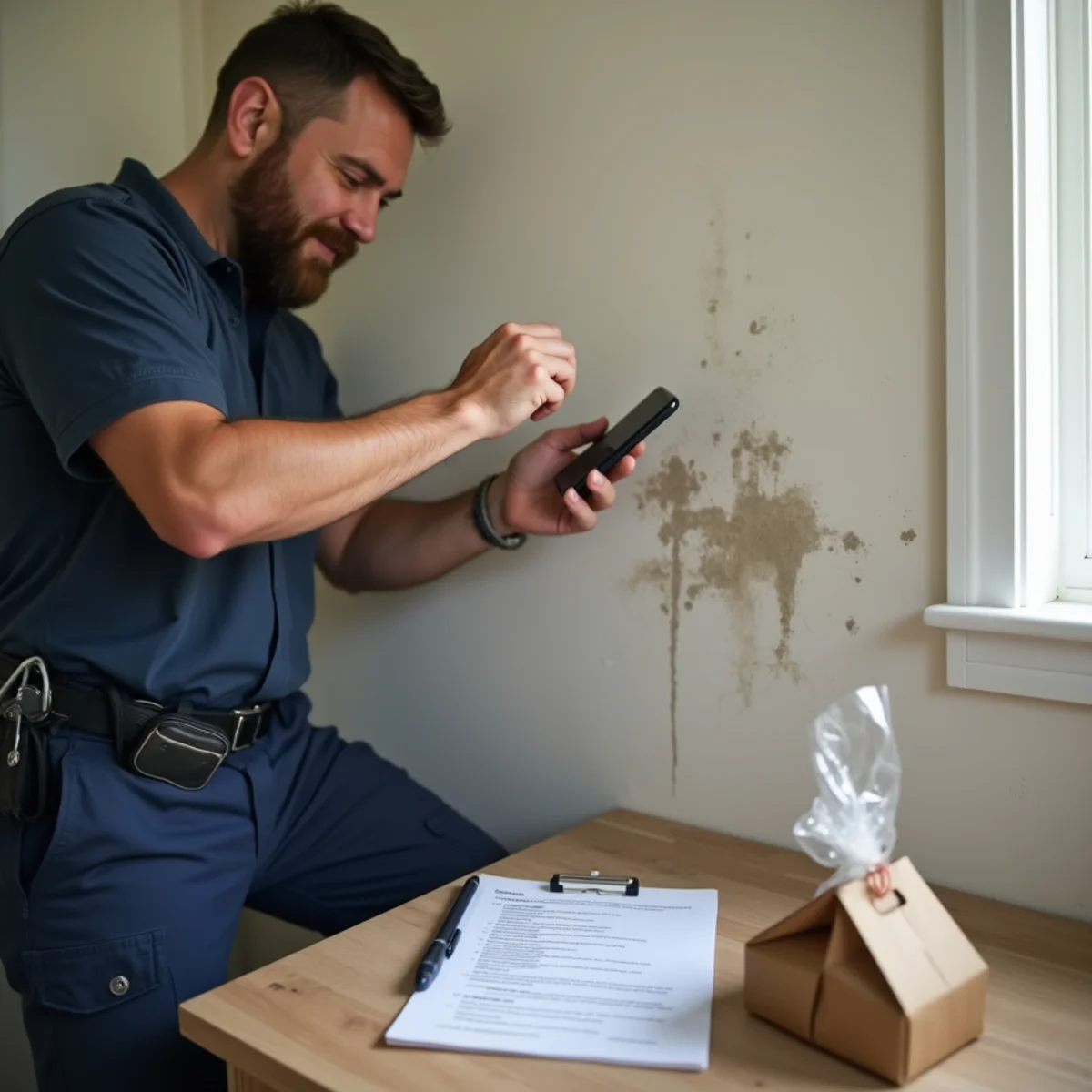
- Photograph where water is entering, during the event if it is safe
- Photograph the exterior damage — lifted tiles, broken glazing, a limb on the roof
- Record the date and the storm, and keep a screenshot of the forecast or warning
- Photograph before emergency tarping goes on — a tarped roof tells an adjuster nothing
- Keep the water line height visible in shots if water came in at grade
- Note whether water came in through something or under something — that is the whole question
Prevention Is Cheaper Than Either Policy
Nearly all the ground-level storm entry we attend was preventable with an afternoon in October.
Clear the gutters and confirm downspouts discharge well away from the foundation. Clear yard and area drains of the debris that has accumulated since spring. Check the grade around the house — soil should fall away from the structure, and decades of landscaping frequently reverses that. Where a garage or door threshold sits low, consider a threshold seal or a diverter.
The full list is in our pre-rainy-season drainage checklist.
The Mixed-Cause Storm Loss, and How It Gets Sorted Out
The tidy version of this rule assumes one entry point. Real storm losses in this region frequently have two, and that is where claims get complicated. A December system lifts a tile and pushes rain into a bedroom ceiling while the same storm overwhelms a yard drain and sends runoff under a slider into the adjoining living room. Two perils, two policies, one continuous wet area on the floor.
Adjusters resolve that by entry point and elevation, which is why what gets photographed during the event matters so much. Water that came in at ceiling level and ran down a wall leaves a pattern that starts high and diminishes downward. Water that crossed the ground leaves a horizontal line at a consistent height, debris and silt at the leading edge, and staining that starts at the floor. Those two signatures are distinguishable for a while and then they are not, because in a day or two both simply look like a wet room.
So on any storm call the first thing worth capturing, before anyone lays a towel down, is where water is entering and how high it stood. A short video from the doorway during the event, a photograph of the exterior damage before a tarp goes on, and a screenshot of the storm warning with the date, together do more for a storm claim than anything collected afterward. If you carry both policies, they also stop the two carriers pointing at each other.
The bottom line
Through the roof, usually covered. Off the ground, usually not. Up the drain, only with an endorsement.
Photograph the entry point first — it is the fact the whole claim turns on.