Prevention & Maintenance
Smart Water Sensors and Automatic Shut-Off Valves: Are They Worth It for Your Home?
Point sensors are cheap and genuinely useful. Whole-house shut-off systems are expensive and, for some houses, obviously worth it. Here is which is which.
Water spreading right now? Call before you finish reading — crews are dispatched during the conversation, 24/7.
+1 (201) 277-9344The short answer
Point sensors are cheap, easy and worth fitting everywhere — under the water heater, behind the washer, under every sink. Automatic shut-off valves are a genuine investment and earn it in specific cases: second homes, frequent travellers, rentals, older slab homes in the pipe-failure window, and homes with irreplaceable finishes.
We are asked about these constantly, usually by someone who has just had a loss. The honest answer differs a lot depending on what your house is and how you live in it.
Two categories, and they do different jobs.
Point Sensors: Cheap and Genuinely Useful
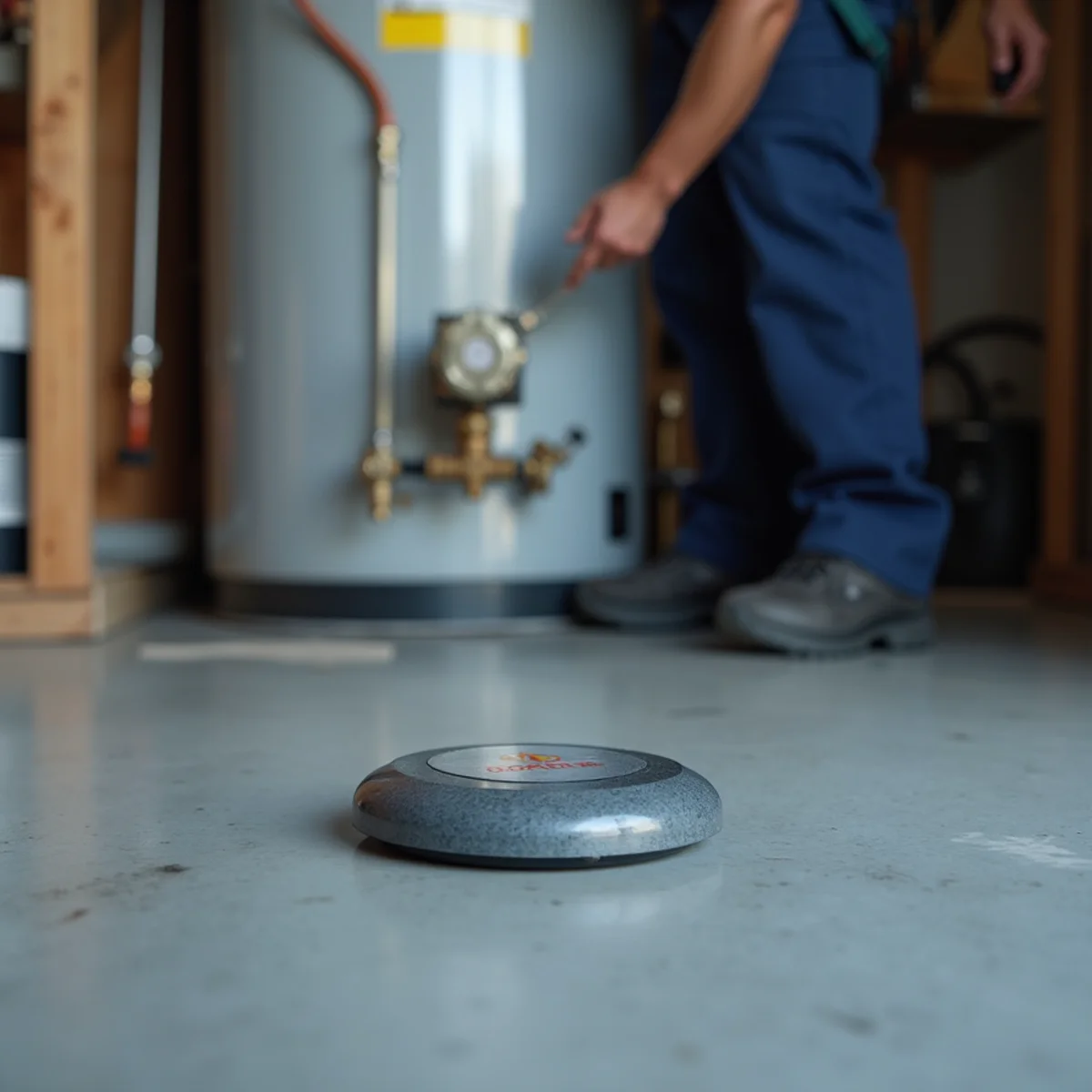
A small battery-powered puck that sits on the floor and alerts your phone when it detects water. Most cost very little; a set covering a whole house is a modest outlay.
What they are excellent at: catching a slow leak early in a place nobody looks. Under the water heater, behind the washing machine, under the kitchen sink, under each vanity, near the dishwasher, next to the sump if you have one.
What they cannot do: stop the water. They tell you, and if you are home and awake and near your phone, you act. If you are at work, on a flight, or asleep with the phone on silent, they have documented the flood rather than prevented it.
For the price, put them everywhere anyway. A slow weep found in hour one instead of week three is a substantial saving on its own.
Automatic Shut-Off Systems: Expensive and Sometimes Obvious
A valve installed on the main supply line that closes automatically. Two general approaches.
Sensor-triggered: the valve closes when a paired leak sensor detects water. Simple, reliable for the failure modes the sensors cover, and blind to anything not near a sensor.
Flow-monitoring: the system watches the flow pattern of the whole house and closes the valve when it sees something anomalous — continuous flow beyond a set duration, or flow that does not match any normal usage pattern. This catches leaks anywhere on the system, including inside walls and under slabs, which sensors cannot.
Flow monitoring is the more capable approach, and it is the one worth paying for if you are paying at all. It also picks up the slow leaks that never produce standing water — the ones that show up on your bill months later.
Who Should Actually Buy One
The case is strong in some situations and weak in others. Being straight about that.
- Strong case: a second home or a property empty for long stretches — the failure mode these systems prevent is exactly the one that happens in empty houses
- Strong case: a home with a history of leaks, or an older slab home in the pipe-failure window
- Strong case: anyone who travels frequently, or who owns rental property where reporting is inherently delayed
- Strong case: a home with expensive or irreplaceable finishes, where the loss is disproportionate to the square footage
- Weaker case: a newer home, occupied continuously, with recent plumbing — point sensors plus the habit of closing valves when you travel gets you most of the benefit
What They Do Not Replace
A shut-off system stops supply-side water. It does nothing about the losses that are not supply-side, and those are a large share of what we attend.
It will not help with a roof leak, storm water entering at grade, a sewer backup, or a groundwater problem in a crawl space. It will not fix drainage that has not been cleared since spring.
It also does not replace knowing where your manual shut-off is and having tested it. Electronics fail, batteries die, and the manual valve is the backstop.
The Free Version
If you buy nothing at all, three habits deliver a meaningful share of the same protection.
Close the laundry valves whenever you go away for more than a couple of days. Shut off the main for longer absences. And run the two-minute meter test seasonally — everything off, watch the dial — which catches continuous flow anywhere on the system, including under a slab.
That last one is essentially what a flow-monitoring system does automatically, performed manually four times a year. It is not as good. It is free, and it works.
What Goes Wrong With These Systems, and How to Fit Them So It Does Not
The failures we see are almost never the electronics. They are placement, power and the assumption that the device has replaced a habit.
Placement first: a sensor sitting beside an appliance catches water only if the floor happens to fall that way, and floors in older local tracts frequently do not fall where the builder intended. Put the puck at the lowest point of the space, not the most convenient one, and where a slab has settled, that is worth establishing with a marble before you decide. Under a water heater the right position is inside the drip pan if there is one; behind a washer it is against the wall where the hoses actually run, not out in the open floor.
Power second: these are battery devices, and a low-battery notification arriving among a hundred other phone alerts is easy to dismiss. Note the date they went in, the same way you would with a hose. And third, the habit — a shut-off valve stops supply-side water and does nothing about a roof leak, storm water at a threshold, or a sewer backup, which between them account for a large share of what we attend. It also does not substitute for knowing where your manual main is and having proved it turns. The device is a second line. The valve in the parkway is still the first.
The bottom line
Buy the cheap sensors — put them under the water heater, the washing machine, both sinks and every vanity.
Buy the shut-off system if the house is ever empty for long, is old enough to be in the failure window, or holds finishes you cannot replace.