
Tier 1 service area · Neighborhood
Water Damage Restoration in Residential Santa Fe Springs, CA
1940s–50s residential pockets wedged between industrial zones, where aging infrastructure meets a genuine runoff contamination question.
- 24/7 emergency dispatch
- around 10 to 12 minutes from our base, south on Painter Avenue
- IICRC-certified technicians
The residential pockets of Santa Fe Springs sit between the industrial parcels rather than apart from them, and they are older than most people expect — 1940s and 50s housing that predates the distribution belt that grew up around it.
That produces an unusual combination: old-house plumbing problems and an industrial-adjacency question that changes how storm water entry is handled.
Old Housing in an Industrial Setting
The plumbing profile is post-war: original galvanized supply that has corroded internally over seven decades, cast-iron drains that have scaled and lost diameter, and clay-tile sewer laterals with long-established root intrusion. Many homes have had partial repairs, leaving mixed systems where the untouched original runs carry the highest risk.
Raised foundations are common in the older sections, which means crawl spaces — and crawl spaces here take storm water through foundation vents that sit at or near grade.
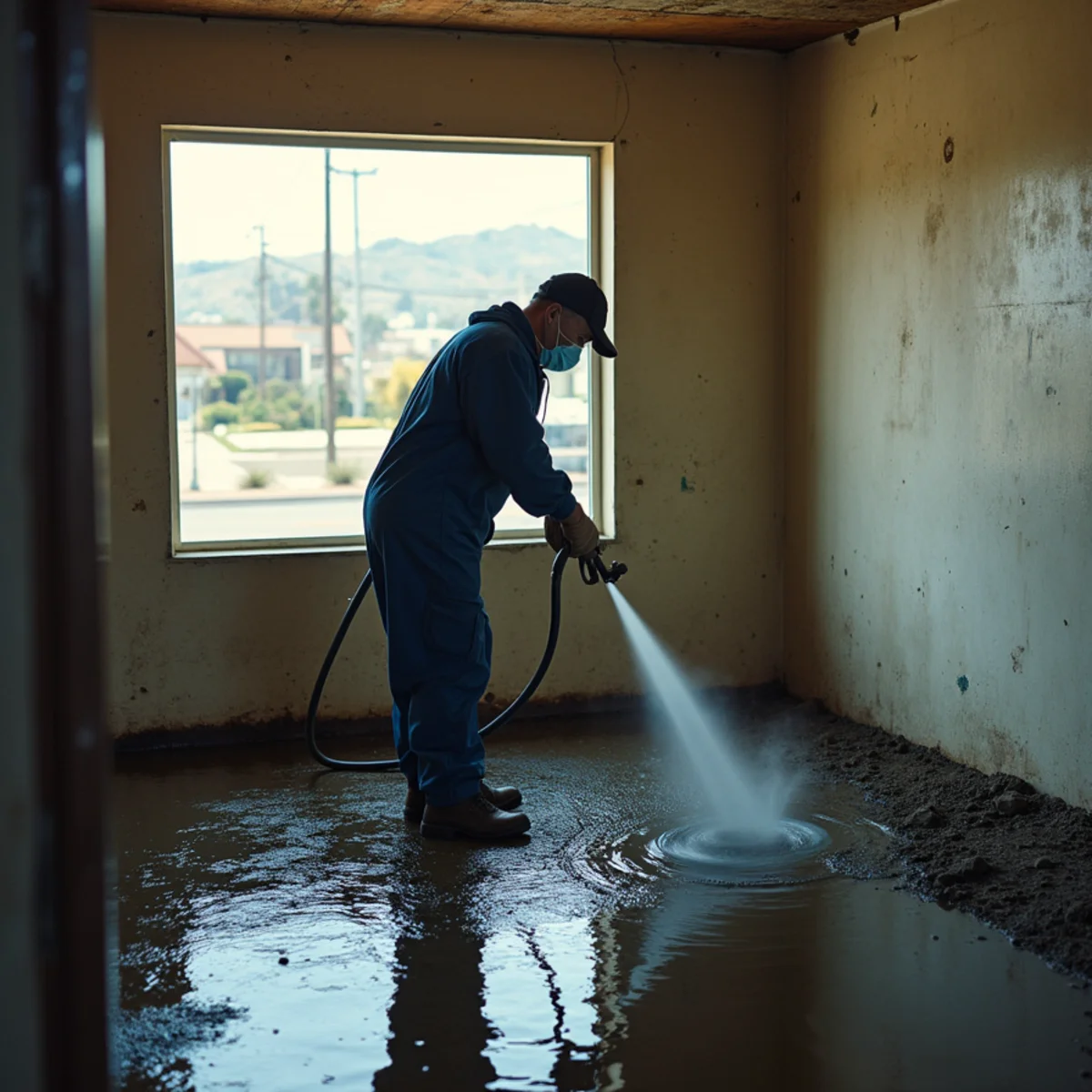
The industrial adjacency matters at ground level. Storm water that has crossed industrial or commercial ground before entering a home is treated as contaminated under industry protocol, regardless of how clear it looks. That means porous materials which absorbed it are removed rather than dried, and the affected area is cleaned and disinfected before drying begins. It is a stricter standard than a clean supply-line loss, and in this setting it is the right one.
- Original galvanized supply and cast-iron drains from the 1940s–50s
- Clay sewer laterals with decades of root intrusion
- Raised foundations with crawl spaces at or near grade
- Storm runoff across industrial ground treated as Category 3
- Mixed-metal systems left by decades of partial repairs
Working the Residential Pockets
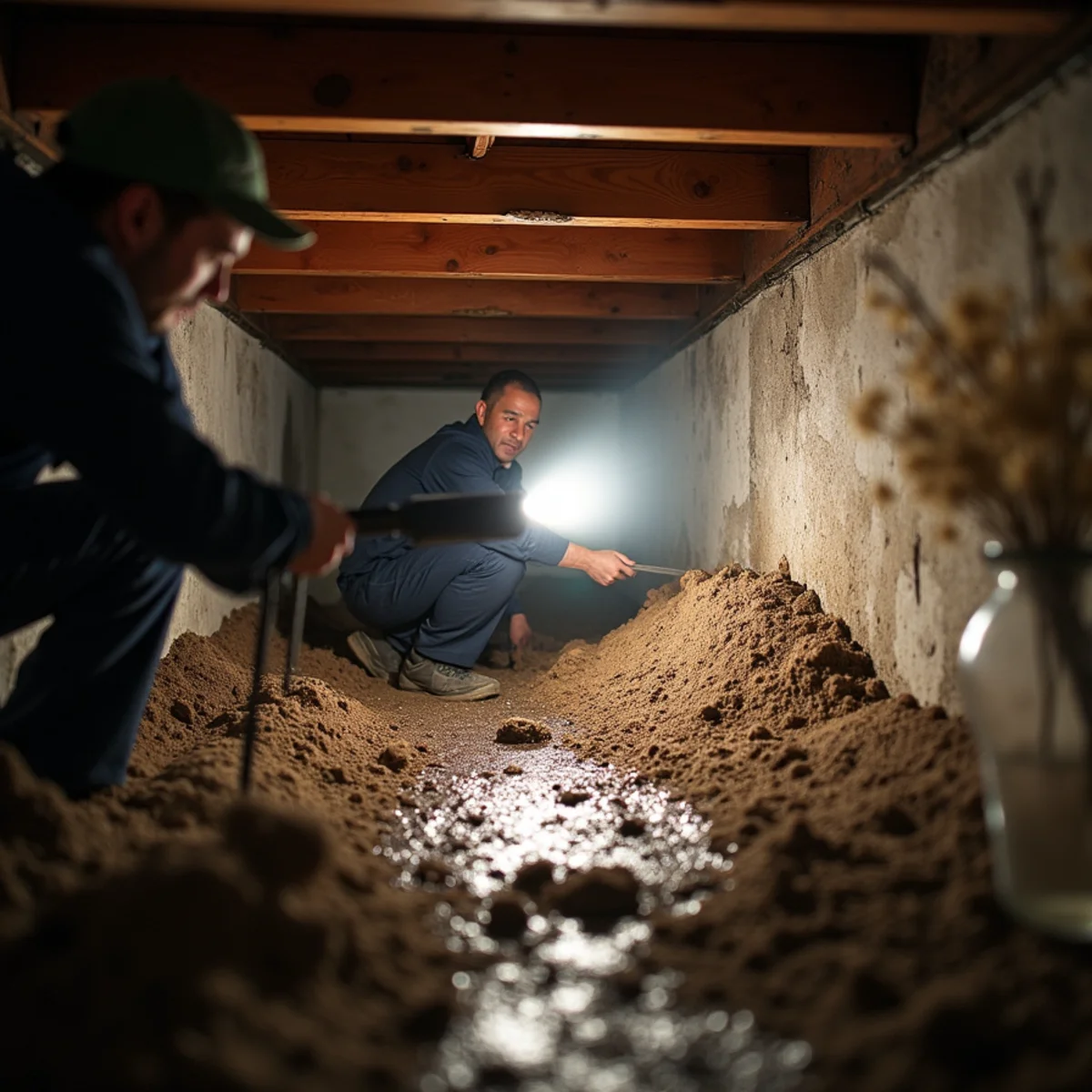
Crawl space work is over-represented here, and it matters more than homeowners expect. Air moves upward through a building and draws replacement air from the lowest point, so in a raised-foundation home a meaningful share of the air in your living space passed through the crawl space first. Water sitting under the house raises humidity throughout and feeds growth on the subfloor directly beneath your floors.
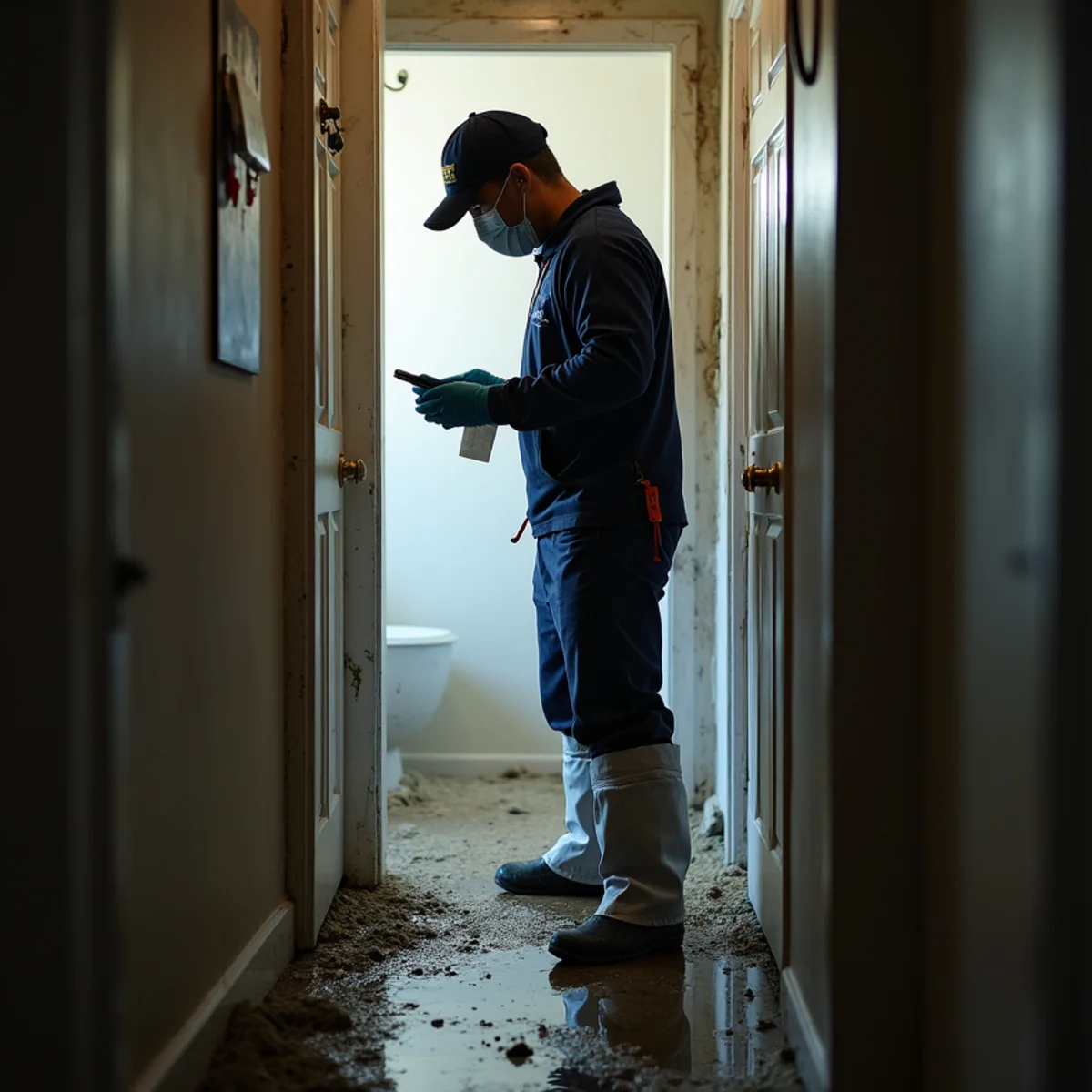
When storm water has entered at grade, we scope it as a contaminated-water job from the outset rather than upgrading halfway through — PPE, containment and removal of porous materials from the first hour.
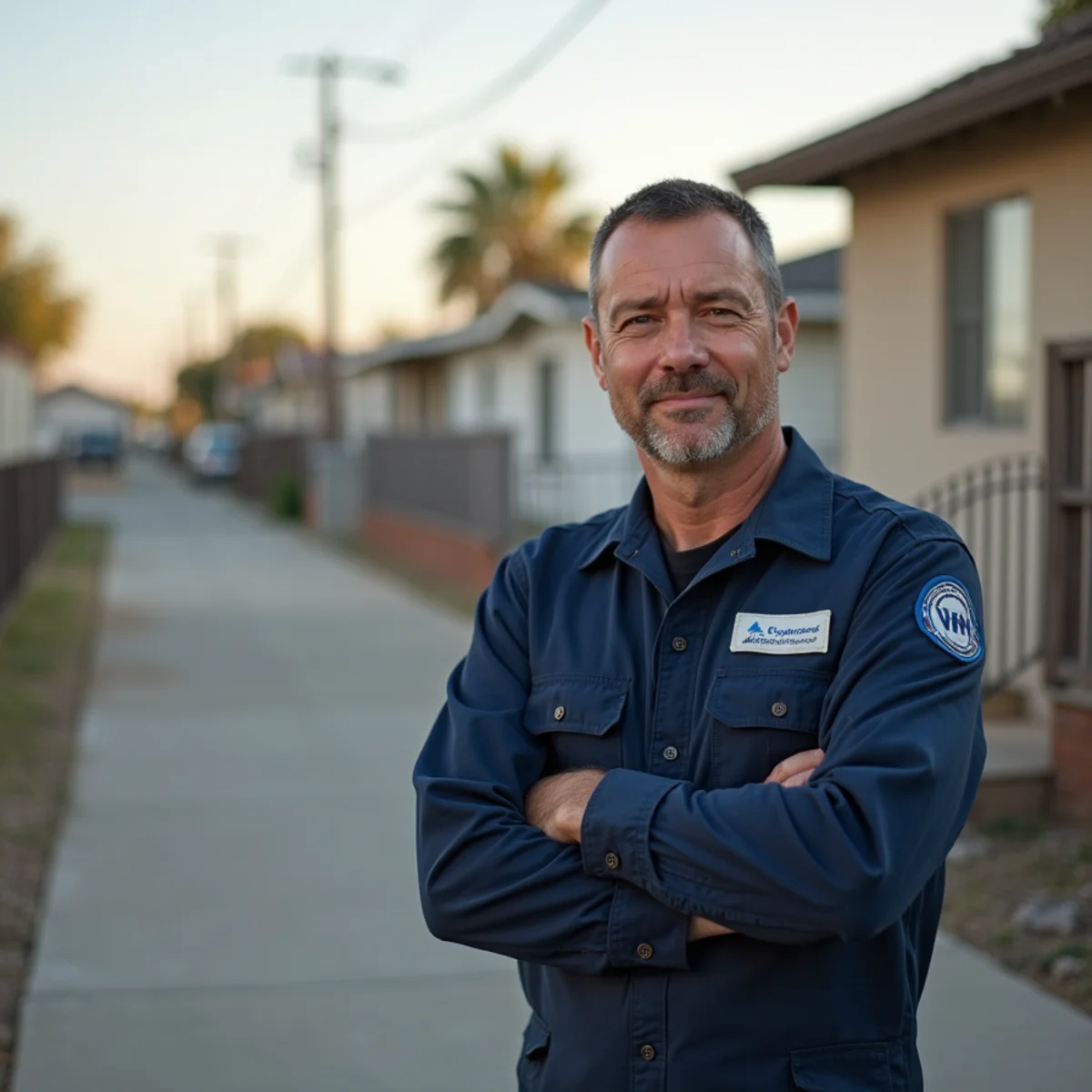
Our work runs across the residential streets north of Telegraph Road and around Lakeland Road, in the pockets bounded by the industrial parcels.
Local landmarks & reference points
- Lakeland Road
- Telegraph Road
- Heritage Park
- Norwalk Boulevard
- Surrounding industrial parcels
Need a crew in Santa Fe Springs Residential?
If it came in from the street rather than a pipe, say so — it changes the whole protocol.
From our own job log
What we get called to in the Santa Fe Springs residential pockets
Aging homes wedged between industrial zones, which changes the questions we ask.
Runoff that crossed industrial ground
Storm water entering at grade here is treated as contaminated until established otherwise. The category, not the volume, sets the protocol and decides what can be dried rather than removed.
1940s–50s supply and laterals
Original galvanized and clay tile still in service, with the usual progression of falling pressure on one side and slow drains on the other.
What is standing under the floor
Where a raised foundation takes water in from the street rather than from a pipe, the question is not only how wet it is but what arrived with it. That turns the crawl space from a drying job into a cleanup one, and the source settles it rather than how the water looks.
What we handle here
Water Damage Services in Santa Fe Springs Residential
The services we are called out for most in this area. Every one of them is handled by our own crews, from the first extraction pass through to the rebuild.
- Flood CleanupStorm and overflow flooding handled as the contaminated-water event it is — extraction, removal, disinfection, drying.
- Flooded Basement & Crawl Space CleanupPump-out, vapor barrier and insulation replacement, and drying for the space under your house that nobody looks at.
- Water Damage RestorationExtraction, structural drying, mold prevention and repairs — one crew from the first hour to the final coat of paint.
- Sewage Cleanup & Backup RemovalBlack-water backups removed under full containment, then disinfected, deodorized and dried to a verified sanitary condition.
- Mold RemediationContainment, HEPA filtration and controlled removal — plus fixing the moisture source so it does not come back.
On the job in Santa Fe Springs Residential
Why people here call us
Why Santa Fe Springs Residents Call Us
Ten to twelve minutes south on Painter, into older homes with an industrial neighbor.
Industrial-adjacent runoff treated as Category 3
Regardless of appearance. Porous materials that absorbed it are removed rather than dried, and the area is cleaned before drying starts.
Crawl spaces are scoped, not skipped
Raised foundations with vents near grade take storm water and hold it, and it affects the air in every room above.
Old plumbing diagnosed for mixed metals
Decades of partial repair leave galvanized and copper joined, and the untouched original runs carry the highest risk.
Water Damage Whittier · 7012 Walnut Grove Dr, Whittier, CA 90606 · +1 (201) 277-9344 · IICRC-certified technicians · Open 24 hours — 7 days a week, including holidays
Find us
Serving Santa Fe Springs Residential from our Whittier base
Crews dispatch from our base in east-central Whittier. Around 10 to 12 minutes from our base, south on Painter Avenue.
Water Damage Whittier7012 Walnut Grove Dr, Whittier, CA 90606Open 24 hours — 7 days a week, including holidays
Nearby service areas and related guides
Nearby areas we serve
Same crews, same response commitment. Each of these pages covers the local risks specific to that area.
- Santa Fe SpringsAround 10 minutes from our base, south on Painter Avenue or straight down the 605.
- Santa Fe Springs IndustrialAbout 10 to 12 minutes from our base, straight down Painter Avenue or the 605.
- NorwalkAround 12 to 15 minutes from our base, south on Norwalk Boulevard or Pioneer Boulevard.
- West Whittier-Los NietosAbout 10 to 15 minutes from our base, west on Whittier Boulevard or Slauson Avenue.
- West WhittierAbout 10 to 14 minutes from our base, west along Whittier Boulevard.
Local proof
Working in Santa Fe Springs Residential
We publish customer reviews as jobs close, with the customer's first name, their neighborhood and what the job actually involved — not invented quotes. Until those are here, judge us on things you can verify on the phone in two minutes:
- A person answers the emergency line — not an answering service taking a message
- A 60-minute target response across Whittier, with an honest arrival window on the call
- IICRC-certified technicians, and a certification number available on request
- Direct insurance billing, with daily moisture readings supplied in writing
- We inspect with thermal imaging and moisture meters before we quote — never a phone price
- Mitigation and rebuild under one roof, so there is one set of documentation
Already worked with us? Leave a review on our Google listing — it genuinely helps other Whittier homeowners find a local crew.