
Tier 1 service area · Neighborhood
Water Damage Restoration in the Santa Fe Springs Industrial Zone, CA
The heavy commercial belt along the 605, where warehouse sprinkler-line breaks and loading-dock flooding drive high-volume commercial losses.
- 24/7 emergency dispatch
- about 10 to 12 minutes from our base, straight down Painter Avenue or the 605
- IICRC-certified technicians
The industrial belt along the 605 in Santa Fe Springs is one of the densest concentrations of distribution and light manufacturing space in southeast Los Angeles County, and it generates a specific category of water loss that residential work never touches.
The defining characteristic is volume — of water, of affected stock, and of downtime cost per hour. Response speed here is not about preventing mold in a bedroom; it is about how much inventory is still saleable at the end of the shift.
How Industrial Buildings Flood
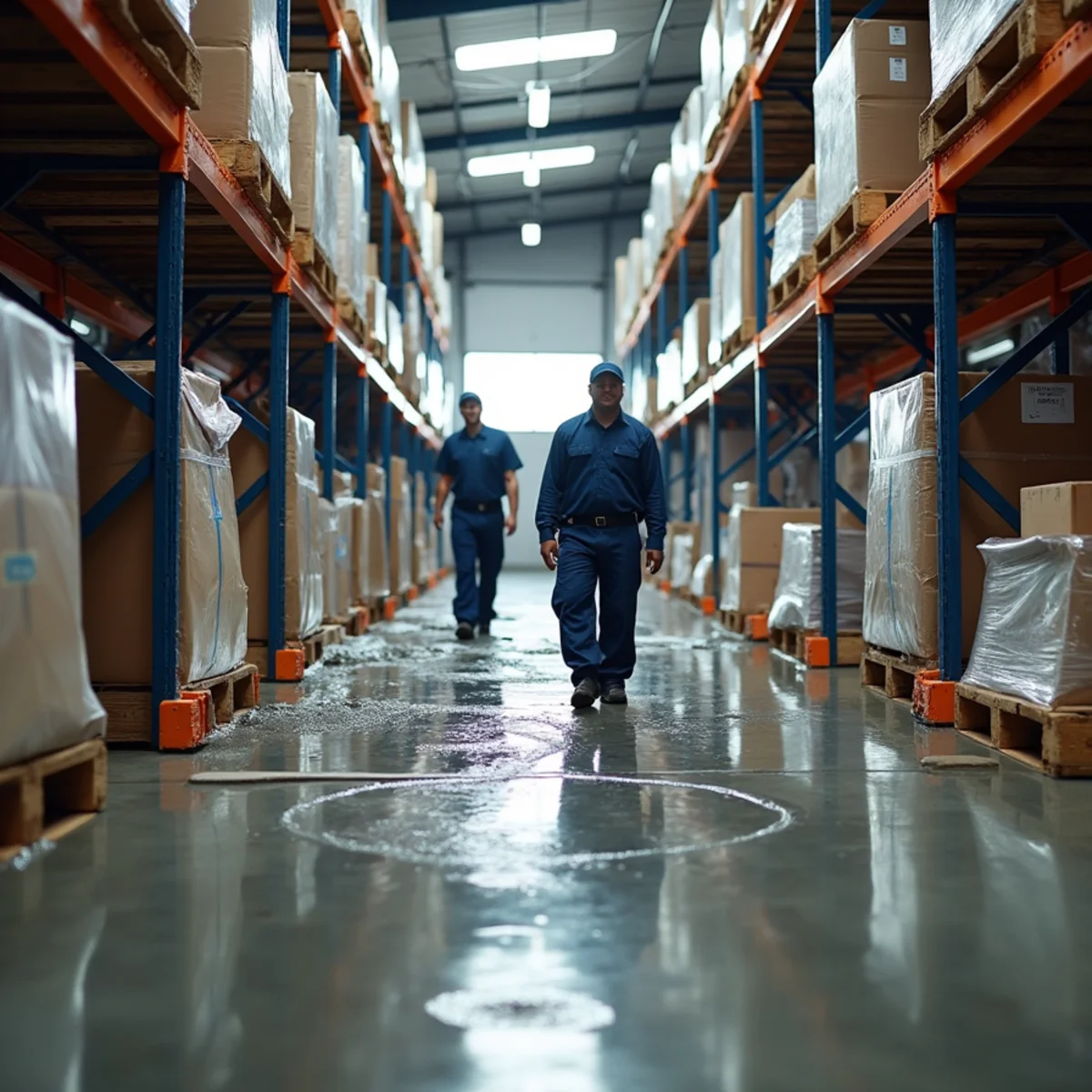
Fire sprinkler systems are the highest-volume risk. A single activated or broken head discharges continuously at high flow until the system is isolated, and in a racked warehouse the water lands on stock rather than on an empty floor. Causes are typically corrosion in older wet systems, mechanical impact from forklifts and racking, or accidental activation during work at height.
Flat roofs with internal drainage are the seasonal risk. Roof drains and scuppers fill with debris through the dry months; a concentrated winter storm then ponds water on a roof designed to shed it, and ponded water finds every seam and penetration. This is the most preventable commercial loss we attend, and we attend it every single winter.
Rooftop mechanical adds a slower failure — packaged HVAC units with blocked condensate drains backing water through the roof penetration, usually discovered as ceiling tile staining weeks after it started.
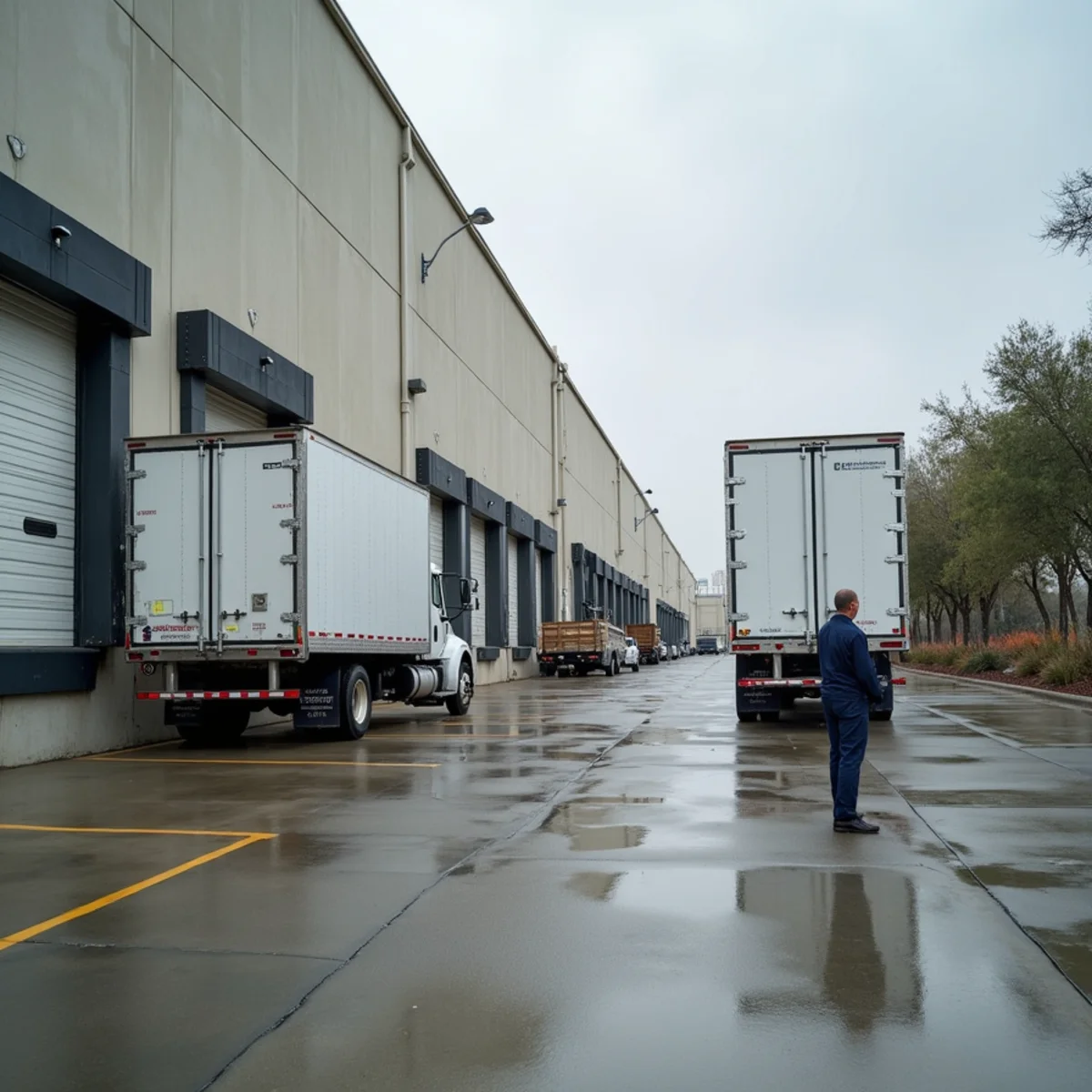
Loading docks and roll-up doors are the ground-level route. Dock wells fill during heavy rain when their drains cannot keep up, and water comes in under the door onto the warehouse floor.
- Fire sprinkler line breaks discharging at high volume onto racked stock
- Blocked internal roof drains ponding water during winter storms
- Rooftop HVAC condensate backing through roof penetrations
- Dock wells and roll-up doors admitting storm water at grade
- Storm runoff across industrial ground treated as contaminated
Commercial Response in the 605 Corridor
The response model here is different from residential in three ways. Capacity is staged — an initial crew stabilizes and starts extraction while additional equipment and personnel follow. Drying uses commercial-capacity equipment sized for warehouse volume rather than room volume, because a 30-foot clear height is a completely different dehumidification problem from an 8-foot ceiling. And documentation runs to inventory: damaged stock recorded as it is moved, and areas logged as unusable by date for business interruption purposes.
Scheduling works around the operation. Extraction and demolition go to off-shift hours wherever possible, containment isolates the affected bays so the rest of the floor keeps running, and zones are returned to service progressively rather than the whole building at once.
One preventive note worth repeating to every facility manager here: have the roof drains cleared in October. It is the cheapest insurance in the building.
Local landmarks & reference points
- The 605 freeway corridor
- Telegraph Road distribution belt
- Los Nietos Road rail corridor
- Norwalk Boulevard
- Shoemaker Avenue industrial parks
Need a crew in Santa Fe Springs Industrial?
Tell us the building footprint and whether product is affected — that decides how many trucks roll.
From our own job log
What we get called to in the Santa Fe Springs industrial belt
High-volume commercial losses where the clock is revenue, not just damage.
Sprinkler-line breaks over product
Large volume fast, usually across stock. Containment first so unaffected bays keep operating, then extraction sized to the space — and the areas taken out of use recorded from day one, because that is what a business interruption claim is built from.
Loading-dock and threshold flooding
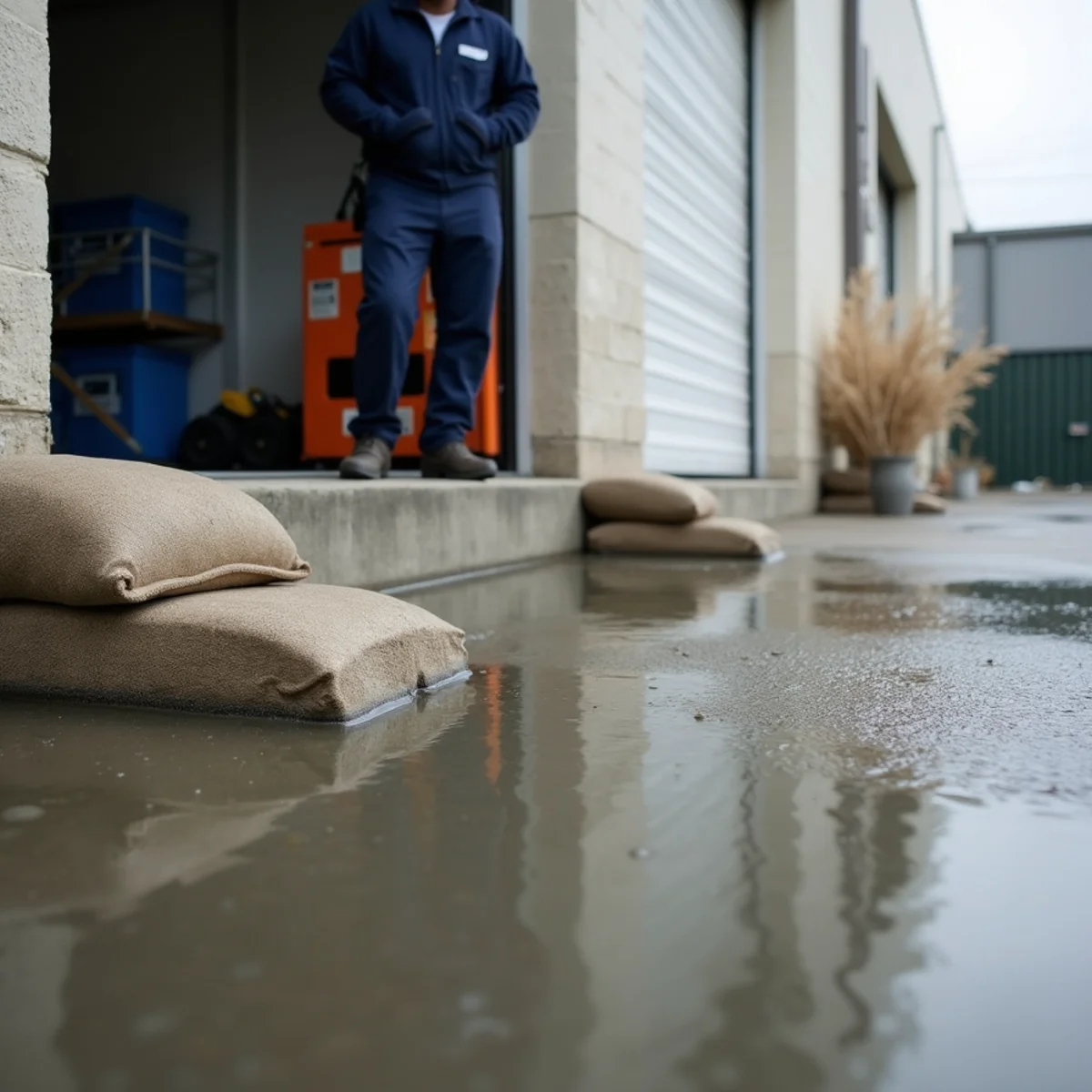
Water entering at grade during sustained storms, which raises a coverage question as well as a cleanup one because it crossed the ground to get in.
Flat roofs and blocked internal drains
Debris accumulates through eight dry months, then ponds during the first long system. The interior damage rarely appears directly beneath the entry.
What we handle here
Water Damage Services in Santa Fe Springs Industrial
The services we are called out for most in this area. Every one of them is handled by our own crews, from the first extraction pass through to the rebuild.
- Commercial Water Damage RestorationAfter-hours crews, phased containment and business-interruption documentation — designed around staying open.
- 24/7 Emergency Water RemovalA real person answers, a crew is dispatched immediately, and you get an honest arrival window before you hang up.
- Water Extraction & RemovalTruck-mounted and portable extraction that pulls water out of carpet, pad and subfloor before it reaches the framing.
- Structural Drying & DehumidificationEngineered drying with daily moisture readings — so the structure is verifiably dry, not just dry to the touch.
- Flood CleanupStorm and overflow flooding handled as the contaminated-water event it is — extraction, removal, disinfection, drying.
On the job in Santa Fe Springs Industrial

Why people here call us
Why Santa Fe Springs Facilities Managers Call Us
Ten to twelve minutes down Painter or the 605, with commercial-capacity equipment and staged crews.
Capacity staged behind the first truck
On a warehouse loss the relevant number is when full capacity arrives, not when someone shows up. We give you both.
Drying sized for clear height
A 30-foot warehouse is a completely different dehumidification problem from an 8-foot ceiling. Equipment is calculated, not carried over.
Stock inventoried as it moves
Damaged inventory recorded in real time rather than reconstructed afterward, because that record is what settles the claim.
Water Damage Whittier · 7012 Walnut Grove Dr, Whittier, CA 90606 · +1 (201) 277-9344 · IICRC-certified technicians · Open 24 hours — 7 days a week, including holidays
Find us
Serving Santa Fe Springs Industrial from our Whittier base
Crews dispatch from our base in east-central Whittier. About 10 to 12 minutes from our base, straight down Painter Avenue or the 605.
Water Damage Whittier7012 Walnut Grove Dr, Whittier, CA 90606Open 24 hours — 7 days a week, including holidays
Nearby service areas and related guides
Nearby areas we serve
Same crews, same response commitment. Each of these pages covers the local risks specific to that area.
- Santa Fe SpringsAround 10 minutes from our base, south on Painter Avenue or straight down the 605.
- Santa Fe Springs ResidentialAround 10 to 12 minutes from our base, south on Painter Avenue.
- NorwalkAround 12 to 15 minutes from our base, south on Norwalk Boulevard or Pioneer Boulevard.
- West WhittierAbout 10 to 14 minutes from our base, west along Whittier Boulevard.
- Los Angeles CountyWe work the southeast quadrant of the county from our base at 7012 Walnut Grove Dr in Whittier, with a 60-minute target response across the Gateway Cities and the lower San Gabriel Valley.
Local proof
Working in Santa Fe Springs Industrial
We publish customer reviews as jobs close, with the customer's first name, their neighborhood and what the job actually involved — not invented quotes. Until those are here, judge us on things you can verify on the phone in two minutes:
- A person answers the emergency line — not an answering service taking a message
- A 60-minute target response across Whittier, with an honest arrival window on the call
- IICRC-certified technicians, and a certification number available on request
- Direct insurance billing, with daily moisture readings supplied in writing
- We inspect with thermal imaging and moisture meters before we quote — never a phone price
- Mitigation and rebuild under one roof, so there is one set of documentation
Already worked with us? Leave a review on our Google listing — it genuinely helps other Whittier homeowners find a local crew.