

Water Damage Restoration · Whittier, CA
Commercial Water Damage Restoration in Whittier, CA
After-hours crews, phased containment and business-interruption documentation — designed around staying open.
- 24/7 emergency dispatch
- 60-minute target response
- IICRC-certified technicians
- Direct insurance billing
For a business, the water damage is rarely the biggest number on the page. The closed days are.
That changes how the job should be run. Residential restoration optimizes for thoroughness on a normal schedule. Commercial restoration optimizes for getting you operating again — which means phasing the work so trading areas come back first, running crews after hours, and containing the job so the parts of the building that are dry stay usable.
We work commercial properties across Whittier and the surrounding Gateway Cities: the retail and office frontage along Greenleaf Avenue in Uptown Whittier, the distribution and light industrial buildings along the 605 corridor in Santa Fe Springs, medical and professional suites, restaurants, and multi-tenant residential.
What you actually get
What Commercial Restoration Includes
Commercial scope is built around one constraint that residential work does not have: the building has to keep earning while we work in it.
Rapid triage and a phasing plan
Affected areas mapped and a reopening order agreed on the first visit — sales floor before stockroom, treatment rooms before admin.
Containment around live operations
Sealed barriers isolating the work from trading areas, with access paths kept clear for your staff and customers throughout.
High-volume extraction
Commercial-capacity equipment sized for warehouse clear height rather than residential ceilings, with additional capacity staged behind the first crew.
Contents and stock inventory
Damaged inventory and equipment recorded as it is moved rather than reconstructed afterward — that record is what the claim settles on.
Business interruption documentation
Which zones were unusable, from when, until when. Tell us on day one if BI coverage is in play, because it changes what we log from the start.
Phased reinstatement
Each zone verified dry, rebuilt and returned to service as it completes, so the building reopens progressively rather than all at once.
Why Commercial Buildings Fail Differently
Commercial construction has different failure modes, and knowing them shortens the diagnostic phase.
Flat roofs with internal drainage. Most commercial buildings in Santa Fe Springs and along Whittier Boulevard have low-slope roofs draining to internal roof drains and scuppers. A blocked drain during a winter storm ponds water on the roof, and ponded water finds every seam. It is the single most common commercial storm loss we see, and it is almost entirely preventable with a pre-season drain clearing.
Fire sprinkler systems. A sprinkler line under pressure discharges a very large volume very quickly. Freeze is a marginal risk here, but corrosion, mechanical impact from forklifts and racking, and accidental activation are all real. In a warehouse with stock on the floor, this is a contents loss as much as a building loss.
Rooftop mechanical. Packaged HVAC units sit on the roof with condensate lines running through it. A blocked condensate drain backs water into the unit and through the roof penetration — a slow, quiet leak that shows up as ceiling tile staining weeks later.
Multi-tenant water migration. Water does not respect lease boundaries. An upstairs suite failure becomes a downstairs tenant's loss, and then a question about which policy responds. Documentation of the source is everything in those cases.
Working Around Your Operation
The scheduling is as much of the job as the drying.
We phase work so revenue-generating space comes back first: the sales floor before the stockroom, the treatment rooms before the admin office, the production line before the break room. Containment is built to isolate the work from the areas still operating, so you are not closing a whole building for a loss in one corner. Crews work nights and weekends where the operation demands it. And equipment is selected with noise and footprint in mind for spaces that stay occupied.
For restaurants, medical offices and food handling, sanitation requirements and health department expectations shape the scope. For occupied multi-family, tenant notice and access coordination shape the schedule. We plan both up front rather than discovering them on day two.
Documentation for Commercial Claims
Commercial policies are different animals, and the documentation burden is higher.
Beyond the standard moisture logs, thermal imaging and photographic record, commercial claims commonly need: a detailed contents inventory of damaged stock and equipment; daily documentation of which areas were unusable and for how long; and equipment placement and power-draw records where a claim addresses operating cost.
Business interruption coverage in particular is decided on records rather than assertions. If your policy includes it, your carrier will want evidence of what was inoperable, from when, and until when. We produce that documentation as the job runs rather than reconstructing it afterward — and it is worth telling us on day one that BI coverage is in play, because it changes what we record.
Property Managers and Landlords
For managed property, the recurring question is not technical, it is contractual: whose loss is it.
In California, the split generally follows the lease and the source. Building systems and structure are typically the landlord's responsibility; tenant improvements, fixtures and contents are typically the tenant's; and the source of the water usually determines which policy responds first. Our job is to document the source and the damage precisely enough that the allocation is a matter of record rather than argument.
For HOAs and condominium associations the same logic applies across the unit boundary, governed by the CC&Rs. We are used to working jobs where the association and the unit owner have separate carriers and both need the same set of facts — see our guides for property managers and HOA and condo losses.
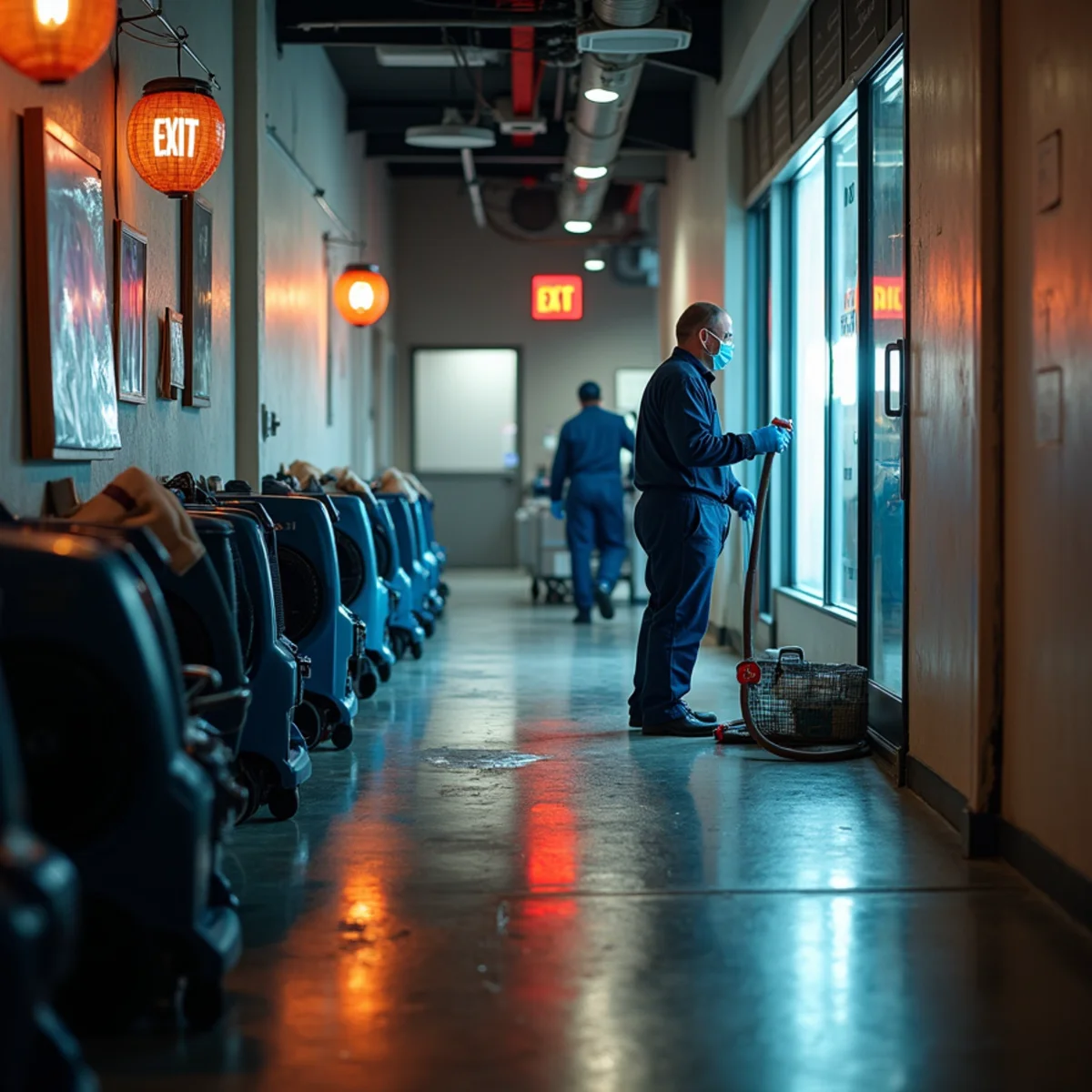
Why us for this job
Why Downtime Is the Number We Optimize
For a business the restoration invoice is rarely the biggest figure on the page. The closed days are, and that changes how the job should be run.
We schedule around your operation
Extraction and demolition to nights and weekends where the tenancy allows, so trading hours survive and drying continues under containment in between.
We know the local building stock
Flat roofs with internal drains along the 605 corridor, historic parapet flashings on Greenleaf Avenue, rooftop HVAC condensate. The failure modes repeat.
Multi-tenant documentation done properly
Water does not respect lease boundaries. We record the source precisely so allocation between landlord, tenant and carriers is evidence rather than argument.
Capacity staged behind the first truck
For a large loss the question is not when someone arrives, it is when full capacity does. We tell you both figures when you call.
- IICRC-certified technicians
- Licensed & insured
- 60-minute target response across Whittier
- Direct insurance billing
- 7012 Walnut Grove Dr, Whittier, CA 90606
Need commercial water damage restoration today?
Tell us your trading hours on the first call and we will phase the work around them.
Step by step
Our Commercial Response
Scoped around your operating schedule from the first call.
Step 1
Rapid assessment and triage
Source stopped, affected areas mapped, and a phasing plan built around what has to reopen first. You get a realistic timeline for each zone, not one date for the whole building.
Step 2
Contain and protect
Work areas isolated from operating areas with sealed containment, stock and equipment moved or protected in place, and access paths kept clear for your staff.
Step 3
Extract and remove
High-volume extraction, then removal of unsalvageable materials and contents — with an inventory recorded as it happens for the claim.
Step 4
Dry with monitored equipment
Commercial-capacity air movers and desiccant or refrigerant dehumidification sized to the space, monitored daily with readings logged by zone.
Step 5
Reinstate by phase
Each zone verified dry, rebuilt and returned to service as it completes, so the building reopens progressively rather than all at once.
On the job

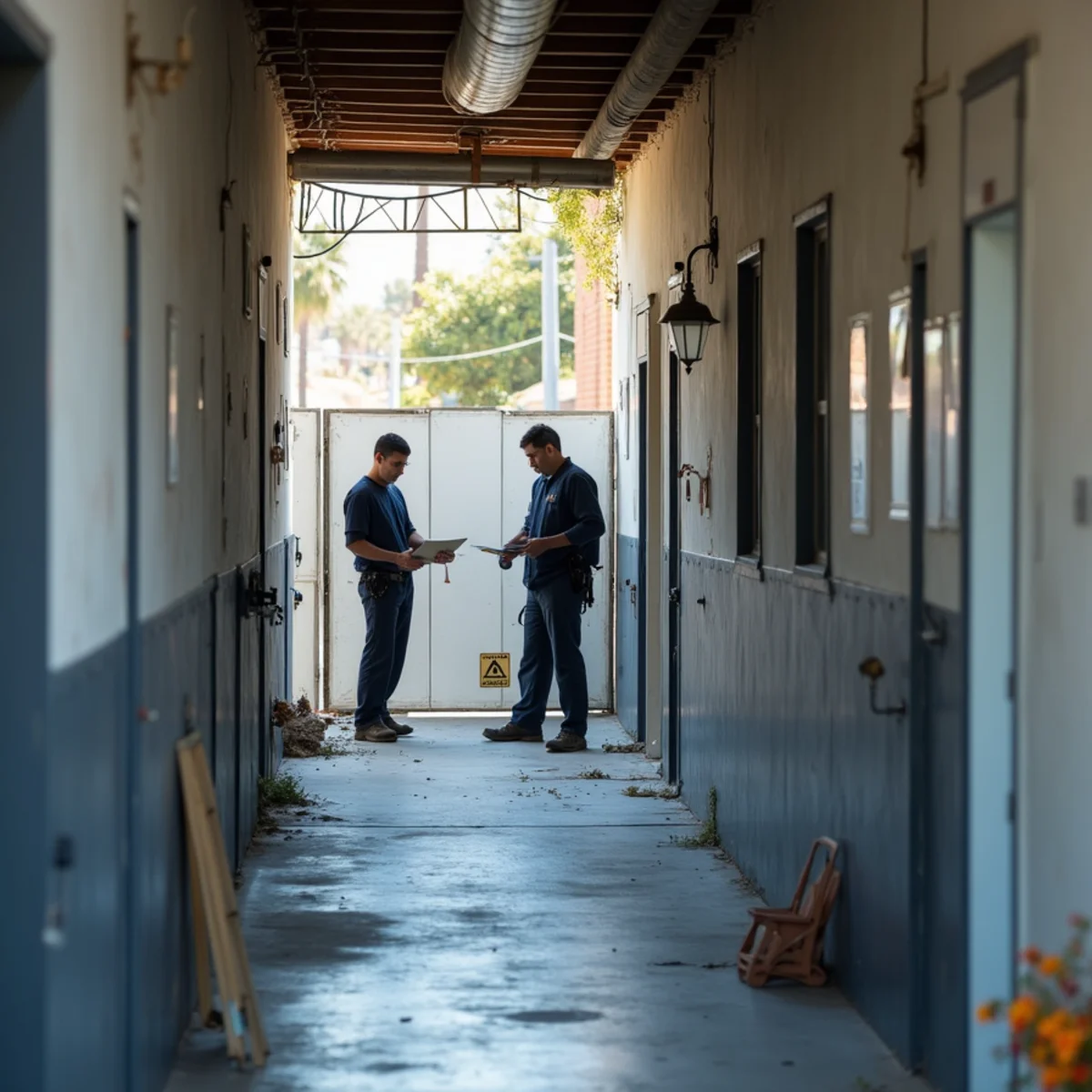
Honest pricing
What Commercial Restoration Costs Depend On
Commercial pricing tracks scale, access and schedule pressure.
- Square footage and ceiling height
- Warehouse volume needs far more dehumidification capacity than the same floor area in a low-ceilinged office.
- Operating constraints
- After-hours and weekend work, phased access, and working around live operations all add labor time.
- Contents and stock
- Inventory handling, moving, storage and disposal — often a larger line than the building work itself.
- Building systems affected
- HVAC, electrical, fire suppression and specialised finishes require licensed trades and coordination.
- Documentation depth
- Business interruption and multi-party claims require substantially more recording than a single-family loss.
Every hour of downtime has a number attached, and it is usually larger than the restoration invoice. That is the argument for calling before you have finished assessing the damage yourself — the assessment is faster with our equipment in the building.
Related services, service areas and guides
Related services
- Water Damage RestorationExtraction, structural drying, mold prevention and repairs — one crew from the first hour to the final coat of paint.
- Flood CleanupStorm and overflow flooding handled as the contaminated-water event it is — extraction, removal, disinfection, drying.
- Structural Drying & DehumidificationEngineered drying with daily moisture readings — so the structure is verifiably dry, not just dry to the touch.
Related reading
- Water Damage in a Retail Space: A Response Plan for Uptown Whittier Tenants and ManagersFor a shop, the water damage is rarely the biggest number. The closed days are. Plan around that.
- Property Manager's Guide to Tenant Water Damage: Who's Responsible for What in CaliforniaThe split follows the source and the lease. Everything else is a documentation problem — which is good news, because documentation is controllable.
Commercial Water Damage Restoration across our service area
We provide commercial water damage restoration across Whittier and the surrounding Los Angeles County communities. Each area page covers the local housing and drainage risks that actually drive water damage there.
- East WhittierUnder 10 minutes from our Walnut Grove Dr base. This is our home zone.
- Uptown WhittierAbout 8 to 12 minutes from our Walnut Grove Dr base, west along Whittier Boulevard or Philadelphia Street.
- Whittwood, WhittierUnder 10 minutes from our Walnut Grove Dr base — one of our closest zones.
- Friendly Hills, WhittierAround 8 to 12 minutes from our base, up toward the Whittier foothills.
- Pico RiveraTypically 10 to 15 minutes from our Walnut Grove Dr base, straight across on Whittier Boulevard or Washington Boulevard.
- Santa Fe SpringsAround 10 minutes from our base, south on Painter Avenue or straight down the 605.
- South WhittierUsually under 10 minutes from our Walnut Grove Dr base — one of the fastest zones we serve.
- La MiradaRoughly 12 to 18 minutes from our Whittier base via Imperial Highway or Rosecrans Avenue.
- NorwalkAround 12 to 15 minutes from our base, south on Norwalk Boulevard or Pioneer Boulevard.
- Los Angeles CountyWe work the southeast quadrant of the county from our base at 7012 Walnut Grove Dr in Whittier, with a 60-minute target response across the Gateway Cities and the lower San Gabriel Valley.
Request a visit
Free Estimate for Commercial Water Damage Restoration
We inspect with thermal imaging and moisture meters before quoting — a firm price given over the phone without readings is a guess. If water is spreading right now, call instead; crews are dispatched during the conversation.
+1 (201) 277-9344