Commercial & Property Managers
HOA and Condo Water Damage: Unit Owner vs. Common-Area Responsibility in California
Water does not respect the boundary in your CC&Rs. Two policies usually respond, and both decide on the same set of facts.
Water spreading right now? Call before you finish reading — crews are dispatched during the conversation, 24/7.
+1 (201) 277-9344The short answer
Most California CC&Rs draw the boundary near the interior surface of demising walls, floors and ceilings — the association covers structure, roof and common plumbing including vertical stacks; the owner covers interior finishes, fixtures and the plumbing serving only their unit. Read the definitions and insurance sections of your own documents before you need them.
In a condominium or planned development, a single failure routinely produces two or three separate claims: the association's, the unit owner's, and sometimes a neighbor's.
This is an orientation to how that generally works in California. Your CC&Rs and counsel govern the specifics, and CC&Rs vary considerably between associations.
The Boundary Question
Most CC&Rs draw the line somewhere around the interior surface of the demising walls, floors and ceilings — but exactly where varies, and that variation is the whole game.
Typically association: the structure, the roof, exterior walls, common-area plumbing including vertical stacks and risers, and shared systems.
Typically unit owner: interior finishes, fixtures, appliances, and plumbing serving only that unit from the point it branches off the common line.
Frequently contested: the pipe inside a wall serving one unit, the water heater in a unit closet, the flooring assembly, and anything the CC&Rs describe ambiguously.
Read your own governing documents before you need them. The definitions section is the part that matters, and it takes twenty minutes.
Why Two Policies Usually Respond
Associations carry a master policy covering the structure and common areas. Unit owners carry an HO-6 policy covering interior improvements, personal property and liability.
The master policy typically has a substantial deductible, and many CC&Rs allocate that deductible to the unit owner whose unit was the source. That is a genuinely unwelcome surprise for owners who assumed the master policy simply covered everything.
The practical consequence: both carriers need the same facts, and they need them recorded by someone with no stake in which side pays. That is a large part of what a restoration company's documentation is for in these jobs.
Water Does Not Respect the Boundary
The technical reality that drives most of these disputes: water in a floor assembly travels laterally, and water in a wall travels down.
A failure in an upstairs unit saturates the floor assembly, drops into the ceiling cavity of the unit below, and frequently tracks sideways into the units either side. The owner three doors down who has noticed nothing may well have a wet cavity.
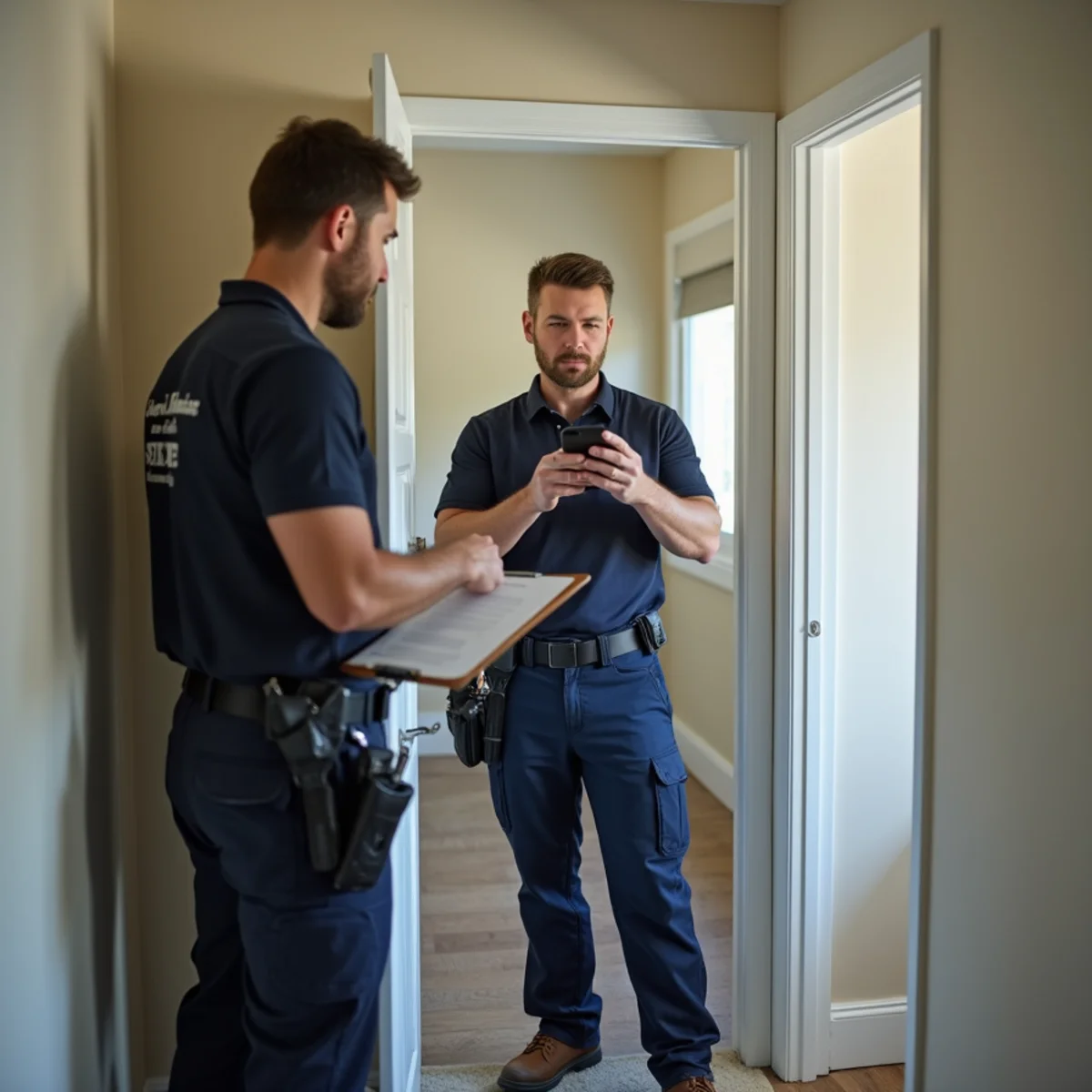
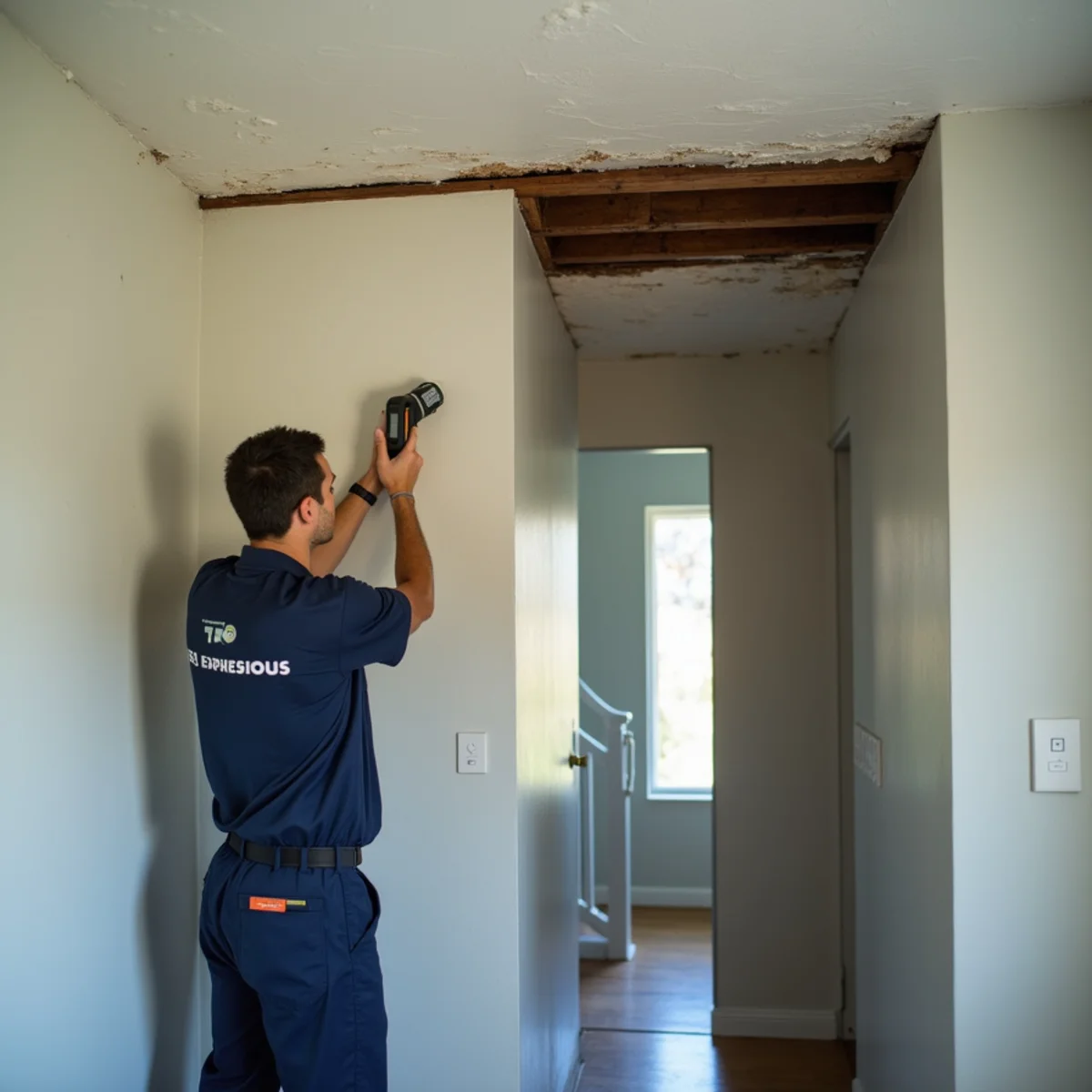
Which is why, on any multi-unit call, we take moisture readings in the units below and adjacent as a matter of routine — see how that plays out in Whittwood and Murphy Ranch, where multi-family and HOA-governed housing is concentrated.
Finding a wet cavity in a neighboring unit on day one is a repair. Finding it in two months is a mold remediation with a much harder conversation attached.
What Boards and Managers Should Do
Preparation makes these jobs dramatically smoother.
- Have a restoration company identified in advance, so the first call is not a search
- Maintain current owner contact details including after-hours numbers — access delays are the most common cause of spread
- Know where shut-offs are for each stack and each unit, and make sure on-site staff do too
- Have the CC&R boundary language summarized in plain English for owners, before an incident rather than during one
- Require evidence of HO-6 coverage from owners where the CC&Rs allow
- Budget for stack and riser assessment in buildings past fifty years — original cast iron and galvanized are the common failure point
What Owners Should Do
Read the CC&Rs, specifically the definitions and the insurance sections, and find out what the master policy deductible is and who the CC&Rs allocate it to.
Carry an HO-6 policy with adequate coverage for interior improvements — an association master policy typically will not restore your finishes to the standard you installed.
Report leaks immediately, in writing to the association as well as by phone. In shared-plumbing buildings, delay does not just cost you; it costs your neighbors.
And if water appears in your unit from elsewhere, photograph everything before anyone moves anything. In a multi-party claim, the record made in the first hour is what everything else is argued against.
Why the Adjoining Units Get Read on Day One
On a multi-unit call the most important work happens in the units nobody has complained about yet, and it is the step most likely to be skipped when everyone is focused on the obvious damage.
Water in a floor or ceiling assembly travels laterally along joists, along the top plates of walls and through shared cavities, and it does not stop at a legal boundary. A failure in an upstairs unit saturates the floor assembly, drops into the ceiling cavity below, and moves sideways into the ceiling of the unit next door — which has no visible sign of anything for days or weeks. So on any shared-wall or stacked-unit loss we ask for access to the units below and adjacent and take readings as a matter of routine, whether or not anyone there has noticed something.
The reason is entirely economic, and it is worth boards and managers understanding it. A wet cavity found on day one is inside the same drying setup that is already on site — a few more air movers and an access hole. The same cavity found in two months is remediation under containment, with drywall out and a much harder conversation about which policy responds and who was on notice. Getting access to neighboring units quickly is the highest-value thing an on-site manager can do, which is why current after-hours contact details for every owner are worth maintaining before there is an incident rather than during one.
The bottom line
Read the definitions section of your CC&Rs and find out who the deductible falls to. Do it this week, not during a loss.
And when something does happen, get moisture readings in the neighboring units on day one. That is the difference between one repair and three.