
Water Damage Restoration · Whittier, CA
Water Damage Insurance Claims in Whittier, CA
Direct billing on covered claims, and the daily moisture documentation an adjuster actually settles from.
- 24/7 emergency dispatch
- 60-minute target response
- IICRC-certified technicians
- Direct insurance billing
Most water damage claims are not won or lost on whether there was water. Everyone agrees there was water. They are decided on two narrower questions: how far it actually spread, and how many days of equipment that justified.
Both are answered with instrument readings taken on a schedule, not with photographs of a wet carpet. We build that file on every job as standard — and on covered claims we bill your carrier directly, so you are generally dealing with your deductible rather than the full invoice up front.
What we will not do is tell you your claim is covered. That decision belongs to your carrier under your policy, and any restoration company implying otherwise is overselling.
What you actually get
What's in the file we hand over
Produced on every job whether or not a claim is opened, because the same evidence is what tells us when drying is finished.
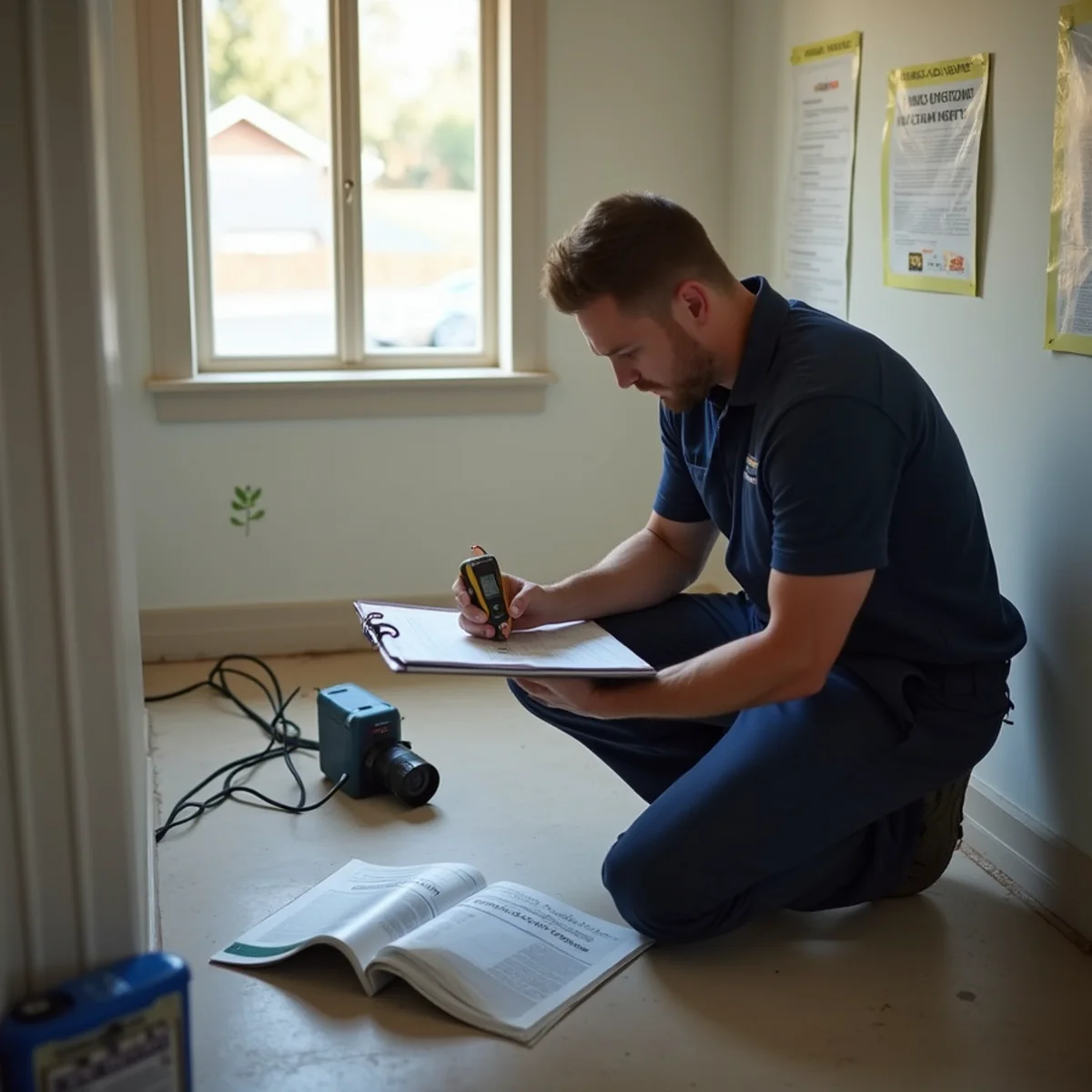
Daily moisture readings at fixed points
Taken at the same marked locations with the same meters every day, so the file shows a curve rather than a snapshot. This is the single line item carriers question most often, and the only thing that answers it.
A stated dry standard
A benchmark reading from unaffected material of the same type in your own property. Without it, "dry" is an opinion. With it, every equipment day has a measurable justification.
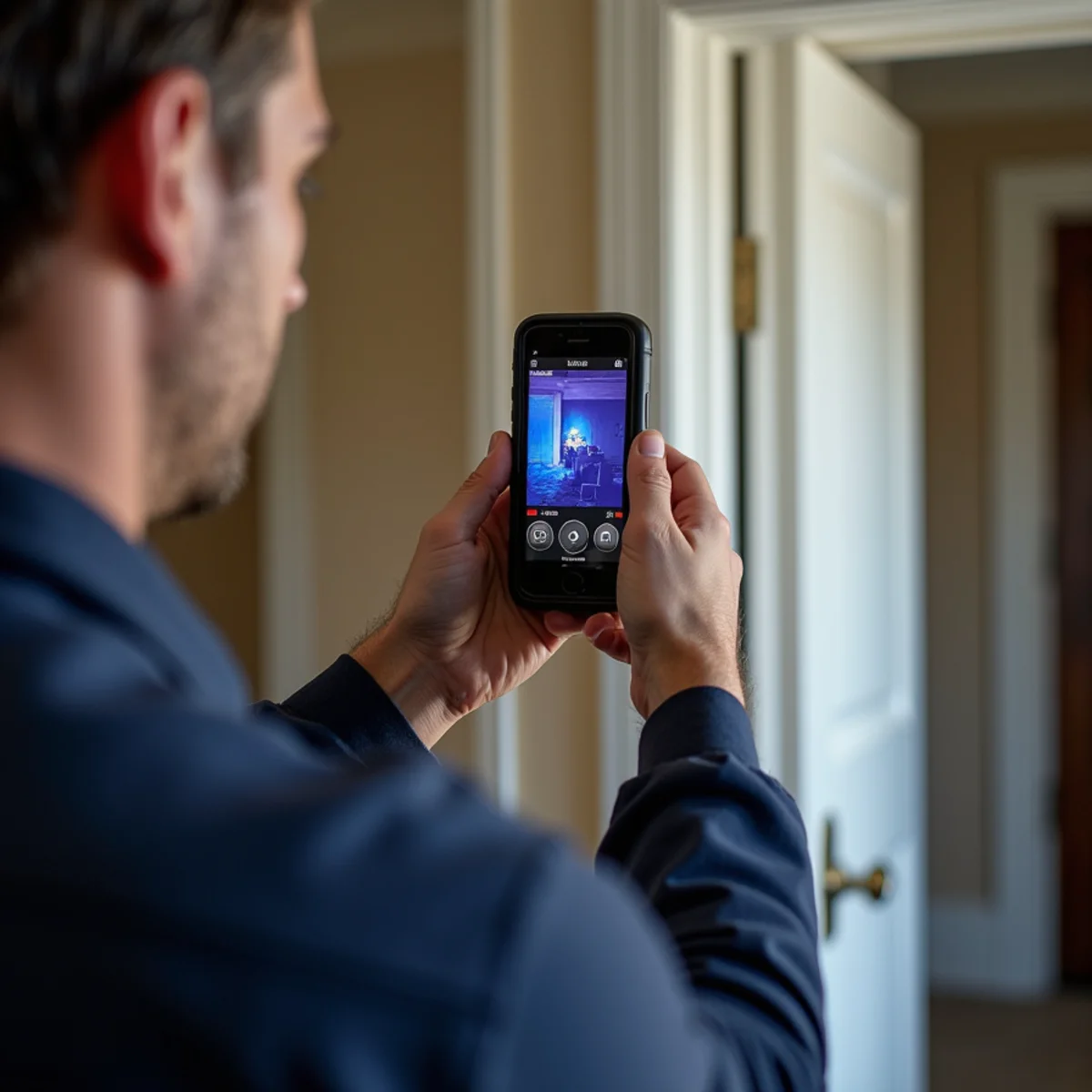
Thermal images of the affected assemblies
Captured at the start and on completion. They show the extent behind finishes that a photograph of the room cannot, which is what settles arguments about how far water travelled.
A written scope with the area as measured
Affected square footage mapped with a meter rather than estimated by eye, the water category and what it implies for materials, and what is being dried versus removed.
Equipment placement and run-time log
What ran, where it sat and for how many days. Paired with the readings, this is what converts drying days from a disputed charge into a documented one.
Cause and origin evidence
The failed component photographed in place before removal, and kept where it matters. A fitting that failed at a corroded thread tells a different story than one that split clean.
Direct billing, and what it actually means
On a covered claim we can bill your carrier directly rather than asking you to pay in full and chase reimbursement. In practice that usually leaves you handling your deductible and whatever your policy does not cover.
It changes the cash-flow question, not the coverage question. Your carrier still decides what is covered, and your policy still governs. What direct billing removes is the part where a household in the middle of a loss has to find several thousand dollars before anyone will start extraction.
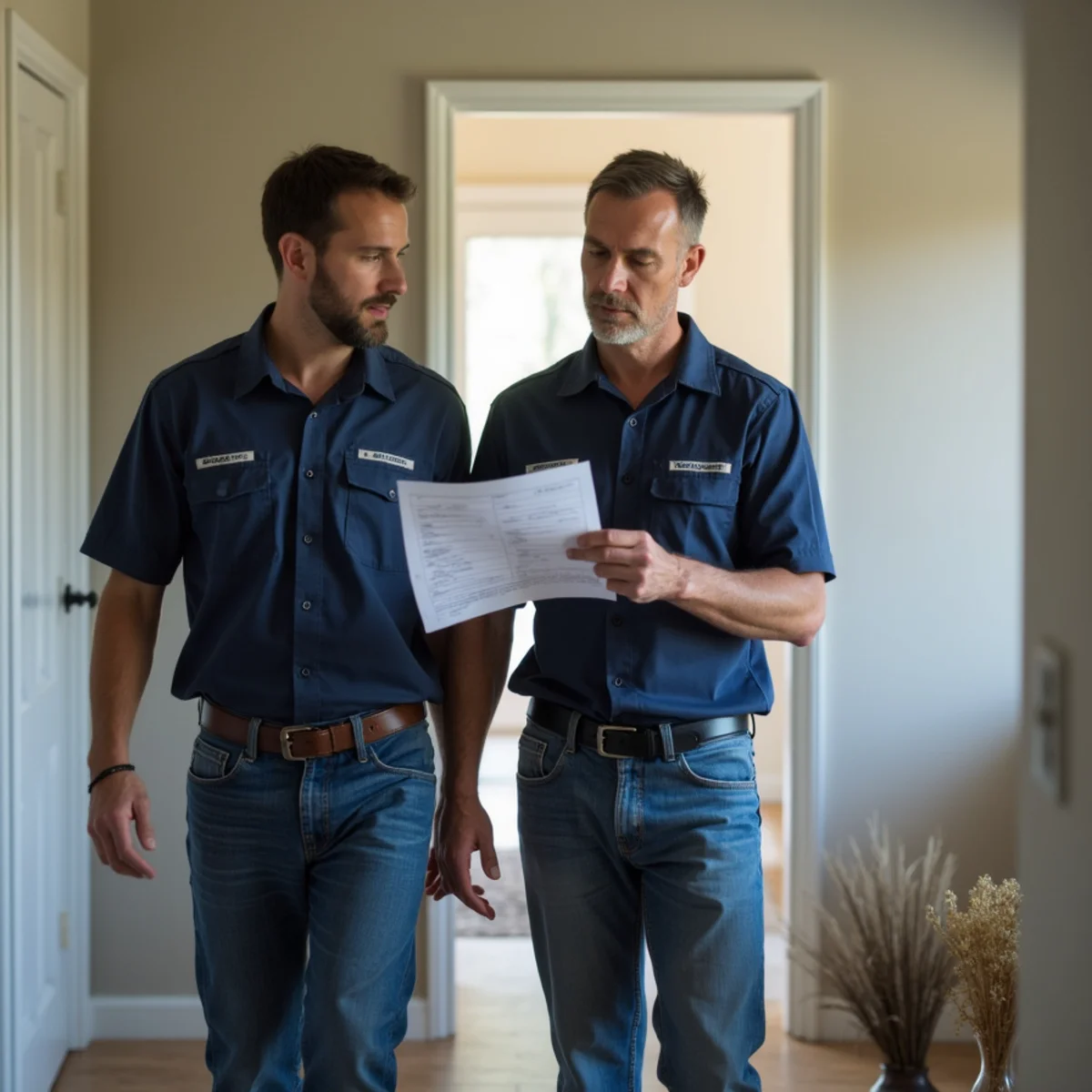
We also coordinate with the adjuster directly on scope — which is less adversarial than it sounds. Adjusters are working from evidence, and a file with daily readings and a stated dry standard gives them something to approve rather than something to argue with.
Where California water damage claims are actually fought
Sudden versus gradual. Standard California policies respond to water that escapes suddenly and accidentally. A supply line that had been weeping for months before it split is genuinely contested, and the evidence is physical: tide lines, swollen cabinet board, existing surface growth, rusted fasteners. Keeping the failed component matters more than any photo.
Scope of resulting damage. Carriers routinely dispute that a room two doors away was affected at all. A moisture map made on day one, before anything is moved, is what establishes the footprint — and the footprint is almost always larger than the visible edge of the water.
Drying days. The most commonly short-paid line on a water claim. Equipment is billed per unit per day, and without a dated log at marked locations there is nothing to point at when the days are questioned.
The three guides below go further on each of these, and they are worth reading before you speak to your carrier rather than after.
What is usually excluded, stated plainly
We would rather you hear this from us on day one than from your carrier in week three.
Flood from outside — storm runoff, rising or surface water — is excluded from standard homeowners policies and needs separate flood cover. Because water that crossed the ground is treated as flood, where it entered decides the claim, which is why we photograph the entry point during the event wherever it is safe to.
Sewer and drain backup is excluded under most standard policies unless a water backup endorsement was added beforehand, and those endorsements usually carry their own sub-limit well below the dwelling limit.
The failed component itself — the pipe, the heater, the appliance — is generally not covered; the policy pays for what the water damaged. Mold is commonly capped at a low sub-limit, and often excluded entirely when it follows an excluded cause.
Why us for this job
Why the documentation holds up
None of this is unusual practice. It is simply done every day rather than reconstructed at the end.
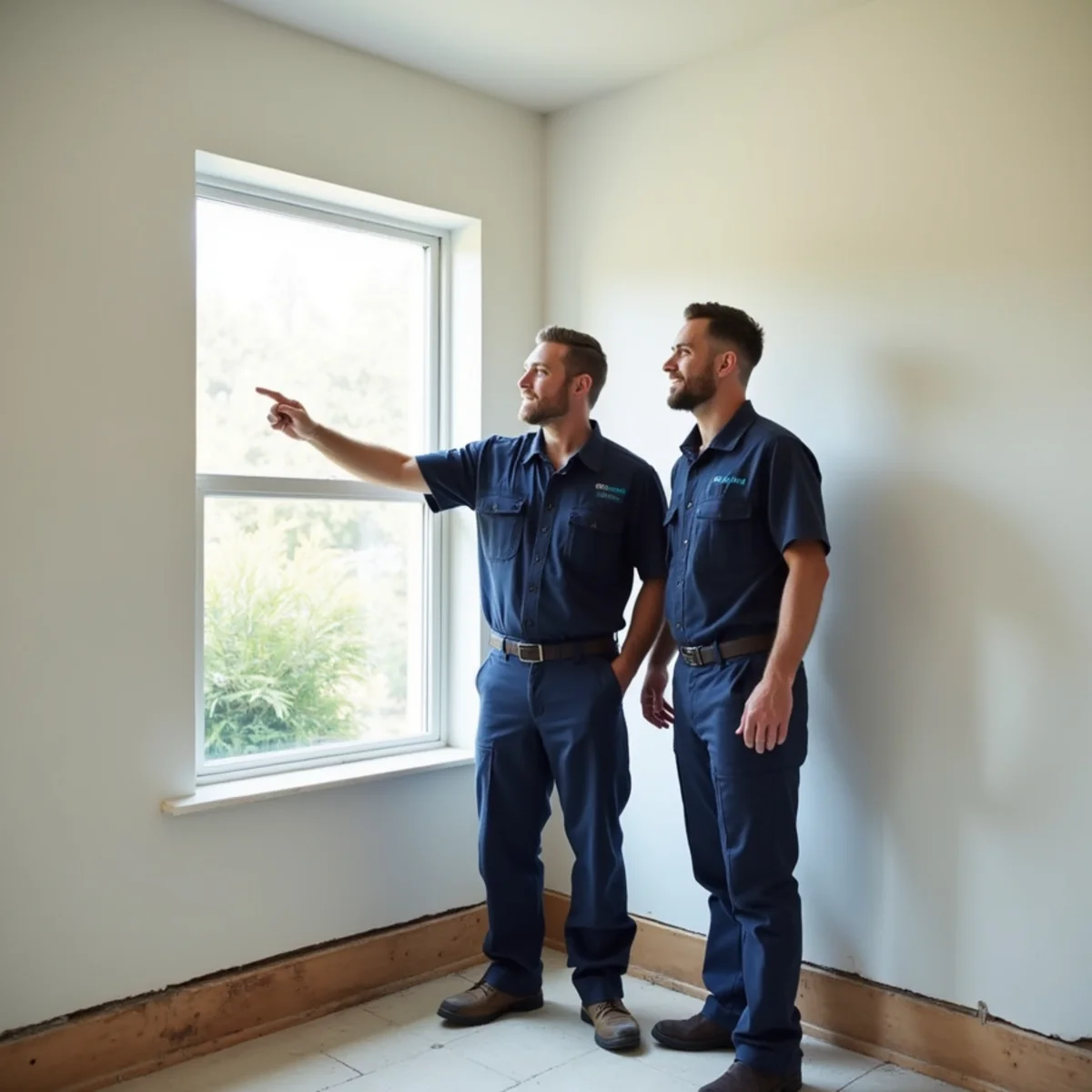
Readings are taken before anything is moved
The first thing on site is a moisture map of the affected room and every wall adjoining it. Once mitigation starts the original condition is gone, and no amount of care afterwards recovers it.
We are not the ones deciding your claim
We document cause, category, extent and every equipment day. Your carrier decides coverage. Being straight about that line is why adjusters take the file at face value.
Mitigation and rebuild under one roof
No seam between a drying company that signs off at the dry standard and a builder who prices weeks later from what they can see. That gap is the part of a claim that tends not to get paid.
We keep the failed component
The hose, the fitting, the cut section of pipe. On a contested sudden-versus-gradual claim it is the best evidence there is, and once it is in a skip the argument becomes your word against a file note.
- IICRC-certified technicians
- Licensed & insured
- 60-minute target response across Whittier
- Direct insurance billing
- 7012 Walnut Grove Dr, Whittier, CA 90606
Need insurance claim documentation today?
Ask for the moisture log and the dry standard — call and we will walk you through what your file contains.
Step by step
How a claim runs alongside the work
Mitigation does not wait for an adjuster. Most policies require you to take reasonable steps to prevent further damage, so starting promptly supports the claim rather than complicating it.
Hour 1
Document, then stop the damage
Moisture map, thermal images and photographs of the source before extraction begins. Then the water comes out — the two are minutes apart, not days.
Day 1
Open the claim with real information
Call your carrier once mitigation is under way. You will have the category, the measured area and the expected drying days to give them, rather than a guess.
Daily
Readings logged and shared
Same points, same meters, written down. You get the log as it builds, not as a surprise at the end.
Completion
Verified dry, then the scope for rebuild
Equipment comes out when readings reach the dry standard. The rebuild scope is quoted against the same documented footprint, so there is one version of events across the whole claim.
On the job
Honest pricing
What this costs you
Claim documentation is not a separate product with its own price. It is how the job is run.
- Documentation and daily monitoring
- Included on every job. The readings are what tell us when drying is finished, so they would be taken either way.
- Direct billing to your carrier
- Available on covered claims where you authorise it. You generally handle your deductible rather than the full invoice up front.
- What your policy does not cover
- Excluded causes, sub-limits and the failed component itself remain yours. We will flag which of these are likely in play on the first visit.
- The work itself
- Priced from an inspection — affected area as measured, water category, materials and equipment days. Never quoted firm over the phone.
We are a restoration contractor, not an insurer, broker or public adjuster. We do not decide claims, and we will not tell you a loss is covered in order to win the job.
Related services, service areas and guides
Related services
- Water Damage RestorationExtraction, structural drying, mold prevention and repairs — one crew from the first hour to the final coat of paint.
- Sewage Cleanup & Backup RemovalBlack-water backups removed under full containment, then disinfected, deodorized and dried to a verified sanitary condition.
- Storm Damage CleanupEmergency tarping and board-up first, then extraction and drying — so the next band of rain does not undo the work.
Related reading
- Does Homeowners Insurance Cover Water Damage in California? What's In and What's OutThe whole thing turns on two words: sudden and accidental. Here is what that phrase includes, what it excludes, and where the arguments actually happen.
- How to Document Water Damage for an Insurance Claim (Photo & Receipt Checklist)Claims are decided on evidence, and the evidence disappears the moment mitigation starts. Twenty minutes of documentation is worth more than any argument later.
Insurance Claim Documentation across our service area
We provide insurance claim documentation across Whittier and the surrounding Los Angeles County communities. Each area page covers the local housing and drainage risks that actually drive water damage there.
- East WhittierUnder 10 minutes from our Walnut Grove Dr base. This is our home zone.
- Uptown WhittierAbout 8 to 12 minutes from our Walnut Grove Dr base, west along Whittier Boulevard or Philadelphia Street.
- Whittwood, WhittierUnder 10 minutes from our Walnut Grove Dr base — one of our closest zones.
- Friendly Hills, WhittierAround 8 to 12 minutes from our base, up toward the Whittier foothills.
- Pico RiveraTypically 10 to 15 minutes from our Walnut Grove Dr base, straight across on Whittier Boulevard or Washington Boulevard.
- Santa Fe SpringsAround 10 minutes from our base, south on Painter Avenue or straight down the 605.
- South WhittierUsually under 10 minutes from our Walnut Grove Dr base — one of the fastest zones we serve.
- La MiradaRoughly 12 to 18 minutes from our Whittier base via Imperial Highway or Rosecrans Avenue.
- NorwalkAround 12 to 15 minutes from our base, south on Norwalk Boulevard or Pioneer Boulevard.
- Los Angeles CountyWe work the southeast quadrant of the county from our base at 7012 Walnut Grove Dr in Whittier, with a 60-minute target response across the Gateway Cities and the lower San Gabriel Valley.
Request a visit
Free Estimate for Insurance Claim Documentation
We inspect with thermal imaging and moisture meters before quoting — a firm price given over the phone without readings is a guess. If water is spreading right now, call instead; crews are dispatched during the conversation.
+1 (201) 277-9344