Emergency Guides
Toilet Overflowing? How to Stop It — and When It's Actually a Sewage Emergency
The 30-second fix, and then the question that actually matters: is this a clog in your toilet, or is your sewer line telling you something?
Water spreading right now? Call before you finish reading — crews are dispatched during the conversation, 24/7.
+1 (201) 277-9344The short answer
Push the flapper down inside the tank and close the angle stop valve behind the toilet — that stops the overflow in about thirty seconds. Then run a nearby sink and shower. If they drain normally you have an isolated clog. If they gurgle or push water back up, the sewer line is blocked and you should stop using water entirely.
First, stop the water. Then work out what you are actually dealing with, because a blocked toilet and a backed-up sewer line look identical for the first thirty seconds and are completely different problems.
Stop It in 30 Seconds
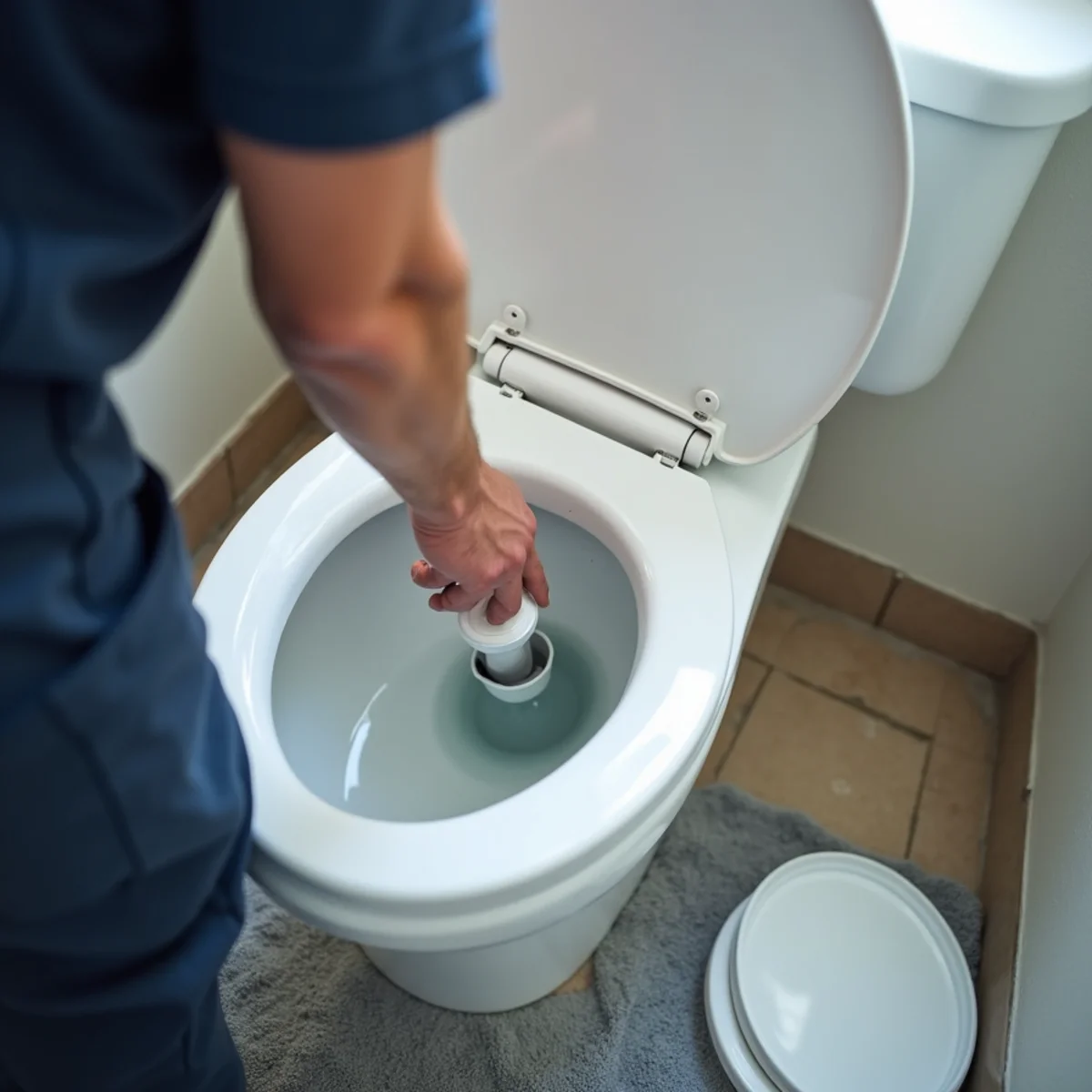
Take the tank lid off and push the flapper — the rubber seal at the bottom of the tank — down into its seat with your hand. That stops water leaving the tank into the bowl immediately.
Then lift the float, or simply close the angle stop valve on the wall behind the toilet (turn clockwise). That stops the tank refilling.
That is the whole emergency. Everything from here is diagnosis and cleanup.
Clog or Backup? Three Tests
This distinction determines whether you need a plunger or a professional, so run through it before you do anything else.
Test one — other fixtures. Flush nothing, but run the bathroom sink and the shower. If they drain normally, the problem is almost certainly isolated to the toilet. If they gurgle, drain slowly, or push water up, the blockage is downstream of the fixtures and you have a line problem.
Test two — the shower and tub. Run water in a sink and watch the nearest shower or tub drain. If water rises there, the main line is blocked and waste is looking for the lowest opening in the house.
Test three — what came up. Clean water from the tank is one thing. Dark, foul-smelling water carrying material from elsewhere in the system is a sewer backup, and that is a Category 3 event.
- Only that toilet affected, other drains normal → likely a clog
- Multiple drains slow or gurgling → line blockage downstream
- Water rising in a tub or shower when you run a sink → main line blocked
- Dark, foul water or material from elsewhere → sewage backup, stop using all water
If It Is a Simple Clog
A flange plunger — the type with a soft extended sleeve rather than a flat cup — seals a toilet outlet properly and does most of the work. Slow, firm strokes, not fast ones; you are trying to move the obstruction, not splash the room.
If a plunger does not clear it in a few minutes, a closet auger is the next tool. Do not reach for chemical drain openers in a toilet: they rarely work on the kind of obstruction toilets get, and they leave you and your plumber handling caustic water.
If It Is a Backup, Stop Using Water Entirely
Everything that goes down any drain in the house — sinks, shower, washing machine, dishwasher — reaches the same blocked line and comes back up at the lowest opening. Running a load of laundry during a backup is how a bathroom event becomes a hallway event.
Keep people and pets out of the affected rooms. Sewage carries bacteria, viruses and parasites, and the health risk here genuinely outweighs the property damage. Do not try to clean it with a mop and bleach — disinfectant on a porous surface treats the top layer and leaves what soaked in below it.
Turn off the HVAC if it is running. Air handlers distribute contamination through a whole house remarkably efficiently.
Why This Happens in Whittier
Older Whittier neighborhoods run original sewer laterals — the private line from house to city main, which is the homeowner's responsibility. Homes built before roughly 1970 in Central Whittier, Penn Park and South Whittier commonly have vitrified clay tile in short jointed sections.
Clay joints are exactly what tree roots find. Roots grow toward the moisture and nutrients leaking from the joint, get inside, and form a net that catches everything passing. The line restricts progressively over years rather than blocking suddenly.
The seasonal pattern is consistent: roots grow through the dry months, the first heavy November rain loads the system, and the restricted line finally fails. If you have had two slow-drain episodes in a year, the next one is likely to be a backup.
Why Sewage Cleanup Is Removal Rather Than Cleaning
The single most common mistake we see on a toilet overflow is disinfectant applied first. Someone reaches for bleach, sprays the floor, wipes it down, and reasonably assumes the problem is handled. Two weeks later the room smells and nobody can find the source.
The reason is porosity. Antimicrobial products need direct contact with a surface to work, and they are neutralized by organic soil. Applied over a floor that still holds contamination in the grout lines, under the toilet flange, or in the paper backing of the drywall behind the baseboard, they treat the top layer and leave everything below it. The correct order is always remove, clean, then disinfect — never disinfect first.
That order is also why category 3 losses cost more than their size suggests. A small bathroom overflow can mean the toilet lifted and reset on a new wax ring, the vinyl and its underlayment out, the bottom two feet of drywall cut, and the framing cleaned and treated. It is not that the water traveled far. It is that everything it touched which cannot be cleaned to a verifiable standard has to leave the building.
- Porous materials that absorbed contaminated water are removed, not cleaned
- Semi-porous framing and concrete are cleaned mechanically, then treated
- Hard, non-porous surfaces are cleaned and disinfected in that order
- The toilet is lifted so the flange area and the subfloor beneath it can be reached
- Post-cleanup drying is verified with readings, because a cleaned surface can still be wet
The bottom line
Flapper down, valve closed. Then check whether the rest of the house drains normally — that one test tells you whether this is a plunger evening or a phone call.
If it is a backup, stop using water and keep everyone out until it has been handled properly.