Problem Solving
Stormwater Got Inside: What's Salvageable After a Flood and What Isn't
Porous keeps water and contamination inside it. Non-porous does not. Almost every keep-or-toss decision follows from that one distinction.
Water spreading right now? Call before you finish reading — crews are dispatched during the conversation, 24/7.
+1 (201) 277-9344The short answer
Carpet, padding, wet insulation, particle board, mattresses, upholstery, cardboard, food and medications go. Framing, concrete, tile, metal, glass and solid wood usually stay. Hardwood, textiles, electronics and appliances are case by case. Set photographs and documents aside rather than binning them, and photograph everything before it leaves the house.
Storm water that crossed the ground before entering your home is Category 3 — contaminated. That single classification governs nearly every decision about what stays.
The rule underneath it is simple: if the material absorbed the water into itself, it goes. If the water only sat on the surface, it can usually be cleaned.
Goes, Without Argument
These cannot be reliably decontaminated once saturated with Category 3 water.
- Carpet and carpet padding
- Laminate and engineered wood flooring that has swollen
- Wet fiberglass or cellulose insulation
- Particle board and MDF furniture and cabinet bases
- Mattresses, box springs and upholstered furniture
- Cardboard and anything stored in it
- Food, including sealed packaging that sat in the water
- Cosmetics, medications and anything that touched contaminated water and goes on or in a body
Usually Stays
Non-porous materials can be cleaned, disinfected and dried.
- Framing lumber, structural timber and plywood subfloor, unless it has lost integrity
- Concrete, sealed masonry and tile
- Metal, glass and hard plastics
- Solid wood furniture — cleaned and dried, though it may need refinishing
- Dishes, cookware and utensils, after proper cleaning and sanitising
Case by Case — Do Not Decide Alone
Solid hardwood flooring. Frequently recoverable with mat drying systems if the response is quick. Worth assessing rather than assuming.
Clothing and textiles. Washable items usually survive proper laundering at appropriate temperature. Dry-clean-only items depend on the fabric and how long they were wet.
Electronics. If they were submerged, do not power them on — that is what causes the permanent damage. Some are recoverable by specialists; all of them are ruined by someone testing whether they still work.
Appliances. Anything with a motor or control board that was submerged needs professional assessment before use.
Do Not Throw These Out — Set Them Aside
Photographs, documents, artwork, books and textiles with sentimental value should not go in the skip on day one, even when they look destroyed.
Specialty drying recovers considerably more paper and photographic material than people expect, including items that were fully submerged. The window is measured in days, not weeks, and the enemy is mold rather than the water itself.
Put them somewhere cool, keep them separated so they do not stick together, do not try to peel photographs apart, and tell your restoration crew they matter on the first visit.
Photograph Everything Before It Leaves
Every item you discard is a line on your claim, and once it is at the curb it is gone from the evidence.
Photograph contents in place before moving them, record what each item is with approximate age and value, and keep the list as you go rather than reconstructing it later. For high-value items, do not dispose of them until the adjuster has seen them or agreed in writing that photographs suffice.
The flood cleanup process includes documenting removed material for exactly this reason.
The Contents Decision Nobody Should Make Alone on Day One
The instinct after a flood is to clear the house — get the ruined things out, get the smell down, start feeling like you are making progress. It is completely understandable and it is the decision that costs people the most money on a storm claim.
Two things are happening at once. The first is evidentiary: every item at the curb is an item you can no longer prove you owned, in the condition you say it was in. Adjusters settle contents claims from inventories and photographs, and an inventory built from memory a fortnight later is both incomplete and easy to challenge. The second is economic: the restore-versus-replace line sits in a different place than most people assume. Specialty cleaning and drying recover a great deal of textile, paper, photographic and even electronic material, and where restoration costs less than replacement your carrier generally prefers it — which means throwing the item away can convert a covered restoration into a disputed replacement.
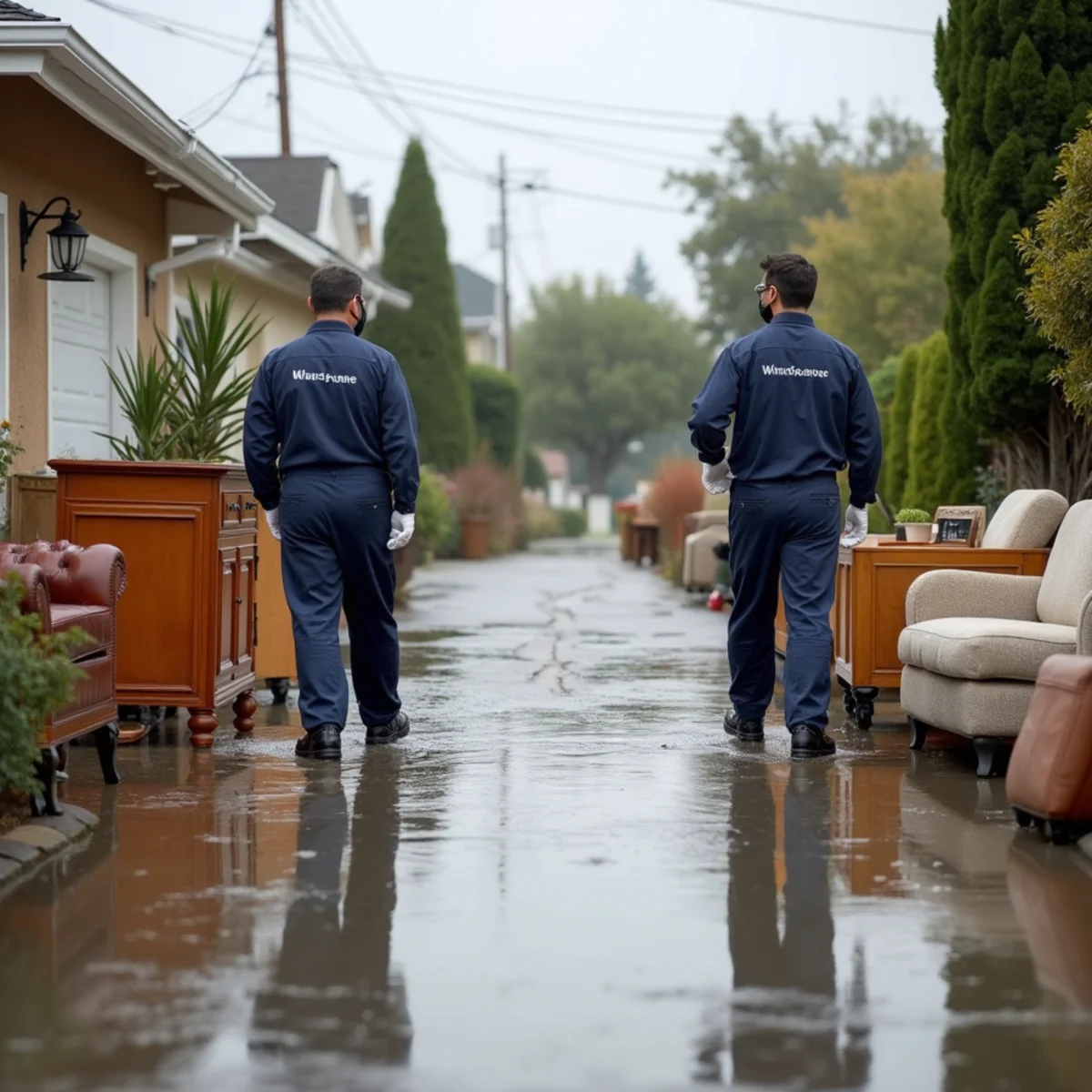
This is what a pack-out is for. Salvageable contents are inventoried, photographed, boxed and moved to a facility for cleaning and controlled drying while the structure is dried and rebuilt, then returned. It is not necessary on every job, and on a small clean-water loss it is overkill. On a storm loss that reached the contents of a whole ground floor, it is usually both the cheaper answer and the one that keeps the claim intact. Ask about it before anything goes out of the door.
The bottom line
Porous and contaminated goes. Non-porous gets cleaned. Sentimental goes in a cool room, not in the skip.
And photograph all of it before anything moves — that record is the claim.